Description
Understanding Double Pitch Conveyor Chains
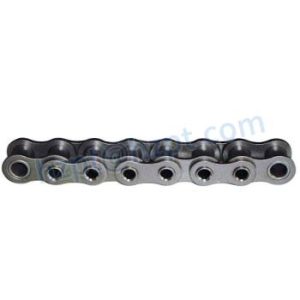
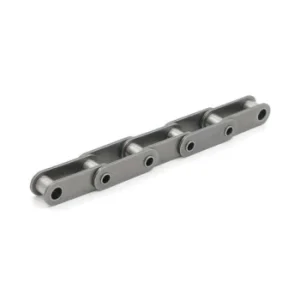
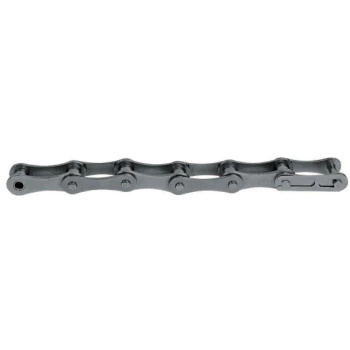
Double pitch conveyor chains derive their name from a simple dimensional relationship: the pitch of a double pitch chain is exactly twice that of the equivalent short pitch chain from which it is derived. A C2040 double pitch chain, for example, has a pitch of 25.40mm — exactly twice the 12.70mm pitch of a standard ANSI #40 chain. This relationship means that double pitch chains share the same roller diameter, inner plate width, and pin dimensions as their single-pitch parent chains. They run on sprockets designed with alternating (every other tooth) engagement, or on full-tooth sprockets specifically profiled for double pitch chains.
The core advantage of double pitch construction is material efficiency in low-speed conveying applications. Because slow-speed conveyors do not require the dynamic load rating that short-pitch chains are optimised for, the additional pitch length can be used to reduce the number of links required for a given conveyor length, cutting chain weight, reducing lubrication requirements, and lowering the total component cost. In agricultural, construction, textile, and light industrial conveying where conveyor speeds are below 0.5 m/s, double pitch chains are the standard selection rather than an alternative.
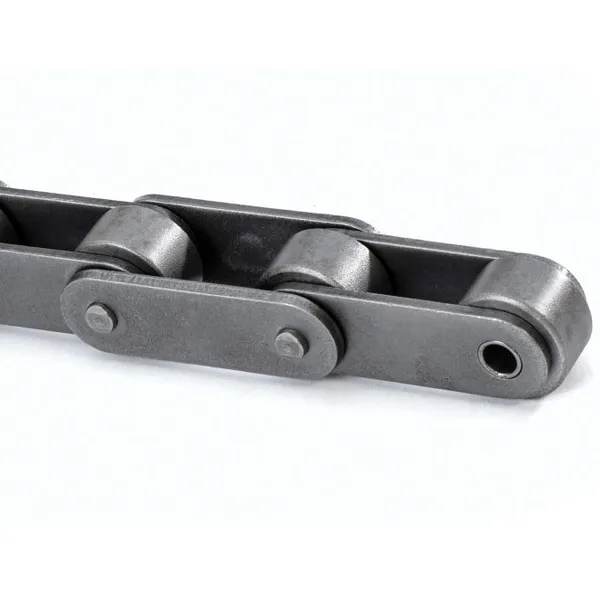
Double pitch conveyor chains — small and large roller types for varied conveying requirements
Small Roller vs Large Roller Type
Double pitch conveyor chains are produced in two distinct roller diameter options that affect their function in the conveying system, not just their dimensions.
Specification Table — Double Pitch Conveyor Chains
| ISO No. | ANSI No. | Pitch P (mm) | Small Roller Ø (mm) | Large Roller Ø (mm) | Inner Width (mm) | Pin Ø (mm) | Plate Depth (mm) | Q min kN | Weight kg/m |
|---|---|---|---|---|---|---|---|---|---|
| C208A | C2040 | 25.40 | 7.95 | 15.88 | 7.85 | 3.96 | 12.00 | 14.1 | 0.45 |
| C210A | C2050 | 31.75 | 10.16 | 19.05 | 9.40 | 5.08 | 15.09 | 21.8 | 0.68 |
| C212A | C2060 | 38.10 | 11.91 | 22.23 | 12.57 | 5.94 | 18.00 | 31.3 | 1.10 |
| C216A | C2080 | 50.80 | 15.88 | 28.58 | 15.75 | 7.92 | 24.00 | 55.6 | 2.10 |
| C220A | C2100 | 63.50 | 19.05 | 39.68 | 18.90 | 9.53 | 30.00 | 87.5 | 3.30 |
| C224A | C2120 | 76.20 | 22.23 | 44.45 | 25.22 | 11.10 | 35.70 | 125.6 | 4.90 |
Where Double Pitch Chains Excel
Double pitch chains are the dominant chain type in three sectors: agriculture, light industrial material handling, and textile manufacturing. Each sector uses double pitch chains for different reasons, but all share the common feature of needing to convey materials reliably at low-to-moderate speeds without the high dynamic load ratings that short-pitch chains are engineered for.
Agricultural Machinery
Grain conveyors in elevators and storage facilities, seed cleaning equipment, and crop washing systems all run at conveying speeds where double pitch chain is the appropriate selection. Agricultural environments also present high dust and debris loading that can accelerate pin-bushing wear in standard chains — the extended pin-to-bushing contact area in the larger pitch of double pitch chains is more tolerant of contaminated lubrication than equivalent small-pitch configurations.
Construction and Road Building Equipment
Asphalt mixing plants, concrete batching equipment, and aggregate handling systems use double pitch conveyor chains to move heavy, abrasive bulk materials at controlled low speeds. The extended pitch allows for easier attachment fitting — cross-bars, scrapers, and flights can be bolted through the extended pins without the tight spacing constraints of short-pitch chain.
Packaging and Textile Machinery
Indexing conveyor systems in packaging lines — where the chain advances a fixed distance per cycle rather than running continuously — benefit from double pitch chain’s lighter weight per unit length, which reduces the inertia that must be overcome at each indexing step. In textile machinery, long runs of double pitch chain carry fabric through process stages at very slow speeds with minimal vibration, where the smoother articulation of the larger pitch reduces the polygon effect that causes speed variations in short-pitch chains at low tooth counts.
Bent Side Plate and Attachment Variants
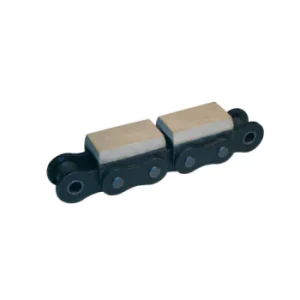
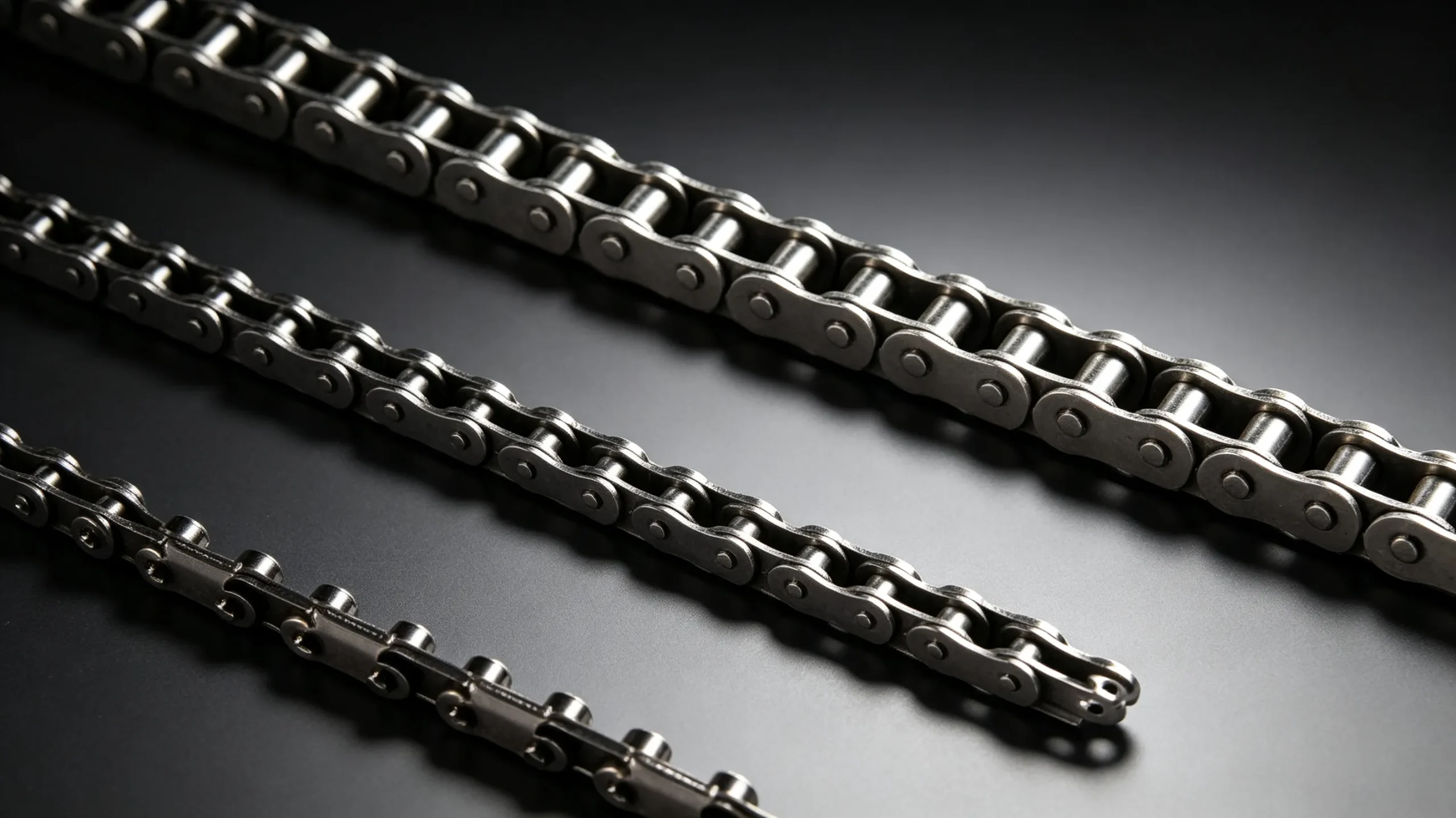
Standard double pitch conveyor chains are available with optional bent side plate construction (K-type), where the outer link plates are formed with an upward-facing flange that provides a convenient flat surface for attachment of conveyor accessories. Attachments available include A-type (single tab on one side), K-type (double tab extending both sides), and custom forms to client drawings. Extended pin attachments (EP) allow direct bolting of cross bars without bracket hardware. All attachment variants are available across the full pitch range and can be specified at any link pitch interval within the chain run.
Components and Matching Parts Available
Customer Reviews
“We’ve been using C2060 double pitch in our grain elevator conveyors for three seasons. The chains have handled the abrasive grain dust environment significantly better than the standard short-pitch chains we used previously. Lubrication intervals are manageable and the elongation rate has been well within spec throughout.”
“Our fabric handling conveyors require very precise chain pitch to avoid fabric misalignment through the process stages. The double pitch chains from this supplier hold their pitch tolerance consistently across the full run length. We’ve had no alignment issues since switching from our previous supplier two years ago.”
“Ordered C2040 with K-type attachments for our carton conveying line. The bent side plates arrived correctly formed and the attachment drilling was exactly to our specification drawings. Lead time was 12 days from order confirmation — faster than we expected for custom attachment work. Will be placing a repeat order for the second line.”
Frequently Asked Questions
Get in Touch
Ready to Place Your Order?
Send us your specifications and annual volume. Standard enquiries receive a full technical quotation within 2 business days.
For more on conveyor chain selection, see our article on what a double pitch roller chain is and where it is used and our guide on where roller chain is used in industrial machinery.