
The phrase “made in China” carries different connotations depending on the industry and the decade, and nowhere is the evolution of that perception more apparent than in industrial mechanical components. China roller chain manufacturers now supply a significant proportion of the global industrial roller chain market, including OEM supply to Australian agricultural equipment assemblers, mining equipment builders, and industrial machinery manufacturers. The reasons why purchasing managers and procurement engineers increasingly specify Chinese-origin chain for OEM programmes go beyond price — they encompass manufacturing capability, standards compliance, customisation flexibility, and supply chain depth that many alternative sources cannot match.
Manufacturing Capability: What Has Changed Since 2000
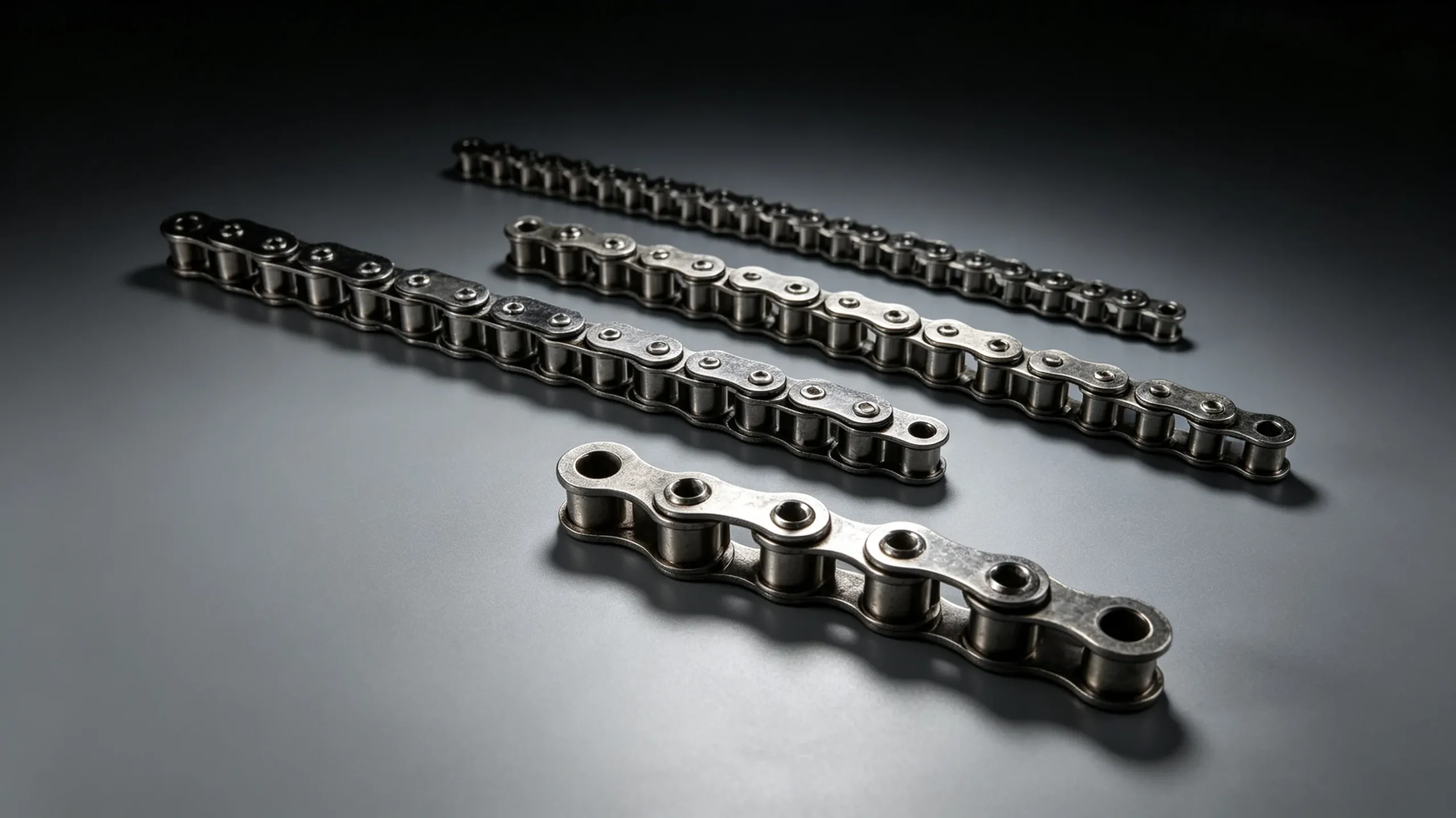
Chinese roller chain manufacturing has undergone a fundamental transformation since the early 2000s. The sector that once produced low-cost chain primarily for domestic agricultural use has invested heavily in precision manufacturing equipment — automated hardening and tempering lines, CNC plate blanking and finishing, computer-controlled assembly and inspection, and calibrated tensile testing facilities. Leading Chinese roller chain manufacturers now operate ISO 9001 certified quality systems with dimensional inspection capable of verifying conformance to ANSI B29.1 and ISO 606 tolerances for all key dimensions.
The output of this manufacturing investment is visible in the quality data: a well-specified roller chain from a reputable Chinese manufacturer will show breaking load test results, dimensional inspection certificates, and material certificates (confirming steel grade and heat treatment specification) that are directly comparable to equivalent documentation from Japanese and European chain manufacturers. The key qualifier is “reputable” — the Chinese market includes manufacturers at all quality levels, and sourcing without supplier qualification carries real risk of receiving under-specification product.
Cost Advantage: The Real Numbers
The cost advantage of Chinese-manufactured industrial roller chain relative to Japanese (Tsubaki, Daido), European (Renold, Iwis), or North American (Rexnord, Ramsey) branded chain is substantial — typically 30 to 60 percent lower unit cost for equivalent specification chain in standard pitch sizes. For OEM programmes where chain is purchased in high volumes, this difference can represent meaningful savings per assembled unit. A combine harvester might use 12 to 20 metres of various chain pitch sizes; at 40 percent cost reduction, the per-unit savings are easily measurable.
| Chain Source | Relative Unit Cost | Standards Compliance | Lead Time (Standard Sizes) | OEM Customisation |
|---|---|---|---|---|
| Chinese manufacturer (reputable) | 1.0x (baseline) | ANSI B29.1, ISO 606 with certificates | 4–8 weeks ex-factory | High — custom lengths, attachments, special plates |
| Japanese manufacturer (Tsubaki/Daido) | 1.8–2.5x | ANSI, ISO, JIS — certified | 8–16 weeks | Moderate — standard catalogue plus limited custom |
| European manufacturer (Renold/Iwis) | 2.0–3.0x | ISO 606, DIN — certified | 8–14 weeks | Moderate — standard plus custom at extended lead |
| US manufacturer (Rexnord/Ramsey) | 2.0–2.8x | ANSI B29.1 — certified | 6–12 weeks | Moderate |
| Generic import (unknown source) | 0.6–0.8x | Unknown — often non-compliant | Variable | Limited |
Standards Compliance: What to Look For
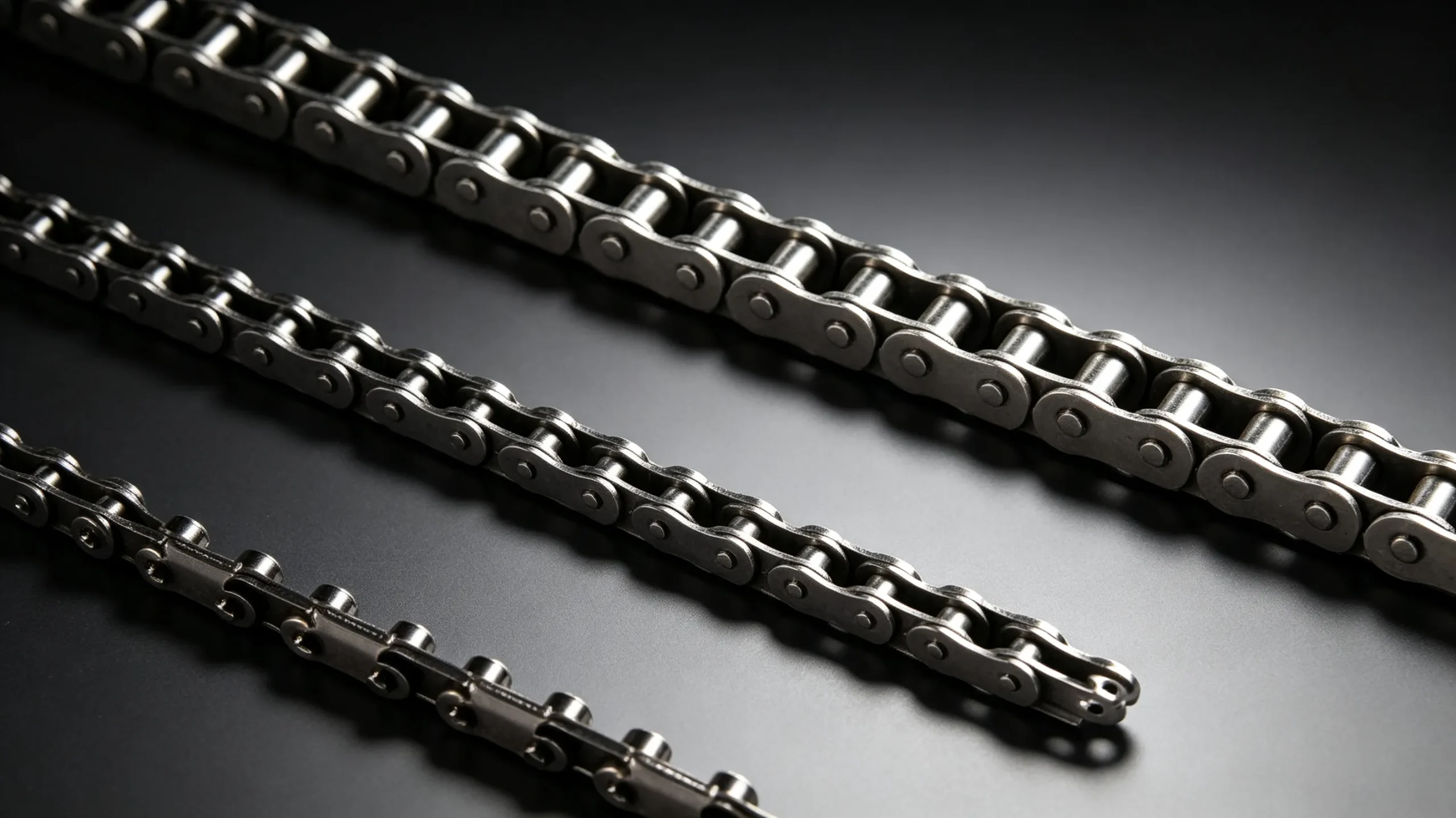
The single most important factor when qualifying a Chinese roller chain manufacturer for OEM supply is standards compliance documentation. A manufacturer producing chain to ANSI B29.1 or ISO 606 should be able to provide, for each batch: a dimensional inspection report verifying pitch, roller diameter, inner width, pin diameter, and plate thickness against the standard table; a tensile test report showing the minimum breaking load achieved (which should meet or exceed the standard minimum); and a material certificate confirming the steel grade and heat treatment specification for the plates, pins, and bushings.
If a supplier cannot provide these documents on request, or provides documents that reference only their own internal specification rather than ANSI B29.1 or ISO 606, treat this as a significant qualification risk. Reputable Chinese roller chain manufacturers involved in export supply — particularly to markets with quality-conscious buyers such as Australia, Germany, and Japan — routinely provide this documentation as part of their standard commercial offering.
OEM Customisation: A Significant Advantage
For OEM applications, China roller chain manufacturers offer a degree of customisation flexibility that is often difficult to obtain from branded Western suppliers without minimum order quantities that are uneconomical for smaller OEM programmes. Common customisations available from qualified Chinese manufacturers include: attachment chain with custom attachment geometry (K-type, A-type, or special bent plates), sawtooth plate roller chain in specific pitch and strand configurations, extended pin chain with custom pin protrusion lengths, and pre-cut chain loops in specified link counts rather than bulk reels.
For Australian agricultural equipment manufacturers producing specialised harvesting attachments, custom attachment chain from a qualified Chinese supplier can be designed, sampled, and approved in 8 to 12 weeks — a timeline that supports product development cycles without requiring the longer lead times typical of European OEM chain suppliers for non-catalogue items.
How to Qualify a Chinese Roller Chain Supplier
Step 1: Request Full Documentation
Ask for ANSI B29.1 or ISO 606 dimensional inspection report, tensile test report, and material certificate for a standard size. A supplier unable to provide these is not appropriate for OEM qualification.
Step 2: Order a Sample Batch
Order 2–5 metres of a representative chain size before committing to OEM volumes. Measure pitch, roller diameter, and inner width yourself against the standard. Test breaking load if your facility allows.
Step 3: Run an Operational Trial
Install the sample chain in a representative drive and run for at least 200 hours. Measure elongation before and after. Examine the chain for any premature fatigue signs at pin holes or connecting link areas.
Step 4: Establish Quality Assurance Terms
For ongoing OEM supply, specify inspection and certificate requirements in the purchase order. Request batch-specific certificates rather than generic factory documents for each consignment.
EverPower: Australian-Based Supply With Chinese Manufacturing Expertise
EverPower Roller Chains Australia combines the advantages of China roller chain manufacturing — competitive pricing, customisation flexibility, and broad product range — with Australian-based customer service, technical support, and account management. Our Sydney facility maintains stock of the most commonly requested ANSI and ISO chain sizes for immediate despatch, eliminating the lead time penalty that direct Chinese OEM supply can involve for urgent replacement requirements.
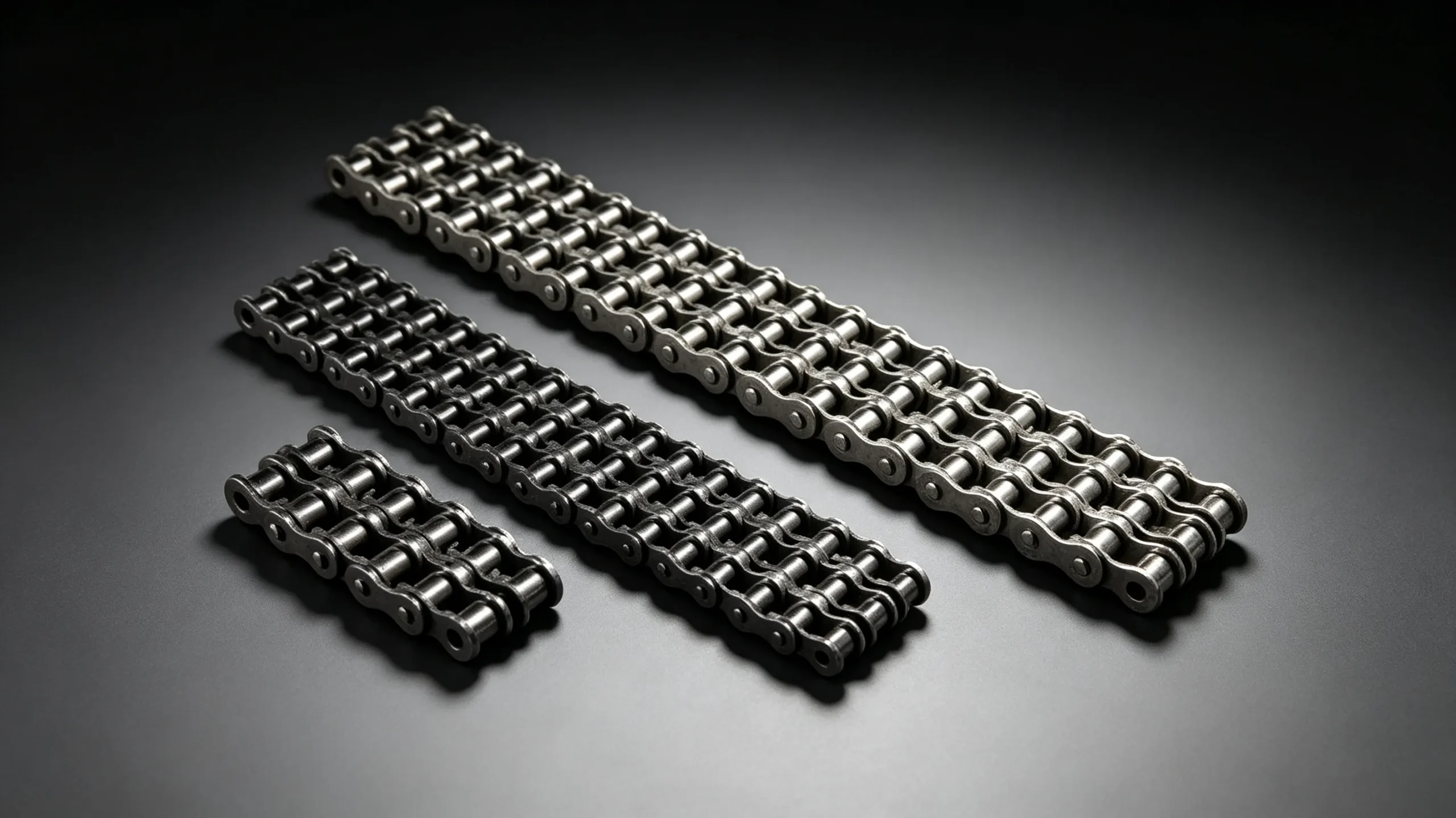
For Australian OEM programmes requiring custom sawtooth plate roller chain, attachment chain, or large-volume standard chain in ANSI or ISO specification, we manage the supplier qualification, quality documentation, and shipment logistics on behalf of our customers — providing a single point of contact for chain supply without the complexity of managing a Chinese supplier relationship directly.
Contact EverPower Roller Chains Australia to discuss OEM roller chain supply programmes for agricultural machinery, mining equipment, and industrial machinery manufacturers across New South Wales and Australia. Our Sydney team can provide samples, technical specification support, and volume pricing for qualified OEM accounts.
+61 2 9708 3322 | [email protected] | 27 Harley Crescent, Condell Park NSW 2201