Description
Product Overview
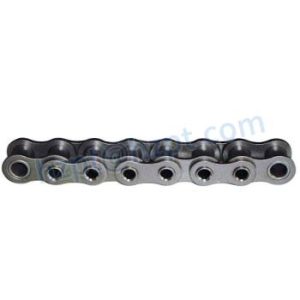
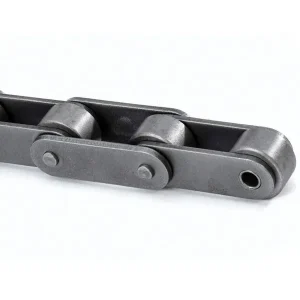
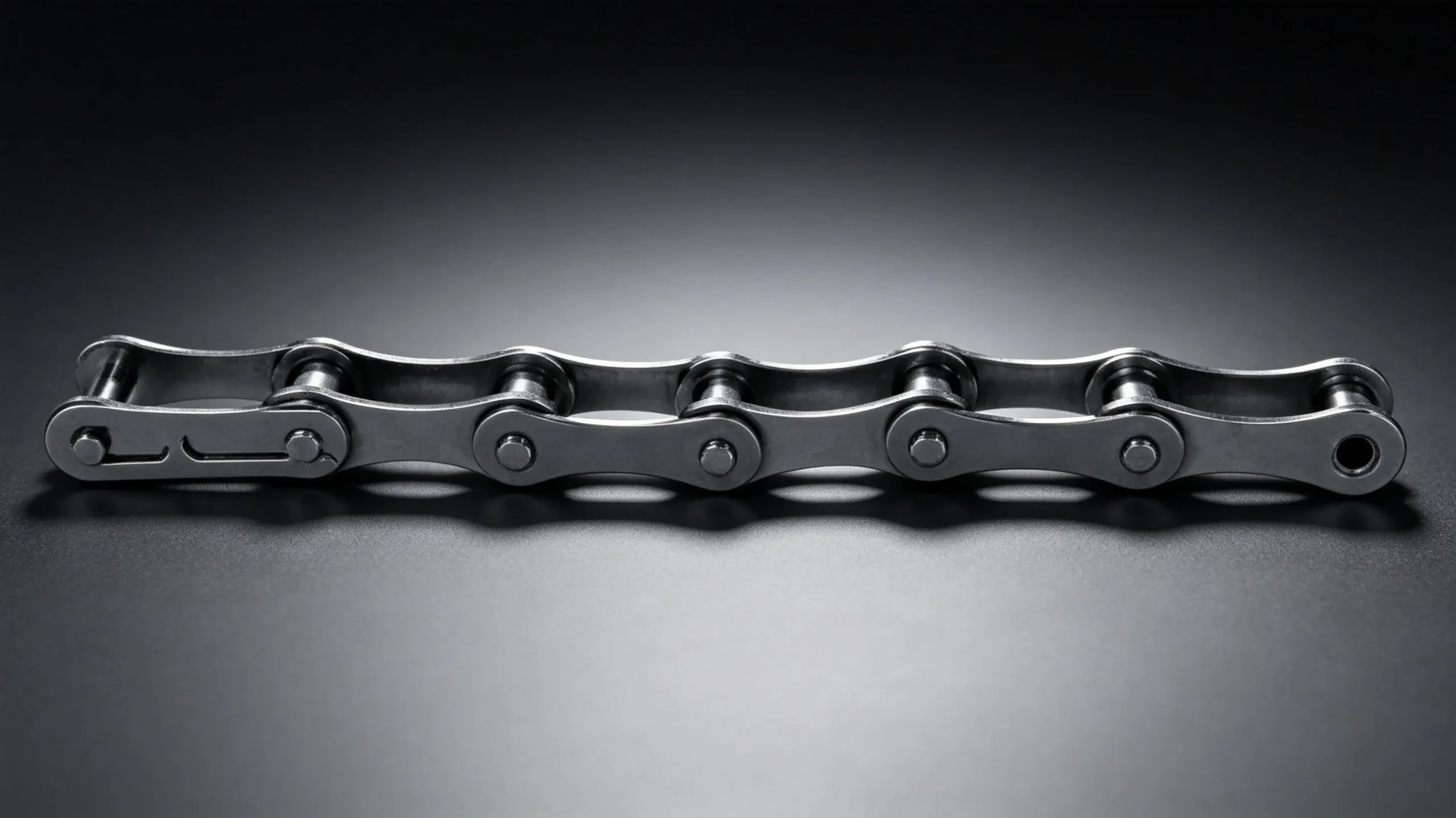
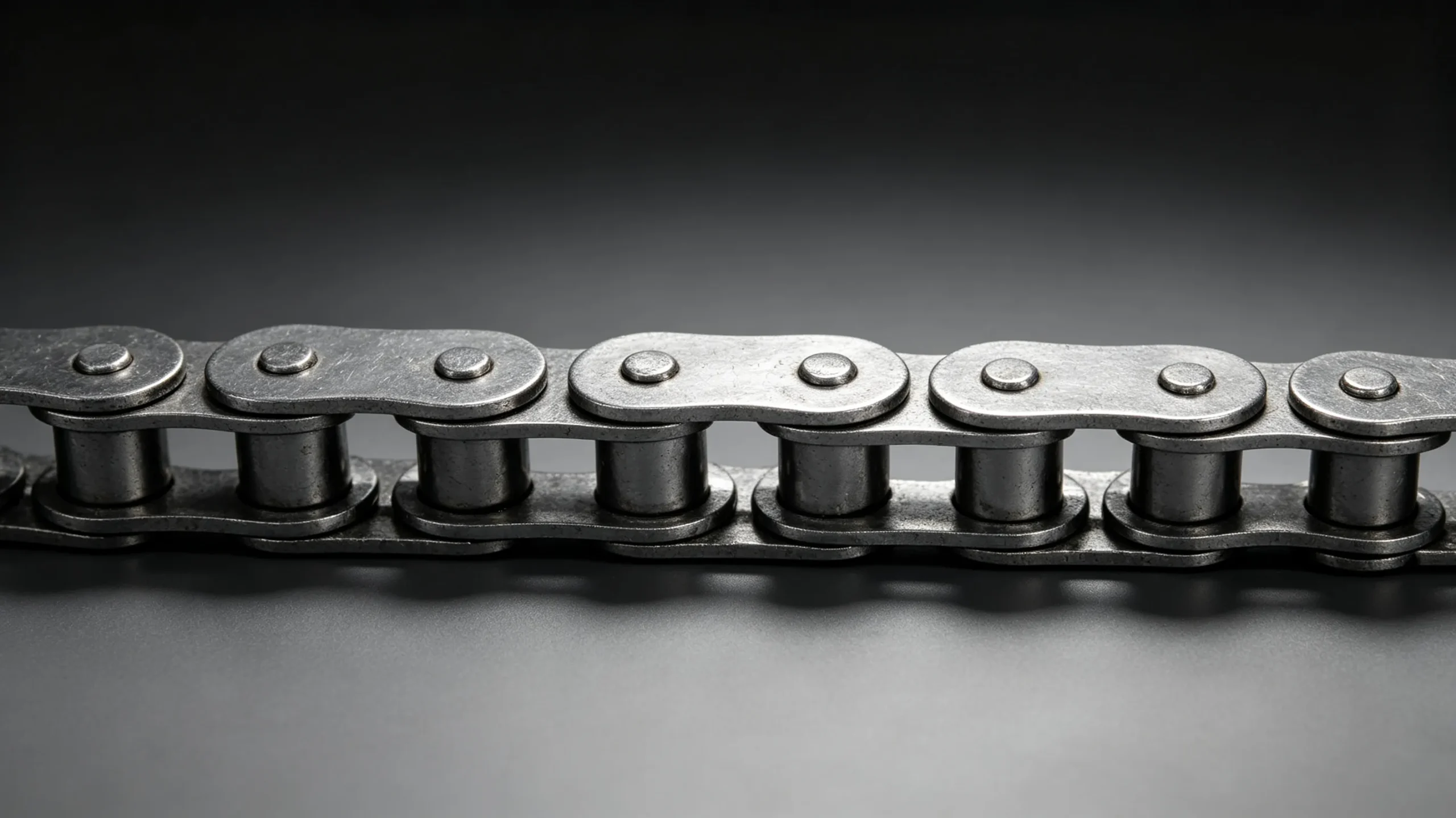
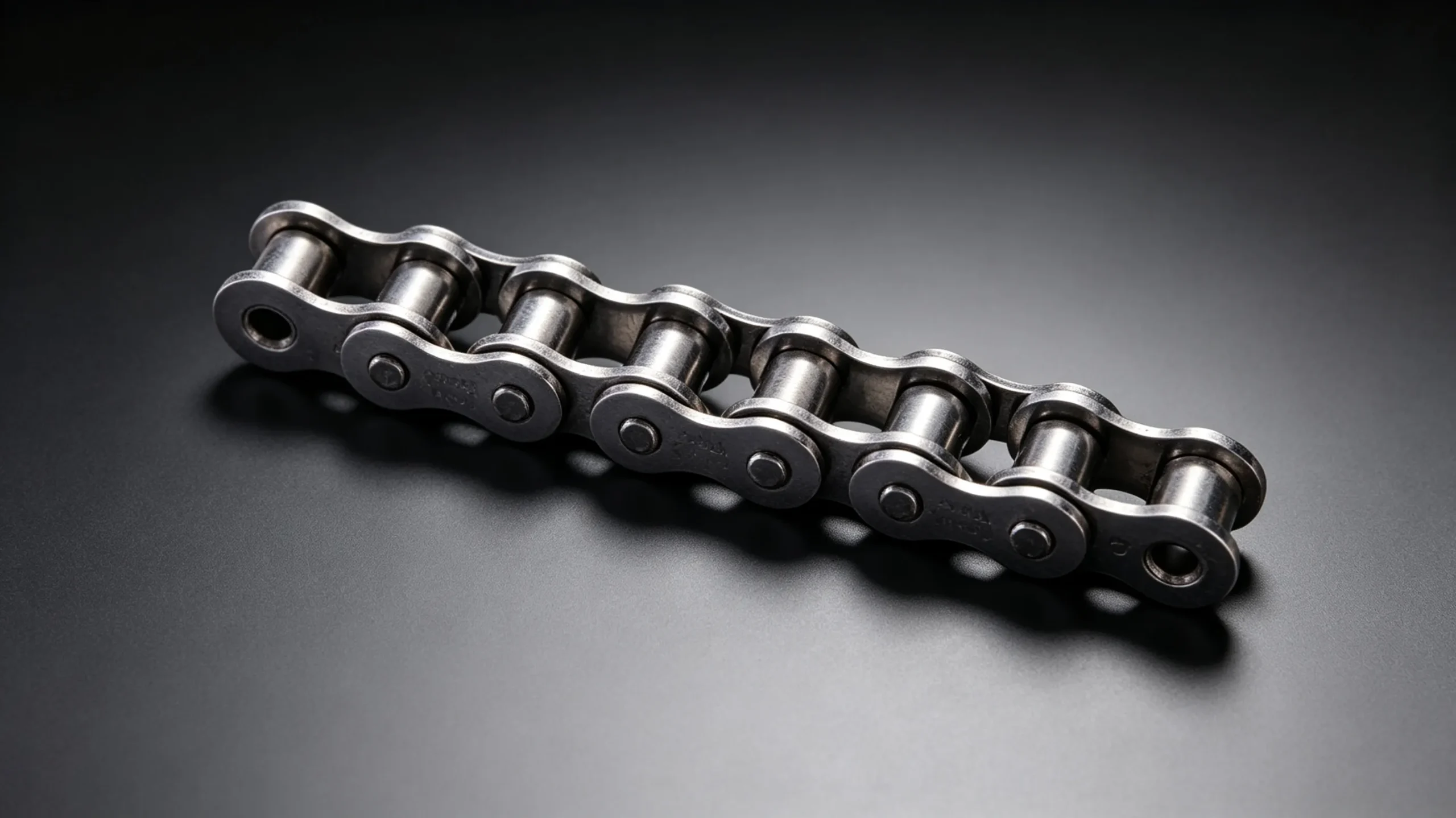
Engineering steel bushing chains (also called engineering class chains or bush chains) differ from precision roller chains in two fundamental ways: they have no external rollers, and they are manufactured to engineering class dimensional tolerances rather than precision roller chain tolerances. The absence of rollers is not a design deficiency — it is deliberate. Engineering bushing chains are used in applications where the chain runs on flat rails, scrapers, or guide surfaces rather than engaging toothed sprockets in the conventional sense. The bushing — the cylindrical sleeve that surrounds the pin — directly contacts the sprocket tooth or guide rail surface, providing the load-bearing interface.
The engineering class designation refers to the manufacturing tolerance band, which is wider than precision roller chain standards. This wider tolerance is appropriate because engineering bushing chains are used in heavy, slow applications where the precision engagement geometry of roller chains is not required. The practical benefit is that engineering class chains can be manufactured with heavier plate sections, larger pin diameters, and greater bushing wall thickness than precision chains of equivalent pitch — all of which improve load capacity and service life in the demanding environments where these chains operate.
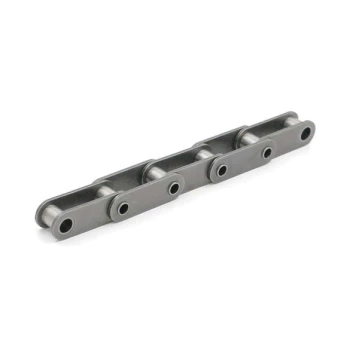
DIN 8164 engineering class bushing chains for heavy industrial conveying
Specifications — Engineering Steel Bushing Chains
Dimensional data for the primary engineering steel bushing chain sizes. Pitch sizes range from 66.27mm through 216mm to cover the full range of mining, glass, and heavy industrial applications.
| Chain No. | Pitch P (mm) | Bush OD (mm) | Bush ID (mm) | Inner Width (mm) | Pin Ø (mm) | Plate Depth (mm) | Plate Thick. (mm) | Q min (kN) |
|---|---|---|---|---|---|---|---|---|
| BL422 | 66.27 | 22.2 | 17.6 | 19.0 | 17.5 | 38.1 | 6.4 | 142 |
| BL434 | 101.60 | 38.1 | 31.8 | 38.0 | 31.8 | 57.1 | 9.5 | 222 |
| BL444 | 101.60 | 44.5 | 38.1 | 44.0 | 38.1 | 63.5 | 9.5 | 311 |
| BL488 | 152.40 | 50.8 | 44.5 | 50.0 | 44.5 | 82.6 | 12.7 | 445 |
| BL522 | 66.27 | 28.6 | 23.0 | 25.0 | 22.2 | 44.5 | 7.9 | 222 |
| BL534 | 101.60 | 44.5 | 38.1 | 44.0 | 38.1 | 63.5 | 9.5 | 334 |
Primary Industries and Applications
Glass manufacturing plants are among the largest users of engineering steel bushing chains globally. The roller-hearth kilns used for tempering and annealing glass panels use long chain runs that carry the glass on driven roller bars — the chain drives the roller system at precisely controlled speeds through the kiln at temperatures up to 650°C. At these temperatures, standard roller chains suffer rapid thermal fatigue and lubricant degradation; engineering bushing chains with high-temperature bushing materials and graphite solid lubrication tolerate these conditions for extended service periods.
Mining and quarrying conveyors impose load conditions that lie entirely outside the specification range of precision roller chains. A run-of-mine conveyor handling blasted rock carries highly variable loads — from near zero when the conveyor is empty to several tonnes per metre when heavily loaded — with frequent impact shock from large rock fragments dropping onto the chain. Engineering bushing chains in heavy plate (BL488 and BL522 series) provide the plate cross-section and pin-bushing load area to handle this duty cycle without the failure modes that occur at the pin-bushing interface in standard precision chains at these load levels.
Oil drilling and well servicing equipment uses engineering bushing chains in rotary table drives and draw-works — the mechanisms that control drill string weight and movement during drilling operations. These chains must transmit very high torque under variable load with minimal elongation, as pitch change in the drive chain directly affects positioning accuracy of the drill string. Chains for this application are manufactured to API (American Petroleum Institute) specification in addition to DIN 8164.
Attachment Options for Engineering Bushing Chains
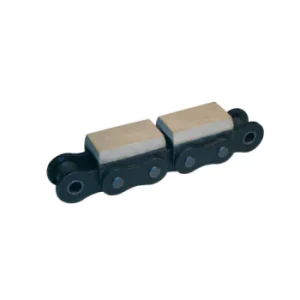
Engineering bushing chains are produced with a range of attachment configurations that adapt the chain to specific material handling functions. A1 and A2 attachments add single or double tabs to one side of selected outer link plates, providing a mounting surface for flights, scrapers, or carriers. K1 and K2 attachments extend tabs from both sides of the outer link plate, used when the conveyed material or the attachment structure straddles the chain centreline. Extended pins (EP attachments) pass the pin ends beyond the outer link plate face, allowing direct bolting of cross bars without additional bracket hardware.
Custom attachment geometries are available from customer drawings. The most common custom requests are: flight attachments with specific height and thickness for trough scrapers; carrier attachment plates with bolt-hole patterns matching proprietary conveyor frame profiles; and bent-plate outer links for accumulation conveyor applications where the chain must provide a flat top surface at the same level as adjacent chains.
Components and Matching Parts
Customer Reviews
“We have been running BL488 chains in our annealing lehr for three production cycles now. With the graphite lubrication specification, chain life is now 18–22 months compared to 8–10 months with the previous supplier’s chains. The attachment quality on the cross-bar tabs is good — no cracking at the weld zone that we experienced with the previous chains.”
“Specified BL534 for our underground conveyor upgrade. The chain arrived on schedule with full CE certification documentation. Load performance has been exactly as the specification data predicted — no unexpected elongation or link failures in the 14 months since installation. We’ll be ordering the same specification for the second conveyor when it comes due for replacement.”
“We manufacture drag conveyors for construction aggregate handling and specify engineering bushing chain as standard. This is one of the few suppliers offering the full BL range including the larger BL488 and BL522 sizes that our heavy-duty models require. Documentation for CE marking compliance is thorough and has passed our internal review without issues.”
Frequently Asked Questions
Get in Touch
Ready to Place Your Order?
Send us your specifications. Standard enquiries receive a full quotation within 2 business days.