
Roller chain is one of the most widely distributed mechanical components in industrial machinery worldwide, yet its presence is rarely noticed until it fails. Behind the sheet metal guards and access panels of manufacturing equipment, agricultural machines, mining conveyors, and construction equipment, roller chain drives operate continuously — transmitting torque, synchronising shafts, and conveying materials across virtually every sector of the industrial economy. This article maps where roller chain is actually used in industrial machinery, what specific function it serves in each context, and what chain specifications are typically required.
Power Transmission: The Core Function
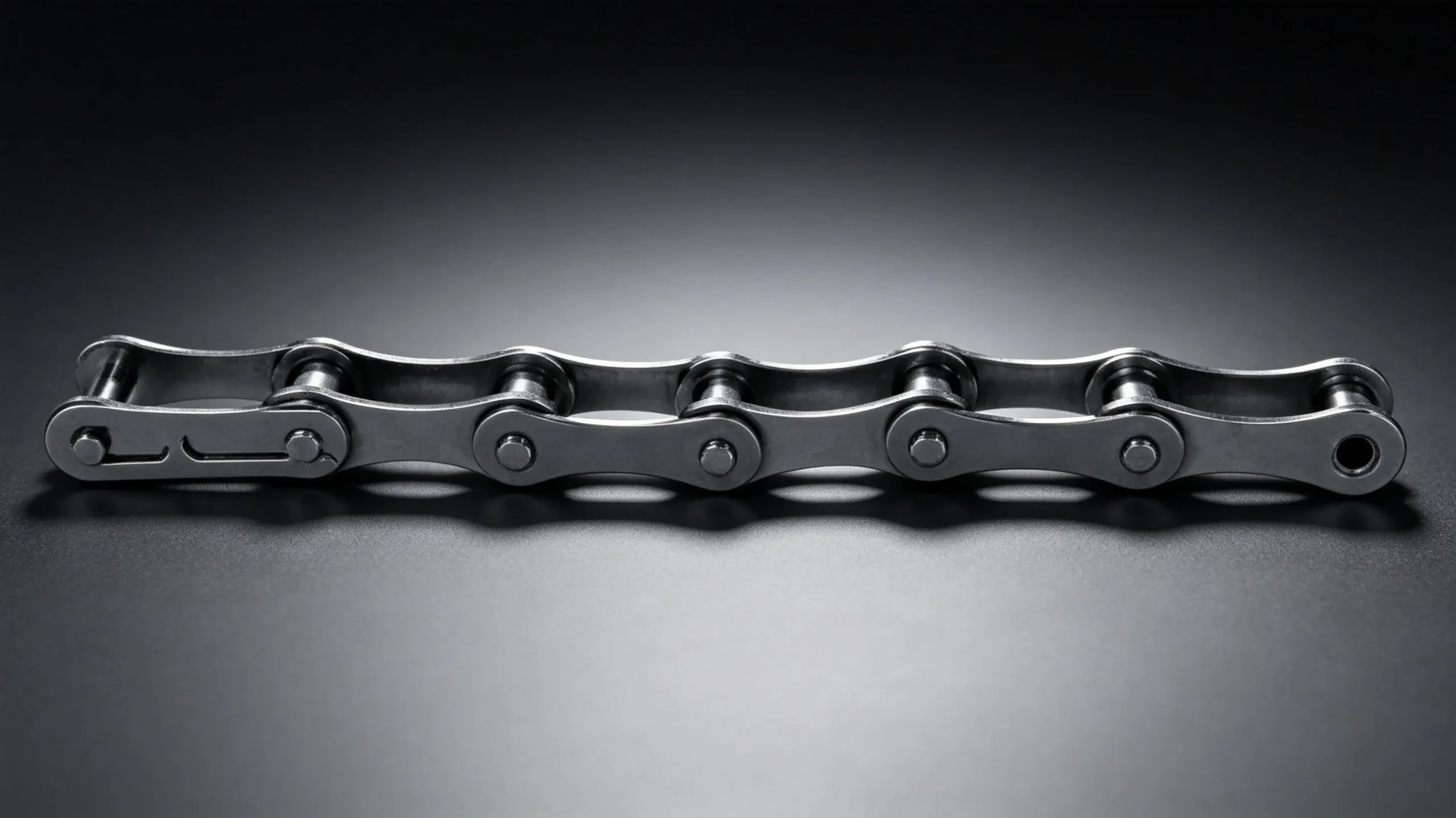
The fundamental industrial application of roller chain is power transmission between two rotating shafts at a fixed speed ratio. Where a gear drive requires fixed shaft spacing and a belt drive risks slip under shock loading, roller chain accommodates flexible centre distance, transmits positive torque without slip, and handles moderate shock loads — making it the preferred power transmission medium across a wide range of industrial speed and torque combinations.
In manufacturing machinery, roller chain power transmission drives are found in: gearbox output drives coupling a gearbox to a conveyor drive shaft, machine tool spindle drives where positive synchronisation is required, press and forming machine main drives where high torque at low to medium speed is needed, and pump and compressor drives where the chain provides a flexible coupling between motor and rotating equipment. The chain size for these applications is determined by the shaft power, the speed ratio, and the service factor for the loading conditions — typically ANSI 40 through ANSI 80 for light to medium industrial drives.
Conveyor Systems: The Volume Application
Conveyor roller chain — chain used to move material rather than to drive a shaft — accounts for the largest volume of industrial chain consumption worldwide. The two main conveyor chain functions are: drive chain (the chain that transmits power from the motor to the conveyor mechanism) and carrier chain (chain that directly supports and moves the conveyed material or product).
| Conveyor Type | Chain Function | Typical Chain Specification | Industry |
|---|---|---|---|
| Roller conveyor | Drive chain — powers conveyor rollers via sprocket-to-roller links | ANSI 40–60 simplex | General manufacturing, distribution |
| Slat conveyor | Carrier chain — slats mounted to two parallel chains carry product | Double pitch C2060H or C2080H with attachments | Automotive, food processing, heavy assembly |
| Bucket elevator | Carrier chain — buckets attached to chain carry bulk material vertically | ANSI 80–120 or custom attachment chain | Grain handling, mining, cement |
| Apron conveyor | Carrier chain — overlapping steel aprons carry hot or abrasive material | Heavy series attachment chain ANSI 80–120 | Foundry, mining, steel plant |
| Drag chain conveyor | Carrier chain — chain drags material along trough floor | ANSI 80–120 or detachable link chain | Grain, coal, wood chip handling |
| Overhead trolley conveyor | Carrier chain — trolleys suspended from overhead chain carry product | Precision conveyor chain to specific load rating | Automotive paint line, assembly |
Agricultural Machinery: High-Wear, High-Stakes Applications
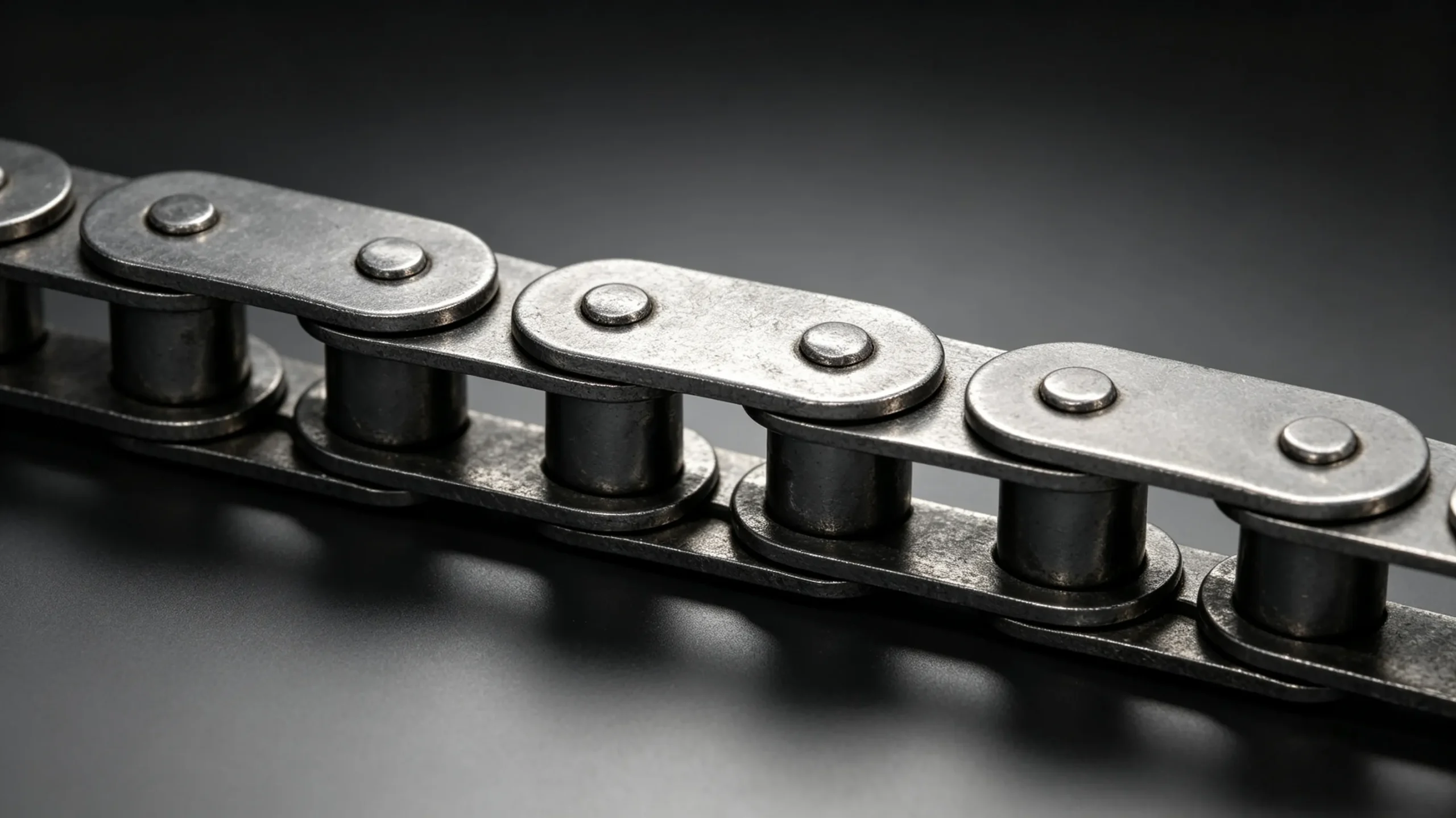
Agricultural machinery is one of the highest-wear environments for roller chain because of the combination of variable loading, abrasive dust exposure, outdoor storage, and the seasonal time pressure that makes a failure during harvest particularly costly. Virtually every major agricultural machine uses multiple roller chain drives simultaneously.
In a combine harvester alone, the number of individual chain drives ranges from 12 to over 20 depending on the model, covering: the feeder house drive, header drives, threshing drum pre-drive, main elevator and returns elevator, straw walker drives, cleaning shoe and chaffer drives, grain tank unloading auger drive, and various secondary drives for sensors, fans, and monitoring equipment. Each of these drives has a specific chain size, operating speed, and load profile. The ANSI roller chain sizes most commonly used are ANSI 60 and ANSI 80, with ISO 12B and 16B for European-brand machines.
Mining and Quarrying: Extreme Duty Applications
Mining equipment imposes the most demanding conditions encountered by industrial roller chain: continuous 24-hour operation, abrasive contaminated environments, heavy shock loading from variable material flow, and consequences of failure that include major production losses and significant safety risks. Chain drives in mining are found in: underground conveyor systems moving coal or ore, surface overland conveyors in open-cut operations, vibrating screen drives, crusher feeder conveyor drives, and various ancillary drives on mining equipment including pumps, fans, and material handling attachments.
Mining chain applications almost universally require heavy duty roller chain (ANSI H series) due to the shock load profile, with sealed chain types (O-ring roller chain or self-lubricating) frequently specified to address the contamination problem in dusty underground environments. Chain sizes range from ANSI 80 for lighter mining conveyors to ANSI 120 and above for the main drives on large surface mining equipment.
Construction Equipment: Mobile Drive Applications
Construction machinery uses roller chain in both stationary drive applications (concrete batching plants, mobile crushers) and in mobile equipment drives. Excavator undercarriage track drives — the chain-like links that form the track — are technically roller chain derivatives operating under extreme conditions of mud, impact, and continuous loading. Concrete mixer drives, concrete pump drives, and screeding machine chain drives all use roller chain for power transmission where the mobile nature of the equipment and the operating environment rule out gear drives or belt drives.
Food Processing: Hygienic Chain Applications
Food processing facilities use roller chain extensively in conveyor systems for product transport, packaging machine drives, and processing equipment drives. The regulatory requirements of food production environments demand stainless steel roller chain with food-grade lubricants for any drive in a product contact zone. Applications include: bottle and can conveyors in beverage production, slat conveyors in meat processing, elevator conveyors in bakeries and confectionery plants, and packaging machine drives in general food manufacturing.
ANSI 40–50 Stainless
Light-duty food processing conveyors, packaging machine drives, pharmaceutical equipment. Low load, moderate speed, stringent hygiene requirements.
ANSI 60 Stainless
Medium-duty food processing drives, bakery conveyors, meat processing equipment. Most common size in food manufacturing.
ANSI 80 Stainless
Heavy food processing applications, large baking ovens, industrial meat processing conveyors. Higher load capacity with full stainless specification.
Self-Lubricating Stainless
Overhead conveyors above open product lines where any lubricant drip is unacceptable. Eliminates external lubrication entirely.
Energy and Utilities: Long-Life Drive Applications
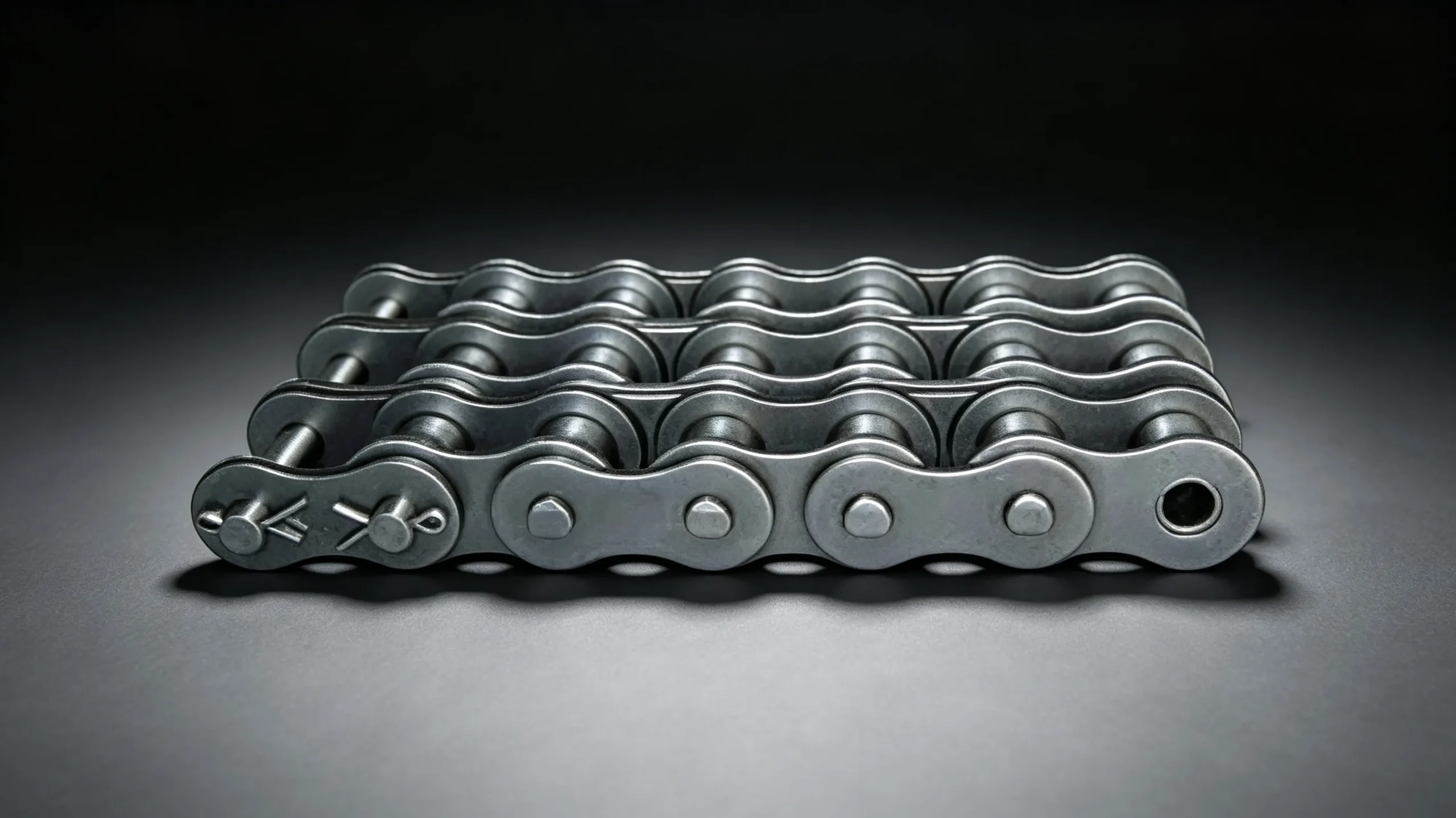
Power generation and utilities infrastructure uses roller chain in applications where reliability over long service intervals is critical. Water treatment plants use chain drives on slow-moving sludge scrapers and filter mechanism drives, where a chain failure requires a plant shutdown for maintenance. Hydroelectric plants use chain drives in gate operating mechanisms and valve actuators. Solar tracking systems use chain drives to rotate solar panels following the sun — a slow, continuous duty that requires corrosion resistance and minimal maintenance in outdoor installations.
EverPower Roller Chains Australia supplies industrial roller chain for all the applications described in this article — from standard ANSI and ISO sizes for general industrial drives, through to heavy duty roller chain, stainless steel roller chain, and sawtooth plate roller chain for specialist applications. Contact our Sydney team for specification advice and pricing.
+61 2 9708 3322 | [email protected] | 27 Harley Crescent, Condell Park NSW 2201