
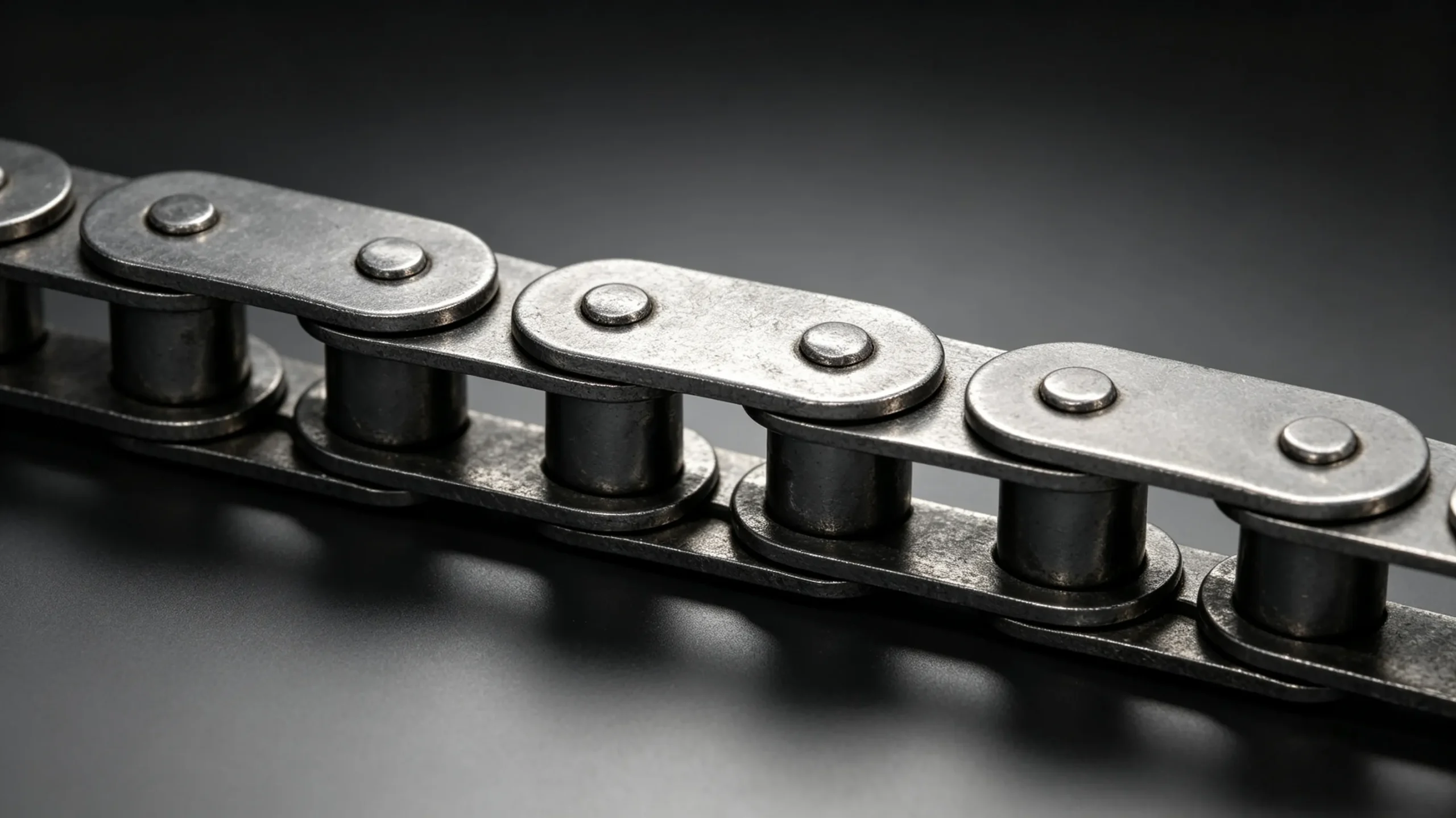
Walk through the chains that have failed in any industrial maintenance department and a disproportionate number will show failure at or adjacent to the connecting link. This is not a coincidence, and it is not necessarily a sign that the connecting links are defective. The connecting link is the weakest point in the chain assembly by design and by necessity — it must be removable and reassemblable in the field, which places inherent constraints on its strength that the rest of the chain does not face. Understanding why roller chain breaks at the connecting link allows maintenance engineers to eliminate the most common causes and choose the correct connecting link type for each application.
Why the Connecting Link Is the Weakest Point
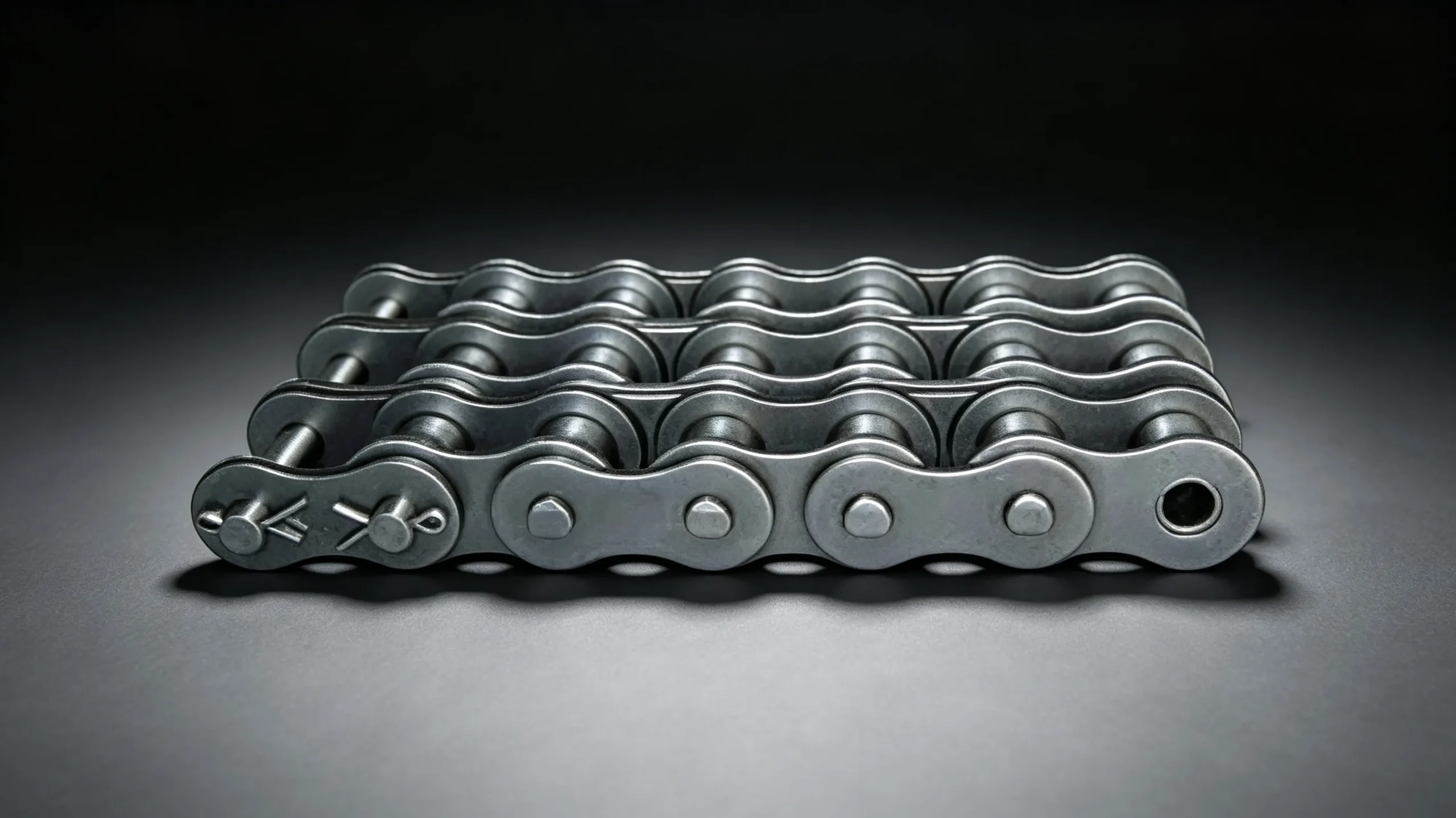
In a standard roller chain, the pins in the body of the chain are retained in the outer link plates by a press fit with typically 0.02 to 0.04 mm interference. This interference fit is permanent — the pin cannot be removed without a chain breaker tool and significant force. The connecting link pin, by contrast, must be removable for field maintenance: it is retained either by a spring clip engaging a groove on the pin end, or by a cotter pin through a drilled hole in the pin end. Both of these retention methods are mechanically less robust than a press fit — which is why connecting link assemblies are rated at 85 to 95 percent of the chain breaking load rather than 100 percent.
At 85 to 95 percent of the chain breaking load, the connecting link is not dramatically weaker than the rest of the chain for most applications — but when operating conditions push the chain toward its load limit (through shock, overloading, or incorrect specification), the connecting link is the point most likely to reach its limit first. Understanding the specific failure modes helps identify which contributing factors are responsible in each case.
Failure Mode 1: Spring Clip Dislodgement
The spring clip (also called a snap link or circlip) engages a circumferential groove on each end of the connecting pin. When correctly installed, the clip holds the connecting plate against the chain body by spring pressure. The clip can be dislodged by vibration — in high-frequency vibration environments (vibrating screens, resonant conveyor spans) the clip gradually works out of its groove over many vibration cycles until it falls free, allowing the pin to pull out of the plate.
Installation errors are the more common cause of premature spring clip failure. The most critical error is installing the spring clip with the open end facing the direction of chain travel. The closed end of the spring clip must face the direction of chain travel (the driving direction) — if the open end faces forward, any contact between the clip and a guide, housing, or debris can lever the clip out of its groove. This installation error is responsible for a significant proportion of spring clip failures in the field.
Failure Mode 2: Cotter Pin Failure From Inadequate Spreading
Cottered connecting links use a split pin (cotter) through a drilled hole in each pin end. When correctly assembled, the two legs of the cotter are spread approximately 60 to 90 degrees apart — wide enough to prevent the cotter from pulling through the hole, but not so wide that the soft cotter metal is overstressed at the bend. The most common failure is insufficient spreading: the legs are spread only 15 to 30 degrees, which is not sufficient to prevent the cotter from being pulled through the hole under shock loading.
The second cotter failure mode is reusing a previously spread cotter. The act of spreading the cotter legs work-hardens the metal at the bend, making it brittle. If a used cotter is straightened and reused, the brittle leg typically fractures under the operating loads rather than bending plastically as a new cotter would — allowing the cotter to separate and the connecting link to open. Replace cotters on every reassembly without exception.
Failure Mode 3: Spring Clip in a Shock-Load Application
The spring clip connecting link is rated for approximately 85 percent of the roller chain breaking load — adequate for smooth drives and moderate shock applications. In heavy shock environments (crusher drives, baler plunger drives, vibrating conveyors, mining equipment), the peak shock loads can momentarily exceed the spring clip retention force even when the mean operating load is well within the chain rating. Each shock event that exceeds the clip retention force partially dislodges the clip, and after several such events the clip has worked far enough out of its groove to no longer provide reliable retention.
The solution is to use a cottered connecting link rather than a spring clip for any application involving heavy shock loading. The cotter provides mechanical locking that is independent of spring tension and is not susceptible to progressive dislodgement through repeated shock events. The rated retention of a correctly assembled cottered connecting link (approximately 95 percent of chain breaking load) provides adequate margin for most heavy shock applications.
Failure Mode 4: Incorrect Connecting Link for the Chain Size
Using a connecting link rated for a smaller chain size than the chain being joined is an obvious specification error but it occurs regularly, particularly when connecting links are sourced separately from the chain or from a general fastener supplier without careful specification checking. A connecting link that appears similar in size can have significantly different pin diameter, plate thickness, and clip groove depth — all of which affect its load rating.
Always source connecting links from the same supplier and in the same specification as the chain. A connecting link marked 60 should be used only with ANSI No. 60 chain; a link marked 12B should be used only with ISO 12B chain. Verify the marking on the connecting link packaging before installation — never install an unmarked or unidentified connecting link in a load-bearing chain drive.
Failure Mode 5: Fatigue at the Connecting Plate Pin Hole
The connecting plate — the movable plate that is retained by the spring clip or cotter — is subject to the same pin-hole fatigue mechanism as regular link plates. However, the connecting plate is typically thinner than the equivalent press-fit outer plate in standard chain design, because it must clear the clip groove on the pin end. This slightly reduced plate thickness means the connecting plate reaches its fatigue limit at a lower cyclic load than the body plates — consistent with the 85 percent load rating relative to the chain breaking load.
Fatigue failure at the connecting plate pin hole manifests as a crack initiating at the pin-hole edge of the connecting plate, propagating across the plate width, and eventually causing the connecting plate to fracture while the pin and clip remain in place. This failure mode is most common in drives where the connecting link is subjected to the same cyclic loading as the rest of the chain — meaning high load amplitude cycles at high frequency. The solution is to use a heavier specification connecting link (such as a cottered link with a full-thickness connecting plate) or to reposition the connecting link to a lower-stress section of the chain loop if the drive geometry allows.
| Failure Mode | Root Cause | Diagnostic Sign | Correct Fix |
|---|---|---|---|
| Spring clip dislodgement | Wrong installation direction; vibration | Clip missing; pin pulled out of plate | Reinstall with closed end facing travel direction; switch to cotter link for vibration |
| Cotter pin fracture | Reused cotter; insufficient spreading | Fractured cotter legs found near failure | Always use new cotter; spread legs 60–90 degrees |
| Spring clip shock failure | Shock loads exceed spring clip retention force | Repeated spring clip ejection under load peaks | Specify cottered connecting link for shock applications |
| Wrong connecting link size | Link not matched to chain specification | Link markings differ from chain number | Source matched connecting link from same supplier as chain |
| Connecting plate fatigue | High cyclic load; thin connecting plate | Crack at connecting plate pin hole | Use heavy-specification cottered link; reposition link to low-stress section |
EverPower Roller Chains Australia supplies spring clip, cottered, and heavy-specification connecting links matched to ANSI and ISO chain in all standard pitch sizes. Contact our Sydney team to specify the correct connecting link type and specification for your drive conditions.
+61 2 9708 3322 | [email protected] | 27 Harley Crescent, Condell Park NSW 2201