Description
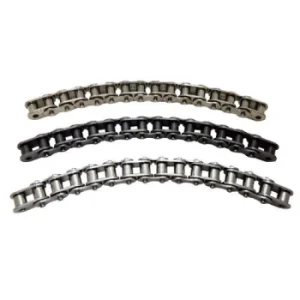
A Series C-Type Straight Side Plate Chain
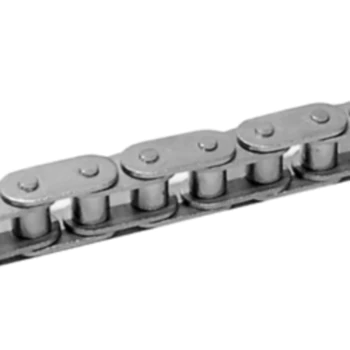
A Series Roller Chains with Straight Side Plates (C-type) deliver greater strength and fatigue resistance than standard figure-eight plate chains — the preferred specification for demanding conveyor applications in food processing, bottling, packaging, and chemical processing.
What Sets Straight Side Plate Chains Apart
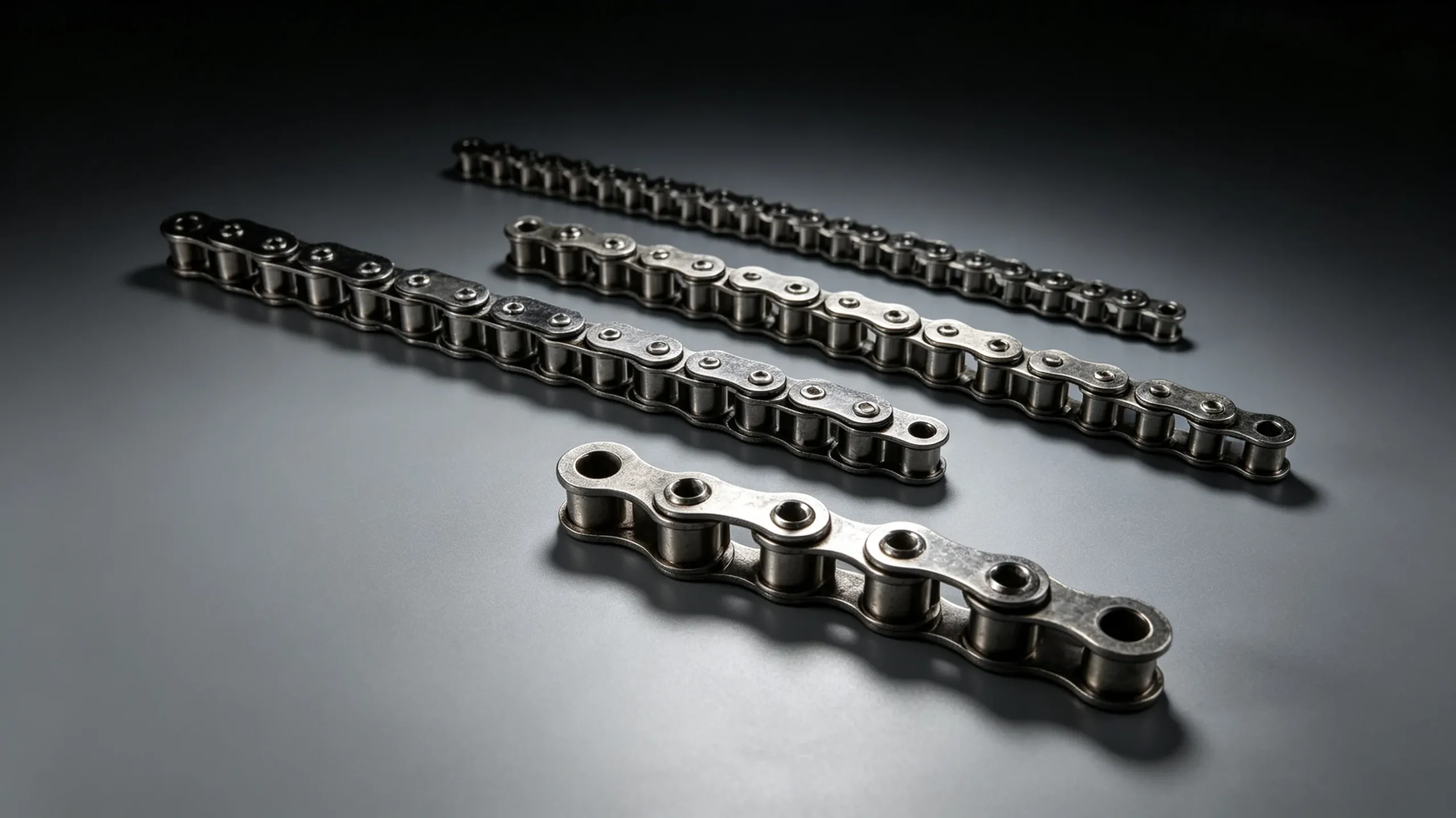
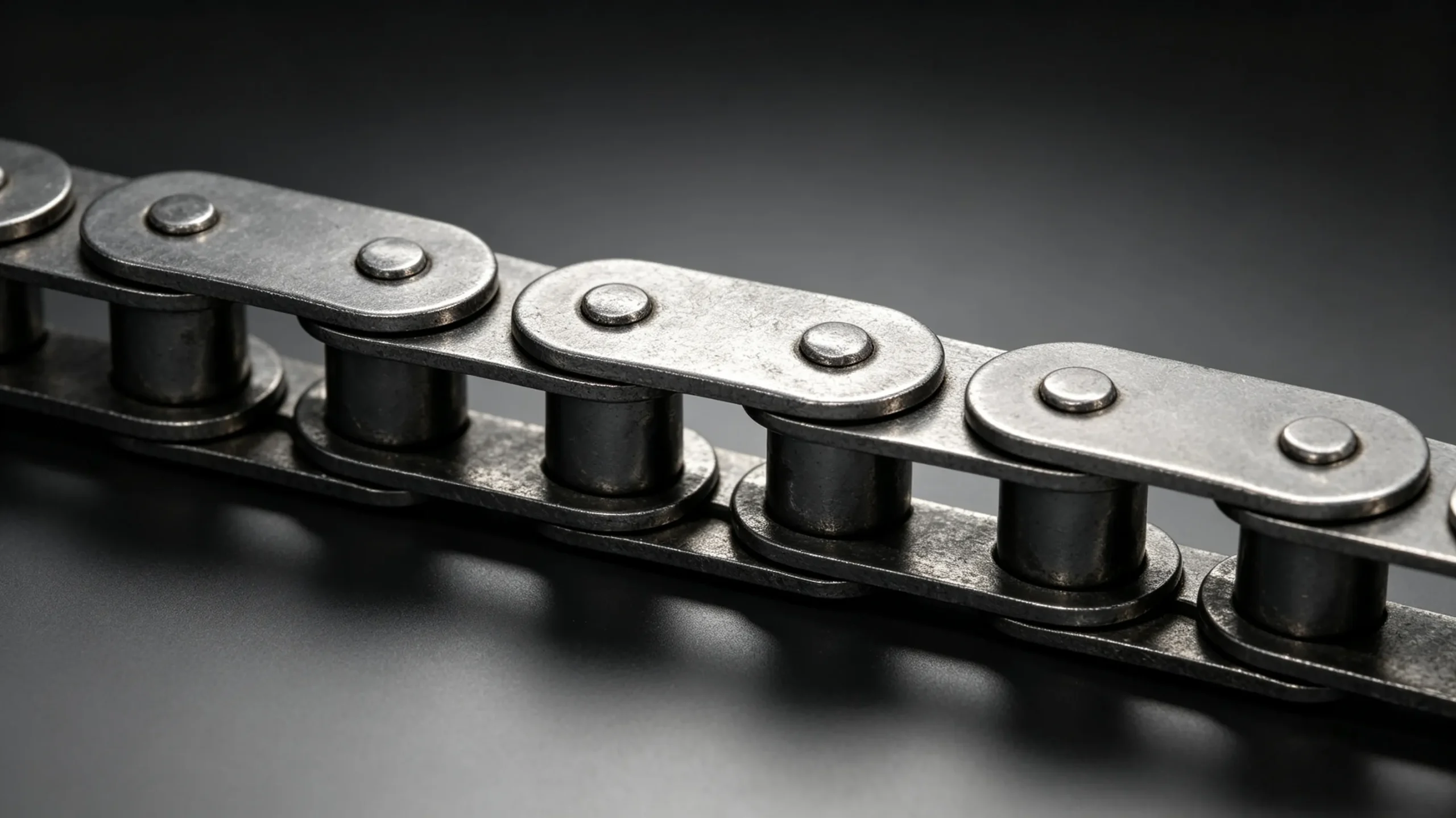
Standard roller chain link plates are formed in a figure-of-eight profile — waisted at the pin holes to save material and reduce weight. This profile concentrates stress at the narrowest section of the plate and limits the plate’s contribution to overall fatigue strength. Straight side plate chains, sometimes called C-type chains, use plates with uniform width from end to end, eliminating the stress concentration at the waist. The result is a chain that is somewhat heavier per metre but carries a notably higher tensile strength and fatigue rating at the same pitch — and is more resistant to the elongation that occurs when chains are operated at high loads over long service cycles.
A Series Roller Chains with Straight Side Plates follow ANSI pitch conventions and are dimensionally compatible with standard ANSI sprockets. The roller diameter and pitch remain identical to standard A series chains — the only dimensional change is the plate profile and thickness, which are both increased. This means straight side plate chains can be retrofitted directly to existing A series drives as an upgrade where the standard chain is reaching the limit of its fatigue life.
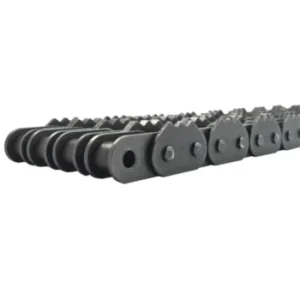
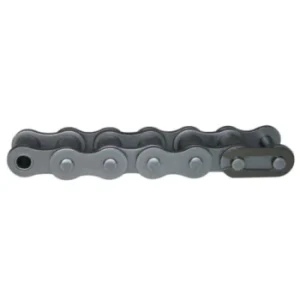
ANSI A Series C-Type — straight side plate construction for conveyor and process line applications
Typical Applications and Industries
The industries that most consistently specify straight side plate A series chains are those running continuous conveying cycles at moderate speeds with heavy or variable loads — conditions that accumulate fatigue damage quickly in standard plate chain.
🍾
Bottling and Beverage Lines
Long conveyor runs at moderate speed carrying glass and PET bottles loaded into carriers or running directly on chain — exactly the kind of continuous, steady loading that favours straight plate fatigue resistance over standard plate designs.
🐟
Seafood and Fish Processing
Salt water and cleaning chemicals attack bare carbon steel rapidly. Straight side plate chains in stainless steel or nickel-plated versions maintain structural integrity in wash-down environments while providing the fatigue reserve needed for continuous daily operation.
🍊
Citrus and Produce Processing
Juice plant conveyors handle high throughput with frequent cleaning cycles. The C-type plate profile distributes load evenly across the plate width, reducing the localised wear that develops at the waisted section of standard plates under persistent side loading from product crowding.
📦
Packaging and Case Packing
Packaging line conveyors often carry chains that are loaded and unloaded thousands of times per hour. Straight plate chains tolerate this high-cycle, variable-amplitude loading significantly better than standard chains over a production season.
⛽
Refineries and Chemical Plants
High-temperature process environments accelerate the creep and fatigue of standard chains. Straight plate chain’s greater plate cross-section provides better resistance to the thermally-driven elongation that shortens chain life in elevated-temperature conveying applications.
🚗
Car Wash Systems
Constant immersion in detergent solution combined with the mechanical drag of vehicles being conveyed through the wash creates a demanding combination of chemical attack and sustained tension — straight plate chains in corrosion-resistant materials handle this better than standard types.
Specifications — A Series with Straight Side Plates
Dimensions follow standard ANSI A series pitch, roller diameter, and inner width. The difference from standard chain lies in the plate depth (h2) and plate thickness (t), which are increased to provide the greater cross-sectional area that delivers higher tensile and fatigue ratings.
| ANSI No. |
Pitch P (mm) |
Roller Ø (mm) |
Inner Width (mm) |
Pin Ø (mm) |
Plate Depth h2 (mm) |
Plate Thick. t (mm) |
Trans. Pitch (mm) |
Q min (kN) |
Weight (kg/m) |
| 40C |
12.700 |
7.95 |
7.85 |
3.96 |
12.00 |
2.03 |
14.38 |
16.9 |
0.72 |
| 50C |
15.875 |
10.16 |
9.40 |
5.08 |
15.09 |
2.42 |
18.11 |
26.7 |
1.08 |
| 60C |
19.050 |
11.91 |
12.57 |
5.94 |
18.00 |
3.25 |
22.78 |
37.7 |
1.84 |
| 80C |
25.400 |
15.88 |
15.75 |
7.92 |
24.00 |
4.00 |
29.29 |
66.7 |
3.10 |
| 100C |
31.750 |
19.05 |
18.90 |
9.53 |
30.00 |
4.80 |
35.76 |
105.0 |
4.63 |
| 120C |
38.100 |
22.23 |
25.22 |
11.10 |
35.70 |
5.60 |
45.44 |
150.3 |
6.93 |
Manufacturing Quality and Material Selection
Ever-Power’s straight side plate A series chains are manufactured from alloy steel selected specifically for the balance of tensile strength and fatigue resistance required in continuous-duty conveying applications. The deep-waisted plate of standard chain is replaced by a straight-profile plate machined to consistent width tolerance across its full length — any deviation in plate width creates uneven load sharing between the two plates of each link and reduces the effective tensile rating below specification.
Induction hardening of pins and bushings follows the same process used for standard A series chains, ensuring that the improved plate design is not undermined by premature pin-bushing wear. Pre-stretching is available as an option, removing the initial seating elongation that occurs in all new chains during the first hours of loaded operation. For applications where chain tension is measured and adjusted infrequently, pre-stretched chains maintain their working length more consistently and require fewer re-tensioning interventions over the chain’s service life.
Components and Matching Parts We Carry
◆
Standard ANSI Sprockets (C-Type Compatible)
Straight side plate chains run on standard ANSI A series sprockets — no special tooth form required. We supply matched sprockets from 9 to 114 teeth in carbon and hardened steel.
◆
Cotter-Pin Connecting Links
Heavier-duty cotter-pin connecting links recommended for straight side plate chain applications, which are typically higher-load than standard chain applications. Available in all ANSI C-type pitch sizes.
◆
Side Plate Repair Links
Individual inner and outer link assemblies for field repair of damaged sections without full chain replacement. Maintain the same plate profile and specification as the main chain.
◆
Stainless Steel Version
316L stainless steel straight side plate chains available for food processing wash-down environments. Full FDA-compliant material specifications available on request.
Customer Reviews
★★★★★
“We switched from standard 60-1 to 60C straight side plate on our bottle conveyor head drives three years ago after repeated chain failures during peak production. The improvement in service life has been significant — we went from replacing chains every 8 months to 22 months on the current set with no sign of elongation issues.”
G
Greg Donnelly
Engineering Manager — Adelaide Bottling Co.
★★★★★
“Specified 80C in corrosion-resistant treatment for our process line conveyors. The technical support team was helpful in selecting the right corrosion treatment for our specific wash-down chemical composition. Chains have been performing exactly as specified — no corrosion at plate surfaces after 14 months of daily CIP cycles.”
C
Claudia Reinhartz
Process Engineer — Rheinland Chemical GmbH
★★★★★
“Running 50C in stainless steel on our shrimp processing lines. We chose this supplier after checking material certificates from three sources — these were the only ones that provided full heat number traceability on the stainless plates. No rust issues and the chain is still at nominal pitch after 18 months.”
N
Nelson Patel
Plant Manager — Mumbai Seafood Processing
Frequently Asked Questions
Are straight side plate chains the same as C-type or G-type chains?+
Yes — the terms C-type (used by Renold and some European manufacturers), G-type (used by Tsubaki), and ‘straight side plate’ all refer to the same configuration: ANSI or ISO pitch chain with uniform-width link plates in place of the standard figure-eight profile. The key property is greater plate cross-section for higher tensile and fatigue ratings.
Can I fit straight side plate chains on my existing standard A series sprockets?+
Yes — the pitch and roller diameter of straight side plate A series chains are identical to standard A series. They run on the same sprockets without modification. The only dimensional change is the plate profile, which does not affect sprocket engagement.
Why would I choose straight side plate chain over heavy series chain?+
Heavy series chain increases both plate thickness and pin diameter (and therefore roller diameter too, since it changes), which means it requires a different sprocket. Straight side plate chain provides a tensile and fatigue upgrade with the same pin and roller dimensions as standard chain — giving you a stronger chain without the sprocket replacement cost.
Is stainless steel straight side plate chain available for food applications?+
Yes — we produce A series straight side plate chains in 304 and 316L stainless steel. 316L is recommended for saltwater seafood processing and environments with chloride-based cleaning chemicals. Material certificates and compliance documentation for food industry audits are provided with every stainless steel order.
What is the service life improvement over standard A series chain in conveying applications?+
In continuous-duty conveying applications operating at 60–80% of rated load, straight side plate chains typically achieve 1.5–2× the service life of equivalent standard A series chains before reaching the 3% elongation limit. The improvement is more pronounced in applications with frequent load variations or periodic overloads.
Get in Touch
Ready to Place Your Order?
Send us your specifications and annual volume. Standard enquiries receive a full technical quotation within 2 business days.
For information on why chain type matters in demanding conveyors, see our article on why heavy duty roller chain outperforms standard chain.