
Dust is one of the most damaging environments for standard roller chain. Fine particles of grain dust, mineral fines, cement powder, and silica sand penetrate the pin-bushing clearance and act as an abrasive cutting medium between two hardened steel surfaces that are already under high contact pressure. In these conditions, even well-lubricated standard chain can reach the 3 percent elongation replacement threshold in a fraction of its normal service life. O-ring roller chain addresses this problem at its root by sealing the pin-bushing interface against external particle ingress — not by filtering the air around the chain, but by eliminating the pathway through which particles reach the contact surface in the first place.
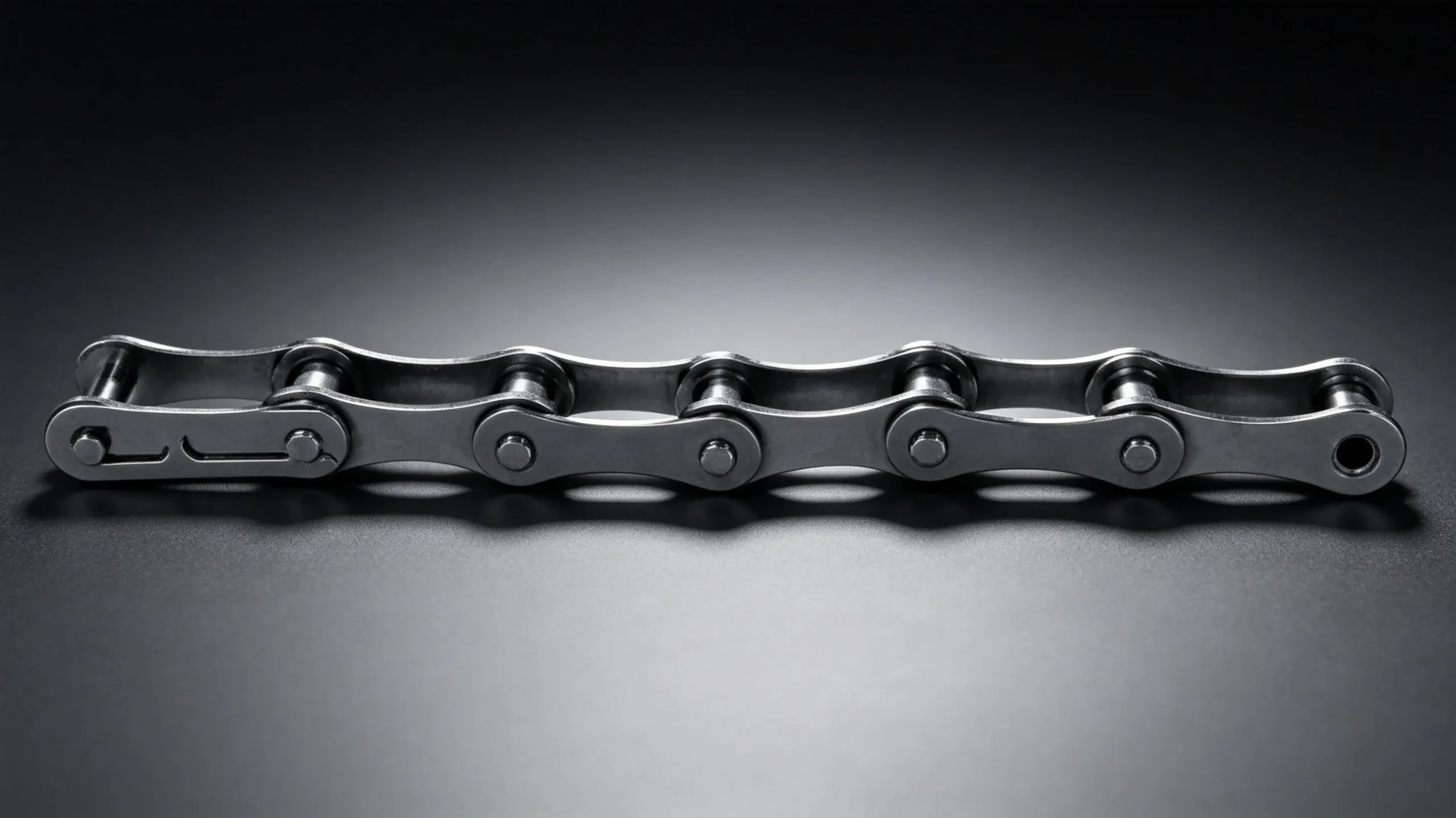
Why Dust Destroys Standard Roller Chain So Quickly
The pin-bushing interface in a standard roller chain has a radial clearance of approximately 0.02 to 0.05 mm — narrow enough to retain an oil film under normal conditions, but not narrow enough to exclude fine dust particles. Silica (quartz) particles found in agricultural dust and mineral processing environments range from 1 to 100 micrometres in diameter. Particles in the 5 to 50 micrometre range are particularly damaging: large enough to generate abrasive contact between pin and bushing surfaces, small enough to pass freely through the available clearance.
Once inside the pin-bushing clearance, these particles are trapped by the oil film and subjected to the full Hertz contact pressure at the pin-bushing interface — in a loaded drive this can exceed 100 MPa. At this pressure, even relatively soft particles are pressed into both contact surfaces, acting as a cutting medium that removes material from the hardened steel on every articulation cycle. This three-body abrasive wear mechanism is additive to the normal adhesive wear from the pin-bushing sliding contact, and in heavily contaminated environments it can dominate the total wear rate, reducing chain life by 60 to 80 percent compared to operation in clean conditions.
How O-Ring Chain Seals the Critical Interface
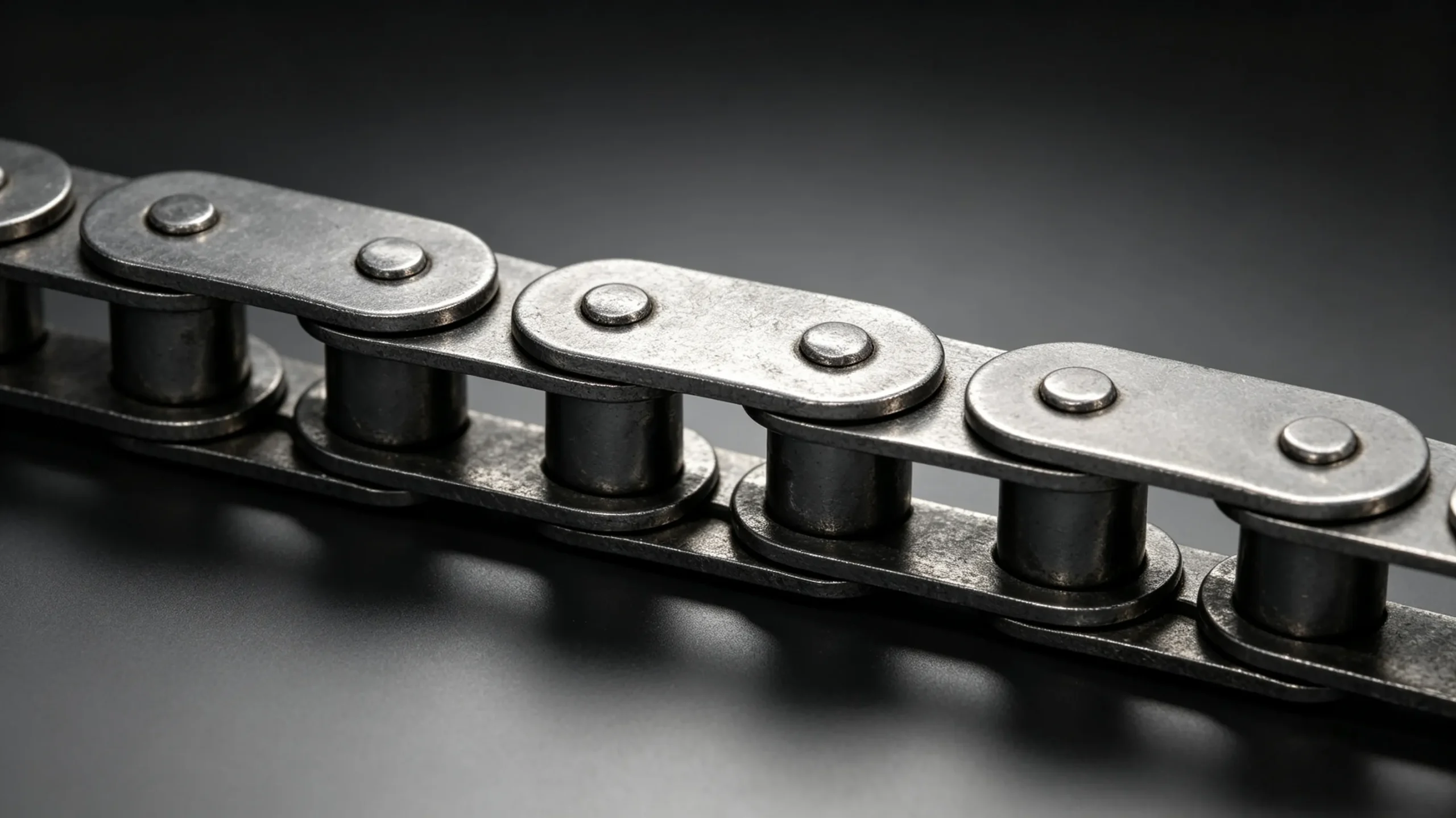
An O-ring roller chain addresses dust contamination by fitting four rubber O-rings at each pin-bushing joint — one between each link plate face and the adjacent bushing or roller end face. The O-rings are compressed during chain assembly, forming a continuous seal around the circumference of each pin end. Before assembly, the pin-bushing annulus is packed with high-viscosity grease, which is retained inside the sealed joint for the life of the chain.
This seal works in two directions simultaneously: it prevents external dust particles from reaching the pin-bushing contact surface, and it retains the pre-packed grease lubricant inside the joint without it being washed or thrown away during operation. The result is a pin-bushing interface that operates in a controlled, permanently lubricated, contamination-free environment regardless of how dusty the external conditions are. Field comparisons in grain handling and cement processing environments consistently show O-ring roller chain outlasting standard chain by a factor of 2 to 5 in terms of elongation life.
Dusty Industries Where O-Ring Chain Provides the Greatest Benefit
Grain Handling and Storage
Augers, bucket elevators, and conveyor drives in grain storage facilities operate in continuous fine dust from grain movement. O-ring chain achieves 2–4x the life of standard chain in these environments.
Cement and Concrete Production
Cement dust is highly abrasive and attacks unprotected chain joints rapidly. O-ring chain is standard specification for many cement plant conveyor and mixer drives.
Flour Milling
Flour dust is finer than grain dust and penetrates standard chain joints easily. O-ring chain in the conveyors and elevators of flour mills achieves dramatically extended replacement intervals.
Coal and Mineral Processing
Coal dust, iron ore fines, and mineral processing dust all introduce abrasive particles to chain joints. O-ring chain is widely specified for conveyor drives in these environments.
Agricultural Field Operations
Combine harvesters and balers generate dust from crop handling. Main drives on high-value harvesting equipment benefit from O-ring chain protection during the dusty conditions of grain harvest.
Quarry and Crushing Operations
Stone dust from crushing and screening operations is highly abrasive. O-ring chain on conveyor and screening equipment drives reduces replacement frequency significantly.
O-Ring Chain vs Self-Lubricating Chain in Dusty Environments
Both O-ring roller chain and self-lubricating roller chain with sintered bushing address the dust contamination problem, but through different mechanisms. O-ring chain physically seals the joint against particle ingress — an active barrier approach. Self-lubricating chain provides a continuous internal oil supply from the sintered bushing that can flush particles from the contact zone — a dilution approach rather than a barrier approach.
| Factor | O-Ring Chain | Self-Lubricating Chain |
|---|---|---|
| Contamination mechanism | Physical seal — particles cannot enter joint | No seal — relies on oil flush to manage particles |
| Protection in very heavy dust | Excellent — seal physically excludes particles regardless of dust load | Good at moderate dust; less effective in very heavy particle loading |
| External lubrication required | Not required — pre-packed grease lasts chain life | Not required — sintered bushing provides lubrication |
| Speed limit | ~3–4 m/s (O-ring friction limit) | Higher — up to 5+ m/s depending on pitch |
| Initial cost vs standard chain | 30–80% premium | 40–80% premium |
| Food-grade versions available | Not typically — O-ring compound not food grade | Yes — food-grade oil impregnation available |
| Best for dust type | All dust types including abrasive minerals | Light to moderate grain and industrial dust |
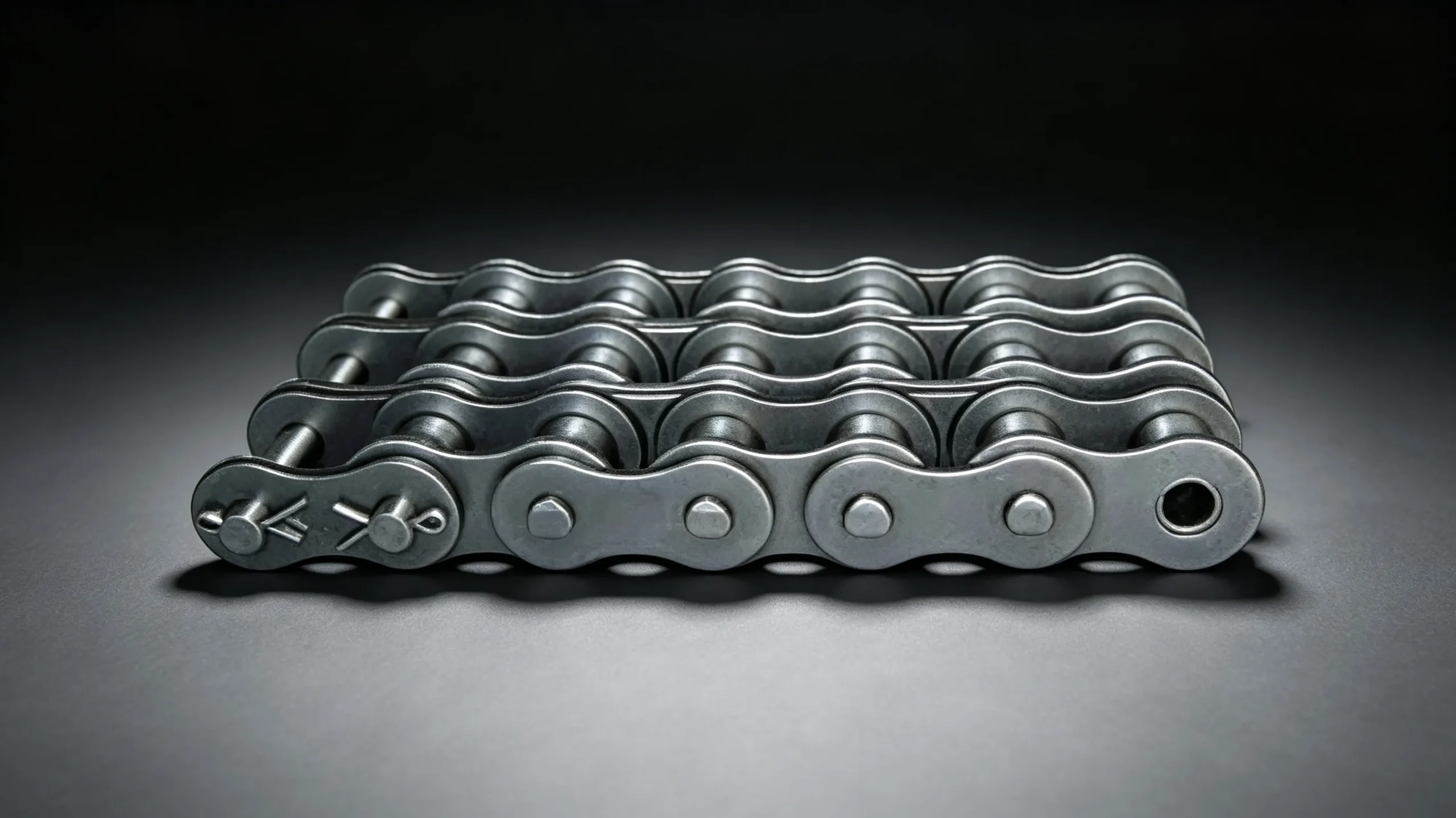
Limitations to Account for When Specifying O-Ring Chain
The rubber O-ring seals in O-ring roller chain introduce articulation friction that reduces mechanical efficiency by 3 to 7 percent compared to well-lubricated standard chain. This efficiency reduction generates heat at the O-ring contact faces during operation, and at chain speeds above approximately 3 to 4 m/s this heat accumulation can accelerate O-ring elastomer degradation. For dusty applications where chain speed exceeds 3 m/s, self-lubricating chain is generally the better specification — it does not have the speed limitation of O-ring seals.
O-ring chain is also incompatible with solvent-based cleaning. If the chain must be cleaned with a degreaser or solvent — as in some maintenance procedures that remove accumulated dust and grease from the outer chain surface — the solvent can penetrate the O-ring seal and wash the grease from inside the joint, defeating the purpose of the sealed design. Clean O-ring chain by wiping with a dry cloth or compressed air rather than solvent washing.
Measuring Elongation on O-Ring Chain
The elongation measurement procedure for O-ring roller chain is identical to standard chain — multi-link span measurement with a vernier caliper across 20 to 30 links, comparing the measured length to the nominal pitch multiplied by the link count. The O-ring seals do not affect the pin-centre-to-pin-centre dimension and do not interfere with measurement. The 3 percent elongation replacement threshold applies to O-ring chain in the same way as standard chain.
In practice, O-ring chain in dusty environments often reaches the elongation threshold from wear within the sealed joint (gradual normal wear of the pre-packed grease film) rather than from external contamination — which is the desired outcome. The chain wears at its designed rate rather than the accelerated rate caused by abrasive contamination. If O-ring chain in a dusty environment is reaching the replacement threshold faster than expected, check whether the O-ring seals are intact at the failed joints — a damaged or missing seal reintroduces the contamination vulnerability at that location.
EverPower Roller Chains Australia supplies O-ring roller chain in ANSI and ISO series for grain handling, mining, cement processing, and other dusty industrial applications. Contact our Sydney team for chain specifications and pricing for your application.
+61 2 9708 3322 | [email protected] | 27 Harley Crescent, Condell Park NSW 2201