
Agricultural machinery is one of the most chain-intensive environments in any industry. A single combine harvester contains more individual chain drives than most manufacturing machines, and those drives operate under conditions — variable loading, abrasive dust, outdoor storage, seasonal time pressure — that make agricultural roller chain among the most demanding specifications in the industrial chain market. Mapping where roller chains are actually used across the main categories of agricultural machinery — harvesters, balers, tractors, and grain handling equipment — provides a practical reference for maintenance engineers, parts managers, and operators who need to understand their chain inventory requirements.
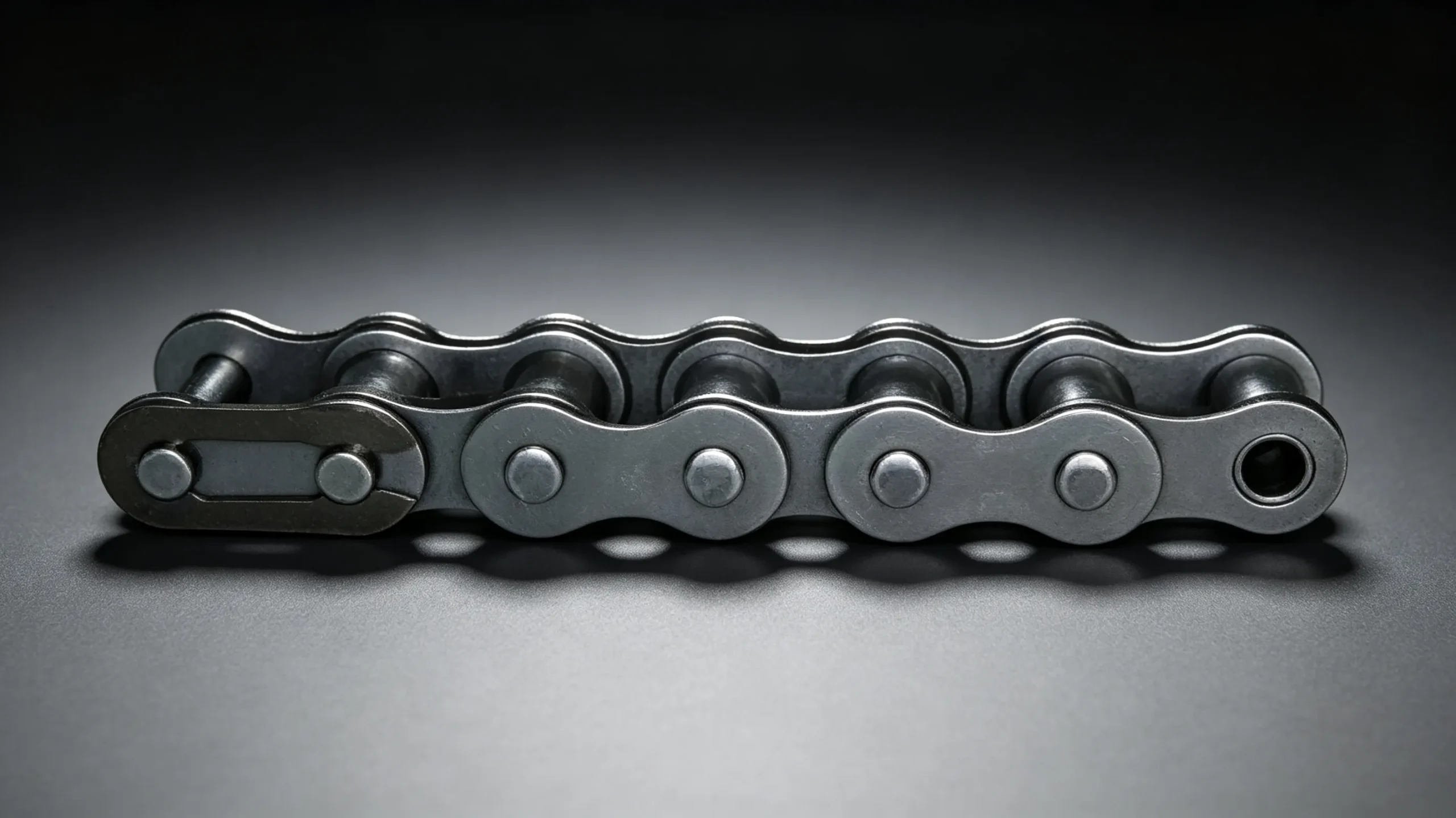
Combine Harvesters: The Most Chain-Intensive Machine
A modern combine harvester is essentially a chain-driven factory on wheels. The number of individual roller chain drives in a full-size combine ranges from 12 to over 20, each with a specific pitch size, load rating, and replacement interval. The main drives and their typical chain specifications in ANSI-standard machines are:
| Drive Location | Function | Typical ANSI Chain | Load Character |
|---|---|---|---|
| Feeder house main drive | Transmits power to feeder elevator and header | ANSI 60 or ANSI 80 simplex/duplex | Variable — highest shock peaks from crop density variation |
| Header drive | Powers cutterbar, reel, and auger | ANSI 50–60 simplex | Moderate variable — depends on crop conditions |
| Threshing drum pre-drive | Drives threshing cylinder from feeder shaft | ANSI 80 simplex or duplex | High load — moderate variation |
| Main grain elevator | Elevates threshed grain to grain tank | ANSI 60 simplex | Moderate steady — grain weight relatively consistent |
| Returns elevator | Returns unthreshed material to cylinder | ANSI 60 simplex | Moderate — variable with crop throughput |
| Straw walker drives | Oscillate straw walkers to separate grain | ANSI 50–60 simplex | Cyclic oscillation — fatigue-dominated loading |
| Cleaning shoe and chaffer | Oscillates cleaning system components | ANSI 40–50 simplex | Cyclic — lower amplitude than straw walker |
| Grain tank unloading auger | Drives unloading auger when emptying grain tank | ANSI 60 simplex | Intermittent high load when engaged |
| Engine to gearbox drive | Main power transmission from engine output | ANSI 80 duplex or larger | High steady load — primary power chain |
Hay and Straw Balers: High-Fatigue Drives
Baling machinery generates some of the most fatigue-demanding roller chain drive conditions in agriculture. Square balers, in particular, use a reciprocating plunger mechanism that cycles between near-zero tension on the retraction stroke and high compressive load on the compression stroke — creating high-amplitude cyclic loading at frequencies of one to two cycles per second during normal baling operation.
The plunger main drive chain in a square baler is typically ANSI 80 simplex or duplex, with heavy duty roller chain or sawtooth plate roller chain specified by operators who have experienced repeated fatigue failures with standard chain. Round balers use chain drives for the feed roller assembly, the bale formation belt tension system, and the bale wrapping mechanism — typically ANSI 50 to ANSI 60 simplex in these lighter-duty secondary drives.
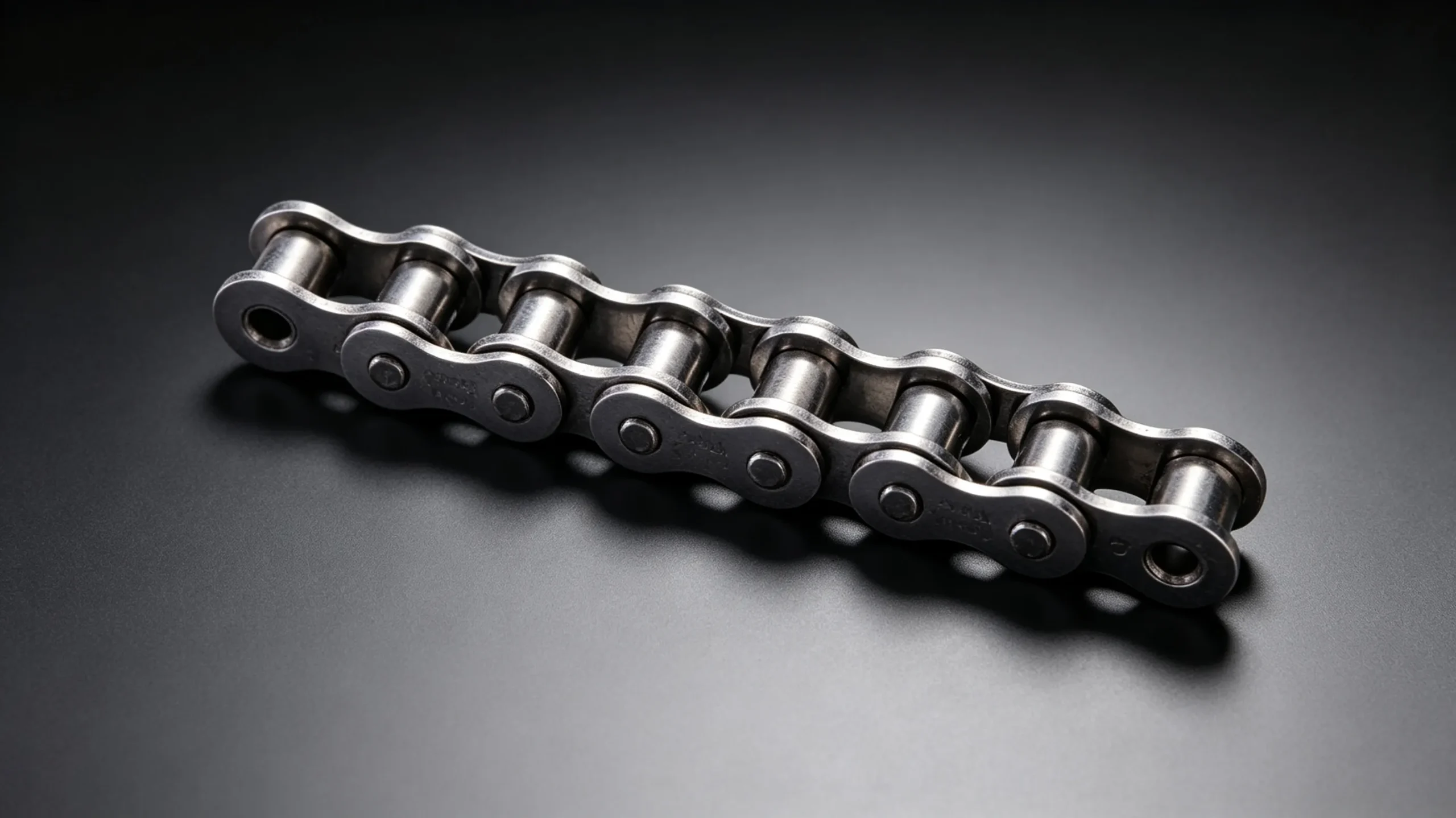
Grain Augers and Elevators: High-Wear Conveyor Chain
Grain handling equipment — farm-scale grain augers, grain elevators, and transfer conveyors — uses roller chain in the drive systems that power the auger flight or elevator bucket mechanism. The loading is relatively steady compared to harvesting machinery, but the abrasive grain dust and the outdoor storage conditions between seasons make corrosion and dust contamination significant factors in chain life.
Grain auger drives typically use ANSI 60 simplex chain in the direct drive from the power source (PTO or electric motor) to the auger tube. Bucket elevators use ANSI 80 to ANSI 100 chain on the main head shaft drive, with the elevator chain itself (carrying the buckets) being a specialised attachment chain that runs in the elevator casing rather than a standard roller chain drive.
Tractors and Self-Propelled Equipment
Modern tractors use relatively few external roller chain drives compared to older designs, as most internal drives have moved to gear trains and hydraulic systems. However, PTO (power take-off) driven attachments connected to tractors rely heavily on chain drives: mowers, balers, silage choppers, fertiliser spreaders, and sprayer pump drives all use roller chain to transmit PTO power to the working mechanism. The chain connecting the PTO output shaft to the implement gearbox is typically ANSI 60 simplex for medium-duty implements and ANSI 80 for heavy-duty implements such as wood chippers and large forage harvesters.
Silage and Forage Equipment
Silage harvesting equipment — forage harvesters, silage wagons, and maize choppers — uses roller chain in the pre-cutter drives, chop length adjustment mechanisms, and crop accelerator drives. Forage harvester main drives transmit high power to the cutterhead, with ANSI 80 or ISO 16B duplex chain common on the primary power shaft. The shock loading from sudden engagement with dense crop material makes fatigue resistance critical on these drives, making sawtooth plate roller chain a relevant upgrade consideration for operators running continuous harvesting operations.
Grain Dryers and Storage Systems
Commercial grain storage and drying facilities use roller chain in the conveyor systems that move grain between storage bins, across drying floors, and into transport equipment. These drives are typically steady-state with relatively light loads — ANSI 60 or double pitch C2060H chain is common for flat-bottom bin sweep auger drives and horizontal conveyor systems. The priority for grain storage chain is corrosion resistance for year-round outdoor or semi-outdoor exposure, making regular lubrication with a corrosion-inhibiting oil essential.
Combine Harvester
12–20 chain drives per machine; ANSI 50–80; highest replacement volume in Australian grain farming; feeder house chain most frequently replaced.
Square Hay Baler
3–6 chain drives; ANSI 60–80; plunger drive is highest-fatigue location; sawtooth plate chain recommended for plunger drive.
Round Baler
4–8 chain drives; ANSI 50–60; lower fatigue loading than square baler; feed roller and pickup chains most commonly replaced.
Grain Auger / Elevator
1–3 chain drives; ANSI 60–80; steady load but abrasive dust and outdoor storage accelerate wear; sealed chain types extend replacement intervals.
EverPower Roller Chains Australia stocks agricultural roller chain in ANSI and ISO series for combine harvesters, balers, grain handling equipment, and forage machinery across New South Wales and Australia. Contact our Sydney team for pre-season supply planning and chain specification advice.
+61 2 9708 3322 | [email protected] | 27 Harley Crescent, Condell Park NSW 2201