
Double pitch roller chain occupies an interesting position in the roller chain product family: it uses standard rollers and pins from conventional chain, but the link plates are twice as long, giving a pitch of exactly twice the standard value. This geometry makes double pitch chain dramatically lighter and less expensive per metre than standard chain of the same roller diameter, yet it retains full compatibility with a subset of standard sprockets. For the specific applications where double pitch chain is appropriate, it offers significant cost advantages — and for applications where it is not appropriate, it fails quickly.
The Geometry of Double Pitch Chain
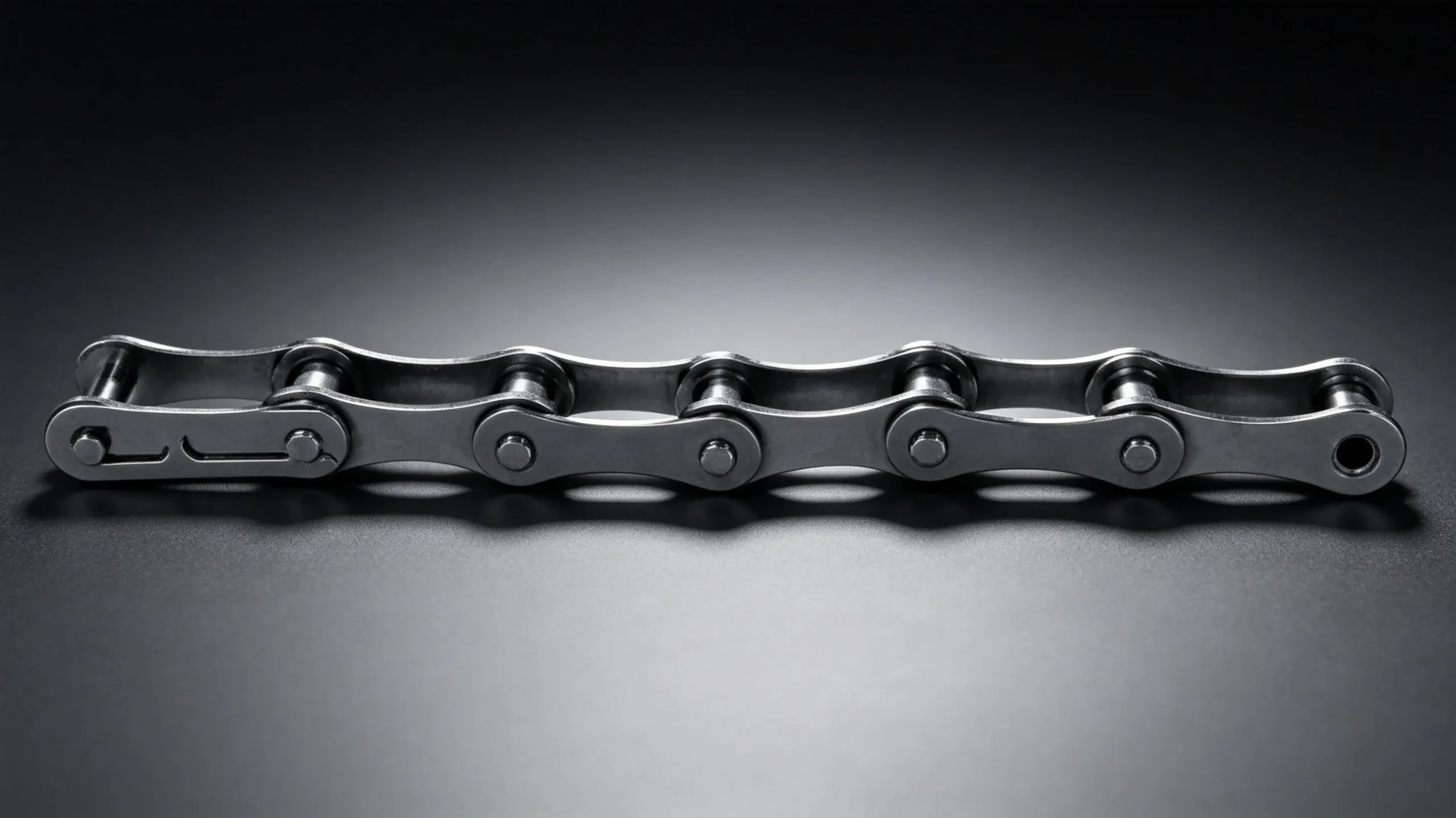
In standard roller chain, each pitch contains one set of inner plates and one set of outer plates. In double pitch chain, each pitch contains the same roller and pin components, but the inner and outer plates are elongated to span twice the standard pitch distance. The result is that rollers appear at every second standard pitch position along the chain length — the chain has the same roller-to-roller contact geometry with the sprocket, but half the number of rollers per unit length compared to standard chain of the same roller size.
ANSI designates double pitch chain with the prefix C2: C2040 is double pitch chain with the same roller diameter as ANSI 40 standard chain, but with a pitch of 25.40 mm (twice the 12.70 mm pitch of ANSI 40). C2050 has the roller diameter of ANSI 50 and a pitch of 31.75 mm. The ISO equivalent uses a similar double-pitch designation. The key dimensional relationships are fixed: pitch = 2 x standard pitch; roller diameter = standard roller diameter; inner width = standard inner width.
| Double Pitch Chain | Pitch (mm) | Roller Dia. (mm) | Standard Chain Equiv. | Weight vs Standard (per metre) |
|---|---|---|---|---|
| C2040 | 25.40 | 7.92 | ANSI 40 roller | ~50% lighter |
| C2042 (LR) | 25.40 | 7.77 | ANSI 40 (small roller) | ~50% lighter |
| C2050 | 31.75 | 10.16 | ANSI 50 roller | ~50% lighter |
| C2052 (LR) | 31.75 | 9.53 | ANSI 50 (small roller) | ~50% lighter |
| C2060H | 38.10 | 11.91 | ANSI 60 roller | ~50% lighter |
| C2080H | 50.80 | 15.88 | ANSI 80 roller | ~50% lighter |
Where Double Pitch Chain Performs Best
Slow-Speed Conveyor Systems
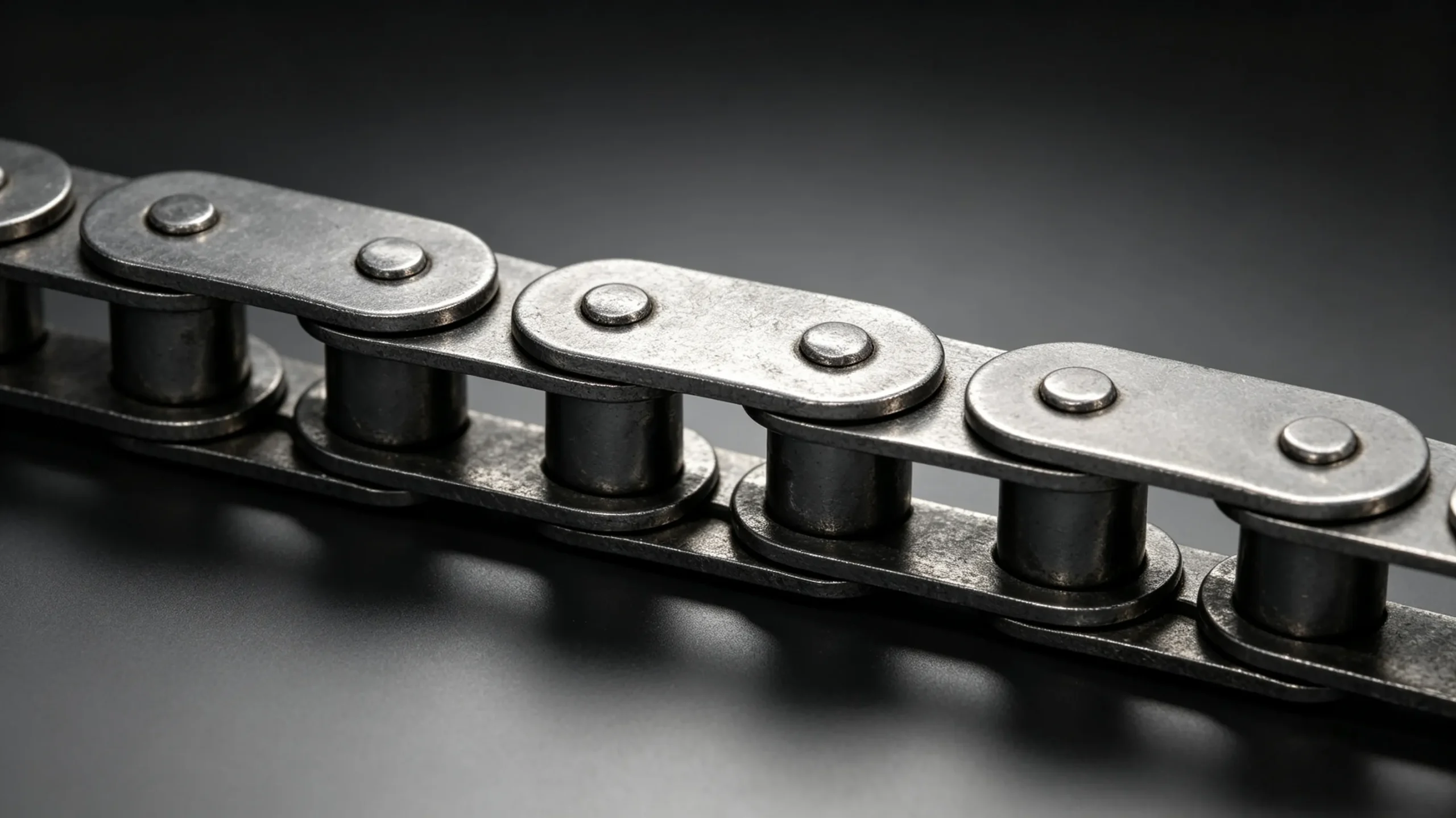
The primary application for double pitch chain is slow-moving conveyor and transfer systems where chain speed is below approximately 1.5 m/s and loads are light to moderate. At low speeds, the increased chordal action produced by the long pitch does not generate significant vibration or dynamic loads. The light weight of double pitch chain reduces the dead load the conveyor structure must support and lowers the tension in the return strand, which reduces bearing loads on the drive and tail shafts.
Agricultural seed and grain handling conveyors, bottle and can transfer lines in food and beverage plants, and assembly line workpiece carriers all commonly use double pitch chain. These applications share the characteristics of moderate loads, low to medium speeds, and long conveyor runs where the per-metre cost difference between double pitch and standard chain is multiplied across dozens or hundreds of metres.
Attachment Chain for Material Handling
Double pitch chain is particularly well suited to attachment chain applications — chains with extended pins, bent plates, or cleated attachments for carrying, positioning, or transferring products. Because the pitch is longer, attachment points are more widely spaced, which suits many handling applications where close attachment spacing would cause products to interfere with each other. The wider pitch also provides more room for designing attachment geometry that clears the chain body on both sides.
Light Duty Drive Applications
For drive applications where the pitch circle of the sprocket must be large for centre distance or speed ratio reasons, double pitch chain can provide a large effective pitch diameter with smaller, lighter sprockets. However, this is only appropriate at low to medium loads — double pitch chain has a lower maximum working load than standard chain of the same roller diameter because the long plate increases the bending stress during articulation across the sprocket.
Large Roller vs Small Roller Double Pitch Chain
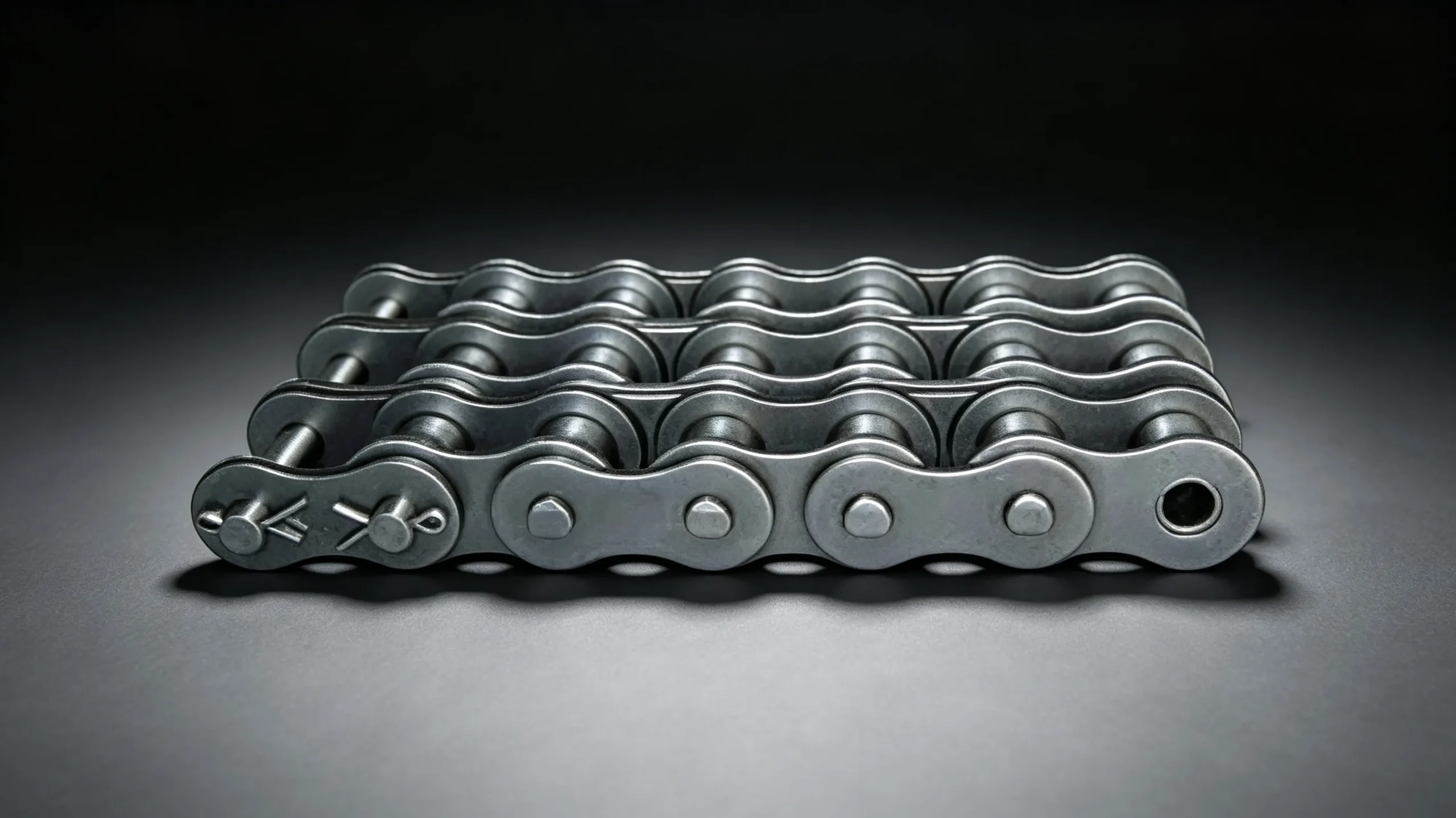
Double pitch chain is available in two roller configurations: large roller (LR suffix omitted — rollers identical to standard chain of the same pitch base number) and small roller (LR suffix added — rollers sized to suit the double pitch sprocket tooth geometry). Large roller double pitch chain can run on standard pitch sprockets when every other tooth is used — that is, a 20-tooth standard pitch sprocket can run C2040 chain by engaging every other tooth, effectively acting as a 10-tooth double pitch sprocket. Small roller double pitch chain requires dedicated double pitch sprockets.
The choice between large and small roller configurations depends on availability of matched components. When retrofitting an existing standard pitch sprocket drive to double pitch chain for cost reduction on a slow conveyor, large roller double pitch chain can be a direct plug-in replacement. When designing a new system from scratch, small roller double pitch chain with dedicated sprockets often provides better engagement geometry and smoother operation.
Load and Speed Limitations: Where Double Pitch Chain Should Not Be Used
Double pitch chain is not appropriate for high-speed drives, shock-load applications, or any drive where chain speed exceeds 1.5 to 2.0 m/s with any significant load. The extended link plate generates greater bending stress during articulation than a standard pitch plate of the same material and thickness, which reduces the fatigue endurance limit. At higher speeds, the larger pitch also produces more pronounced chordal action (polygon effect), generating vibration and dynamic loads that standard pitch chain at the same roller speed would not produce.
Agricultural main drives, mining conveyors, heavy industrial drives, and any application with shock loads or frequent start-stop cycles under full load should all use standard pitch chain. Double pitch chain in these applications will fail prematurely — typically by plate fatigue at the pin holes within a fraction of the service life that standard chain would achieve.
Use double pitch chain for…
Slow conveyors under 1.5 m/s, light to moderate loads, attachment chain with wide spacing, long conveyor runs where per-metre cost matters, and material handling lines with uniform loads.
Do not use double pitch chain for…
High-speed drives, shock-load applications, agricultural main power drives, mining and heavy industrial conveyors, or any application with frequent start-stop under full load.
Cost Benefit Analysis: Double Pitch vs Standard
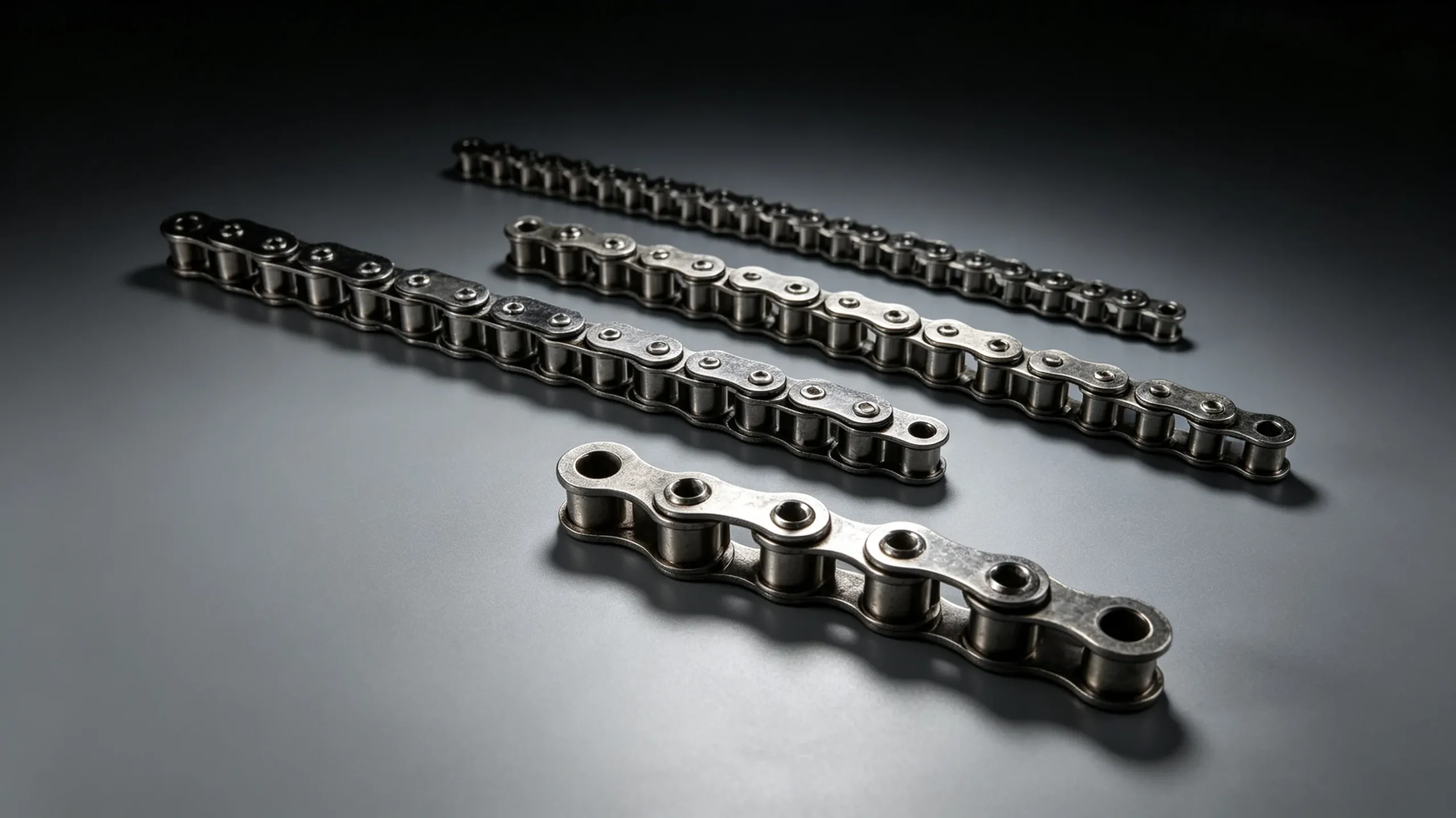
For a 30-metre slow conveyor running at 0.8 m/s with moderate uniform load, the cost difference between double pitch chain and equivalent-roller standard pitch chain is typically 40 to 55 percent per metre of chain length. On a 30-metre conveyor requiring 65 metres of chain including return strand, this difference can amount to several hundred dollars per chain replacement — compounded over multiple replacement cycles, the total saving is substantial.
Against this saving, the engineer must weigh the lower maximum working load of double pitch chain, the need for compatible sprockets, and the critical importance of staying within the speed and load limits. A chain failure mid-shift on a conveyor that should have been specified with standard chain is never economical regardless of the initial procurement saving.
EverPower Roller Chains Australia supplies double pitch roller chain in C2040, C2050, C2060H, and C2080H configurations, with large and small roller variants available to order. Contact our Sydney team to check stock for your conveyor specification and to verify that double pitch chain is suitable for your speed and load requirements.
+61 2 9708 3322 | [email protected] | 27 Harley Crescent, Condell Park NSW 2201