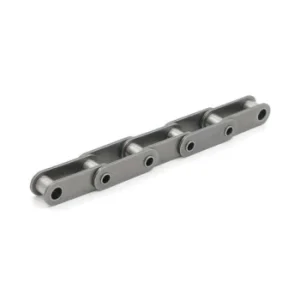
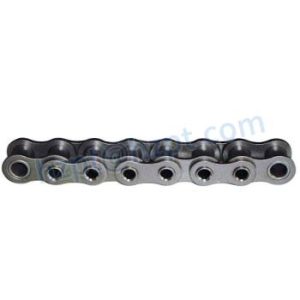
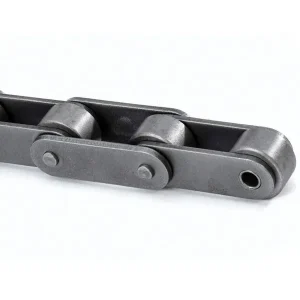
Description
Product Overview and Material Science
Vulcanised elastomer roller chains combine a standard precision roller chain base with a rubber or polyurethane profile chemically bonded and heat-vulcanised to the outer link plates. The vulcanisation process — identical in principle to tyre manufacturing — creates a permanent molecular bond between the elastomer and the steel plate, rather than a mechanical attachment or adhesive joint. This bond does not loosen, peel, or crack under the repeated flexing that occurs every time the chain engages and leaves a sprocket, making the elastomer profile as durable as the chain itself rather than a consumable wear item that must be replaced independently.
The elastomer material selection determines the chain’s performance profile in four key dimensions: hardness (Shore A rating), friction coefficient, temperature resistance, and chemical resistance. Softer elastomers (60–70 Shore A) provide higher grip and better surface conformity but wear faster. Harder elastomers (80–90 Shore A) balance grip with wear resistance and are the standard selection for most industrial conveying applications. Nitrile butadiene rubber (NBR) is the most widely specified material for general industrial use, offering good oil resistance, abrasion resistance, and a service temperature range from -20°C to +80°C. Polyurethane (PU) profiles extend the upper temperature limit and improve resistance to hydrolysis in wet environments.
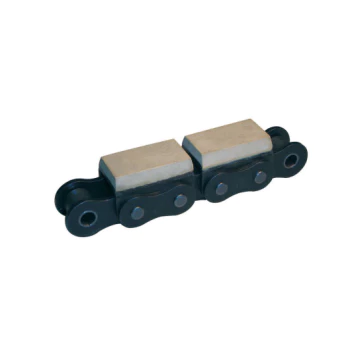
NBR and polyurethane elastomer chain — multiple profile types for delicate goods conveying
Elastomer Material Options and Their Applications
| Material | Shore A | Temp Range | Key Resistance | Best For |
|---|---|---|---|---|
| NBR (Nitrile Rubber) | 80 | −20 to +80°C | Oils, fuels, moderate chemicals | General industrial, bottling, automotive |
| PU (Polyurethane) | 85 | −30 to +90°C | Abrasion, hydrolysis | Wet environments, food processing |
| EPDM (Ethylene Propylene) | 70 | −40 to +120°C | Hot water, steam, UV/ozone | Outdoor, high-temperature conveyors |
| Silicone | 60 | −60 to +200°C | Extreme temperature, FDA compliance | Food contact, pharmaceutical, kiln zones |
| CR (Neoprene) | 75 | −20 to +80°C | Weathering, ozone, flame | Outdoor installations, mild chemical exposure |
Chain Base Specifications
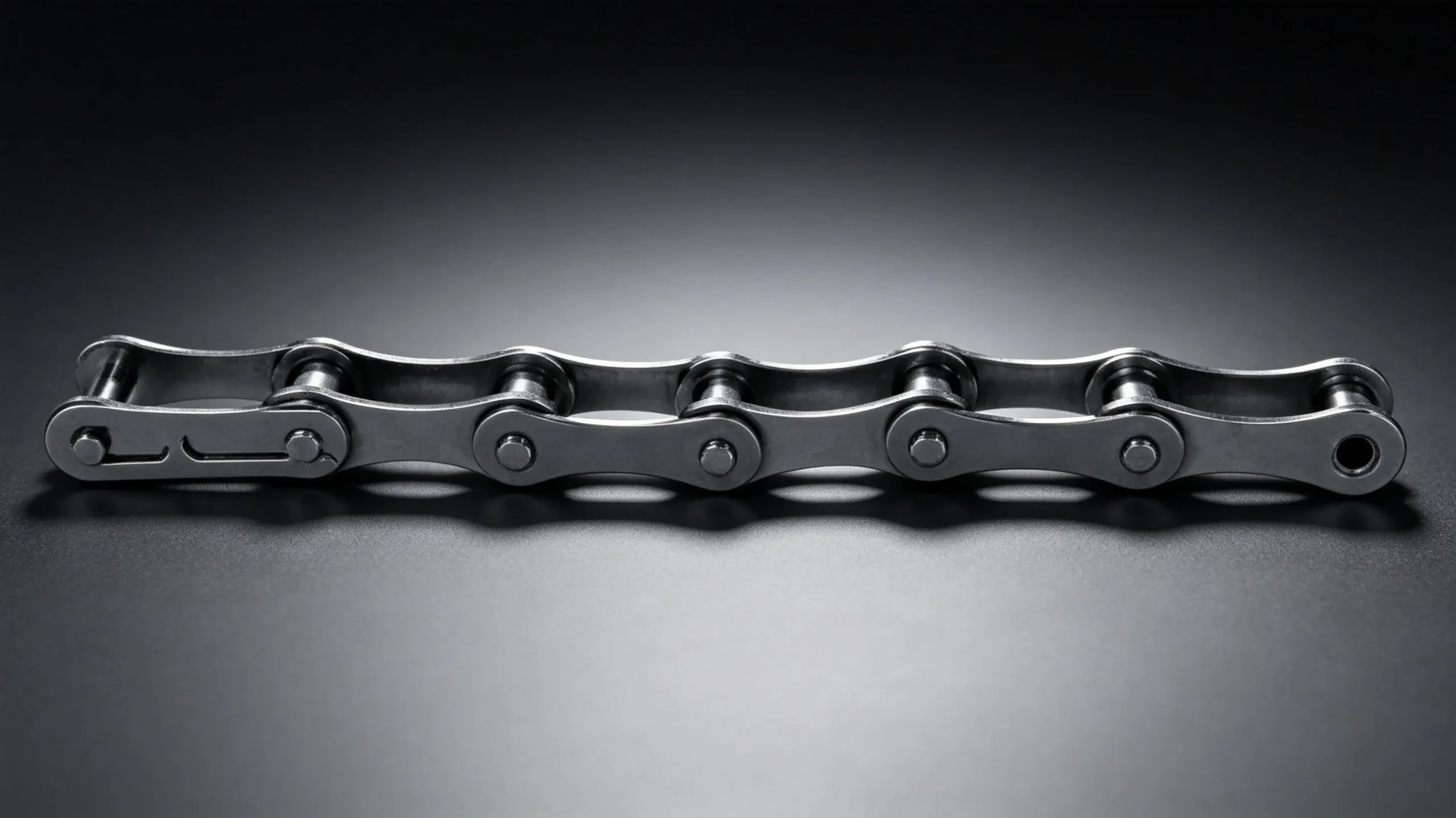
Elastomer profiles are bonded to standard ISO B series and ANSI A series chain bases. The chain base retains its full tensile and fatigue specification — the elastomer layer adds the conveying function without affecting the structural integrity of the chain assembly. The following base chain sizes are available:
| Chain Base No. | Pitch P (mm) | Roller Ø (mm) | Inner Width (mm) | Pin Ø (mm) | Q min (kN) | Profile Width (mm) |
|---|---|---|---|---|---|---|
| 08B-G1 | 12.700 | 8.51 | 7.75 | 4.45 | 18.0 | 26 |
| 08B-G2 | 12.700 | 8.51 | 7.75 | 4.45 | 18.0 | 40 |
| 10B-G1 | 15.875 | 10.16 | 9.65 | 5.08 | 22.2 | 30 |
| 10B-G2 | 15.875 | 10.16 | 9.65 | 5.08 | 22.2 | 46 |
| 12B-G1 | 19.050 | 12.07 | 11.68 | 5.72 | 29.0 | 36 |
| 12B-G2 | 19.050 | 12.07 | 11.68 | 5.72 | 29.0 | 52 |
| 16B-G1 | 25.400 | 15.88 | 17.02 | 8.28 | 60.0 | 46 |
| 16B-G2 | 25.400 | 15.88 | 17.02 | 8.28 | 60.0 | 64 |
ELITE Profile Type
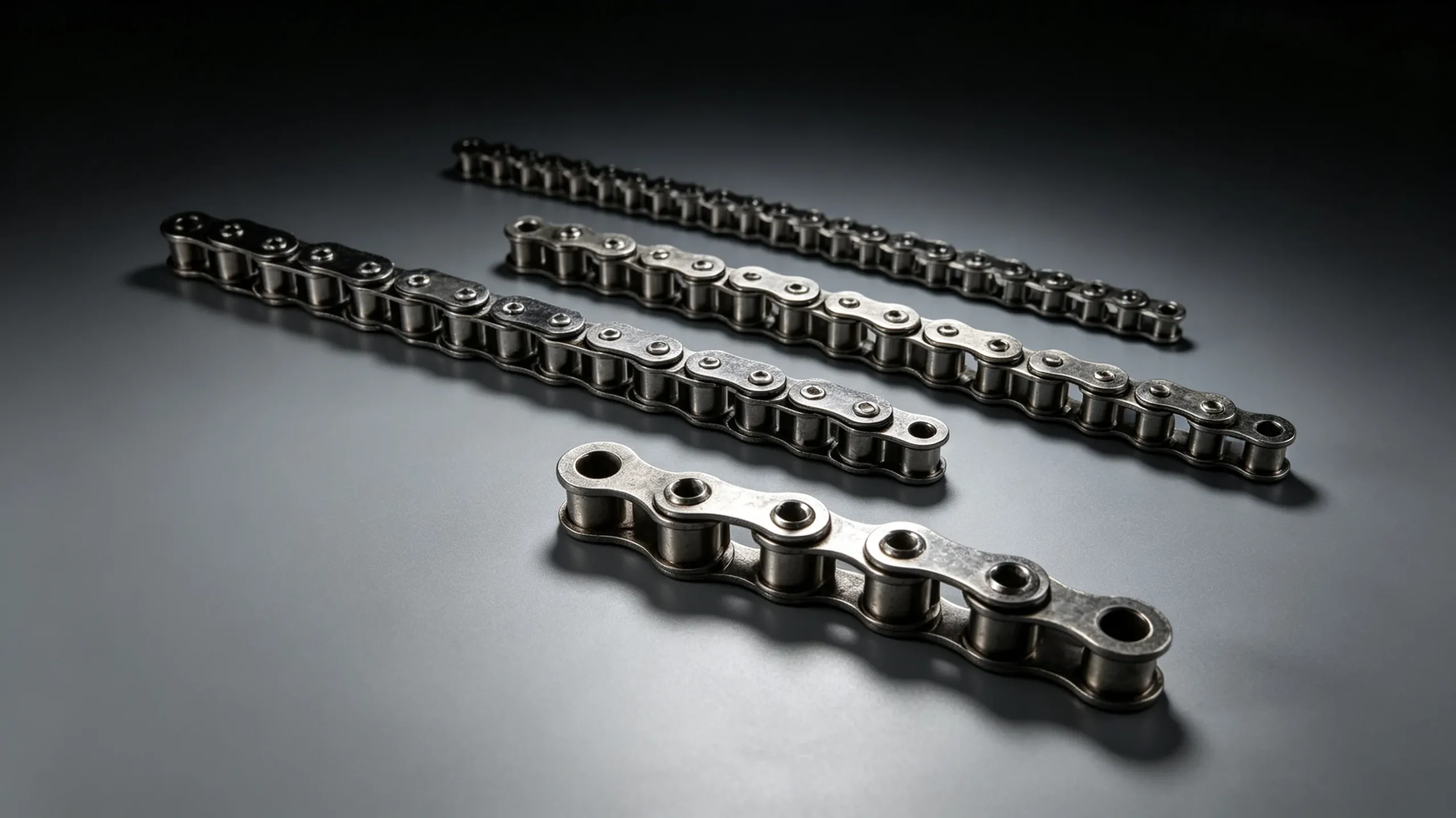
The ELITE profile type represents the highest-specification elastomer chain configuration in our range. ELITE chains use 80 Shore A NBR elastomer with a high-contact-ratio profile geometry — the elastomer surface makes contact with the conveyed product across a wider area per link, distributing contact pressure and reducing the risk of marking on delicate surfaces. Shot-blasted and tapered link plates improve the mechanical bond between the elastomer and the steel substrate, reducing delamination risk in high-cycle applications. Seamless rollers of regular wall thickness ensure consistent engagement with sprocket teeth and reduce the vibration that can cause surface marking on particularly sensitive products such as glass optical components, polished metal parts, and high-gloss packaging.
ELITE chains are recommended for: bottling and can lines where filled containers must be conveyed without label damage; automotive parts lines handling painted or plated components; consumer electronics assembly conveyors; solar panel and flat glass handling systems; and any application where the conveyed product has a finished surface that will be visible to the end customer and cannot tolerate marks from conveyor contact.
Profile Shape Selection
Elastomer chains are produced with several profile cross-sections, each suited to different product geometries and conveyor configurations. The flat-top profile provides a continuous planar surface across the chain width — the standard selection for cartons, trays, and flat-bottomed containers. The V-grip profile has a central raised ridge that locates round containers (bottles, cans, cylinders) positively in the centre of the chain width, preventing lateral rolling on straight conveyor runs. The finger profile uses extended elastomer tabs that project above the chain to act as positive stops for irregular or lightweight items. Custom profiles can be produced from your drawings for proprietary product shapes.
Industries Served
Glass and bottle manufacturing plants use elastomer chains extensively on their annealing lehr outfeed conveyors, where fragile hot glass must be conveyed without contact damage. The elastomer’s cushioning absorbs the micro-impacts that occur at sprocket engagement and at product loading points — impacts that cause surface fractures in glass when conveyed on bare steel chain or hard plastic slat conveyors. Automotive body panel and trim component lines specify polyurethane elastomer chains for their combination of high grip, abrasion resistance, and freedom from the surface contamination that mineral-oil lubricated standard chains can cause on painted surfaces. Food packaging lines handling both primary and secondary packaging benefit from elastomer chains’ combination of positive product control and easy wash-down maintenance.
Components and Matching Parts
Customer Reviews
“We specified 12B-G2 ELITE NBR chains on our lehr outfeed conveyor where surface scratch rates were unacceptable with the previous bare-steel chain. After 14 months of operation, scratch defect rates have fallen by over 90% and we have had no delamination issues with the elastomer bonding. The profile geometry holds its shape well even at the 70°C lehr exit temperature.”
“Ordered 08B-G1 for our high-speed bottle conveyor running at 1,100 bottles per minute. The ELITE flat-top profile gives us the smooth bottle base support we needed without the marking issues we had with standard chain. Reorder process is straightforward and lead time is consistent at 10 days.”
“Used the PU grade for our outdoor carton conveyor where heat and UV exposure were degrading NBR profiles from our previous supplier within 6 months. The PU chains have now been running for 15 months without visible elastomer degradation. Price point is good and the team answered all our technical questions on material compatibility before we ordered.”
Frequently Asked Questions
Get in Touch
Ready to Place Your Order?
Send us your specifications. Standard enquiries receive a full quotation within 2 business days.
See also our articles on why roller chain lubrication is critical for long service life and ANSI roller chain size chart and specifications.