
Mining operations place greater demands on roller chain than almost any other industrial application: continuous 24-hour duty cycles, severe contamination environments, shock loading from variable material flow, high chain speeds on some drives, and the consequence of failure that includes production shutdown, maintenance access in confined or hazardous spaces, and safety implications for personnel working around the equipment. Sourcing the right heavy duty roller chain for mining equipment is not simply a procurement exercise — it is a reliability decision that affects operating costs, safety compliance, and production continuity. This guide covers where and how to source mining-specification chain in Australia.
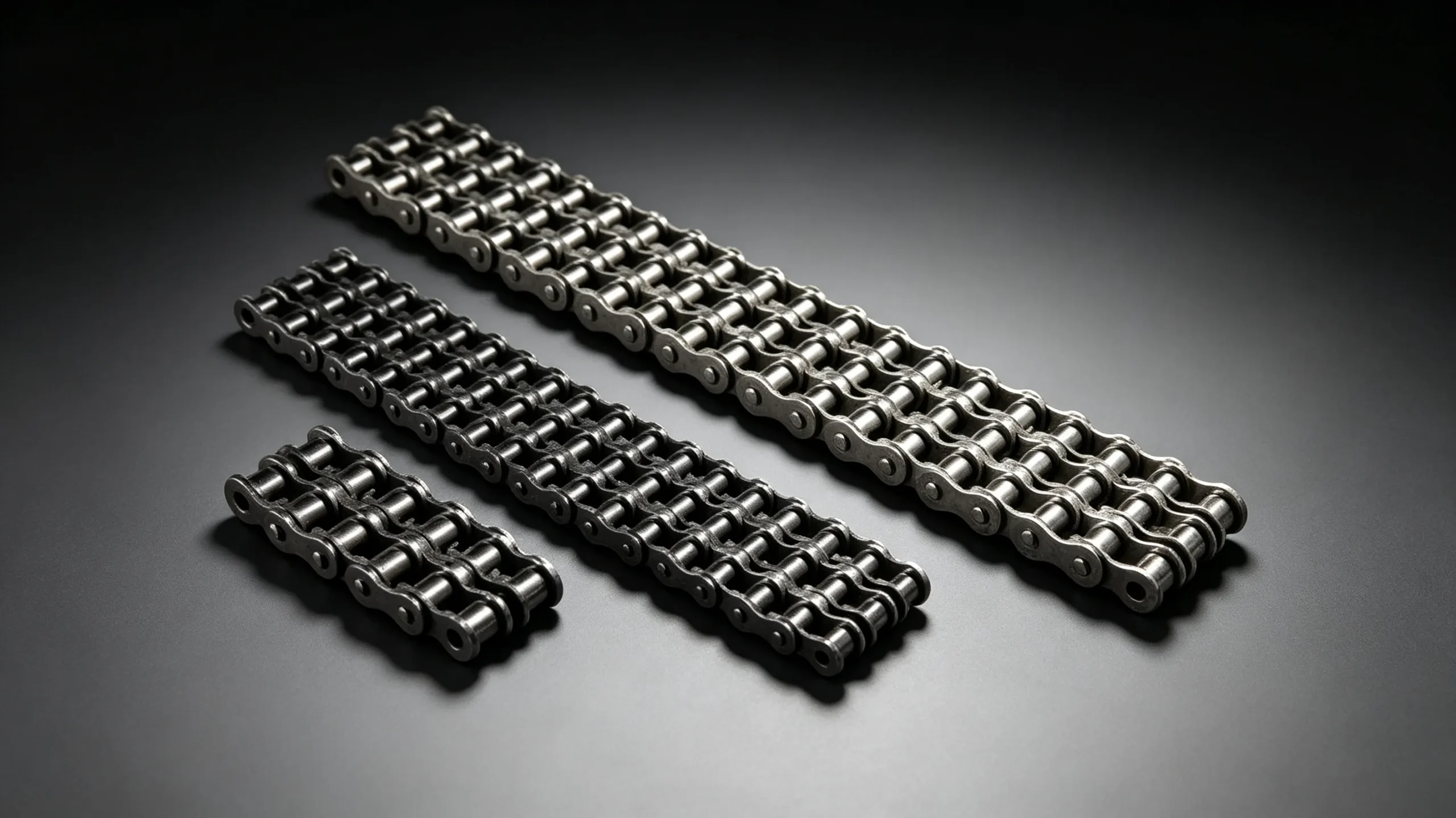
What Mining Applications Actually Require
The term “heavy duty” in mining chain procurement encompasses several distinct specifications that must be matched to the specific drive. Not all mining chain drives require the same specification — a slow-moving sludge scraper chain in a water treatment facility at a mine site requires a different chain than the main conveyor drive in an underground coal mine. Before sourcing, the application must be clearly defined across four key parameters: the drive load (in kN of chain pull), the operating speed (in m/s), the contamination level (dry dust, wet slurry, or clean), and the maintenance access conditions (easy surface access or confined underground space).
| Mining Application | Typical Chain Requirement | Recommended Specification | Notes |
|---|---|---|---|
| Underground coal conveyor drive | ANSI 80H–100H simplex or duplex | Heavy series; O-ring sealed for dust | Check minimum breaking load against start-up tension |
| Surface overland conveyor drive | ANSI 80–120 depending on tonnage | Heavy or standard series; open or sealed | Match chain to drive motor nameplate kW and conveyor speed |
| Vibrating screen drive | ANSI 60H–80H heavy series | Heavy series essential — shock load dominated | Short chain life expected; plan replacement schedule |
| Crusher feeder conveyor | ANSI 80H–100H heavy series | Sawtooth plate or heavy series for fatigue resistance | Impact loading from rock feed generates fatigue-dominated failure |
| Pump and fan drive (auxiliary) | ANSI 40–60 standard series | Standard series adequate for smooth drive | Service factor 1.0 — smooth drive, no shock |
| Material transfer conveyor (surface) | ANSI 60–80 depending on material weight | Standard or heavy series based on load calculation | Assess material density and conveyor speed for load calculation |
Why Generic Industrial Chain Often Fails in Mining
The most common mistake in mining chain procurement is sourcing standard series chain when the application genuinely requires heavy series. The service factor calculation for mining drives typically exceeds 1.5 for most conveyor and screen applications — the threshold above which heavy series chain is required rather than standard series with a higher service factor applied. Standard series chain specified with a 1.7 service factor still uses standard series plate thickness, which does not have the fatigue endurance margin that the heavy series plate provides. The service factor adjusts the design load; it does not change the physical fatigue limit of the chain plate.
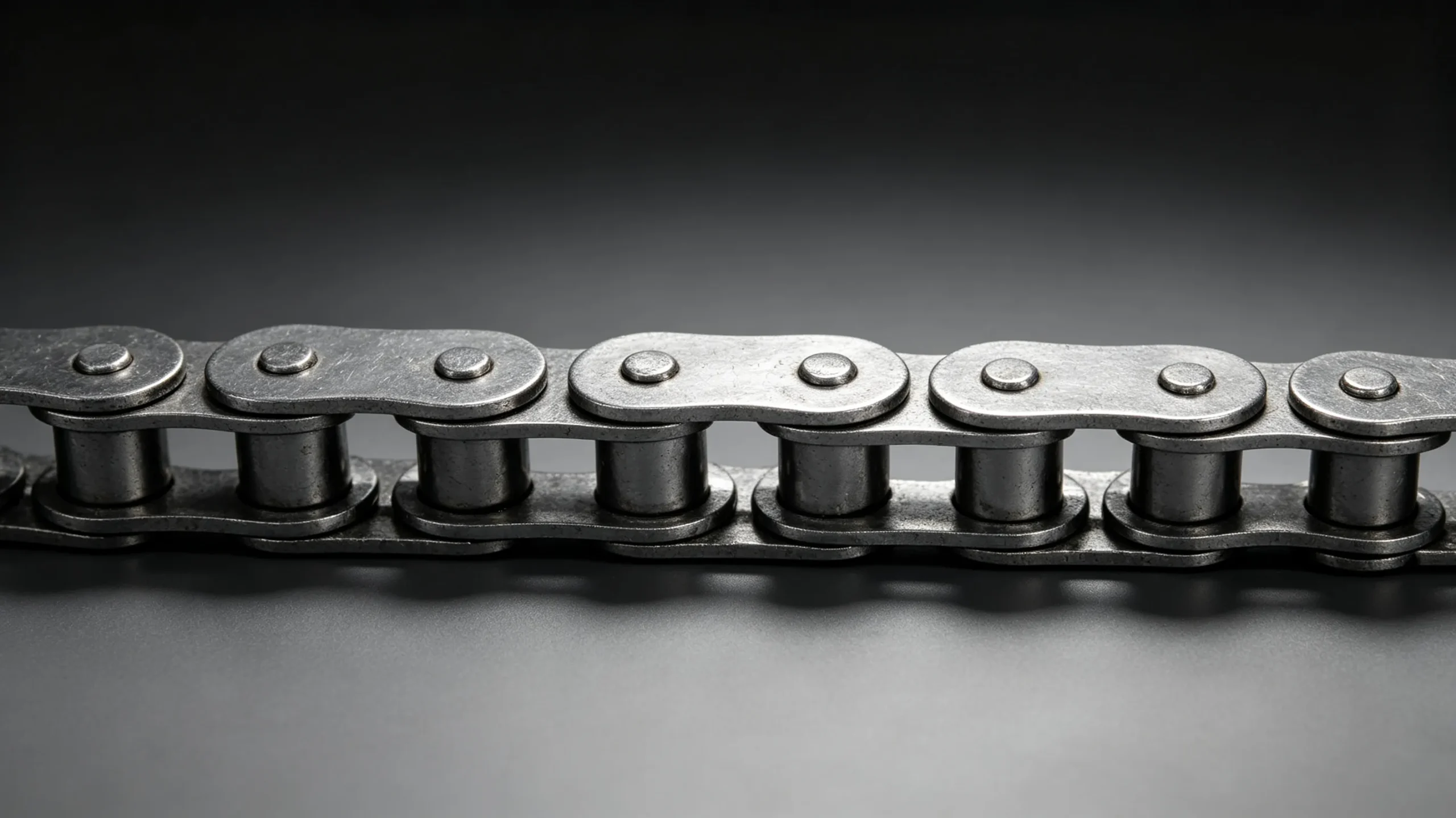
A second common failure is specifying the correct chain type but sourcing from a supplier who cannot provide evidence of compliance to ANSI B29.1 heavy series specifications. Chain marked as “heavy duty” from an unqualified source may have plate thickness within range of standard series rather than heavy series — making it effectively standard series chain with a misleading label. Requiring batch-specific dimensional inspection reports before installation is the correct quality assurance procedure for mining applications where failure consequences are significant.
Where to Source Mining-Specification Chain in Australia
Specialist Roller Chain Importers
Specialist chain importers with direct manufacturer relationships and Australian stock are the primary correct source for heavy duty roller chain in Australian mining applications. They offer: stock of ANSI 80H, 100H, and 120H in Sydney for same-week despatch on urgent requirements; the ability to provide batch-specific quality documentation for MSHA or site safety management plan requirements; technical specification support for chain sizing calculations; and the capacity to source custom configurations (sawtooth plate, sealed chain, attachment chain) through established supplier networks.
OEM Equipment Parts Networks
For chain drives that are part of OEM equipment under warranty — Joy Global, Sandvik, Caterpillar, Komatsu mining equipment — OEM parts networks can supply the correct chain specification with manufacturer part number cross-referencing. The limitation is cost (OEM premium pricing) and availability for non-standard sizes. OEM chain supply is most appropriate when the equipment is still under warranty and the maintenance contract specifies OEM parts.
National Industrial Distributors
National industrial distributors carry standard series ANSI chain in common pitch sizes but often do not stock heavy series or large pitch chain (ANSI 100 and above) in depth. For urgent on-site replacement of a standard-specification chain in common sizes (ANSI 60, 80), a national distributor with a local branch can provide same-day supply when specialist importers cannot deliver fast enough. For the correct specification mining chain, specialist importers remain the primary source.
Quality Requirements for Mining Chain Supply
Mining operations managed under safety management systems, ISO 45001 workplace safety standards, or specific mining industry regulations (NSW Work Health and Safety (Mines and Petroleum Sites) Regulation 2022) require documented evidence that maintenance materials — including roller chain — meet the specification required for the application. This means a supplier who can provide batch-specific documentation: dimensional inspection report confirming ANSI B29.1 heavy series compliance; tensile test report confirming minimum breaking load for the chain number; and material certificate confirming steel grade and heat treatment specification.
EverPower Roller Chains Australia provides this documentation as a standard service for mining account customers. Chains supplied into mining maintenance programmes are accompanied by documentation that forms part of the maintenance record for the equipment — supporting both the safety management system and any regulatory audit of maintenance practices.
Stock Depth and Emergency Supply
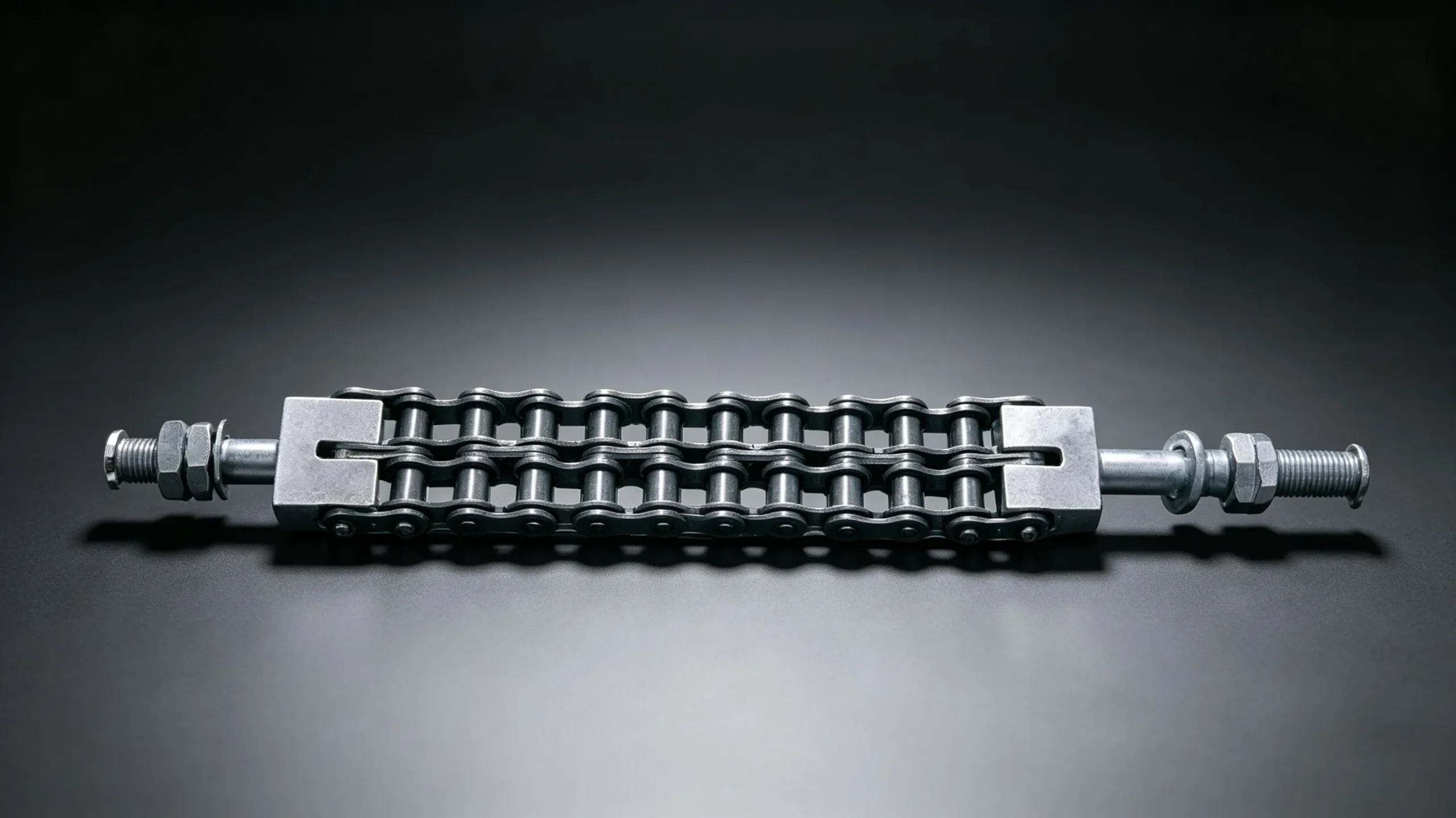
Mining operations cannot always plan chain replacement — equipment failures happen on night shifts, weekends, and during production peaks. EverPower maintains stock of ANSI 80H and ANSI 100 chain in Sydney for urgent despatch, with next-business-day delivery available to most metropolitan locations and 2 to 4 day delivery to regional mining centres in New South Wales, Queensland, and Western Australia via express freight.
For remote mine sites where freight times are long, holding a minimum buffer stock of critical chain specifications on site is the correct risk management approach. EverPower can assist with determining the appropriate buffer stock quantity for each critical drive specification, based on the chain replacement interval, the consequences of downtime, and the freight lead time to the site.
EverPower Roller Chains Australia supplies heavy duty roller chain in ANSI 80H, 100H, and 120H for mining equipment across New South Wales and Australia. Contact our Sydney team for specification advice, quality documentation, and volume pricing for your mining maintenance programme.
+61 2 9708 3322 | [email protected] | 27 Harley Crescent, Condell Park NSW 2201