
Ask any experienced industrial maintenance engineer what single factor most determines roller chain service life, and the answer is almost universally lubrication. Not the chain grade, not the sprocket material, not the service factor applied during design — lubrication. This is not intuition; it is backed by decades of field data showing that correctly lubricated chains consistently achieve 5 to 10 times the service life of identically specified chains running with inadequate lubrication in the same drives. Understanding why lubrication has such a profound effect requires a brief look at what is actually happening at the pin-bushing interface at the molecular level — and why that interface is so sensitive to oil film thickness.
What Lubrication Actually Does Inside a Roller Chain
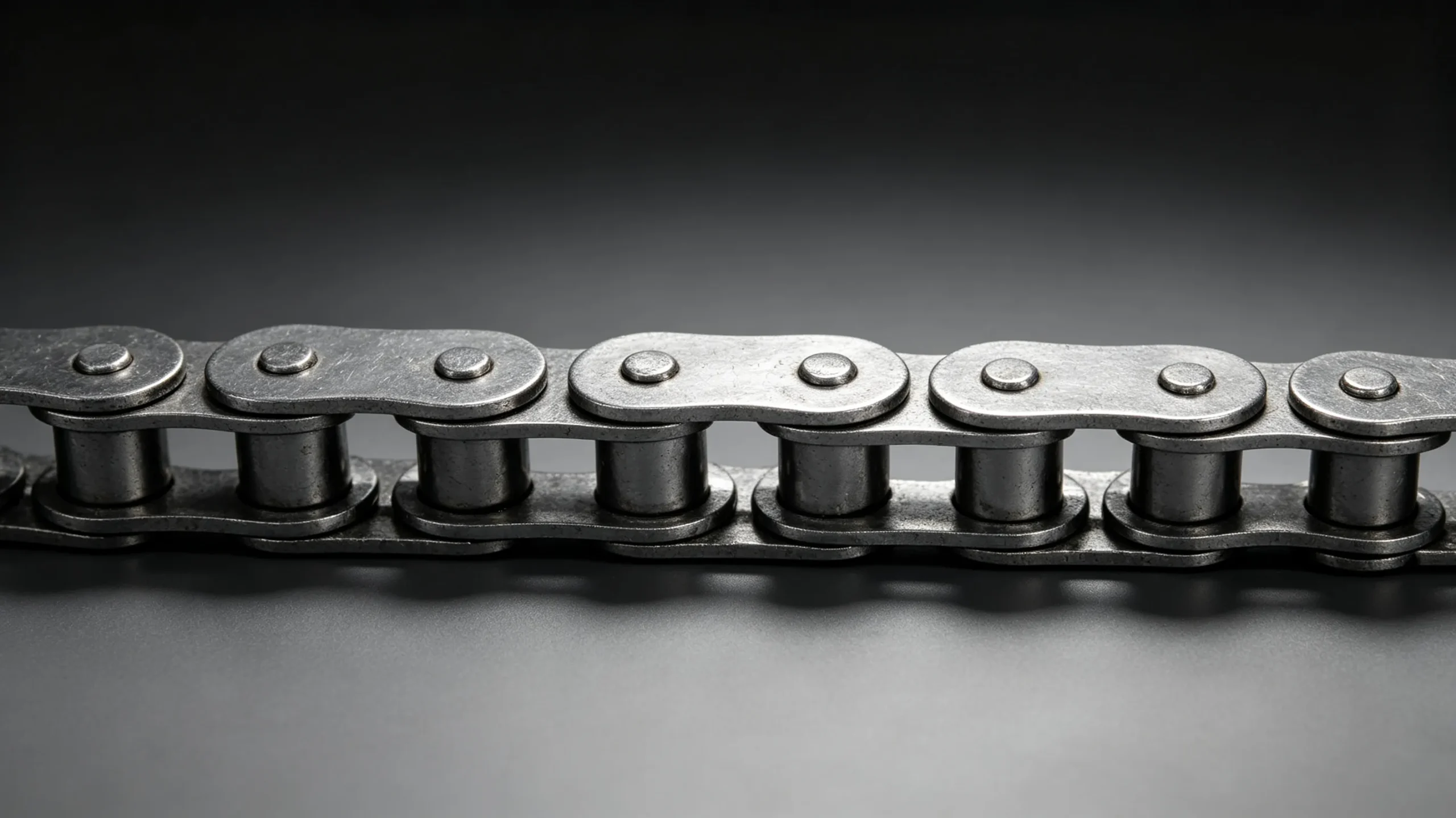
The load-bearing surfaces inside a roller chain are the pin outer surface and the bushing inner bore. Under operating load, these two surfaces are pressed together with Hertz contact pressures that can exceed 100 MPa in a heavily loaded drive. If these surfaces were in direct metal-to-metal contact, every articulation event would remove a measurable amount of metal through adhesive wear — the same mechanism that causes unlubricated sliding surfaces to seize in mechanical components.
Lubrication prevents this metal-to-metal contact by maintaining a thin film of oil between the pin and bushing surfaces. When the oil film is thick enough to completely separate the two metal surfaces — hydrodynamic lubrication — wear is essentially zero. When the film is present but thin enough that surface asperities on the pin and bushing occasionally touch — boundary lubrication — wear is low but non-zero. When no film is present — dry running — every articulation cycle removes measurable material from both surfaces, producing rapid wear elongation.
The Numbers: How Much Difference Does Lubrication Make?
The wear rate difference between lubricated and dry-running roller chain is not a marginal improvement — it is a step change in performance. Laboratory wear testing under controlled conditions demonstrates wear rates for dry-running chain 10 to 50 times higher than correctly lubricated chain at the same load and speed. Field studies in agricultural environments — where the contrast between lubricated and neglected chains is stark and well-documented — consistently show dry-running chains reaching the 3 percent elongation replacement threshold in 150 to 300 hours, versus 1,500 to 3,000 hours for correctly lubricated chains in the same application.
The Pin-Bushing Contact: Why It Is So Sensitive to Lubrication
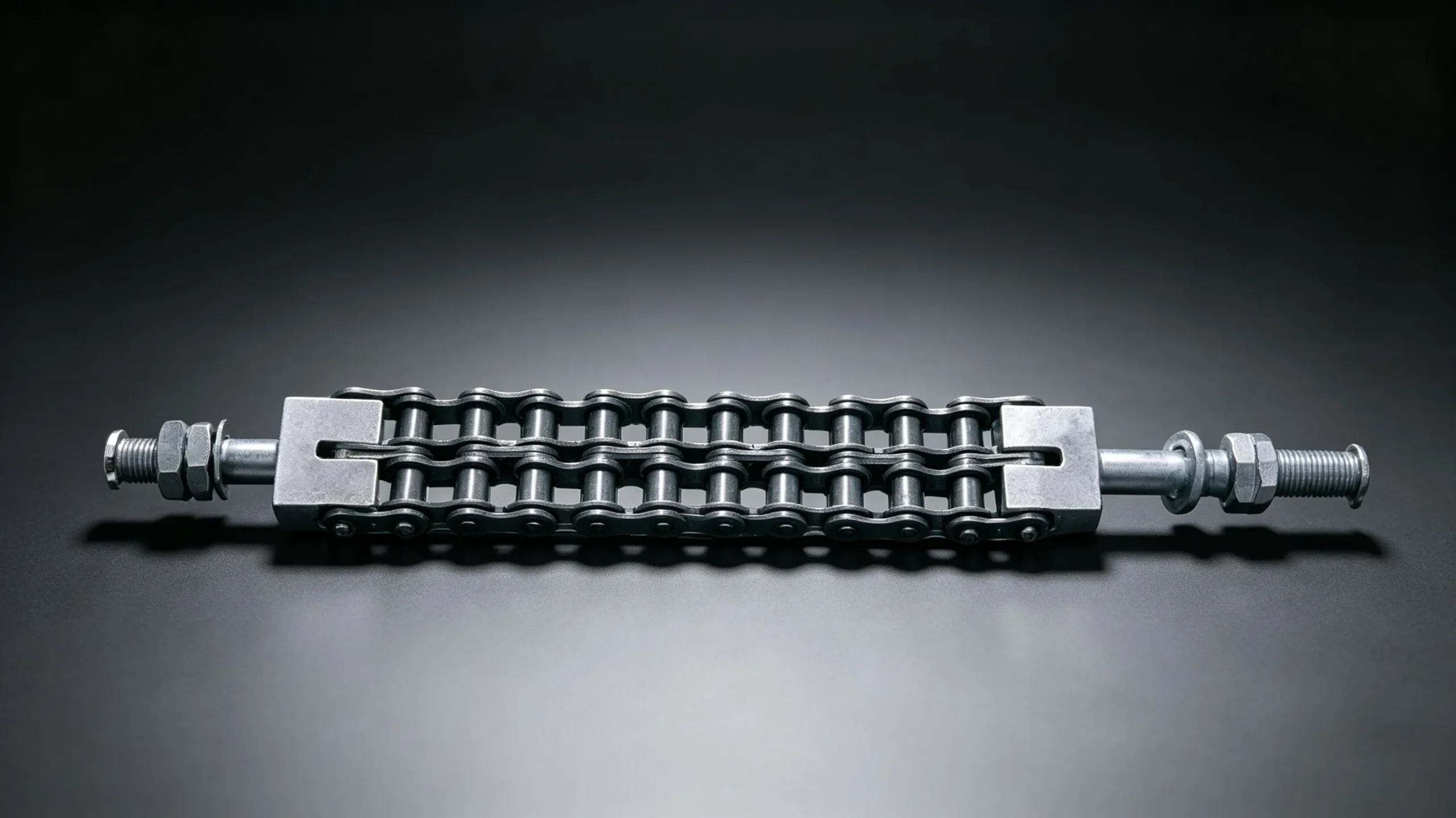
The geometry of the pin-bushing contact in a roller chain generates challenging conditions for maintaining an oil film. The contact area is a narrow cylindrical zone along the length of the pin — the effective Hertz contact width is typically only 0.1 to 0.5 mm, depending on the chain size and applied load. This narrow contact generates very high contact pressures for moderate applied loads, and the small contact area means there is very little volume to retain lubricant between articulation events.
Each time the chain articulates over a sprocket, the pin rotates slightly within the bushing bore — this is the sliding motion that generates wear. The rotation angle is small (typically 5 to 30 degrees per sprocket engagement), which means the contact zone does not traverse the full bushing surface at each articulation. This limits the opportunity for fresh oil to be drawn in from the sides of the contact zone — unlike a continuously rotating journal bearing, the chain pin-bushing interface has only a brief moment at each engagement to replenish the oil film from the surrounding reservoir.
How to Lubricate Correctly: Method Matters as Much as Frequency
Application Point
Oil applied to the outside of the chain — to the roller faces or the outer plates — does not reach the pin-bushing interface in useful quantities. The correct application point is the inner link area: the gap between the inner and outer plates on the slack strand, where capillary action can draw oil into the pin-bushing clearance. A brush, drip oiler, or spray nozzle directed at the inner links from the side produces far better pin-bushing lubrication than the same volume of oil sprayed onto the outer surface of the chain.
Lubrication Method by Chain Speed
| Chain Speed | Recommended Method | Application Notes |
|---|---|---|
| Below 0.5 m/s | Manual brush or oil can | Apply to inner links during shift; ISO VG 68–100 |
| 0.5–1.5 m/s | Drip oiler | Meter 1–3 drops per minute to inner link area; ISO VG 100–150 |
| 1.5–4.0 m/s | Bath lubrication | Chain passes through oil bath on slack side; ISO VG 68–100 |
| Above 4.0 m/s | Force-feed lubrication | Pump-fed nozzle directed at inner links; ISO VG 32–68 at elevated temperature |
| All speeds (contaminated environments) | Tackle-type spray lubricant | Penetrating carrier with tackified base; apply to inner links; re-apply after rain or wash |
Oil Viscosity: Matching the Lubricant to the Conditions
Selecting the correct oil viscosity for roller chain lubrication is more important than many maintenance manuals suggest. The optimal viscosity for a given application is the lowest viscosity that maintains an adequate film thickness at the operating temperature — higher viscosity than necessary reduces efficiency and increases the tendency for oil to throw off under centrifugal force without improving film quality.
ISO VG 68 to 100 is appropriate for most industrial roller chain drives at ambient temperatures of 10 to 40 degrees Celsius. In high-temperature environments (above 60 degrees Celsius), move to ISO VG 150 or a high-temperature chain oil with synthetic base fluid that resists viscosity loss at elevated temperature. In very cold environments (below 5 degrees Celsius), ISO VG 32 or 46 provides adequate film at low temperatures without the high starting torque that comes with thick oil in a cold drive.
Lubrication Frequency: How Often Is Enough?
The correct lubrication interval for a specific industrial roller chain depends on chain speed, load, and environmental conditions. As a starting point, the following intervals are appropriate for standard mineral oil lubrication in clean, indoor environments:
Every 8 hours (daily)
Chains operating at high load (above 60% of rated working load) or in dusty or contaminated environments where lubricant is displaced or diluted quickly.
Every 40–50 hours (weekly)
Chains operating at moderate load in reasonably clean conditions — general industrial drives, indoor conveyor systems, moderate-duty agricultural machinery.
Every 100–200 hours
Light-duty drives at low load and moderate speed in clean, sheltered environments. Always verify by checking chain surface condition at each inspection.
Self-lubricating chain — no interval
Self-lubricating roller chain with sintered bushing and oil impregnation — no external lubrication required for the chain service life under rated conditions.
What Happens When You Miss the Lubrication Interval
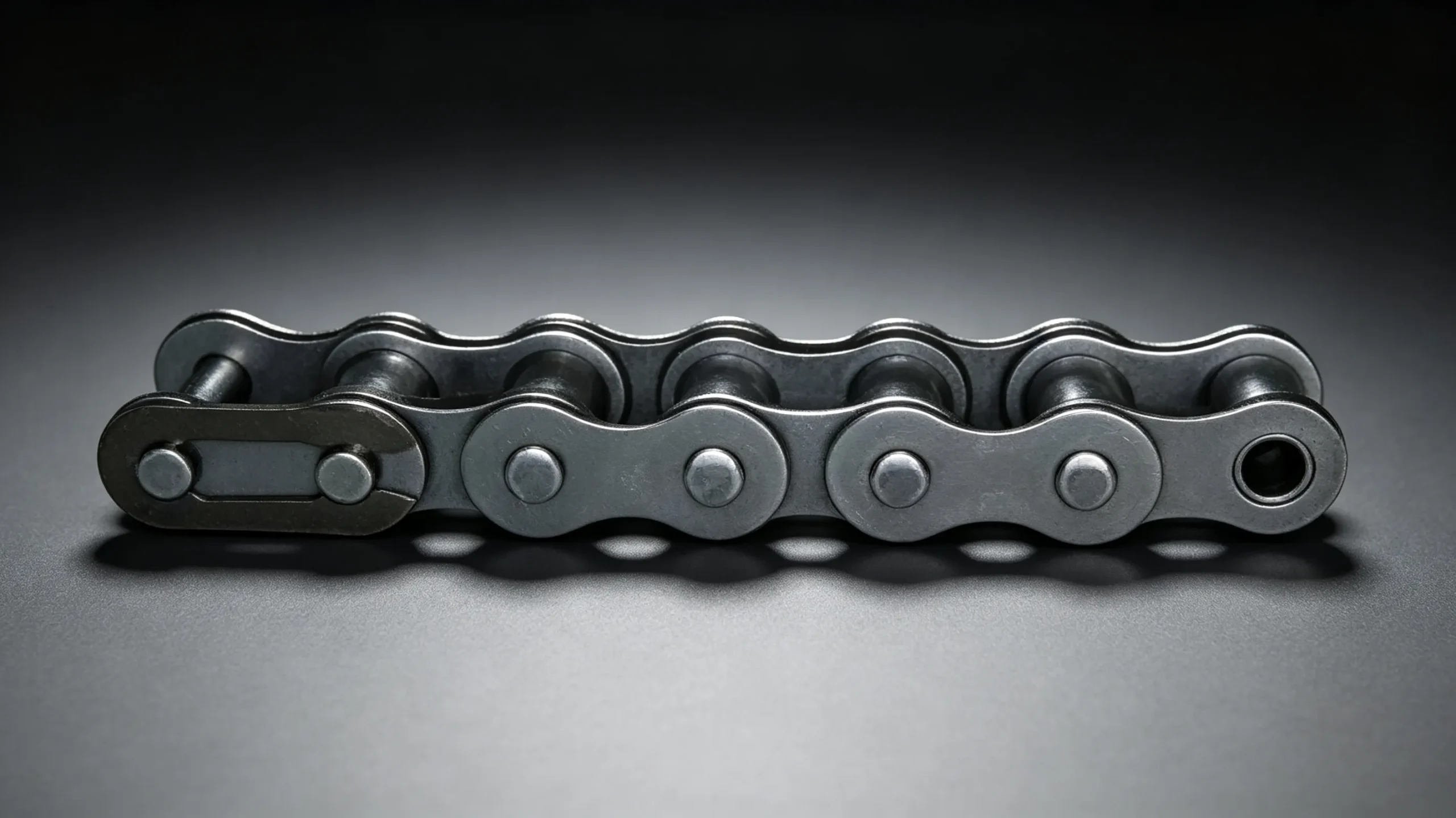
A single missed lubrication interval in a heavily loaded, high-speed drive can cause measurable wear damage that reduces the remaining service life of the chain. This is not a warning designed to generate anxiety — it is a practical consequence of the physics of pin-bushing wear. The wear damage from a 40-hour dry-running period in a 100 MPa contact pressure environment is not recoverable by subsequent lubrication. The oil that is applied later prevents further damage from that point forward, but the material already removed from the pin and bushing surfaces has permanently increased the elongation of those links.
The practical implication is that lubrication intervals should be treated as firm maintenance commitments, not approximate targets. A chain that is lubricated consistently every 40 hours will outlast a chain that is lubricated on average every 40 hours but with occasional 80 or 100-hour dry gaps — even if the total amount of oil applied is similar. Consistency matters as much as quantity in roller chain lubrication programmes.
EverPower Roller Chains Australia supplies roller chain in ANSI and ISO sizes alongside technical guidance on lubrication methods and intervals for specific applications. If you are experiencing faster than expected chain wear, contact our Sydney team — the root cause is almost always lubrication-related and easily correctable.
+61 2 9708 3322 | [email protected] | 27 Harley Crescent, Condell Park NSW 2201