
The specification of stainless steel roller chain in food processing environments is driven by a convergence of regulatory requirements, hygiene standards, and practical operational needs that carbon steel chain simply cannot meet. Understanding why stainless steel is required — not merely preferred — in food contact applications helps procurement managers and maintenance engineers make defensible specification decisions and avoid the compliance and contamination risks that come with using the wrong chain in a food production line.
The Core Problem With Carbon Steel in Food Environments
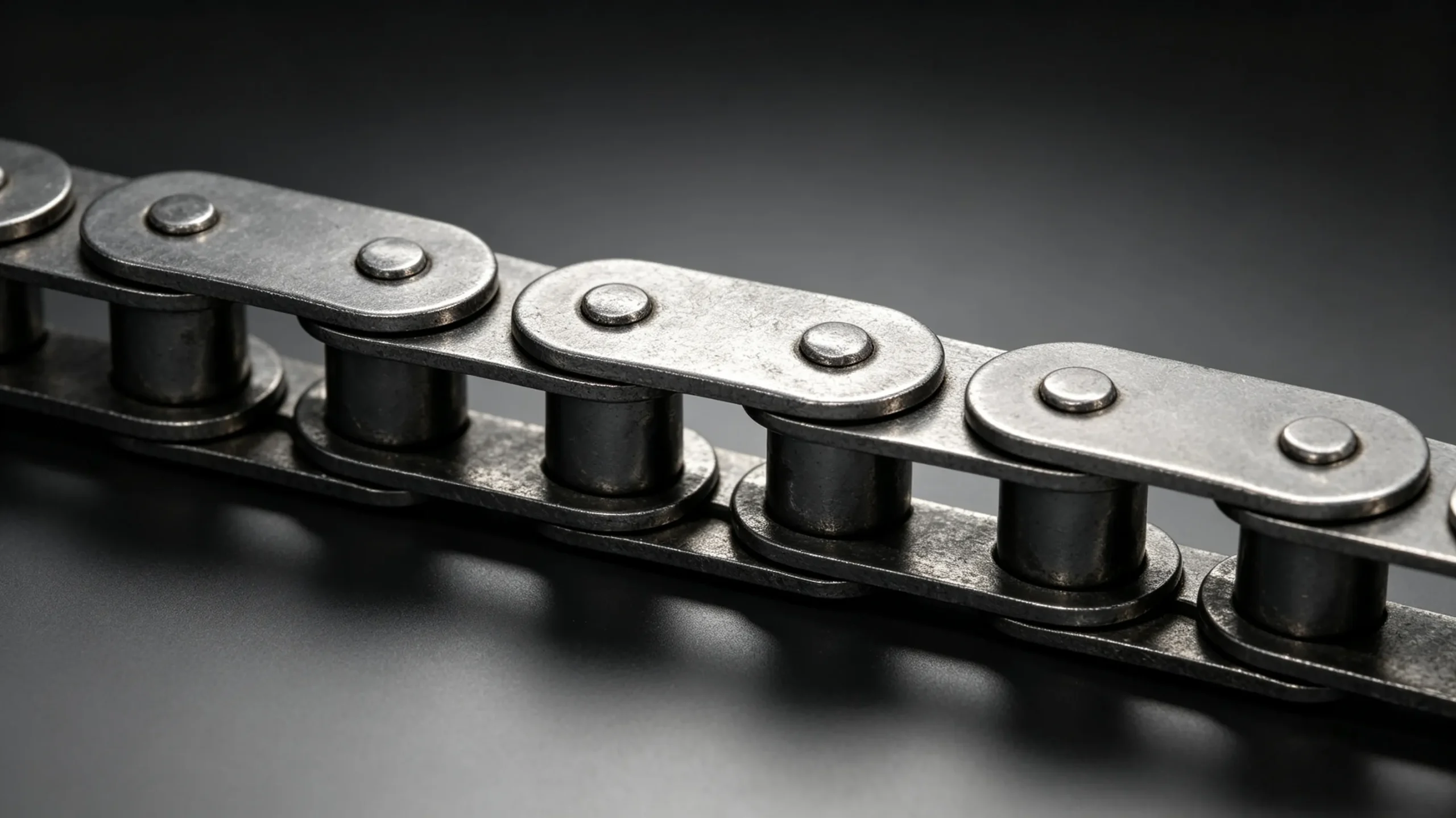
Standard carbon steel industrial roller chain corrodes when exposed to moisture, cleaning agents, and the organic acids present in many food processing environments. The corrosion products — iron oxides and hydroxides — are brown or red particles that can contaminate food products if they detach from a chain running above an open product line. Beyond the direct contamination risk, corroded chain plates develop surface pitting that acts as a reservoir for microbial growth, creating a persistent hygiene risk that cannot be eliminated by cleaning alone.
Carbon steel chain also requires petroleum-based lubricants that are not food-safe. Even when applied carefully, chain lubricants can drip onto products or conveyor surfaces from a chain running in an overhead or adjacent position. In a food processing facility subject to HACCP (Hazard Analysis and Critical Control Points) requirements, a chain drive positioned above an open product line with petroleum lubricant is a documented contamination risk that must be managed or eliminated.
Why Stainless Steel Addresses Both Problems
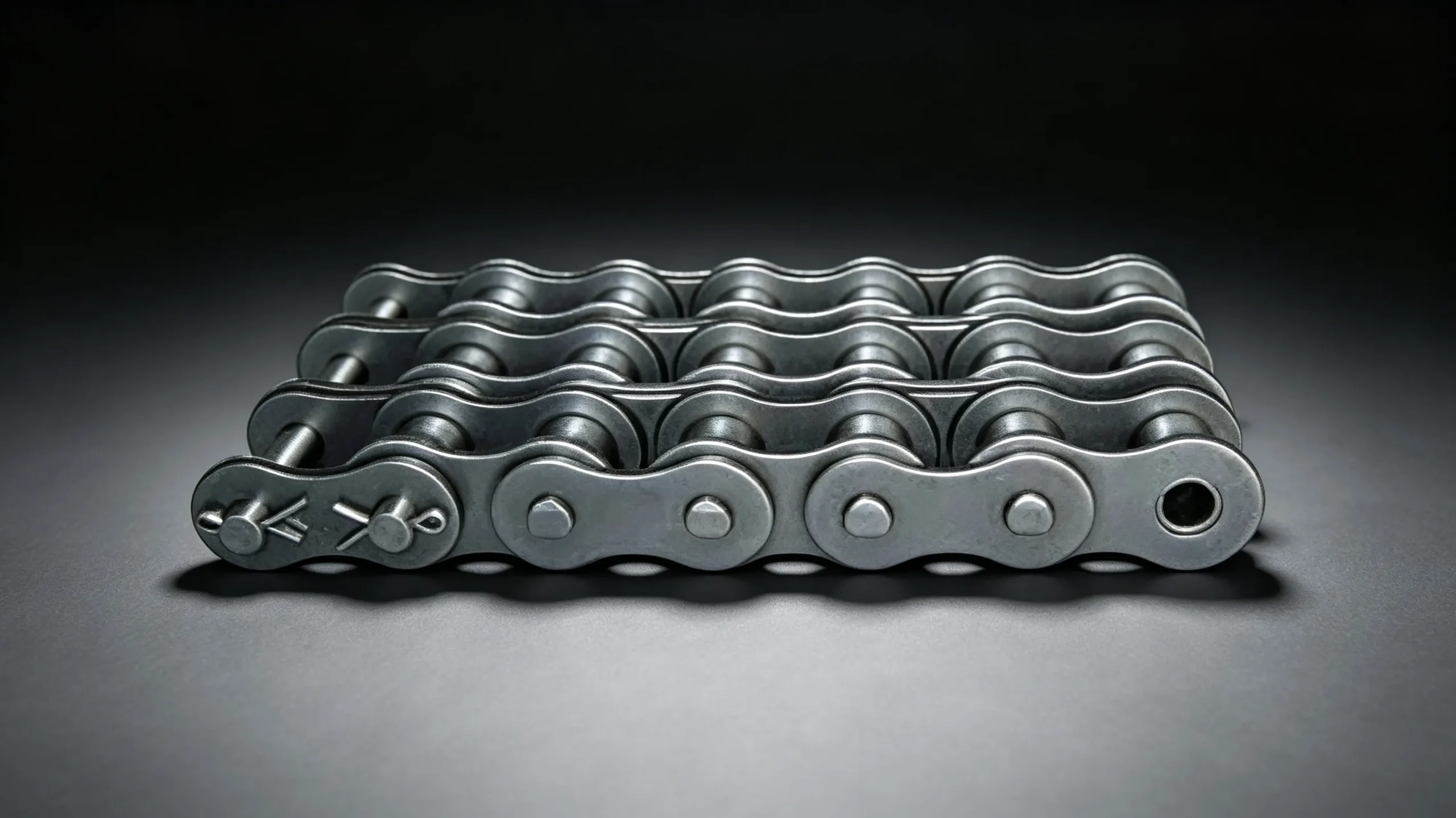
Stainless steel roller chain — manufactured from 304 or 316 grade austenitic stainless steel — resists the corrosion that carbon steel cannot survive in food environments. The passive oxide layer that forms naturally on stainless steel in the presence of oxygen provides corrosion resistance to water, cleaning agents, dilute acids, and most food contact chemicals encountered in processing plants. This means no rust particles, no corrosion pitting, and no metal oxide contamination from the chain running above a product line.
316 grade stainless steel, which contains molybdenum in addition to chromium and nickel, provides significantly better resistance to chloride-containing cleaning agents and sanitisers than 304 grade. In meat processing, seafood processing, and cheese making environments where salt brines and chlorinated sanitisers are used intensively, 316 grade stainless steel chain is the correct specification. In lighter food processing environments with less aggressive cleaning chemistry, 304 grade is adequate and approximately 10 to 15 percent less expensive.
Regulatory and Certification Requirements
Food processing facilities in Australia operate under the Food Standards Code, workplace hygiene regulations, and typically under HACCP programmes that require documented control of physical, chemical, and biological contamination risks. A chain drive running with petroleum lubricant above an open product line is a documented chemical contamination risk under HACCP analysis. Specifying stainless steel roller chain with an NSF H1 rated food-grade lubricant eliminates this risk point and simplifies the HACCP documentation.
NSF H1 lubricants are registered for incidental food contact — they are not food ingredients, but they are formulated from components that are acceptable at low concentrations in food products. Using an NSF H1 lubricant on stainless steel roller chain in a food processing application satisfies both the corrosion resistance requirement and the lubricant compliance requirement simultaneously. This is the correct total specification: stainless chain plus food-grade lubricant, not stainless chain alone with an inappropriate lubricant.
Stainless Steel Chain Specifications and Grades
| Grade | Composition | Best For | Limitations |
|---|---|---|---|
| 304 Stainless | 18% Cr, 8% Ni | General food processing, bakeries, dry food handling, light wash-down | Not suitable for high chloride environments (seawater, strong brine) |
| 316 Stainless | 16% Cr, 10% Ni, 2% Mo | Meat processing, seafood, dairy, chemical wash-down with chlorinated sanitisers | Higher cost than 304; molybdenum addition provides chloride resistance |
| 316L Stainless | Low carbon 316 | Welded assemblies and high-temperature applications in food processing | Slightly lower strength than standard 316 |
| Carbon Steel (standard) | Not food-grade | General industrial drives outside food environments | Corrodes in food environments; not acceptable for food contact applications |
The Trade-Off: Strength vs Corrosion Resistance
The corrosion resistance of stainless steel comes at a cost in mechanical strength. Stainless steel roller chain has a lower tensile strength than carbon steel chain of the same pitch and plate geometry — typically 70 to 80 percent of the equivalent carbon steel breaking load. This means that if the food processing drive requires the same working load as an equivalent drive specified in carbon steel, the stainless steel chain must be either the next larger pitch or a duplex configuration to compensate for the reduced strength per strand.
This strength consideration is frequently overlooked in food processing chain specifications. A maintenance engineer who specifies ANSI 60 carbon steel chain for a drive in a new facility, and then substitutes ANSI 60 stainless steel when the facility goes into food production, may be surprised to find the stainless chain failing by plate fatigue at loads that the carbon steel chain handled comfortably. Always recalculate working load against the stainless steel chain rating, not the carbon steel rating, when converting a drive specification.
Self-Lubricating Stainless Steel Chain: The Premium Option
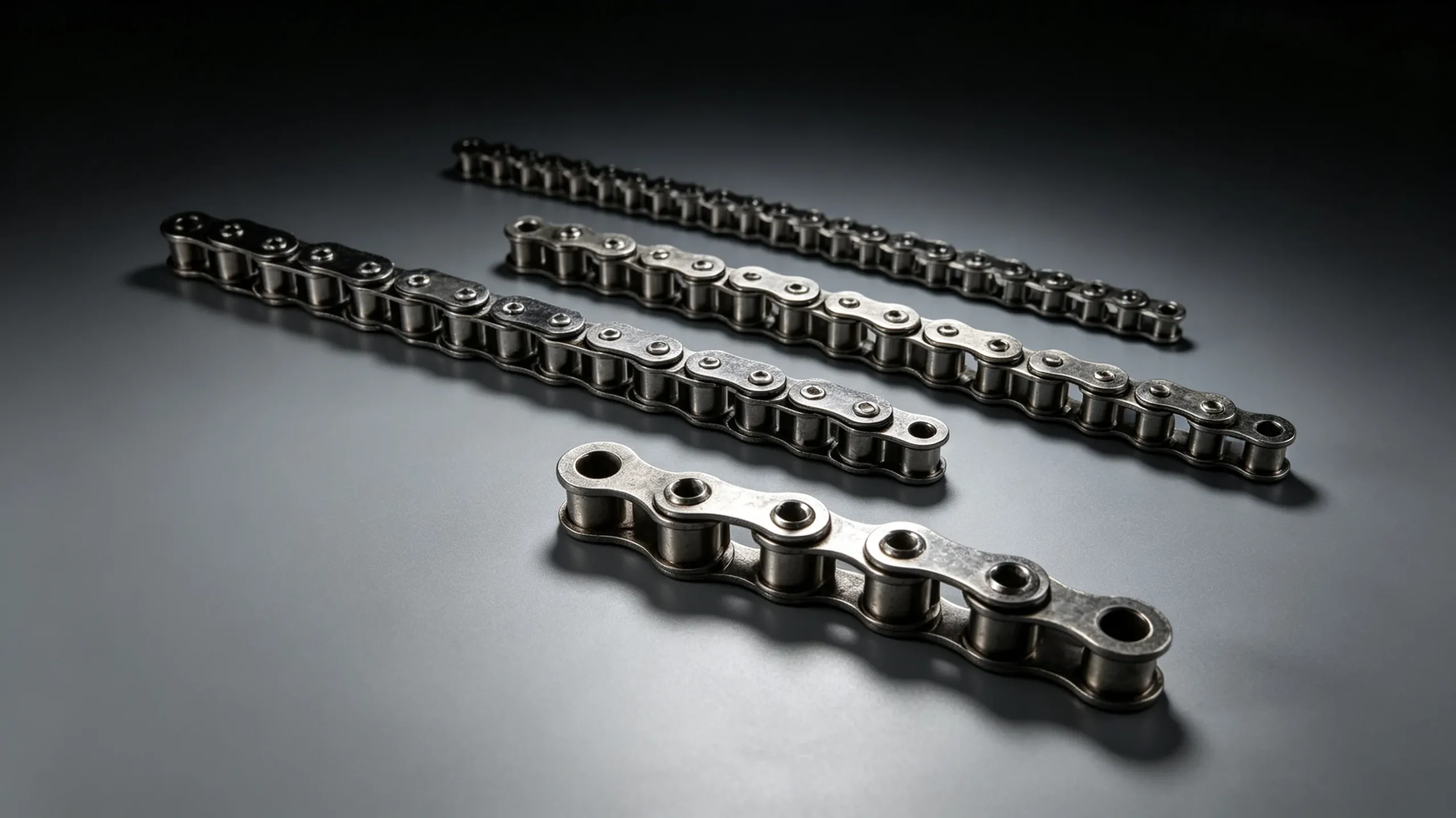
For food processing applications where external lubrication is difficult to maintain — overhead conveyors, enclosed drive housings, or applications where the lubrication interval cannot be maintained consistently — self-lubricating roller chain in stainless steel with food-grade oil impregnation in the sintered bushing provides both corrosion resistance and maintenance-free lubrication. This combination eliminates both the contamination risk from dripping lubricant and the wear risk from missed lubrication intervals.
The cost premium for self-lubricating stainless steel chain over standard stainless chain is significant — typically 60 to 100 percent higher unit cost — but for the right application this premium is easily justified. An overhead conveyor running above a continuous open product line in a bakery or confectionery plant represents a contamination risk every time it needs lubrication. If that lubrication involves stopping the line, a self-lubricating chain that eliminates the lubrication requirement entirely has clear operational and compliance value.
Installation and Maintenance of Stainless Steel Chain in Food Plants
Stainless steel chain in food processing facilities requires specific maintenance practices that differ from standard carbon steel chain. Cleaning with water at high pressure is acceptable — indeed, stainless steel chain is designed to be wash-down compatible. However, avoid using chlorine-based sanitisers at high concentration on 304 grade stainless — at concentrations above approximately 200 ppm, chloride ions can initiate crevice corrosion in 304 grade alloy, particularly at temperatures above 50 degrees Celsius. Either use 316 grade chain in high-chloride cleaning environments, or ensure the sanitiser concentration and contact time are within the limits for 304 grade at the operating temperature.
Lubricate stainless steel roller chain in food environments with NSF H1 registered food-grade oil, applied on the same frequency as carbon steel chain in equivalent loading conditions. The lubrication interval is determined by the loading and speed, not by the chain material. Stainless steel chain does not inherently require less lubrication than carbon steel chain in a drive application — the sintered bushing in self-lubricating variants provides the lubrication; standard stainless steel chain requires external lubrication identical to standard carbon steel chain.
304 Grade — When to Use
General food processing, bakeries, dry and ambient food handling, light cleaning with water or non-chlorinated sanitisers. Lower cost; adequate corrosion resistance for most food environments.
316 Grade — When to Use
Meat, seafood, dairy, fermentation, and any environment where chlorinated sanitisers, salt brine, or acidic food products are in regular contact with the chain. Higher cost; essential for chloride resistance.
Self-Lubricating Stainless
Overhead conveyors above open product lines, enclosed drives where lubrication access is restricted, and any food processing drive where eliminating external lubricant is a HACCP requirement.
Carbon Steel + Food Grade Oil
Only acceptable where the chain has no possibility of food contact and the facility hygiene programme specifically permits carbon steel components in the area. Not recommended for any food contact zone.
EverPower Roller Chains Australia supplies stainless steel roller chain in 304 and 316 grades, with self-lubricating and food-grade lubricated options available for Australian food processing facilities. Contact our Sydney team for a specification recommendation based on your cleaning chemistry, product contact risk, and drive load requirements.
+61 2 9708 3322 | [email protected] | 27 Harley Crescent, Condell Park NSW 2201