
Replacing a worn roller chain while keeping the existing sprockets is one of the most reliable ways to shorten the service life of the new chain. It is also one of the most common maintenance shortcuts in Australian industrial and agricultural operations — the chain is the visible, easily measured wear item, and sprockets feel like expensive, permanent components that surely do not need replacing every time. In practice, a sprocket that has been running with a chain at 2 to 3 percent elongation has absorbed measurable tooth wear that directly compromises the performance of any new chain installed on it. This article explains precisely why concurrent replacement matters and how to judge when the sprockets are still serviceable.
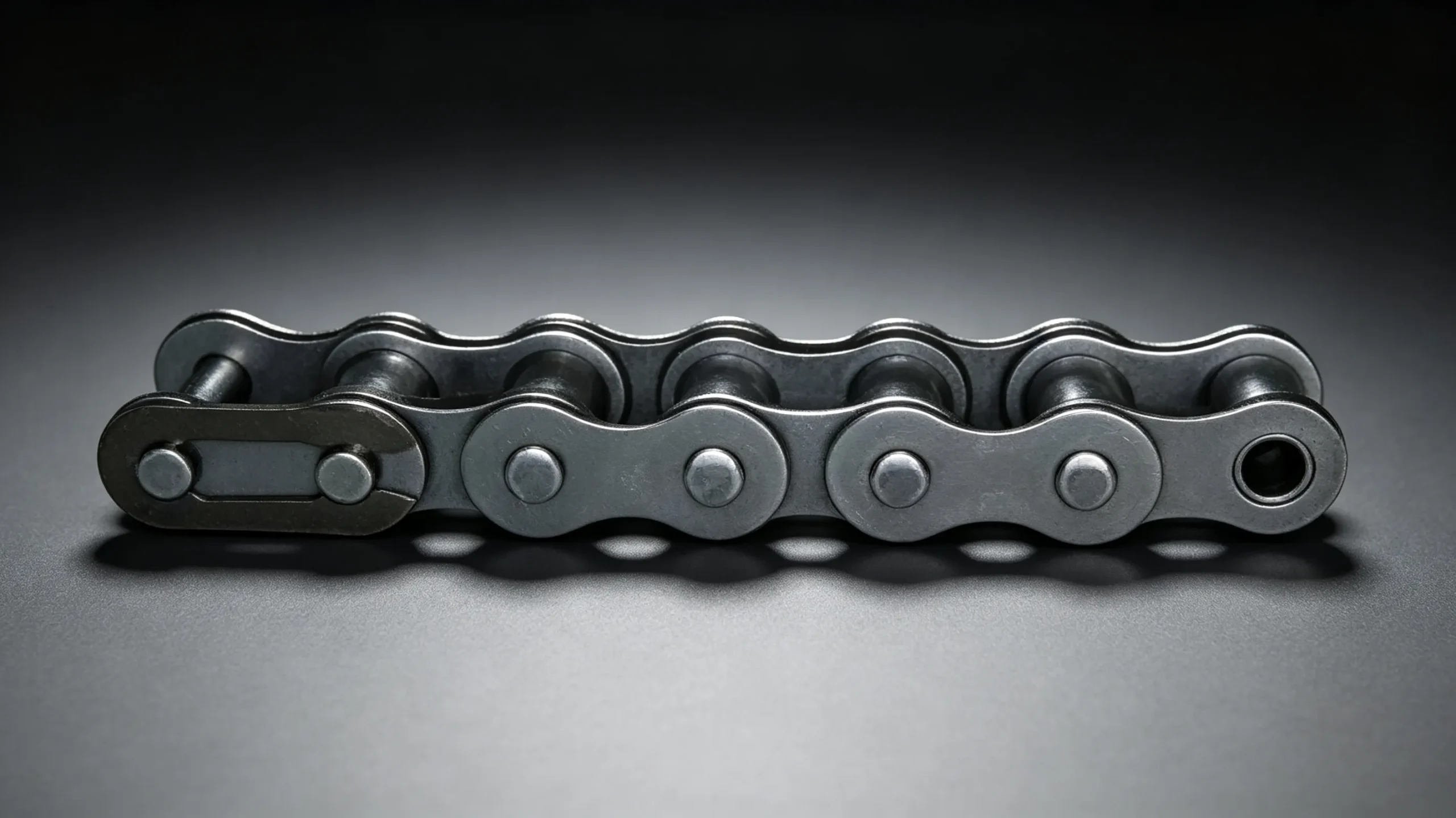
How an Elongated Chain Damages the Sprocket
As a roller chain elongates, the effective pitch of each link increases. The sprocket tooth pocket geometry is machined for the nominal pitch — when the chain pitch grows, the rollers arrive at a slightly different angular position on the tooth face with each engagement. Instead of seating smoothly at the tooth root, the elongated chain rollers contact the tooth face further up toward the tip, and the engagement force has an increasing component directed toward the tooth tip rather than radially inward toward the root.
Over thousands of engagement cycles at this offset contact geometry, the tooth face wears in a characteristically asymmetric pattern. The forward face of the tooth (the face that the incoming chain roller contacts first) wears faster than the trailing face. The net effect is that the tooth develops a hooked or undercut profile — the tip extends forward relative to the original tooth geometry. This hooked profile then affects every subsequent chain installed on that sprocket, regardless of whether the replacement chain is new and dimensionally correct.
What Happens When You Run New Chain on Worn Sprockets
A new roller chain has a precise pitch matching the sprocket tooth spacing exactly. When this new chain engages a sprocket with hooked teeth, the rollers — now arriving at the correct pitch — make contact with the hooked tooth tip rather than the tooth root. This happens because the tooth tip has migrated forward as a result of the asymmetric wear, and it now intercepts the incoming roller before the roller can reach the root.
The result is that the new chain runs as if it were already elongated — the rollers seat above the tooth root, generating the same off-centre engagement forces that caused the original sprocket wear. The new chain begins to wear at an accelerated rate from its first hour of operation, rather than from the gradual accumulation that normally occurs over hundreds of hours. Field measurements consistently show that new roller chain installed on badly worn sprockets achieves only 30 to 60 percent of the service life that the same chain achieves on new or minimally worn sprockets.
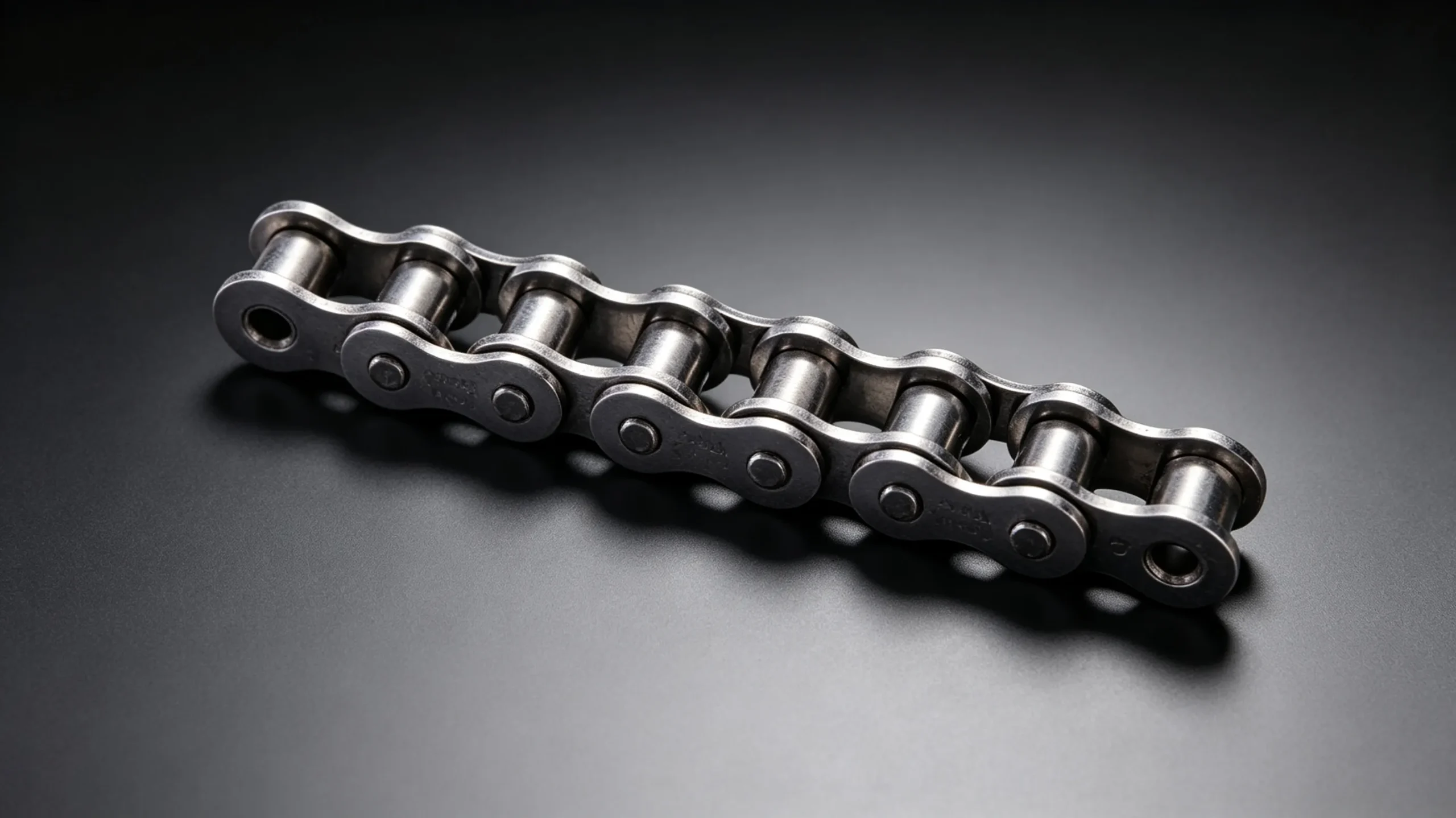
The Test: How to Inspect Sprocket Tooth Profile
The practical field test for sprocket tooth condition requires only a length of new roller chain and a visual inspection. Hold the new chain section firmly against the sprocket teeth — press the rollers into the tooth pockets with light thumb pressure and observe where each roller seats relative to the tooth root. If the rollers settle cleanly at or near the tooth root, the sprocket is still in acceptable condition and the new chain will engage correctly. If the rollers bridge across tooth tips rather than seating in the root pockets, the sprocket is worn past the point of serviceability.
A second test is to examine the tooth profile from the side. A new tooth has a symmetrical, convex profile on both flanks. A worn tooth has an asymmetric appearance — the forward flank is flattened or concave where roller contact has occurred, and the tooth tip appears to lean forward relative to its original centreline. This visual inspection is most useful under good lighting with the sprocket face clean of grease and dirt.
How Many Chain Replacements Before Sprocket Replacement?
In a correctly specified, well-lubricated drive operating within rated load, a sprocket typically survives two to three chain replacements before the tooth profile deteriorates to the point where concurrent replacement is necessary. This assumes the chain is being replaced at the correct elongation threshold of 3 percent — not run significantly past this limit. Running chain past 3 percent dramatically accelerates sprocket tooth wear and can cause a sprocket to reach end of life simultaneously with or even before the first chain replacement.
| Scenario | Expected Sprocket Life (Chain Replacements) |
|---|---|
| Correct lubrication, correct load, chain replaced at 3% threshold | 2–3 chain lives |
| Correct lubrication, moderate overload (up to 120% of rated) | 1–2 chain lives |
| Chain run past 3% elongation before replacement | Often 1 chain life or less — concurrent sprocket replacement required |
| Abrasive contamination environment without sealed chain | 1 chain life — sprocket wears rapidly alongside chain |
| High-shock drive (agricultural, mining) without heavy series chain | 1–2 chain lives depending on peak load severity |
The Economics: Is Concurrent Replacement Worth the Cost?
The economic argument for concurrent chain and sprocket replacement is straightforward when presented as cost per operating hour rather than cost per replacement event. If a new chain achieves 2,000 hours on new sprockets but only 1,000 hours on worn sprockets, and the chain costs $200 while the sprockets cost $300, the cost comparison is: chain only replacement: $200 per 1,000 hours = $0.20/hour. Concurrent replacement: $500 per 2,000 hours = $0.25/hour — not a significant difference, and on the second chain replacement the chain still achieves full life, meaning the amortised cost per hour continues to reduce.
In practice, the economic case for concurrent replacement is stronger when: downtime for chain replacement is costly (as in harvest season); the sprockets are difficult to access and replacement is expensive in labour; or the operated machinery runs 24/7 where a mid-interval chain failure would be extremely costly. In lower-value, easily accessed applications, the decision can legitimately be deferred if sprocket tooth profile inspection shows acceptable condition.
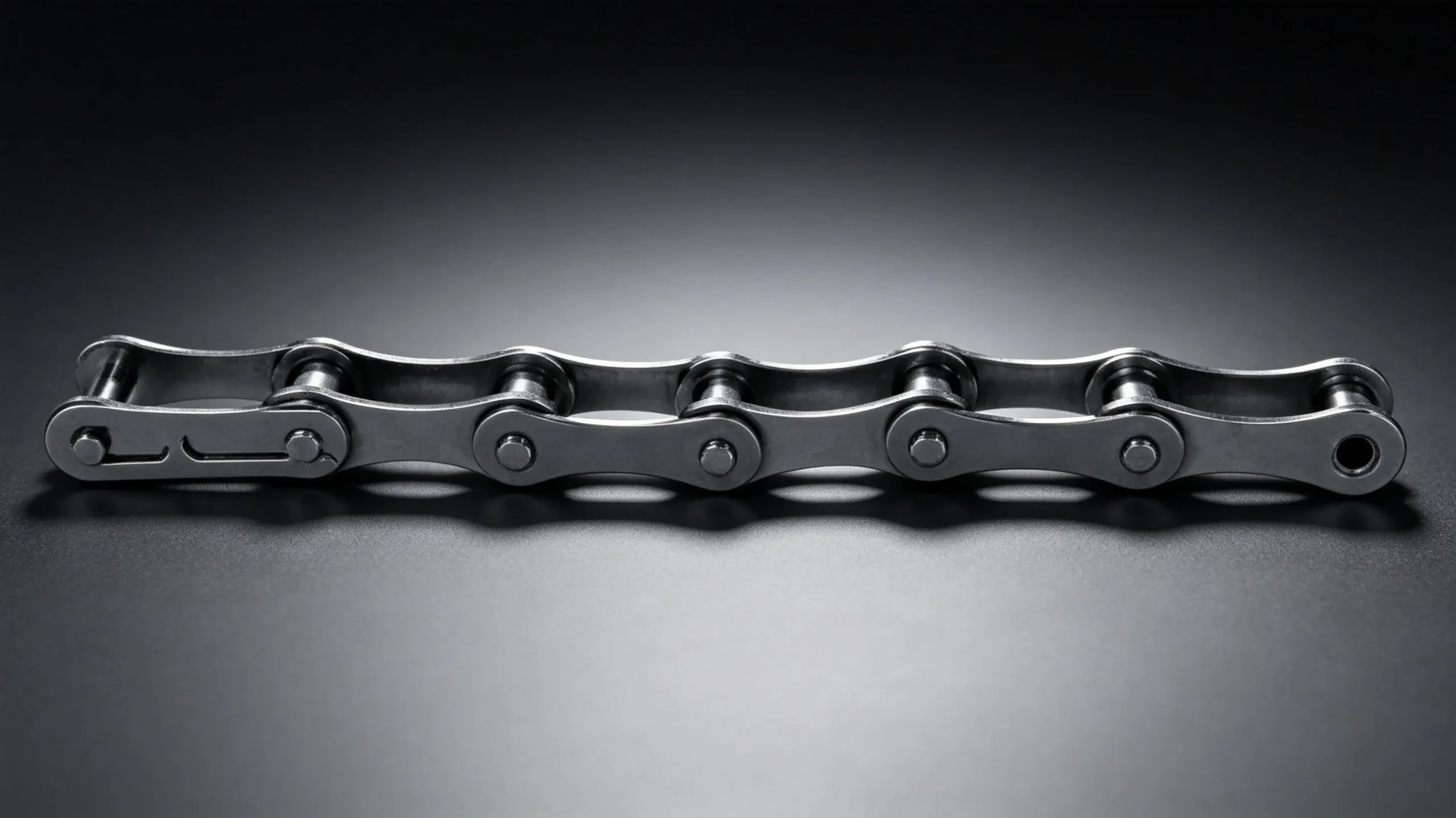
Sprocket Materials and Their Effect on Wear Rate
The rate at which a sprocket tooth wears under contact with a roller chain depends significantly on sprocket material and hardness. Standard carbon steel sprockets are the most economical and are appropriate for most industrial drives. Hardened alloy steel sprockets — case-hardened to 55 to 60 HRC on the tooth surface — wear significantly slower than carbon steel and are the correct specification for high-load, high-cycle drives such as mining conveyors and continuous agricultural processing equipment.
Cast iron sprockets, though widely available, have lower toughness than steel sprockets and are prone to tooth chipping under shock loading. For any application involving shock loads — baler drives, crusher feeders, intermittent-start conveyors — steel sprockets are always preferable to cast iron. Plastic and nylon sprockets are available for very light-load, low-speed applications in food processing and pharmaceutical environments, but their wear rate under industrial loads is too high for most practical conveyor and drive applications.
EverPower Roller Chains Australia supplies matched roller chain and sprocket sets for agricultural, mining, and industrial applications. Our Sydney team can advise on the correct concurrent replacement specification for your drive and help source matched chain and sprocket sets for a range of ANSI and ISO pitch sizes.
+61 2 9708 3322 | [email protected] | 27 Harley Crescent, Condell Park NSW 2201