
A quiet roller chain drive is a healthy roller chain drive. That statement is more than a generalisation — the noise level and character of a chain drive are direct indicators of its mechanical condition, and a change in noise pattern almost always corresponds to a change in drive condition. Whether the sound is a persistent rattling, a rhythmic clicking, a high-pitched whine, or an intermittent snap, each noise pattern has a specific mechanical cause. Diagnosing roller chain noise correctly avoids the common mistake of replacing parts randomly until the noise stops, and instead points directly to the component or condition that requires attention.
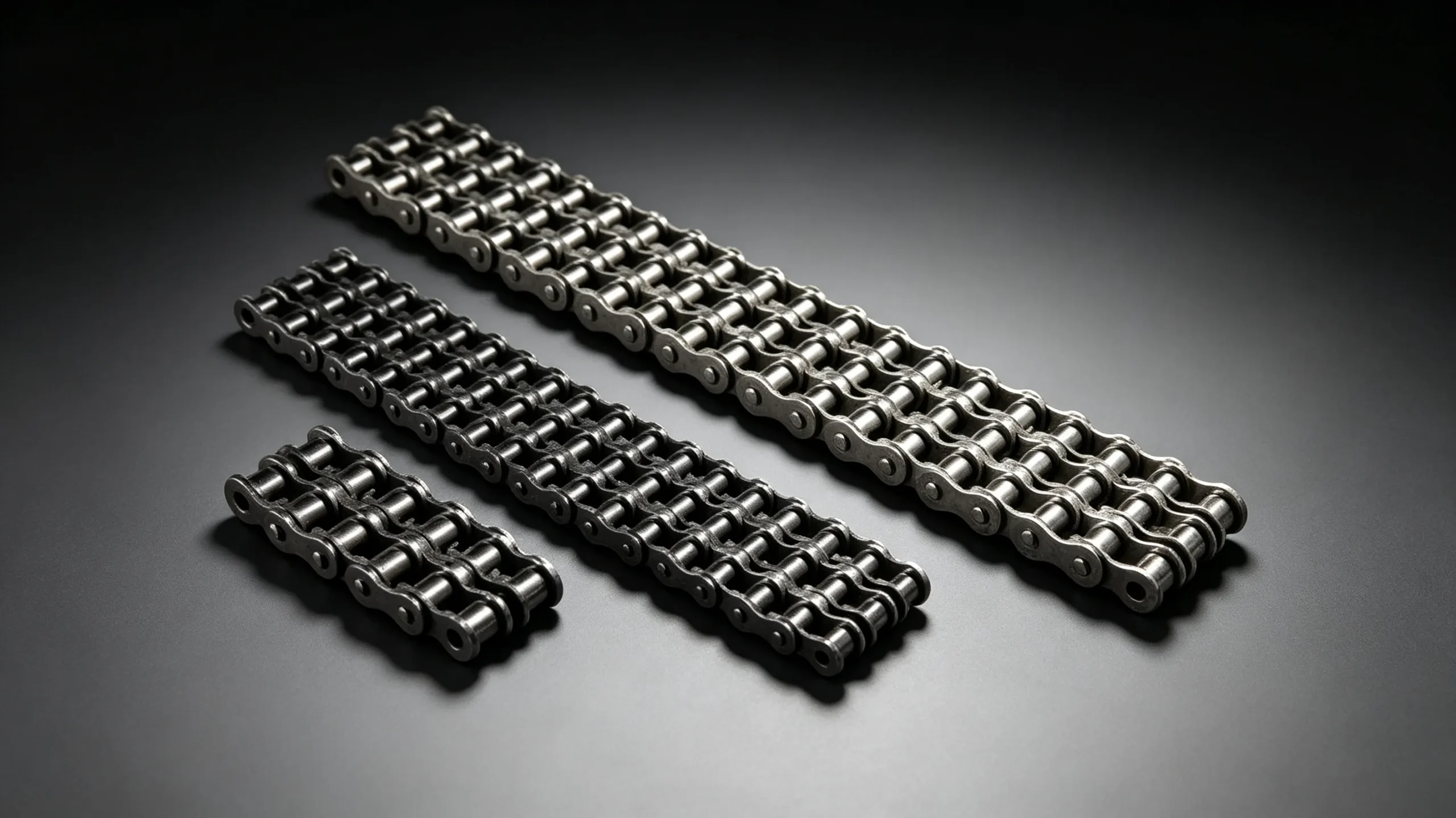
Normal Chain Noise vs Problem Noise
Not all roller chain noise is abnormal. At moderate speeds, a well-maintained drive produces a low, steady mechanical hum from the engagement of rollers with sprocket teeth — this is the normal articulation sound that increases proportionally with chain speed and load. This normal operating sound should be consistent in pitch and amplitude throughout a full revolution of the chain loop. Any noise that is intermittent, rhythmic at a frequency different from the sprocket rotation, irregular, or has changed suddenly from the previous baseline is a potential indicator of a developing problem.
Cause 1: Chain Elongation and Poor Sprocket Engagement
The most common source of abnormal roller chain noise is an elongated chain engaging worn or mismatched sprocket teeth. As chain elongation increases, the rollers can no longer seat cleanly at the sprocket tooth root — they ride higher on the tooth face and engage at an increasing angle to the tooth normal. This produces a clicking or slapping sound as the roller contacts the upper tooth face rather than rolling smoothly into the root pocket. The frequency of the clicking corresponds to the tooth engagement frequency (number of teeth times sprocket RPM), making it relatively easy to distinguish from other noise sources.
Solution: measure chain elongation. If at or beyond 3 percent, replace the chain and inspect sprocket teeth. If sprocket teeth show a hooked profile, replace sprockets concurrently. Correct sprocket alignment after replacement. A correctly dimensioned, well-engaged roller chain on good sprocket teeth produces minimal impulsive noise at moderate speeds.
Cause 2: Insufficient or Incorrect Lubrication
A chain running with inadequate lubrication at the pin-bushing interface generates a distinctive dry, metallic sound — often described as a grinding or screeching — from the metal-on-metal sliding contact at each pin-bushing pair. This sound is characteristically continuous rather than rhythmic, increasing with speed and load. At low speeds and light loads, a dry chain may sound merely rough; at high speed and full load, the noise can be loud enough to be heard across a machine room.
In addition to the pin-bushing noise, an inadequately lubricated chain also generates more roller-to-sprocket impact noise because the dry rollers cannot form even a partial hydrodynamic film between the roller bore and the bushing outer surface — the roller effectively locks to the bushing and slides rather than rolls against the sprocket tooth, converting what should be rolling contact into sliding contact with much higher friction and noise.
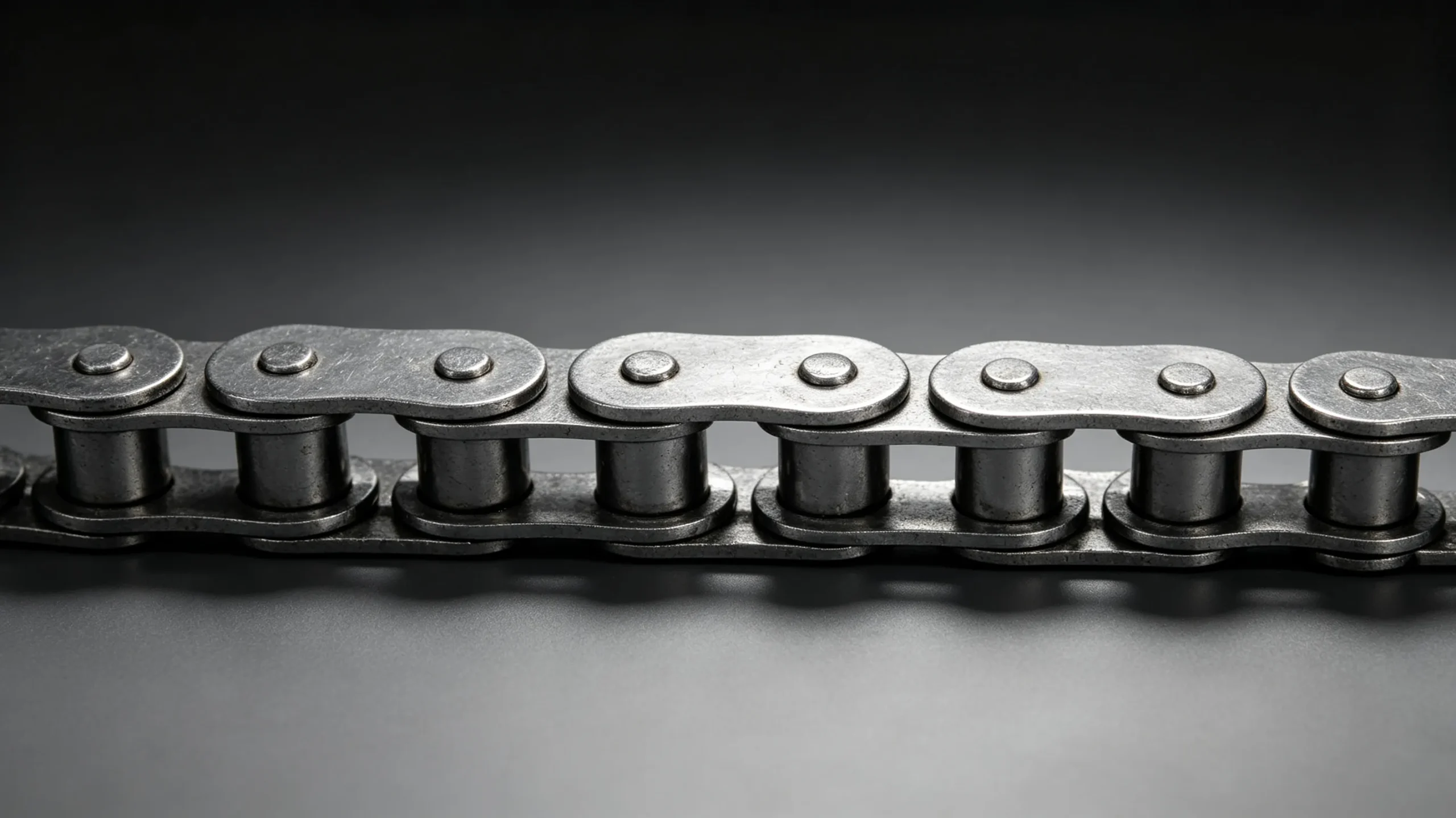
Cause 3: Chordal Action From Small Sprockets or High Speed
Chordal action — the variation in chain velocity that occurs because a polygon (the sprocket) is trying to drive a chain at constant speed — produces a rhythmic fluctuation in chain tension at a frequency of tooth engagement frequency x speed. At low speeds and with large-tooth-count sprockets, this variation is negligible. At high speeds or with few sprocket teeth, the tension variation generates audible vibration in the chain spans between sprockets, producing a characteristic low-frequency throbbing or humming that varies with chain speed.
The sound from chordal action is most noticeable on the tight strand between sprockets and is not directly related to chain or sprocket condition — it is an inherent consequence of the chain drive geometry. Solutions include: increasing the tooth count on the small sprocket (minimum 17 teeth recommended for minimal chordal action), reducing chain pitch (smaller pitch reduces chordal action for the same sprocket diameter), or reducing chain speed by changing the gear ratio before the chain drive.
Cause 4: Sprocket Misalignment
Lateral misalignment between drive and driven sprockets causes the chain to run at an angle through the engagement arc, producing noise from the inner plate faces contacting the sprocket tooth sides. The sound is typically a rhythmic scraping or rasping that varies with the degree of misalignment and is more pronounced under load. Severe misalignment can also produce a clicking or ticking sound from the chain plates contacting the sprocket hub faces.
Diagnostic procedure: listen for the scraping sound and verify by checking alignment with a straight edge across the sprocket face planes. If misalignment is confirmed, adjust the sprocket positions to achieve coplanar face planes within 0.5 mm lateral offset. On gear-motor-driven conveyors, also check that the gearbox output shaft is truly parallel to the driven shaft.
Cause 5: Chain Vibrating in the Span
Long, lightly-tensioned chain spans between sprockets can enter resonant vibration under certain speed and tension combinations, producing a low-frequency rumble or buzz from the chain whipping. This is most common on long conveyor chains running at moderate speed with insufficient take-up tension. The chain span acts as a taut string — it has a natural resonant frequency determined by its mass per unit length and the tension, and if the sprocket rotation frequency or its harmonics approach this natural frequency, the span amplifies the excitation into visible vibration and audible noise.
Solutions include: increasing take-up tension to raise the natural frequency of the span, adding a mid-span guide or support to shorten the effective vibrating length, or adjusting chain speed slightly to move the operating frequency away from the resonant condition.
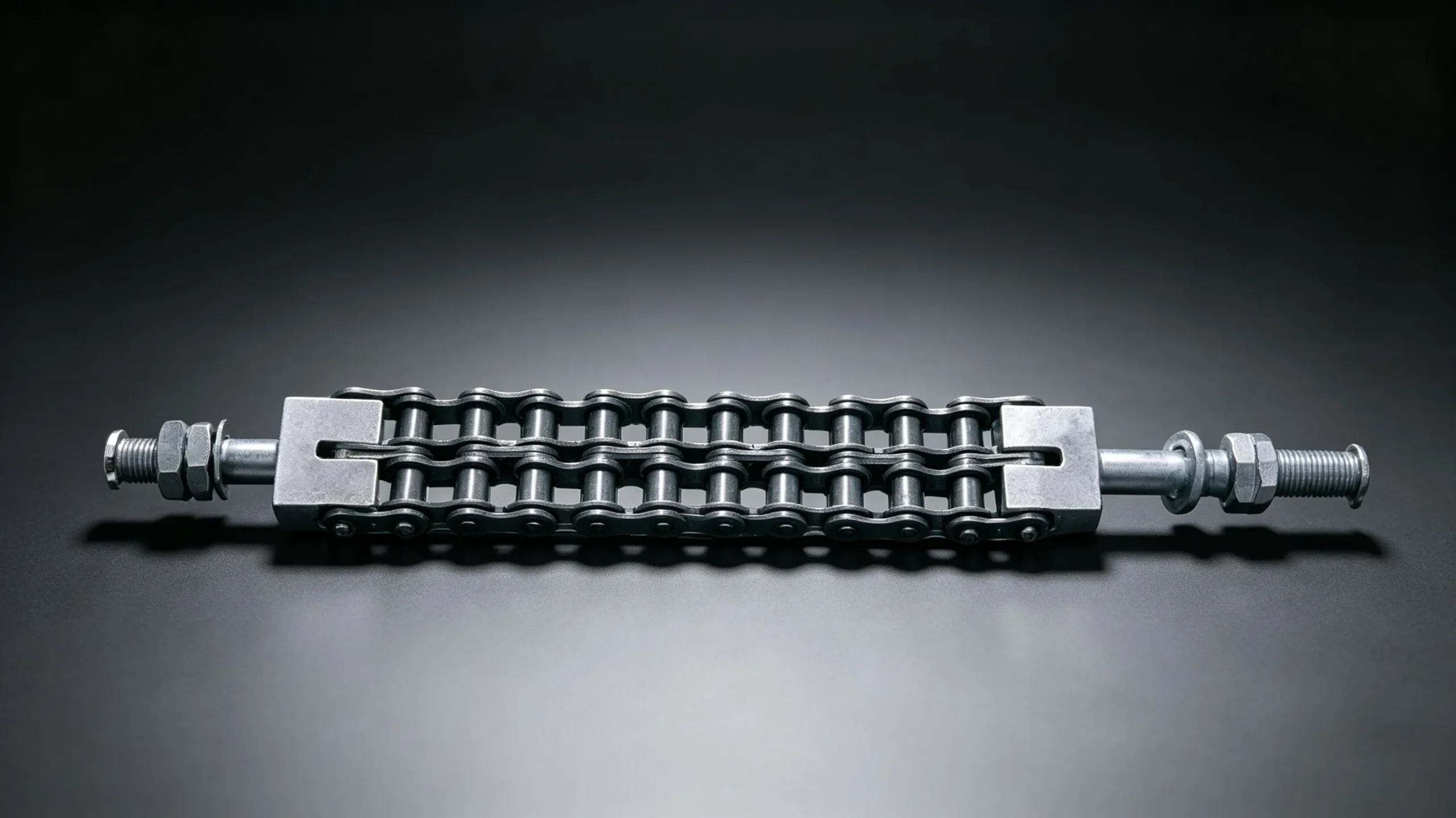
Cause 6: Damaged or Stiff Links
A chain with one or more stiff links — joints that do not articulate freely because of corrosion, over-tightened connecting link assembly, or debris jammed in the joint — produces a distinctive rhythmic click or snap each time the stiff link passes over a sprocket. The click occurs at a frequency equal to the chain speed divided by the chain loop length, which is slower than the sprocket tooth engagement frequency. This relatively slow, periodic click is diagnostic: if the clicking repeats at a rate consistent with one revolution of the full chain loop, look for a stiff or damaged link.
To locate a stiff link, run the chain slowly by hand (with the drive disengaged) and feel each link for abnormal resistance to flexing. A correctly assembled roller chain should flex smoothly at every joint with light finger pressure. A stiff link requires noticeably more force. The fix is to remove and replace the stiff section — typically two links either side of the problem joint — with a new section joined by a cottered connecting link.
| Noise Type | Sound Character | Most Likely Cause | First Action |
|---|---|---|---|
| Rhythmic clicking at tooth frequency | Click per tooth per revolution | Chain elongation or worn sprockets | Measure elongation; inspect sprocket tooth profile |
| Continuous grinding/screeching | Continuous; louder under load | Dry running — lubrication failure | Apply oil to inner links immediately; investigate lubrication system |
| Low-frequency throbbing | Varies with speed; steady amplitude | Chordal action — small sprockets or high speed | Check tooth count; consider smaller pitch or lower speed |
| Rhythmic scraping/rasping | Present under load; linked to rotation | Sprocket misalignment | Check face plane alignment; adjust to within 0.5mm |
| Low-frequency rumble/buzz | Span vibration; changes with tension | Chain span resonance | Increase take-up tension; add mid-span guide |
| Slow rhythmic click | One click per chain loop revolution | Stiff or damaged link | Run chain slowly by hand; locate and replace stiff link |
EverPower Roller Chains Australia provides technical support for roller chain noise diagnosis and replacement. Contact our Sydney team with a description of the noise character and frequency — our team can assist with root cause identification and correct chain or sprocket specification.
+61 2 9708 3322 | [email protected] | 27 Harley Crescent, Condell Park NSW 2201