
Roller chain skipping on a sprocket — where the chain lurches forward by one or more teeth with an audible snap rather than engaging smoothly — is alarming when it happens and potentially damaging to both chain and sprocket. It is also a safety risk in drives where sudden speed changes could injure personnel or damage downstream equipment. The reassuring news is that chain skipping almost always has a clear, identifiable cause, and in the majority of cases it is preventable and correctable without replacing the entire drive system. This guide covers all the common causes and their specific solutions.
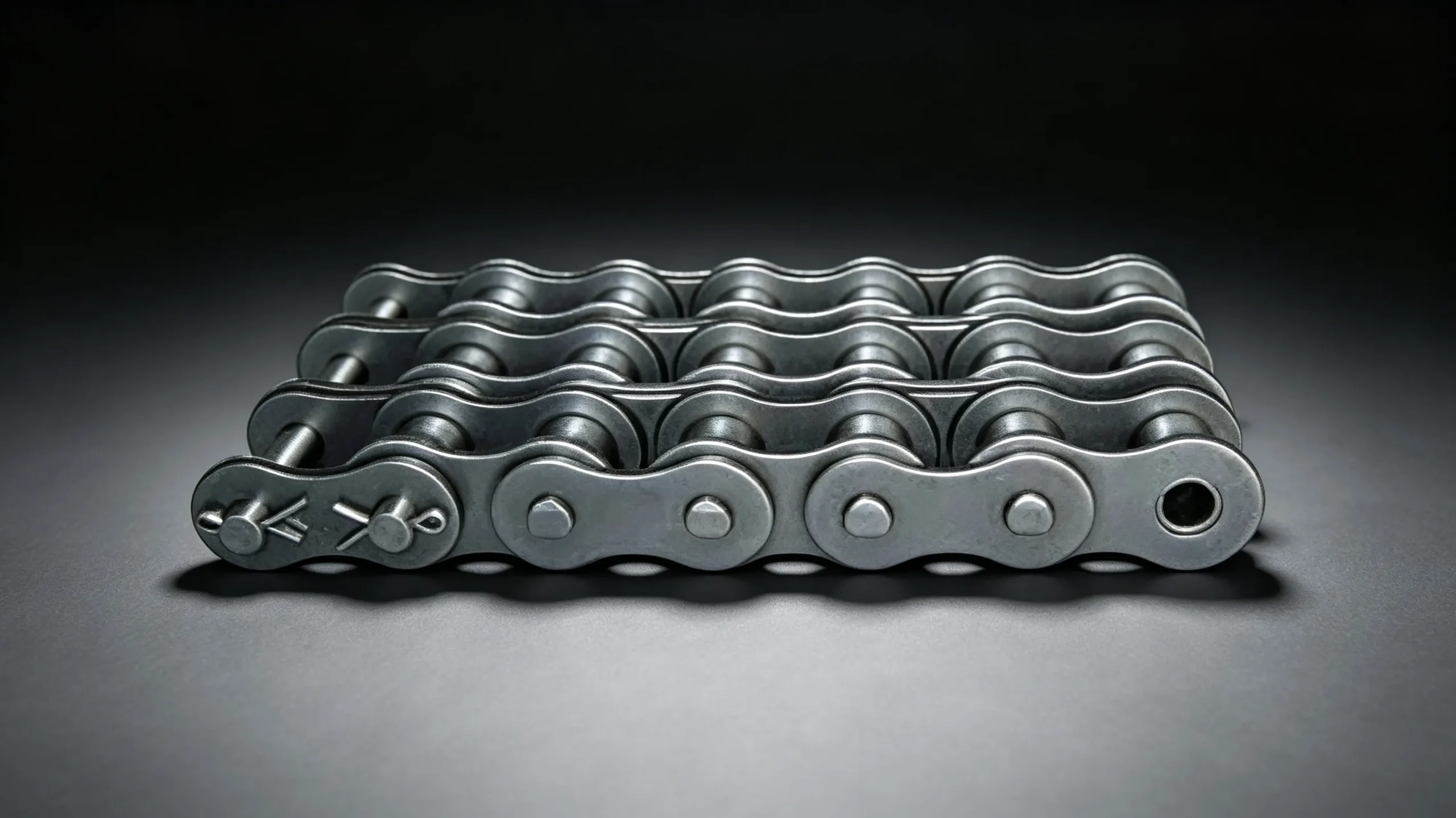
The Mechanics of Chain Skipping
Chain skip occurs when the rollers of an incoming roller chain cannot seat at the tooth root of the engaging sprocket and instead ride up over the tooth tip, advancing the chain by an additional pitch without the corresponding sprocket rotation. The force required to cause skip depends on the tension in the tight side of the chain — the higher the chain tension, the greater the resistance to skipping. When the misfit between chain engagement geometry and sprocket geometry is severe enough that the required seating force exceeds the tooth tip load resistance, skip is the result.
The critical insight is that roller chain skipping requires two conditions to coincide: a geometric mismatch between the chain and sprocket (which prevents correct seating), and sufficient chain tension to force the chain over the tooth tip rather than simply stalling the drive. This is why skip is often associated with sudden load increases — the elevated tension during a load spike provides the force needed to drive the chain over the poorly-fitted tooth.
Cause 1: Chain Elongation Beyond 3 Percent
The most common cause of chain skipping in service is a chain that has elongated past the 3 percent replacement threshold. As explained in the elongation mechanics: an elongated roller chain has a larger effective pitch than the sprocket tooth spacing. On entry to the sprocket, the rollers cannot seat at the tooth roots because the pitch mismatch means they arrive at a position higher on the tooth face. At modest elongation, this produces accelerated tooth wear. At 3 percent and beyond, the mismatch becomes severe enough that the chain rides on tooth tips and can skip under dynamic loading.
Solution: measure chain elongation using the multi-link span method. If elongation is at or beyond 3 percent, replace the chain. Inspect sprocket teeth at the same time — a chain that has been running at 3 percent elongation will have caused measurable sprocket tip wear. If tooth profile is hooked, replace sprockets concurrently.
Cause 2: Worn Sprocket Teeth
Even with a new chain installed, a sprocket whose teeth have developed a hooked profile from previous service with an elongated chain will cause skipping. The hooked tooth profile engages the new chain rollers at the wrong point on the tooth face, generating off-centre loads that the chain tries to escape by riding over the tooth tip when tension is sufficient. New chain on badly worn sprockets is a predictable and avoidable cause of chain skip that is surprisingly common in practice.
Solution: always inspect sprocket teeth when installing new roller chain. Hold a new chain segment against the tooth flanks — if rollers sit above the tooth root and bridge across two tooth tips, the sprocket is worn and must be replaced. The cost of new sprockets is significantly less than the cost of repeated premature chain failures on a worn drive.
Cause 3: Incorrect Chain Specification
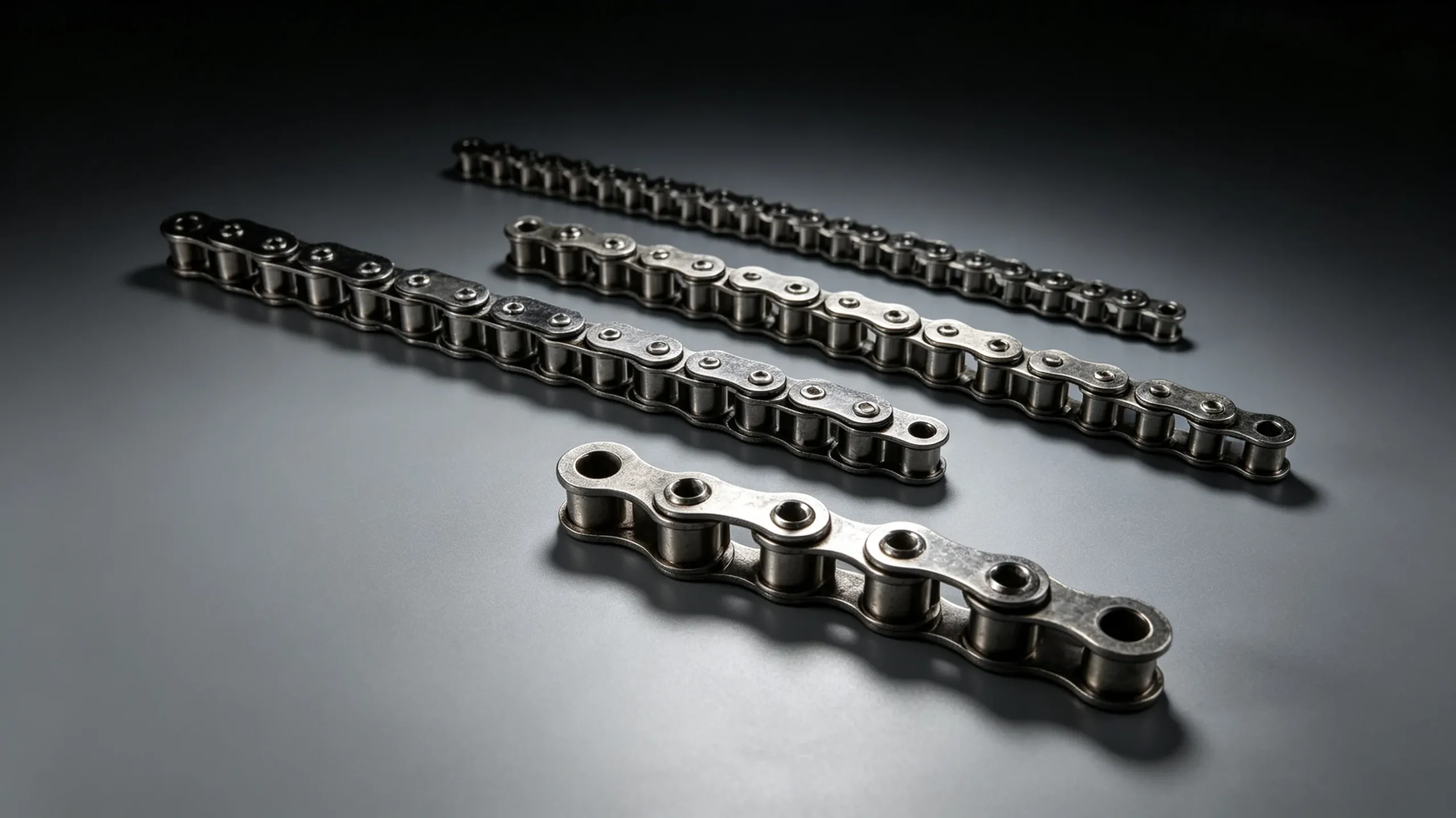
A roller chain of the wrong standard installed on sprockets machined for the correct standard will skip, particularly under load. If an ANSI chain is installed on ISO sprockets (or vice versa), the roller diameter mismatch means the rollers cannot seat at the tooth root. Under light load the drive may appear to function normally. Under the elevated tension of a load peak, the improperly seated rollers are driven over the tooth tips — producing skip.
This is a common scenario in Australia when replacement chain is sourced without verifying that the standard (ANSI vs ISO) matches the existing sprockets. Solution: identify the chain standard by measuring pitch, roller diameter, and inner width, then compare against the ANSI B29.1 and ISO 606 tables. Replace the chain with the correct standard for the installed sprockets.
Cause 4: Insufficient Chain Tension
A chain with excessive slack-side sag engages the driving sprocket with less wrap arc than designed, reducing the number of teeth simultaneously in engagement. In extreme cases, the chain can miss individual teeth entirely on the entry arc, producing the characteristic skip and snap. Incorrect tension is particularly common after chains have been replaced and the take-up has not been adjusted to compensate for the new chain length, or when a manual tensioner has been loosened for maintenance and not re-set correctly.
Solution: adjust chain tension to achieve slack-side sag of approximately 2 to 3 percent of the sprocket centre distance for horizontal drives. For inclined drives, reduce the target sag to 1 to 2 percent. Verify after adjustment that the chain does not become tight at any sprocket position — on a chain with an unequal number of links relative to the tooth counts, tension varies by a small amount as the chain revolves.
Cause 5: Shock Loading Exceeding the Chain Rating
Even with correct chain elongation, correct sprocket condition, and correct tension, a sudden shock load spike can cause a correctly specified chain to skip momentarily if the peak load exceeds the force required to seat the rollers against the sprocket tooth root. This is rare in correctly specified drives but can occur when the application generates shock loads higher than the service factor applied during chain selection.
Diagnostic signs: skip occurs only under specific operating conditions (e.g. starting under full load, material jams) and not during normal running; the chain and sprockets show otherwise normal wear patterns. Solution: recalculate the service factor for the actual shock conditions and upgrade to heavy duty roller chain at the same pitch, or to the next larger pitch. Sawtooth plate roller chain can also help in these conditions by improving the fatigue resistance of the plate at the higher cyclic stress levels produced by frequent shock events.
Cause 6: Sprocket Tooth Count Too Low
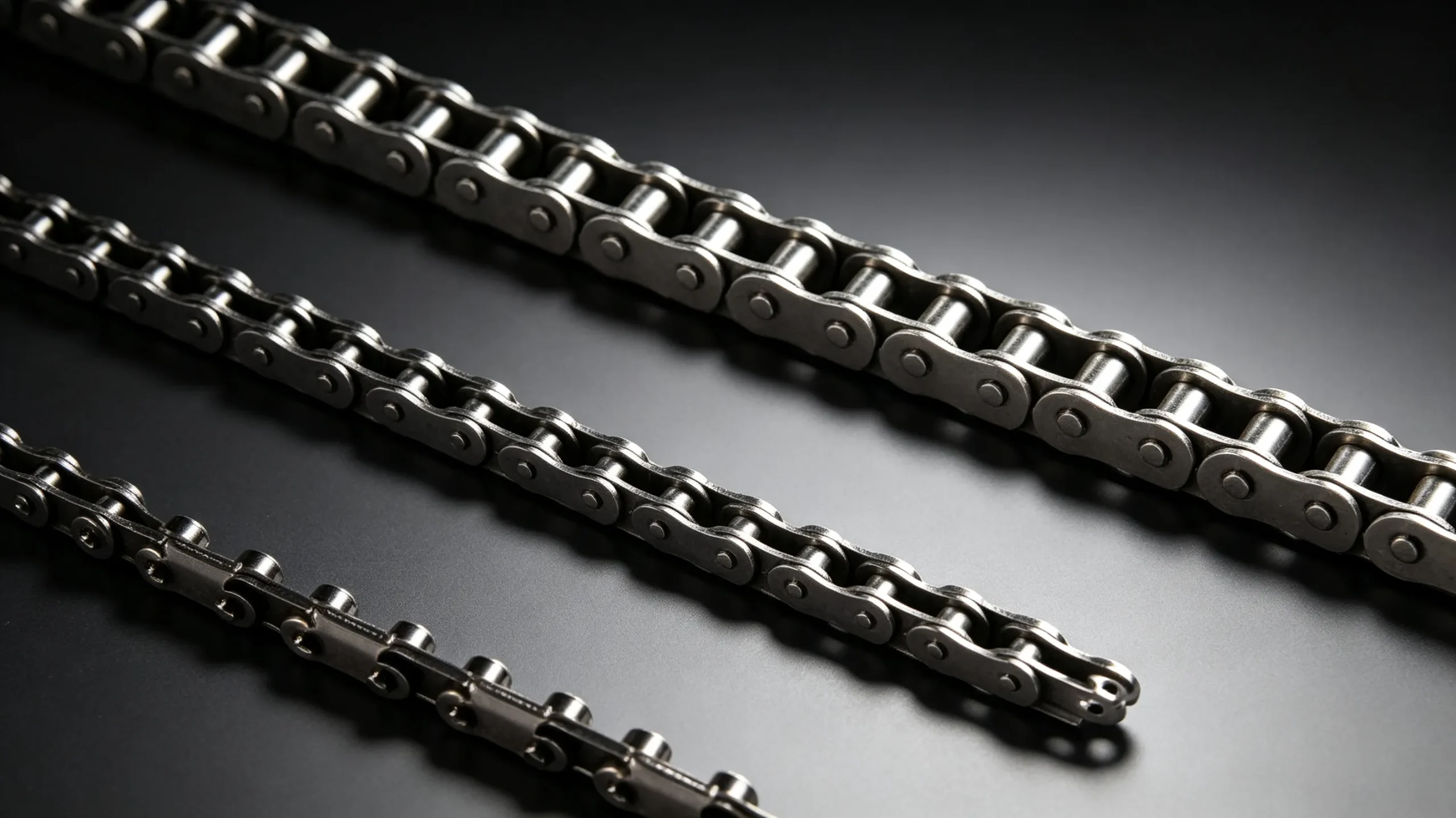
A driving sprocket with fewer than 13 teeth generates such severe chordal action that the chain velocity oscillates visibly with each tooth engagement — and at elevated speeds, these oscillations can cause momentary slack-side slack that allows the chain to disengage from the sprocket momentarily. This is particularly problematic on high-speed drives with small sprockets where the oscillation frequency approaches the natural frequency of the chain loop.
Solution: redesign the drive to use a minimum of 17 teeth on the small sprocket wherever possible. If shaft layout prevents this, reduce chain speed by using a larger pitch chain and adjust the overall drive ratio through gearing before the chain drive.
| Cause | Diagnostic Sign | Fix |
|---|---|---|
| Chain elongation | Skip under load; chain measures above 3% elongation | Replace chain; inspect sprockets |
| Worn sprocket teeth | New chain skips; hooked tooth profile visible | Replace sprockets concurrently with chain |
| Wrong specification | Skip under load; roller does not seat at tooth root | Identify correct standard; replace with matching chain |
| Insufficient tension | Skip on entry to drive sprocket; excessive slack-side sag | Adjust take-up to correct sag target |
| Shock overloading | Skip only during peak loads; normal operation otherwise | Upgrade to heavy duty or next pitch; increase service factor |
| Small sprocket tooth count | Vibration and skip at elevated speeds | Redesign to minimum 17-tooth small sprocket |
EverPower Roller Chains Australia provides chain specification and replacement chain for drives experiencing skipping or engagement problems. Contact our Sydney team with your chain size, sprocket tooth count, and description of when skipping occurs — we can identify the cause and recommend the correct specification.
+61 2 9708 3322 | [email protected] | 27 Harley Crescent, Condell Park NSW 2201