
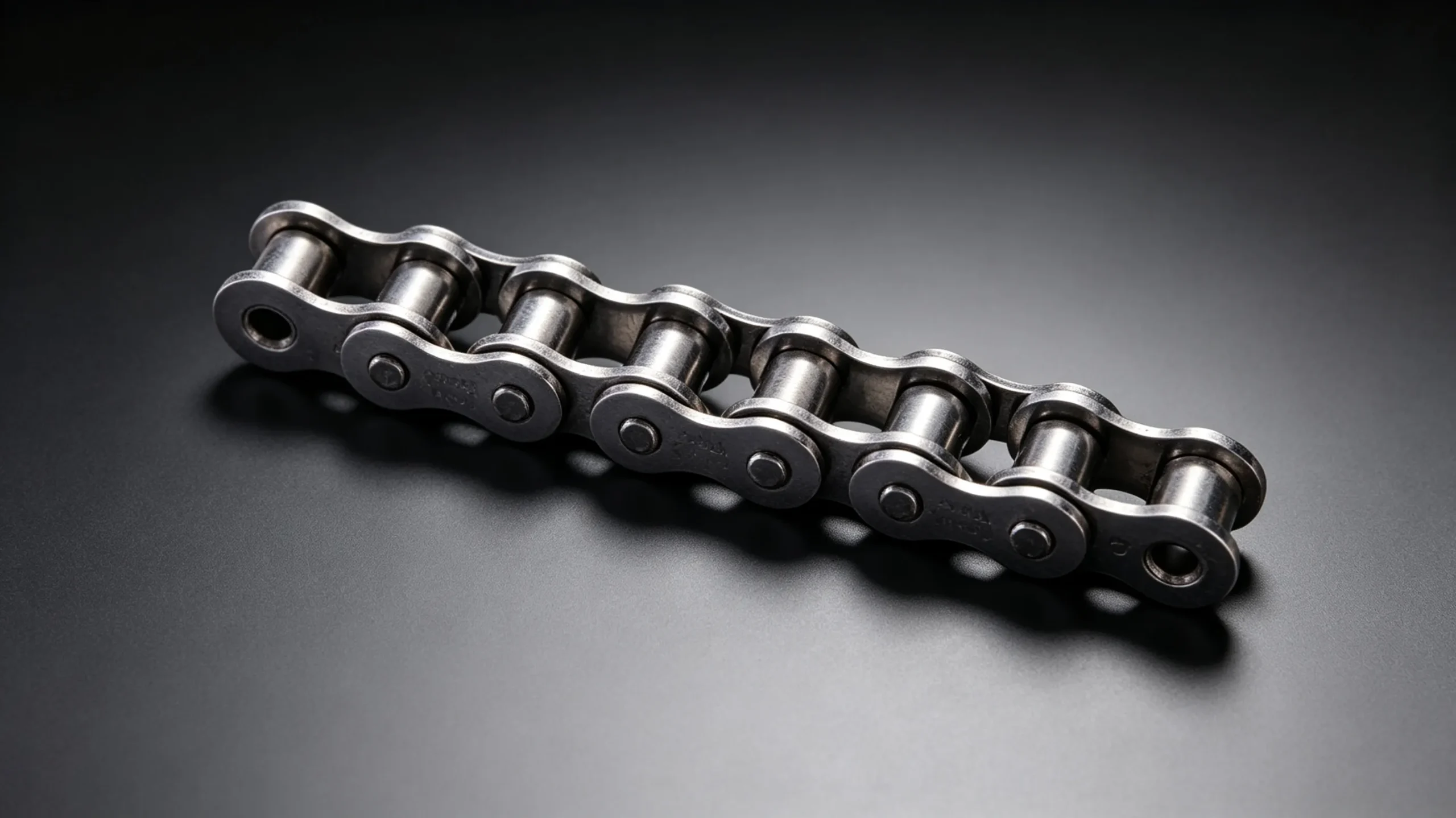
Rapid roller chain elongation — reaching the 3 percent replacement threshold in a fraction of the expected service life — is one of the most frequent maintenance complaints in Australian agricultural and industrial operations. The chain appears to stretch at a rate that feels disproportionate to the operating hours and load conditions. Understanding why this happens requires clarity on what actually causes elongation (wear at the pin-bushing interface, not plastic deformation of the plates) and which specific factors drive that wear rate above the baseline. This guide covers the six most common causes of fast chain elongation and the practical steps to resolve each one.
Why “Stretching” Happens Faster Than It Should
The rate of roller chain elongation is fundamentally determined by the wear rate at the pin-bushing interface — how much material is removed per articulation cycle. The wear rate is governed by three variables: the contact pressure at the interface (load-dependent), the relative sliding velocity at the contact (speed-dependent), and the condition of the contact surface (lubrication and contamination-dependent). When any of these variables is worse than the design assumption, elongation is faster than the manufacturer estimate.
Normal industrial roller chain elongation in a correctly specified, well-lubricated drive is so slow that it is measurable only over hundreds of operating hours. Fast elongation — where the chain visibly loosens over days or weeks — means at least one of the three variables is far outside the design assumption. The diagnostic task is to identify which variable is responsible.
Cause 1: No Lubrication or Lubrication Applied Incorrectly
By a wide margin, lubrication failure is the most common cause of rapid roller chain elongation. A chain running without oil at the pin-bushing interface operates as a dry sliding contact under high Hertz contact pressure. Wear rates under dry conditions are 10 to 50 times higher than under correctly lubricated conditions. A chain that should last 2,000 hours with correct lubrication can reach 3 percent elongation in under 200 hours when run dry.
Lubrication applied to the wrong location is almost as damaging as no lubrication. Oil sprayed onto the outer surfaces of the chain — the roller faces and outer link plates — does not reach the pin-bushing interface where it is needed. Lubrication must be applied to the inner link area, between the inner and outer plates on the slack (loose) side of the chain, where capillary action can draw it into the pin-bushing clearance. A common error is applying oil to a running chain by spraying it from the outside while watching the outer rollers — this achieves good coverage on the rollers (which need minimal lubrication) and poor coverage at the pin-bushing interface (which needs the most).
Cause 2: Abrasive Contamination at the Pin-Bushing Interface
In agricultural and mining environments, the operating atmosphere delivers a continuous supply of abrasive particles — grain dust, fine silica, mineral fines — that penetrate the pin-bushing clearance and act as a cutting medium between the hardened steel surfaces. This three-body abrasive wear is additive to the normal adhesive wear from the pin-bushing sliding contact, and in severely contaminated conditions it can dominate the total wear rate.
Three-body abrasive wear is particularly insidious because it can occur even when external lubrication appears adequate. Oil applied to the outside of the chain can carry fine abrasive particles into the pin-bushing clearance rather than flushing them away, converting what would be a protective film into an abrasive slurry. The solutions are either to use a chain type that seals the pin-bushing interface against external contamination (O-ring roller chain or self-lubricating roller chain), or to use a penetrating, low-viscosity oil that flushes particles out of the interface rather than trapping them.
Cause 3: Running at More Than the Rated Working Load
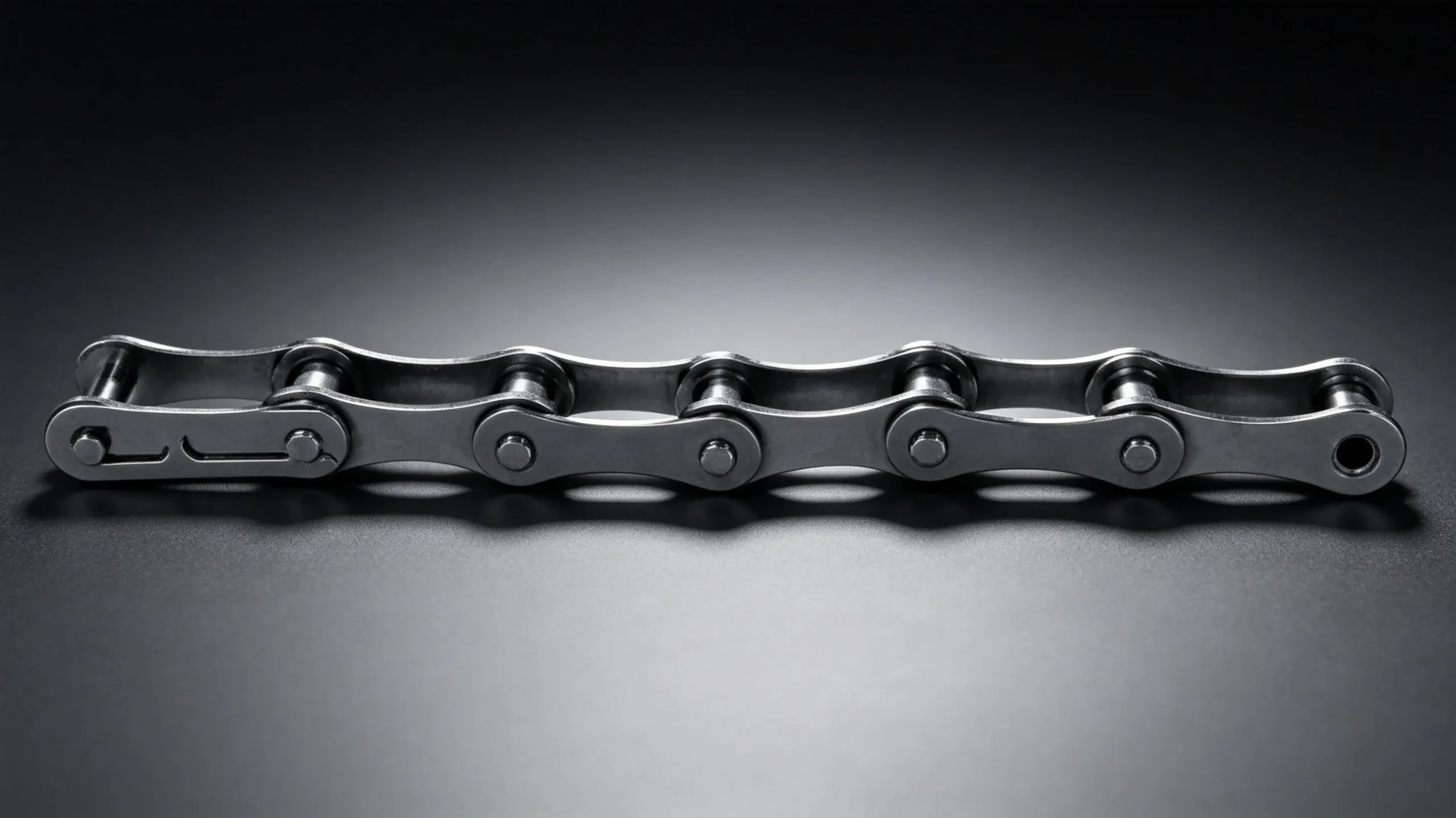
Operating a roller chain above its rated working load increases the Hertz contact pressure at the pin-bushing interface beyond the oil film load-carrying capacity. When the oil film is penetrated by the contact load, metal-to-metal contact occurs and wear rate increases sharply — even though lubricant is present. The transition from lubricated to boundary lubrication at the pin-bushing interface is not always obvious from outside the drive; the chain may appear to run normally while wearing at several times the normal rate.
Signs that your chain is overloaded include: elongation that is faster than the manufacturer estimate even with correct lubrication, link plate fatigue cracks appearing alongside the elongation, and the chain running hot to the touch on the tight side. Calculate the actual working load from measured shaft power and compare it to the rated working load for your chain pitch. If you are operating above 80 percent of rated working load with any shock factor in the drive, upgrade to heavy duty roller chain or the next larger pitch.
Cause 4: Chain Speed Too High for the Pitch
At elevated chain speeds, two phenomena combine to accelerate elongation. First, the frequency of pin-bushing articulation cycles increases proportionally with speed — more cycles per hour means more wear per hour at the same wear rate per cycle. Second, the chordal action (polygon effect) at the sprocket generates dynamic load oscillations whose amplitude increases with the square of speed — at double the chain speed, the dynamic load component is four times higher, pushing the pin-bushing interface further into the boundary lubrication regime on each load peak.
For conveyor roller chain and drive chain, verify that the operating chain speed is within the manufacturer specification for the pitch. As a guideline: ANSI 60 chain should not routinely exceed 5 to 6 m/s, ANSI 80 should not exceed 3 to 4 m/s, and ANSI 100 and larger should stay below 2.5 m/s in most industrial applications. If your drive speed exceeds these thresholds, consider moving to a smaller pitch with duplex strands to maintain capacity while reducing chain speed.
Cause 5: Sprocket Tooth Count Too Low
Sprockets with fewer than 17 teeth produce pronounced chordal action (the polygon effect) that generates dynamic load oscillations in the chain at each sprocket revolution. Below 13 teeth, these oscillations become severe enough to cause significant additional wear at the pin-bushing interface even at moderate speeds. The chordal action load is a dynamic overload superimposed on the static working load — it is not accounted for by the service factor in most simple drive calculations, and it can push a chain that appears correctly sized for the static load into rapid wear territory.
If your drive uses small sprockets (fewer than 17 teeth on the small sprocket), consider redesigning the drive to use at least a 17-tooth driving sprocket. This may require changing sprocket pitch diameter, adjusting the gear ratio, or increasing the chain pitch. The investment in the redesign is typically recovered quickly through reduced roller chain replacement frequency.
Cause 6: Chain Installed on Worn Sprockets
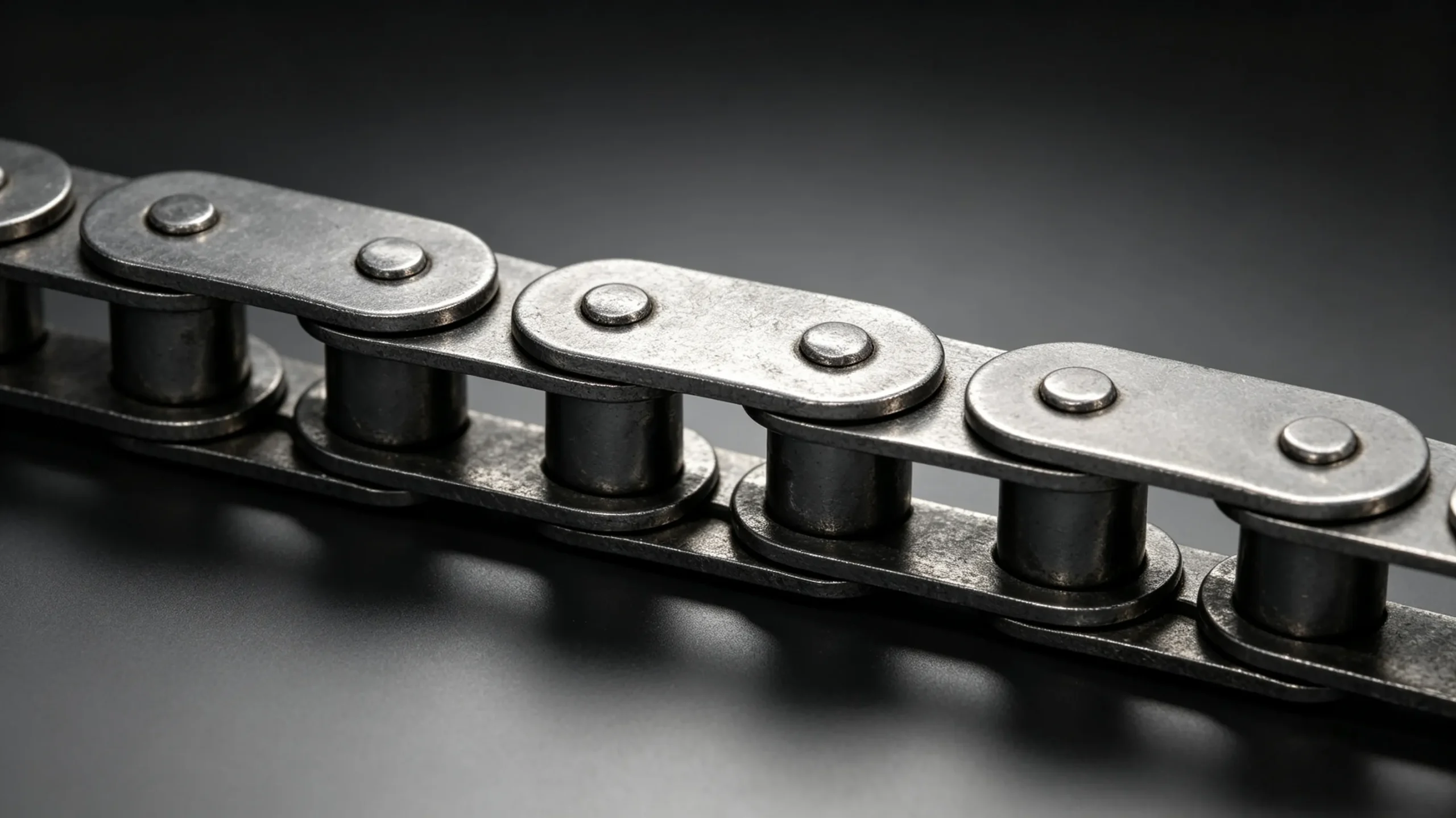
Installing a new roller chain on sprockets with worn, hooked teeth is one of the most reliably fast ways to shorten the replacement chain life. Worn teeth engage the new chain rollers at the wrong point on the tooth face — further up the tooth than designed — generating off-centre loads that accelerate both roller wear and pin-bushing wear simultaneously. Field measurements have documented new chain elongation rates 40 to 70 percent faster on worn sprockets than on new or minimally worn sprockets under identical load conditions.
The fix is straightforward: always inspect sprocket tooth profile when replacing chain. Hold a new chain section against the tooth flanks of the installed sprocket. If the rollers seat at the tooth root, the sprocket is acceptable. If the rollers bridge across the tooth tips, the sprocket is worn and must be replaced before the new chain is installed.
| Cause | Key Diagnostic Indicator | Primary Fix |
|---|---|---|
| No/incorrect lubrication | Dry surfaces; rapid elongation; chain runs hot | Establish oil application to inner links at correct interval |
| Abrasive contamination | Grit visible in chain; rapid elongation in dusty environment | Switch to O-ring or self-lubricating chain |
| Overloading | Chain hot; plate fatigue cracks alongside elongation | Upgrade to heavy series or next pitch size |
| Speed too high | Elongation faster at higher RPM; visible vibration | Move to smaller pitch with duplex strands |
| Small sprocket tooth count | Vibration and noise; elongation faster than expected | Redesign to minimum 17-tooth small sprocket |
| Worn sprockets | Short life on new chain; hooked tooth profile | Replace sprockets concurrently with chain |
EverPower Roller Chains Australia can help diagnose and resolve rapid roller chain elongation in your application. Contact our Sydney team with your chain size, application description, and current service life — we will identify the cause and recommend a specification or maintenance solution.
+61 2 9708 3322 | [email protected] | 27 Harley Crescent, Condell Park NSW 2201