
Purchasing managers ordering replacement roller chain for the first time often encounter an unexpected complication: the specification sheet from the equipment manufacturer lists a BS chain number, but the local supplier quotes an ANSI number — and the two appear to have the same pitch. Are they interchangeable? The short answer is no, and the longer answer requires understanding how BS roller chain and ANSI roller chain standards differ, where they overlap, and how to identify which one your equipment requires.
The Origin of BS and ANSI Standards
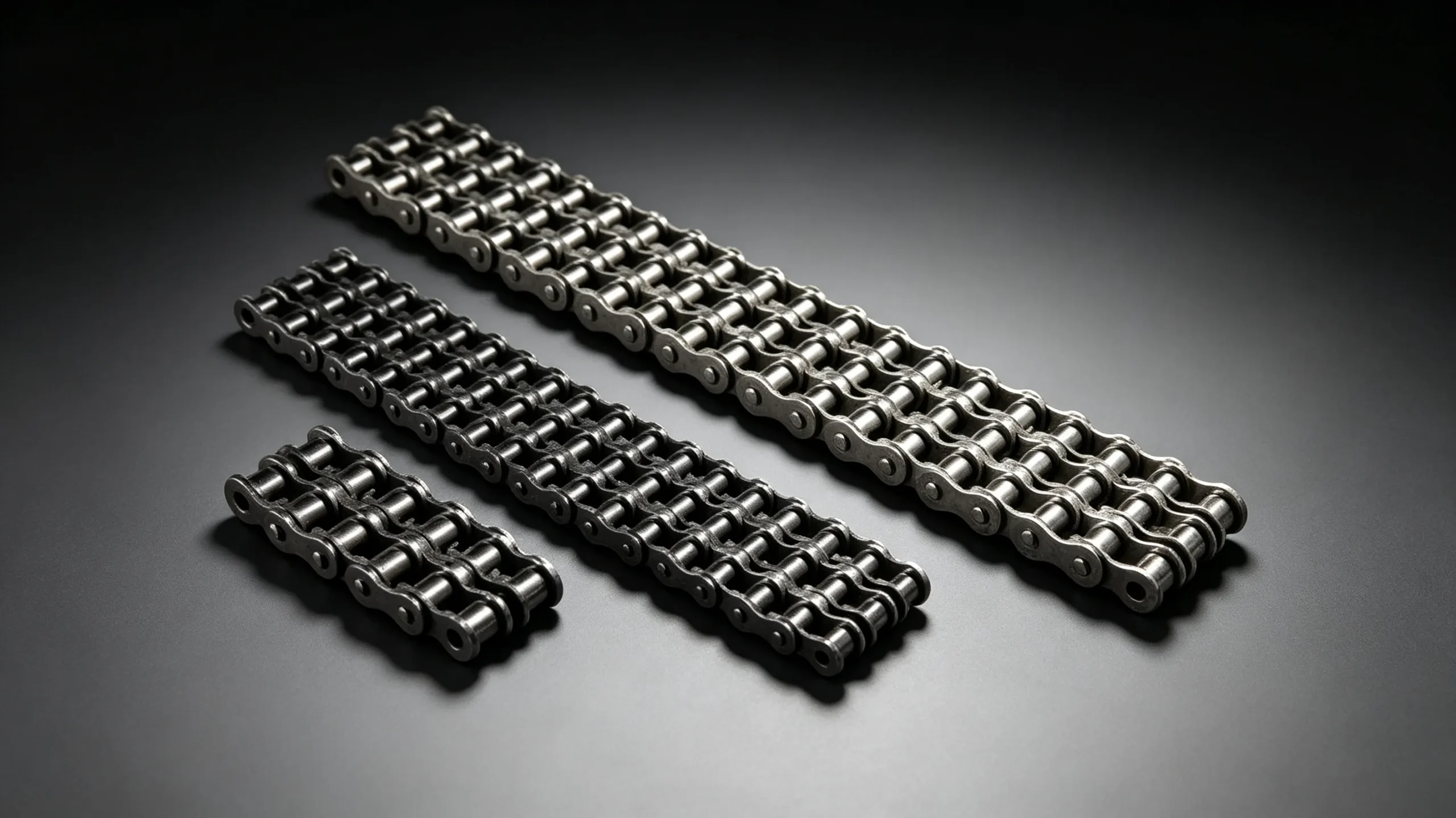
British Standard BS 228 — now superseded and largely replaced by the harmonised European standard ISO 606 — was the dominant roller chain standard in the United Kingdom and across the British Commonwealth from the early twentieth century until the adoption of the ISO standard. BS roller chain numbers use a letter-number format: 06B, 08B, 10B, 12B, 16B, where the number represents the pitch in sixteenths of an inch and the B designates the British series geometry.
ANSI roller chain (American National Standards Institute, standard B29.1) uses a pure number format: 40, 50, 60, 80, 100, where the first digits represent the pitch in eighths of an inch. ANSI was developed independently of BS 228 and differs from it in roller diameter and inner link width, even where the pitch is identical. The practical consequence is that ANSI and BS chains of the same pitch are not dimensionally interchangeable, and neither are their matching sprockets.
Key Dimensional Differences at Common Pitch Sizes
| Specification | BS 08B (12.7mm) | ANSI 40 (12.7mm) | BS 12B (19.05mm) | ANSI 60 (19.05mm) | BS 16B (25.4mm) | ANSI 80 (25.4mm) |
|---|---|---|---|---|---|---|
| Pitch (mm) | 12.70 | 12.70 | 19.05 | 19.05 | 25.40 | 25.40 |
| Roller Dia. (mm) | 8.51 | 7.92 | 12.07 | 11.91 | 15.88 | 15.88 |
| Inner Width (mm) | 7.75 | 7.85 | 11.68 | 12.57 | 17.02 | 15.75 |
| Min. Break Load (kN) | 17.8 | 14.1 | 29.0 | 31.3 | 60.0 | 55.6 |
| Plate Thickness (mm) | 1.60 | 1.50 | 2.10 | 2.40 | 4.00 | 3.20 |
At 12.7 mm pitch, the BS 08B roller diameter (8.51 mm) is larger than the ANSI 40 roller diameter (7.92 mm) — a difference of 0.59 mm. The inner width difference is smaller (7.75 mm vs 7.85 mm) but still means the chains are not interchangeable on the same sprocket. At 25.4 mm pitch, the roller diameters converge (both 15.88 mm) but the inner widths diverge significantly: BS 16B at 17.02 mm vs ANSI 80 at 15.75 mm. This inner width difference makes the sprocket tooth face width non-interchangeable even where the roller diameter matches.
Why BS 228 Was Replaced by ISO 606
ISO 606 is the international standard that absorbed and largely replaced national standards including BS 228, DIN 8187, and several others across Europe and beyond. ISO 606 B-series chain (the B denoting the series formerly known as British Standard) is dimensionally equivalent to BS 228 for most pitch sizes. When a supplier or manufacturer quotes ISO 12B, they are providing roller chain with the same dimensions as BS 228 12B. The standards are compatible and the terms are used interchangeably in most markets.
In Australia, the transition from BS 228 to ISO 606 was gradual and is effectively complete in the supply chain, though many equipment manufacturers and maintenance teams still reference BS chain numbers from original equipment manuals written before the ISO standard was widely adopted. When ordering, quoting either the BS or ISO designation for the same chain size will produce the same product from a reputable supplier — they are the same geometry under different standard names.
How to Identify Whether Your Equipment Uses BS or ANSI Chain
Check the Equipment Origin
Equipment manufactured in the United Kingdom, Europe, or Japan predominantly uses ISO roller chain (BS equivalent). Equipment manufactured in North America, and most North American brand agricultural machinery sold in Australia, uses ANSI roller chain. Chinese-manufactured equipment is increasingly standardised on ISO in most product categories, though some OEM supply chains deliver ANSI-specification chain for export markets.
Measure the Existing Chain
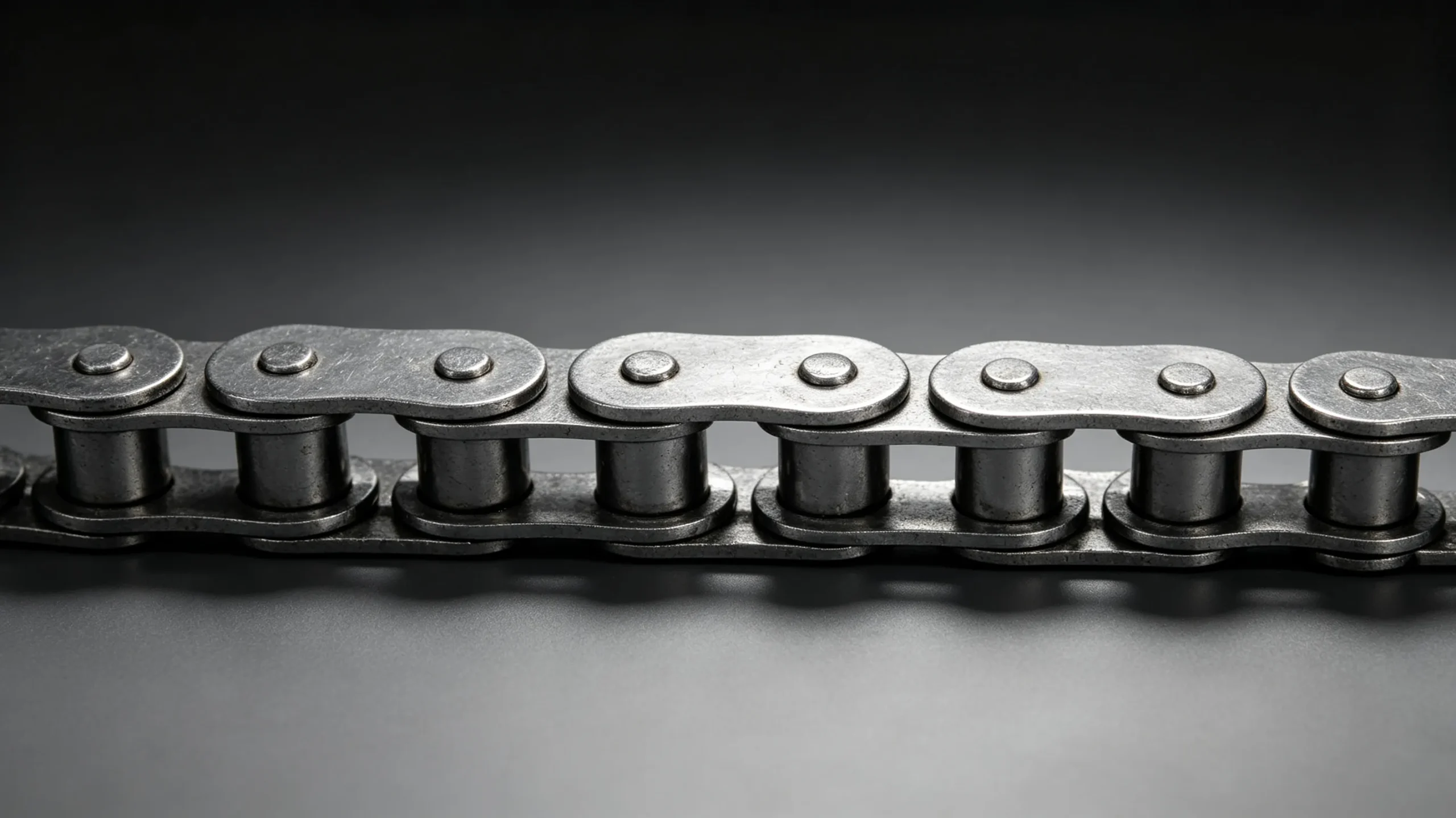
The most reliable identification method is physical measurement. Measure pitch, roller outer diameter, and inner link width with a vernier caliper, then cross-reference against the tables above. Roller diameter is the most distinctive differentiator at pitches where ANSI and BS differ — at 12.7 mm pitch, measuring a roller of 8.51 mm verifies BS 08B; measuring 7.92 mm verifies ANSI 40.
Read the Chain Markings
Quality roller chain carries its chain number stamped on the outer link plates. BS chains carry markings such as 08B, 12B, or 16B; ANSI chains carry 40, 60, or 80. If the marking is worn or illegible, measurement is the fallback. Some Chinese-manufactured chains carry dual markings indicating compliance with both ISO and ANSI standards — verify dimensions against the table rather than accepting the marking alone, as dual-marked chains sometimes use dimensions that are a compromise between the two standards rather than fully conforming to either.
Can BS and ANSI Chain Be Mixed in the Same Drive?
No. Mixing BS roller chain and ANSI roller chain in the same drive loop — even at matching pitch — will cause uneven load distribution at every joint between the two chain types. The different roller diameters mean each type seats at a different radial position on the sprocket tooth, creating a periodic shock load every time a mixed joint passes the sprocket engagement zone. This accelerates both chain and sprocket wear and can cause chain skip under dynamic loading.
When replacing a section of an existing chain loop, always replace the full loop with chain of a single standard and size. Partial replacement with a different standard is never acceptable, regardless of whether the pitch appears to match.
BS Equivalent Reference: Common Sizes for Australian Maintenance Teams
| BS / ISO Number | ANSI Equivalent | Pitch (mm) | Notes |
|---|---|---|---|
| 04B | ANSI 25 (approx) | 6.00 | Different pitch — not exact equivalent |
| 06B | Near ANSI 35 | 9.525 | Close but different roller/width dimensions |
| 08B | Near ANSI 40 | 12.70 | Same pitch; different roller dia and inner width |
| 10B | Near ANSI 50 | 15.875 | Same pitch; different inner width |
| 12B | Near ANSI 60 | 19.05 | Same pitch; slightly different roller dia |
| 16B | Near ANSI 80 | 25.40 | Same pitch; different inner width — roller dia matches |
| 20B | Near ANSI 100 | 31.75 | Same pitch; different inner width |
| 24B | Near ANSI 120 | 38.10 | Same pitch; different dimensions |
EverPower Roller Chains Australia stocks both ANSI roller chain (B29.1) and ISO roller chain (ISO 606, BS equivalent) across the full pitch range. Send us your chain measurements and we will identify the correct standard and specification for your replacement order.
+61 2 9708 3322 | [email protected] | 27 Harley Crescent, Condell Park NSW 2201