
The 3 percent elongation rule is quoted so frequently in roller chain maintenance literature that it can start to seem like a universal constant — a fixed threshold that applies equally to every chain, every drive, and every industry. It is not. The maximum allowable elongation for industrial roller chain varies by application, sprocket condition, chain pitch, and the consequences of a failure. Understanding why the 3 percent figure exists, where it comes from, and when a more conservative threshold is warranted will help maintenance engineers and fleet managers make better replacement decisions than simply waiting for the gauge to hit the standard limit.
Where the 3 Percent Figure Comes From
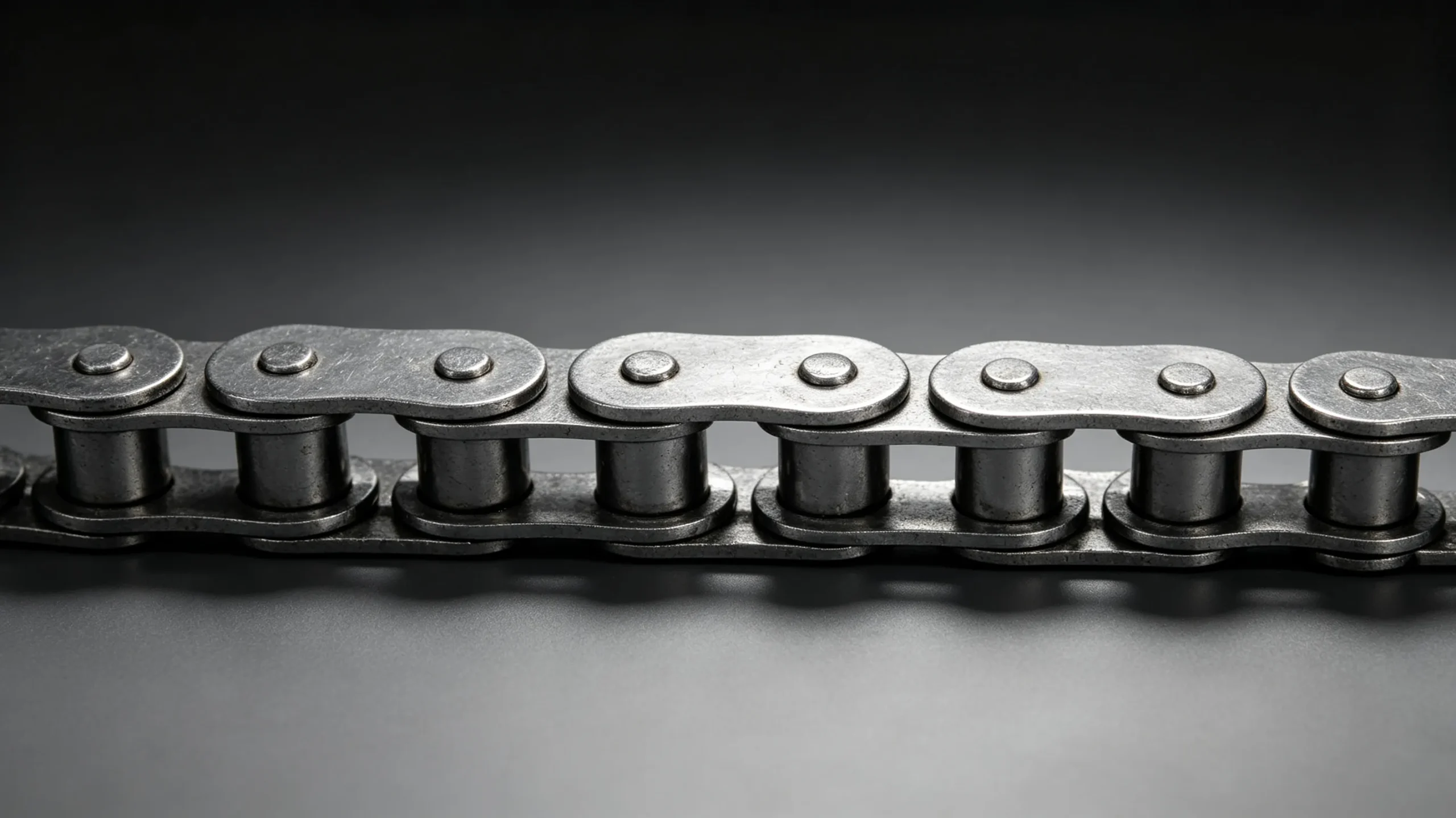
The 3 percent threshold is derived from the geometry of roller chain engagement with sprocket teeth. As a chain elongates, its effective pitch increases and the rollers seat progressively higher on the sprocket tooth flanks rather than at the tooth root. At approximately 3 percent elongation, the seating geometry has deteriorated to the point where the chain begins to ride over tooth tips rather than seating stably — a condition that causes both rapid tooth wear and chain skip under dynamic loading.
This 3 percent figure is specifically calibrated for the sprocket geometry defined in ANSI B29.1 and ISO 606. A sprocket machined to these standards begins to show significant tooth tip loading from an elongated chain at around 2.5 to 3 percent elongation. The 3 percent threshold gives a small margin of safety above the onset of problematic engagement geometry, making it a reasonable general limit for well-maintained drives with sprockets in good condition.
| Elongation Level | Chain Condition | Sprocket Impact | Recommended Action |
|---|---|---|---|
| 0–1% | Normal service wear | Minimal — rollers seat correctly | Continue operation, maintain lubrication schedule |
| 1–2% | Moderate wear | Slight tooth tip loading begins | Increase inspection frequency; plan replacement |
| 2–3% | Advanced wear | Noticeable tip wear accelerating | Replace chain at next scheduled opportunity |
| 3% | Replacement threshold | Significant tip wear; skip risk | Replace chain immediately; inspect sprockets |
| Above 3% | Overdue replacement | Rapid sprocket damage; chain skip likely | Emergency replacement; sprockets likely need replacement too |
When 3 Percent Is Too Lenient
Long Conveyor Systems With Expensive Sprockets
A mine-site overland conveyor running 200 metres between head and tail shafts uses large-diameter sprockets machined from high-alloy steel — components that can cost several thousand dollars each and take weeks to procure. Running the roller chain to the 3 percent elongation limit on such a system allows the sprocket teeth to absorb significant wear before replacement. For these drives, a 1.5 percent elongation limit is commonly applied: the chain is replaced earlier, more frequently, and at lower unit cost, while the sprockets survive 2 to 3 chain replacement cycles rather than requiring replacement concurrently with the chain.
Agricultural Equipment During Harvest
For agricultural roller chain in combine harvester and baler drives, the cost of a mid-harvest failure far exceeds the cost of a chain replaced prematurely. Many agricultural operators adopt a pre-season replacement policy regardless of measured elongation — any chain reading above 2 percent at pre-season inspection is replaced, even if it technically has remaining life according to the 3 percent rule. The logic is straightforward: chain costs a few hundred dollars; harvest downtime costs multiples of that per hour.
High-Speed Drives Where Chain Skip Is Dangerous
In drives where a chain skip event would cause mechanical damage or safety risks — such as a chain connecting a brake to a load-holding mechanism, or a chain drive in a multi-axis machine where sudden speed change causes crashes — replacing at 2 percent elongation is prudent. The chain skip that occurs as elongation approaches and exceeds 3 percent can be sudden and without obvious warning, making a conservative replacement threshold a safety measure as much as a maintenance decision.
When 3 Percent May Be Conservative
For some applications, operating a chain slightly past 3 percent elongation is tolerable. Slow-speed, low-load conveyors with newly machined sprockets and stable, consistent loading can continue operating at 3.5 to 4 percent elongation without immediate failure risk. The sprocket teeth absorb some additional wear, but if replacement is scheduled shortly and the operating conditions are benign, the extra service extracted from the chain does not generate unacceptable risk.
This is not a recommendation to ignore the 3 percent limit — it is a reminder that the limit is a guideline based on average conditions, not a cliff edge. Experienced maintenance engineers who know their equipment, their sprocket condition, and their operating environment can make informed judgements. Engineers without that depth of equipment knowledge should respect the 3 percent limit as a reliable conservative boundary.
How to Measure Elongation: The Right Way
Accurate elongation measurement requires a vernier caliper and the correct technique. The most common measurement error is spanning too few links. Measuring across 2 or 3 links gives a result that is dominated by the wear at those specific joints and may not represent the average chain elongation across the full loop. Always measure across a minimum of 10 links — 20 to 30 is better — and divide the measured length by the number of pitches to obtain the average measured pitch.
Do not measure immediately after a load peak or when the chain is vibrating. The chain should be stationary, relaxed (on the slack side or off the drive), and clean enough to see the pin centre positions clearly. Corrosion deposits or accumulated grease on the outer plates can obscure the measurement reference points and cause errors. Clean the measurement area before calipering if conditions require it.
| Application Type | Standard Elongation Limit | Conservative Limit | Rationale for Conservative Limit |
|---|---|---|---|
| General industrial drives | 3% | 2.5% | Provides additional sprocket life margin |
| Long conveyor systems | 3% | 1.5% | Protects expensive sprockets over multiple chain lives |
| Agricultural main drives | 3% | 2% or pre-season replacement | Avoids costly in-harvest failures |
| High-speed drives above 5 m/s | 3% | 2% | Reduces chain skip risk at elevated speeds |
| Mining and quarry conveyors | 3% | 2% | Difficult maintenance access; high failure cost |
| Food processing conveyors | 3% | 2% | Hygiene risk if chain fails over product line |
Sprocket Inspection at Chain Replacement
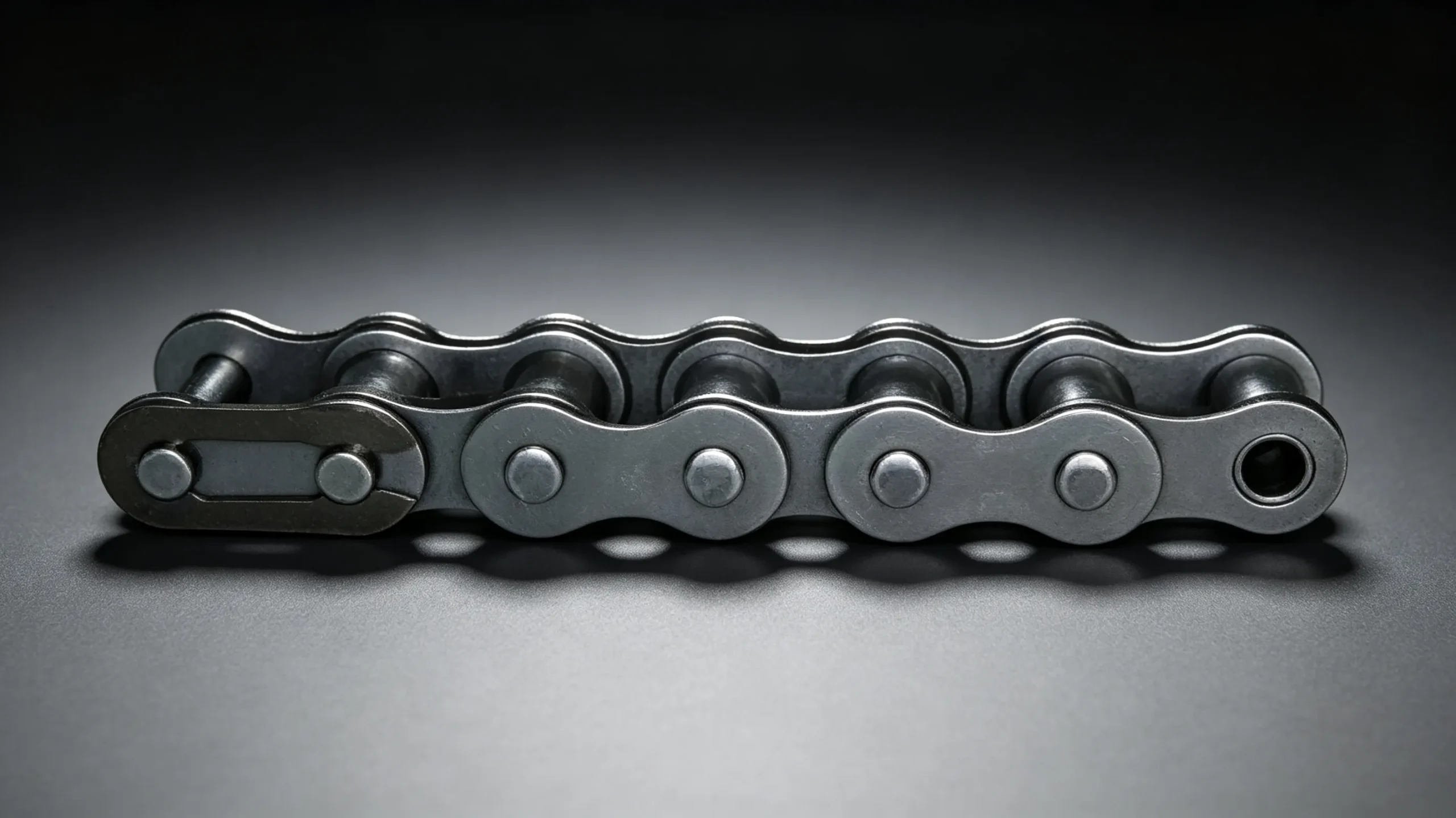
When roller chain reaches its elongation limit and is replaced, sprocket condition must be assessed before the new chain is installed. A sprocket that has been running with a chain at 2 to 3 percent elongation will have absorbed measurable tooth wear, particularly at the tooth tip where the elongated chain was riding. Install new chain on a worn sprocket and the service life of the new chain is immediately compromised — the mismatched geometry accelerates wear and can reduce the new chain life by 30 to 50 percent compared to a matched new chain-and-sprocket installation.
The practical test is simple: hold a new section of chain against the sprocket tooth profile. If the chain rollers seat at or near the tooth root, the sprocket is acceptable. If the rollers ride significantly above the root — bridging across the tooth tips rather than seating in the pockets — the sprocket is worn and should be replaced concurrently with the chain. Sprocket replacement every second or third chain change is a reasonable expectation for well-lubricated drives operating within their rated loads.
EverPower Roller Chains Australia can supply replacement industrial roller chain in ANSI and ISO series for all pitch sizes and strand counts. Contact our Sydney team to discuss replacement scheduling, elongation tracking methodology, and whether your sprockets require concurrent replacement.
+61 2 9708 3322 | [email protected] | 27 Harley Crescent, Condell Park NSW 2201