
The term “chain stretch” is used loosely in maintenance circles to describe the gradual increase in chain length that occurs with operating hours. Technically, the steel in the link plates does not stretch in the plastic deformation sense — the actual mechanism is quite different, and understanding the difference matters because it changes how you diagnose the problem, how you measure it, and how you decide when to act. Roller chain elongation is wear-driven, not stretch-driven, and knowing this shapes every aspect of the maintenance strategy around it.
The Actual Mechanism: Wear, Not Stretch
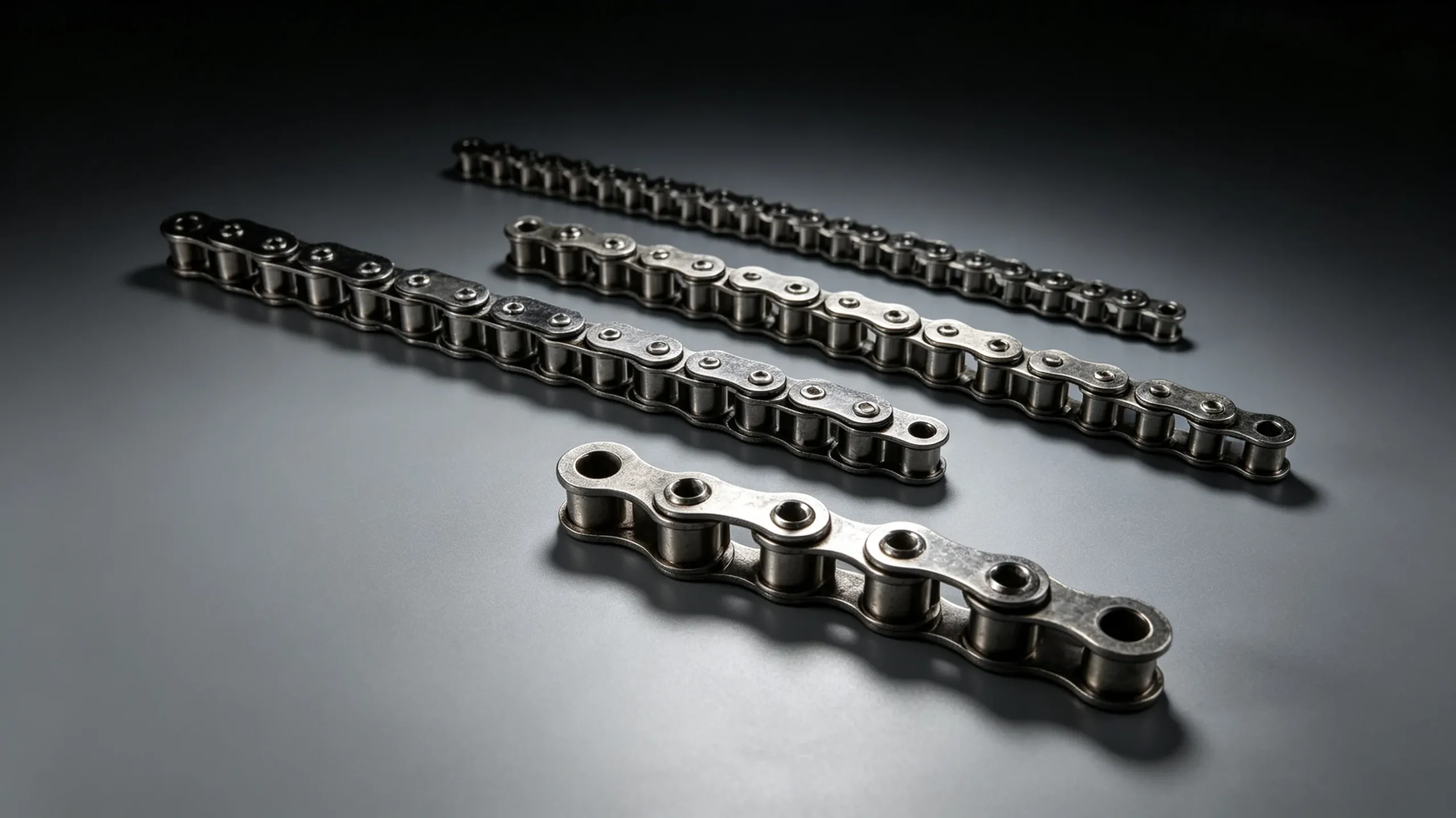
Roller chain elongation occurs because material is progressively worn away from the contact surfaces between the pin and the bushing inside each link. Every time the chain articulates over a sprocket — which happens once per revolution at the driving sprocket and once at the driven sprocket — the pin rotates slightly within the bushing bore. Under load, this relative rotation occurs under high contact pressure. Over thousands and then millions of articulation cycles, the contact surfaces wear by a small amount per cycle, increasing the effective centre-to-centre distance between adjacent pins by the total wear accumulated at each joint.
Because this wear occurs at every pin-bushing interface simultaneously across the full chain length, the cumulative effect on total chain length is the sum of the wear at every joint. A chain with 100 links has 100 pin-bushing interfaces. If each interface wears by an average of 0.19 mm over its service life, the total chain elongation is 100 x 0.19 mm = 19 mm — and on a chain with a nominal pitch of 19.05 mm (ANSI 60), that represents exactly 1 full extra pitch, or 1 percent elongation.
Why Elongation Causes Drive Failure
A new industrial roller chain seats perfectly at the root of each sprocket tooth because the roller diameter and tooth pocket geometry are designed to match at nominal pitch. As the chain elongates, the effective pitch of each link increases slightly. The chain tries to maintain its natural arc around the sprocket at this increased effective pitch, which means the rollers seat higher on the tooth faces rather than at the tooth root. This has three compounding consequences.
Sprocket Tooth Overloading
When the chain rides high on the sprocket teeth, fewer teeth share the transmitted load at any given moment. In a new matched chain-sprocket pair, load is distributed across the teeth in the wrap arc — typically 4 to 6 teeth simultaneously for a standard 17-tooth sprocket at moderate speed. As the chain elongates and rides higher, the effective load arc reduces and eventually the chain engages only the tips of 1 or 2 teeth, concentrating the full drive load on a tiny tooth contact area. Sprocket tooth tip wear accelerates exponentially in this condition.
Chain Skipping and Jumping
When elongation reaches approximately 3 percent of nominal length, the mismatch between effective chain pitch and sprocket tooth pitch becomes large enough that the chain can no longer seat consistently. Under sudden load changes, the chain skips over a tooth — producing an audible snap and a shock load spike that is far higher than the steady running tension. Roller chain skipping on sprockets is almost always a symptom of excessive elongation, not of sprocket damage — though the skipping event itself causes sprocket damage rapidly if the chain is not replaced.
Increased Wrap Arc Tension Distribution Error
On the return (slack) strand of the drive, an elongated chain hangs lower between sprockets than designed, increasing the effective catenary sag. This increases the minimum required pretension to maintain adequate contact on the slack side and can cause the chain to ride off the sprocket on the return arc in extreme cases — particularly on inclined drives where gravity assists the separation.
How to Measure Chain Elongation Accurately
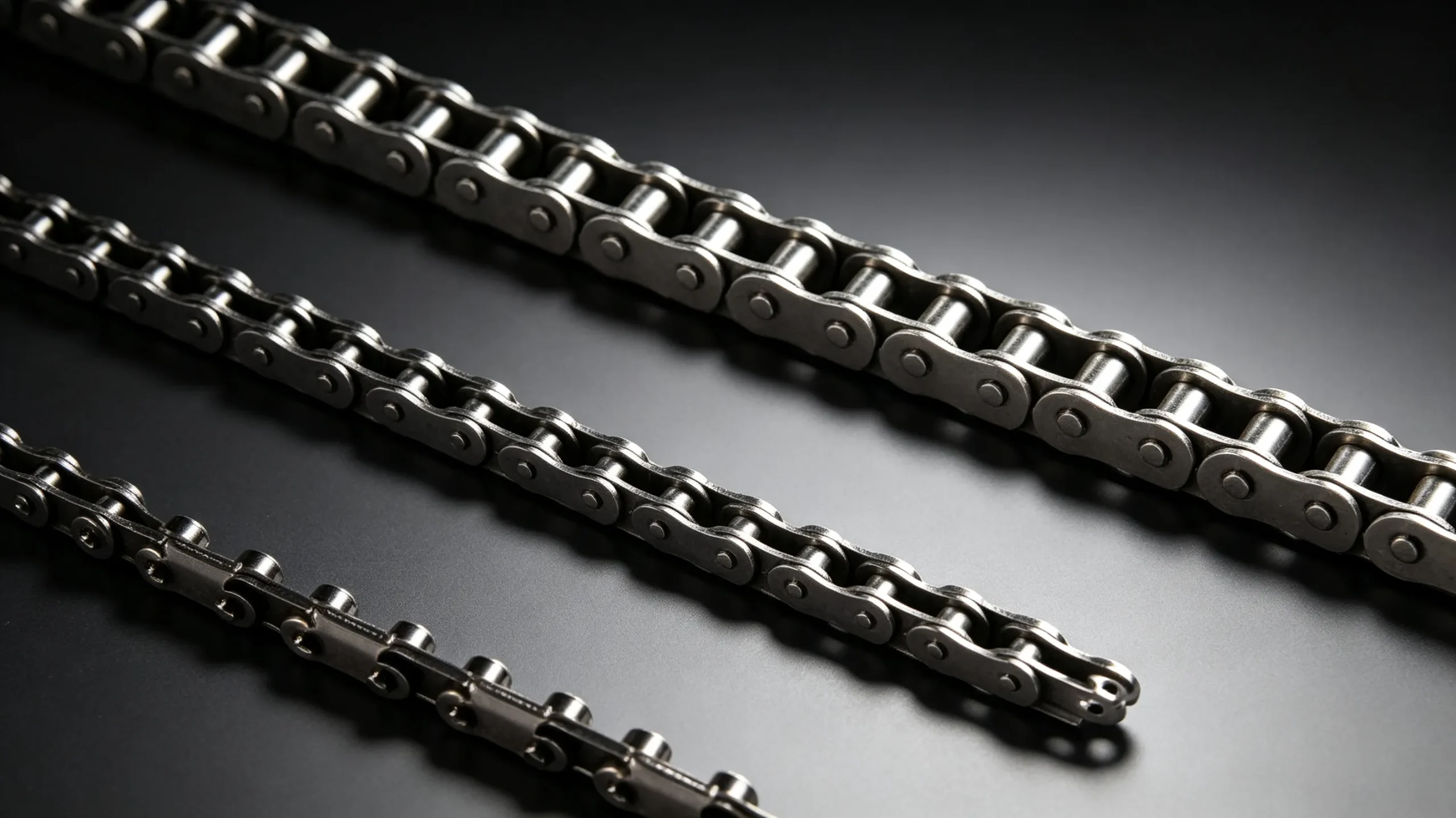
The standard measurement method is the multi-link span technique. Count out a span of at least 10 consecutive links — preferably 20 to 30 for greater accuracy — and measure the pin-centre-to-pin-centre distance across the full span using a vernier caliper. Divide the measured length by the number of pitches in the span to obtain the average measured pitch. Compare this to the nominal pitch for the chain size.
| ANSI Chain | Nominal Pitch (mm) | 30-Link Nominal (mm) | 1% Elongation (mm) | 3% Limit (mm) | 2% Conv. Limit (mm) |
|---|---|---|---|---|---|
| ANSI 40 | 12.70 | 381.0 | 384.8 | 392.4 | 388.6 |
| ANSI 50 | 15.875 | 476.25 | 481.0 | 490.5 | 485.8 |
| ANSI 60 | 19.05 | 571.5 | 577.2 | 588.6 | 583.1 |
| ANSI 80 | 25.40 | 762.0 | 769.6 | 784.9 | 777.2 |
| ANSI 100 | 31.75 | 952.5 | 962.0 | 981.1 | 971.5 |
What Accelerates Elongation
Lubrication Failure
Of all the factors that accelerate roller chain elongation, lubrication failure has the largest effect. A chain running without oil operates the pin-bushing interface as a dry sliding contact under high Hertz contact pressure. The wear rate under dry conditions can be 10 to 50 times higher than under correctly lubricated conditions at the same load and speed. Field studies of agricultural machinery chains have documented elongation to the 3 percent replacement threshold in fewer than 200 operating hours on dry-running chain, versus 2,000 or more hours with correct lubrication intervals maintained.
Abrasive Contamination
Grain dust, sand, and mineral fines that penetrate the pin-bushing clearance introduce three-body abrasion — a mechanism where hard particles act as a cutting medium between the two metal surfaces. This is particularly severe in agricultural and construction environments. Sawtooth plate roller chain does not intrinsically resist abrasive contamination at the pin-bushing interface, but the extended service intervals between chain replacements that the sawtooth plate provides reduce the total number of contamination exposure events over the equipment lifetime.
Overloading
Operating a chain above its recommended working load increases the Hertz contact pressure at the pin-bushing interface beyond the hydrodynamic oil film capacity, causing metal-to-metal contact even with adequate lubricant supply. Each overload event removes more material per articulation cycle than a correctly loaded chain, compressing the fatigue and wear life simultaneously.
Elongation vs Fatigue: Two Different Failure Modes
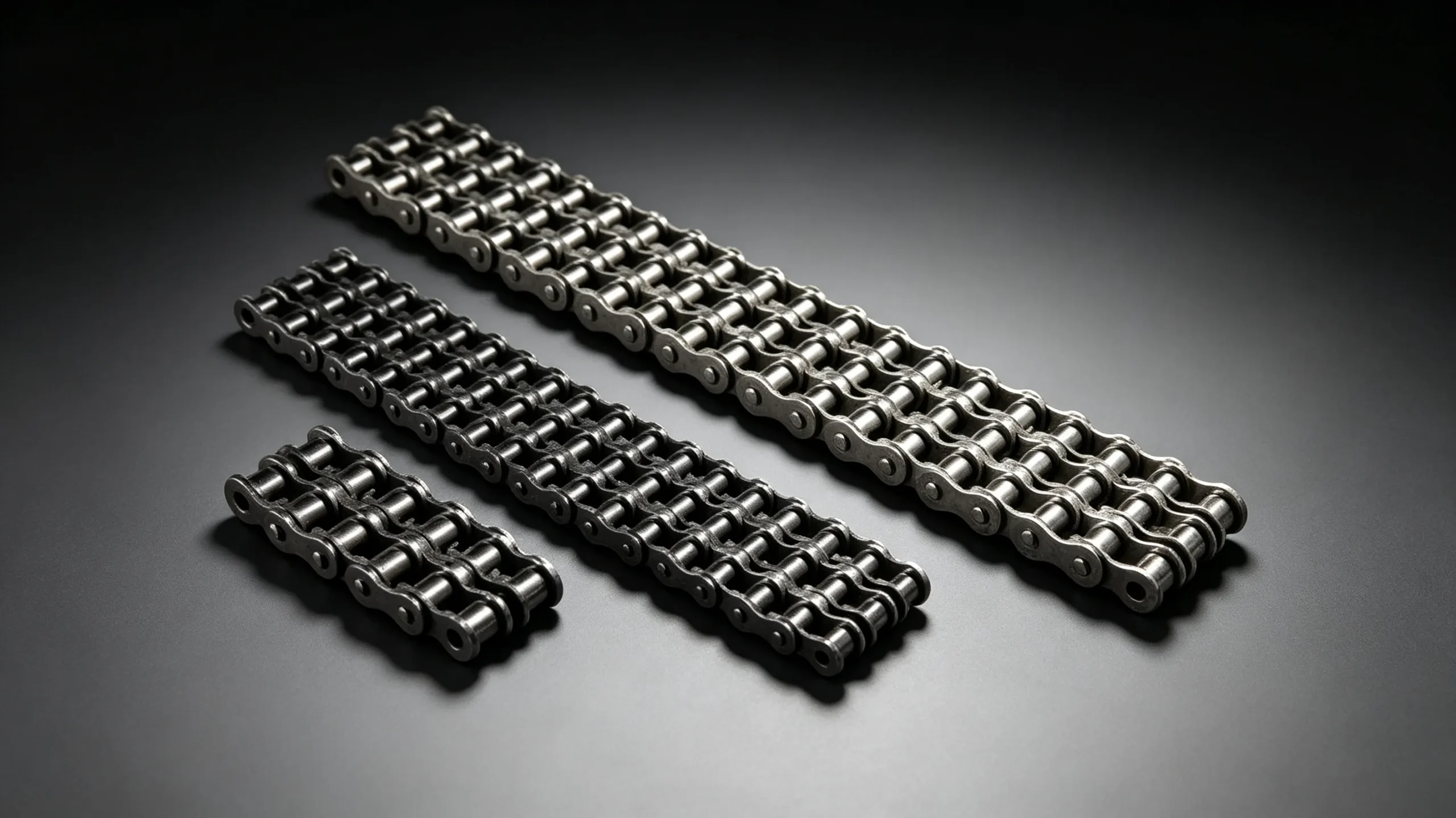
It is important to distinguish roller chain elongation (a wear phenomenon) from fatigue failure (a fracture phenomenon). Elongation is gradual and measurable — a chain approaching 3 percent elongation is doing so over thousands of operating hours. Fatigue failure is sudden — a fatigued link plate cracks and the chain separates without prior warning at a load that it has withstood many times previously. Both failure modes can coexist: a chain that is elongating due to poor lubrication is also accumulating fatigue damage at the pin holes simultaneously.
Elongation monitoring catches the wear component of chain degradation. Visual inspection for link plate cracking — particularly at the pin holes — addresses the fatigue component. A thorough maintenance programme addresses both. Replacing chain at the 3 percent elongation threshold typically pre-empts fatigue failure as well, since the wear and fatigue life of a correctly specified industrial roller chain are designed to be approximately concurrent.
Replacement Decision: 3% or Earlier?
The 3 percent elongation threshold is the general industrial standard for roller chain replacement. However, more conservative thresholds are appropriate in some situations. Long conveyor chains where the sprockets are expensive or difficult to replace should be changed at 1.5 to 2 percent elongation to prevent the accelerated sprocket tooth wear that occurs as elongation approaches 3 percent. Agricultural chains where a mid-harvest failure is extremely costly may also be changed at 2 percent as a preventive measure during pre-season maintenance, regardless of observed performance.
EverPower Roller Chains Australia supplies replacement ANSI and ISO roller chain for all industrial, agricultural, and mining applications. If you are measuring elongation on your current chain and need guidance on replacement timing and specification, contact our Sydney team for advice.
+61 2 9708 3322 | [email protected] | 27 Harley Crescent, Condell Park NSW 2201