
When a roller chain pin fails in a heavy industrial drive, the consequences are rarely limited to the chain itself. Sprockets jam, shafts bend, and in severe cases downstream machinery is damaged before the drive can be stopped. Cottered roller chain addresses the pin retention problem at its root: instead of relying solely on a press fit to hold the outer link plates onto the pin ends, a cotter pin — a split pin passed through a cross-drilled hole in the pin end — provides a positive mechanical lock that cannot be dislodged by vibration, shock loading, or the axial forces that develop in misaligned drives. This article explains the construction, the applications, and the correct assembly procedure.
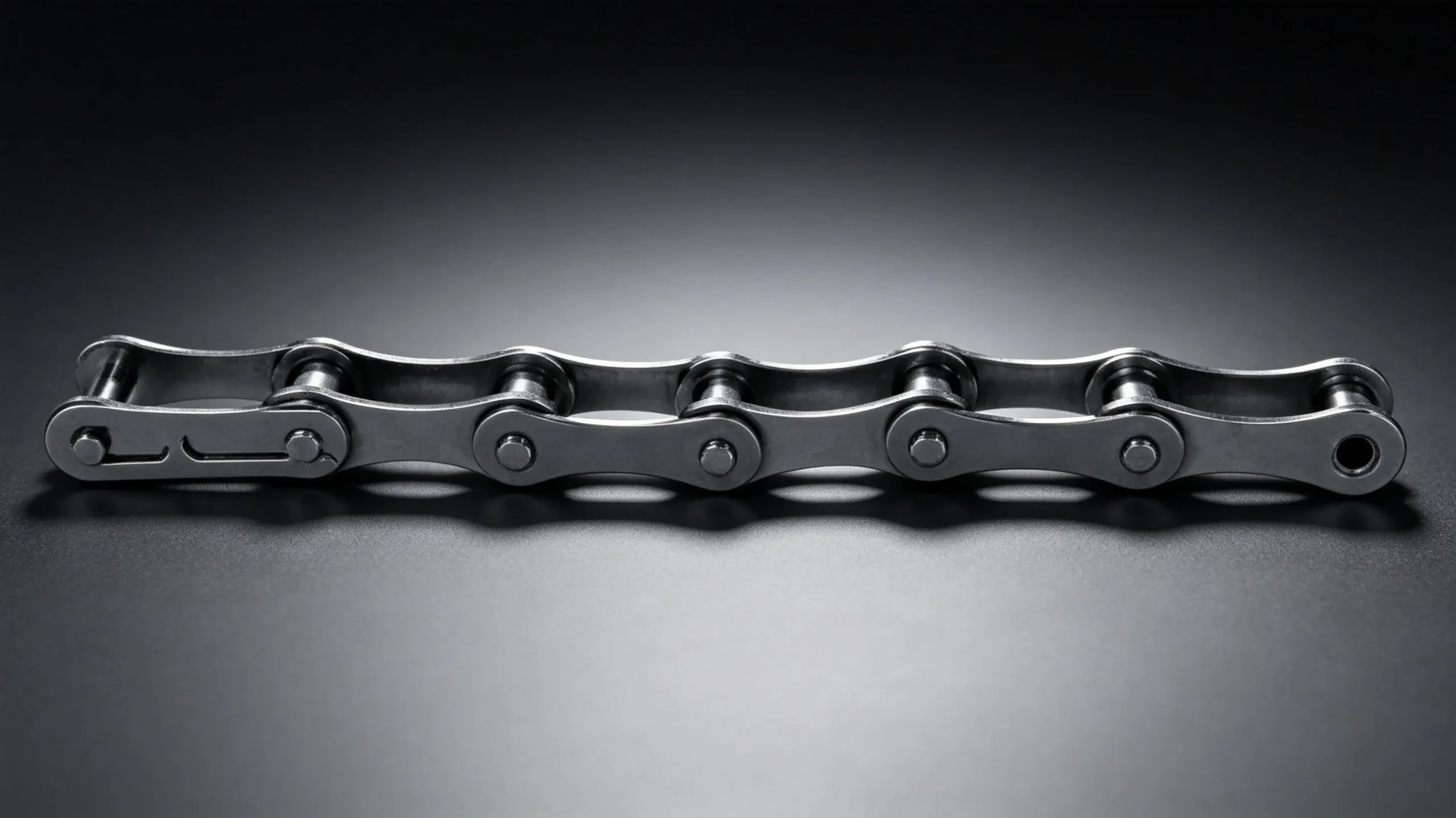
Standard Press-Fit vs Cottered Pin Retention
In a standard roller chain, the pin is retained in the outer link plate by an interference press fit. The pin outer diameter is slightly larger than the hole in the outer plate; pressing the two together creates a friction grip that resists axial separation under normal operating loads. This works reliably in smooth, well-lubricated drives operating within their rated load range.
The press fit begins to fail when operating conditions deviate from the design assumption. Repeated shock loading introduces cyclic axial force on the pin. Misalignment generates lateral plate forces that work the pin in the bore over time. Elevated temperatures reduce the interference fit by differential thermal expansion. In any of these conditions, the pin can work loose from the outer plate, the link opens, and the chain fails. Cottered roller chain eliminates this failure mode by adding a positive mechanical lock independent of the press fit.
Construction: How the Cotter Pin Works
The cotter pin — also called a split pin or cotter — is a small metal pin of circular cross-section, split along its length. It is inserted through a precision-drilled transverse hole in the outer end of the chain pin, and the two legs of the split are spread apart after insertion, locking the cotter in place. The geometry ensures that even if the press fit between the chain pin and outer plate is completely lost, the outer plate cannot travel axially far enough to separate from the pin because the cotter spans the outer face of the plate.
The cotter pin hole is typically drilled at right angles to the chain pin axis, passing through the centre of the pin end. For heavy duty roller chain in cottered configuration, the hole may be offset slightly from the pin centreline to maximise the remaining solid cross-section. Cotter pins are manufactured from soft mild steel or stainless steel and are designed to be replaceable — they are not hardened components and should never be reused once spread.
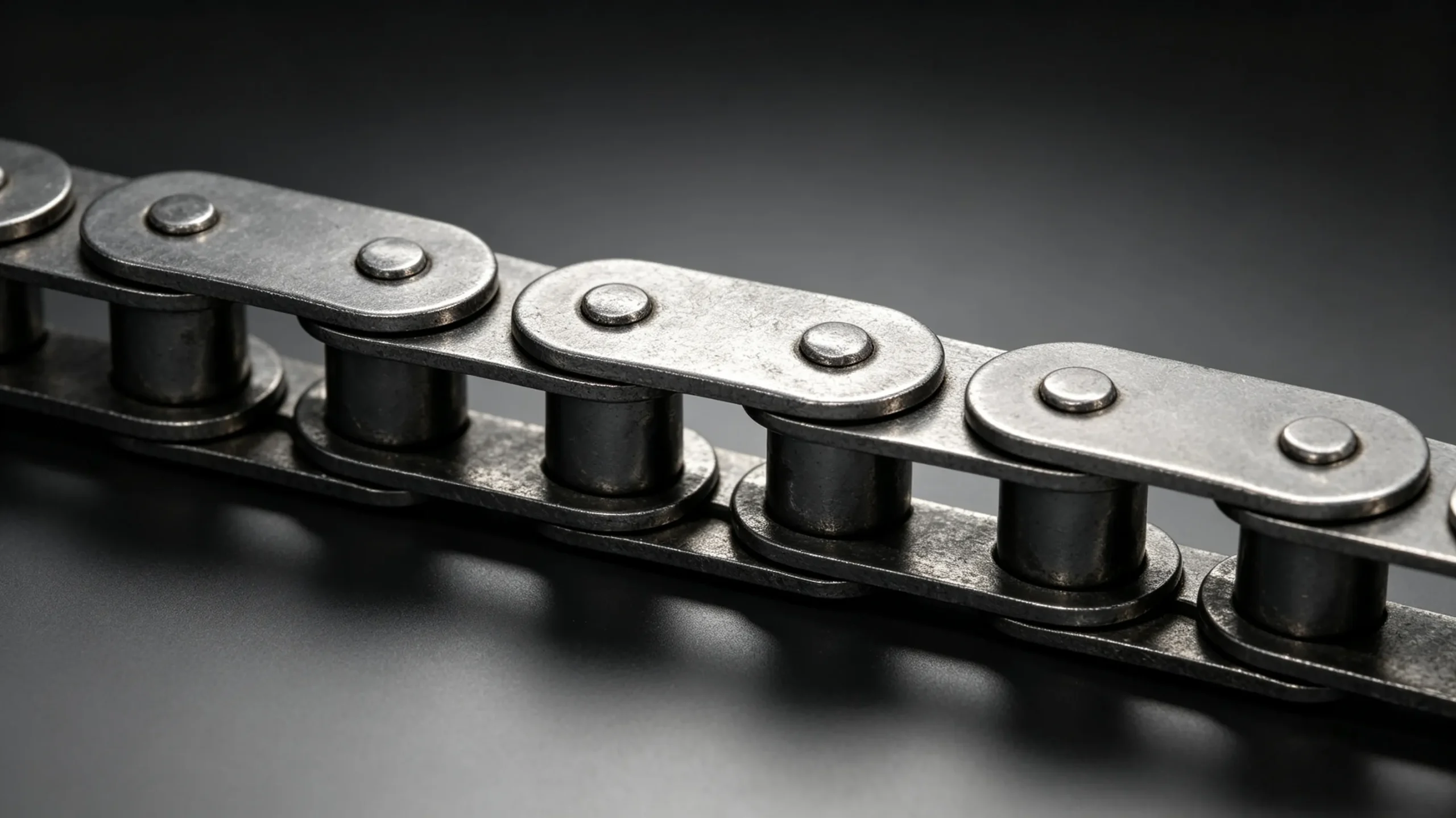
Where Cottered Chain Is Specified
High-Shock Industrial Drives
Crusher drives, shredder main drives, and reciprocating baler drives all generate the kind of shock loading that works standard press-fit pins loose over time. Industrial roller chain in cottered configuration is the standard specification for these applications in heavy industry. The cotter provides insurance against the pin working free during a load spike — a failure mode that in a crusher drive can mean a connecting pin being ejected at high velocity into surrounding machinery.
Long Chain Loops at Remote Locations
In mining conveyors and forestry equipment operating at remote sites, an unplanned chain failure requires personnel, transport, and time to rectify. Cottered chain is specified for these drives because the positive pin retention reduces the probability of an in-service link separation — not to zero, but significantly compared to press-fit chain in the same conditions.
High-Temperature Environments
Above approximately 150 degrees Celsius, the interference fit between a steel pin and a steel plate begins to relax as the two components undergo differential thermal expansion and contraction through repeated heat cycles. Furnace conveyor chains, kiln chains, and chains operating near heat sources benefit from cottered pin retention because the cotter maintains positive plate locking regardless of thermal cycling effects on the press fit. Stainless steel roller chain in cottered configuration is commonly used in high-temperature food processing applications for this reason.
| Application | Why Cottered Chain Is Preferred |
|---|---|
| Crusher and shredder drives | Shock loading works standard press-fit pins loose; cotter provides positive retention |
| Remote mining conveyors | Reduces risk of in-service link separation in locations where maintenance access is difficult |
| High-temperature furnace chains | Thermal cycling relaxes press fit; cotter maintains positive retention independently |
| Heavy baler plunger drives | Repeated high-amplitude load cycles generate axial pin forces beyond press-fit capacity |
| Marine and offshore equipment | Salt corrosion can fuse or weaken press fits; cotter provides reliable independent retention |
Assembly and Disassembly Procedure
Installing a cottered roller chain connecting link requires more steps than a standard spring clip link but is straightforward when done correctly. First, thread the connecting pin through the aligned inner link plates with the cotter hole facing outward. Second, fit the outer plate over both pin ends. Third, place a new cotter pin through each cross-drilled hole. Fourth, use long-nose pliers to spread the cotter legs to approximately 60 to 90 degrees — enough to prevent withdrawal but not so far that the soft metal fatigues. Never reuse a cotter pin that has previously been spread.
Disassembly requires cutting or straightening the spread cotter legs and withdrawing the cotter before the pin can be driven out. Attempting to drive out a cottered pin without first removing the cotter will damage the cotter hole and the outer plate bore, making future reassembly unreliable. Keep spare cotter pins in the maintenance kit at all times — they are low-cost consumables that should be renewed at every chain inspection where connecting links are opened.
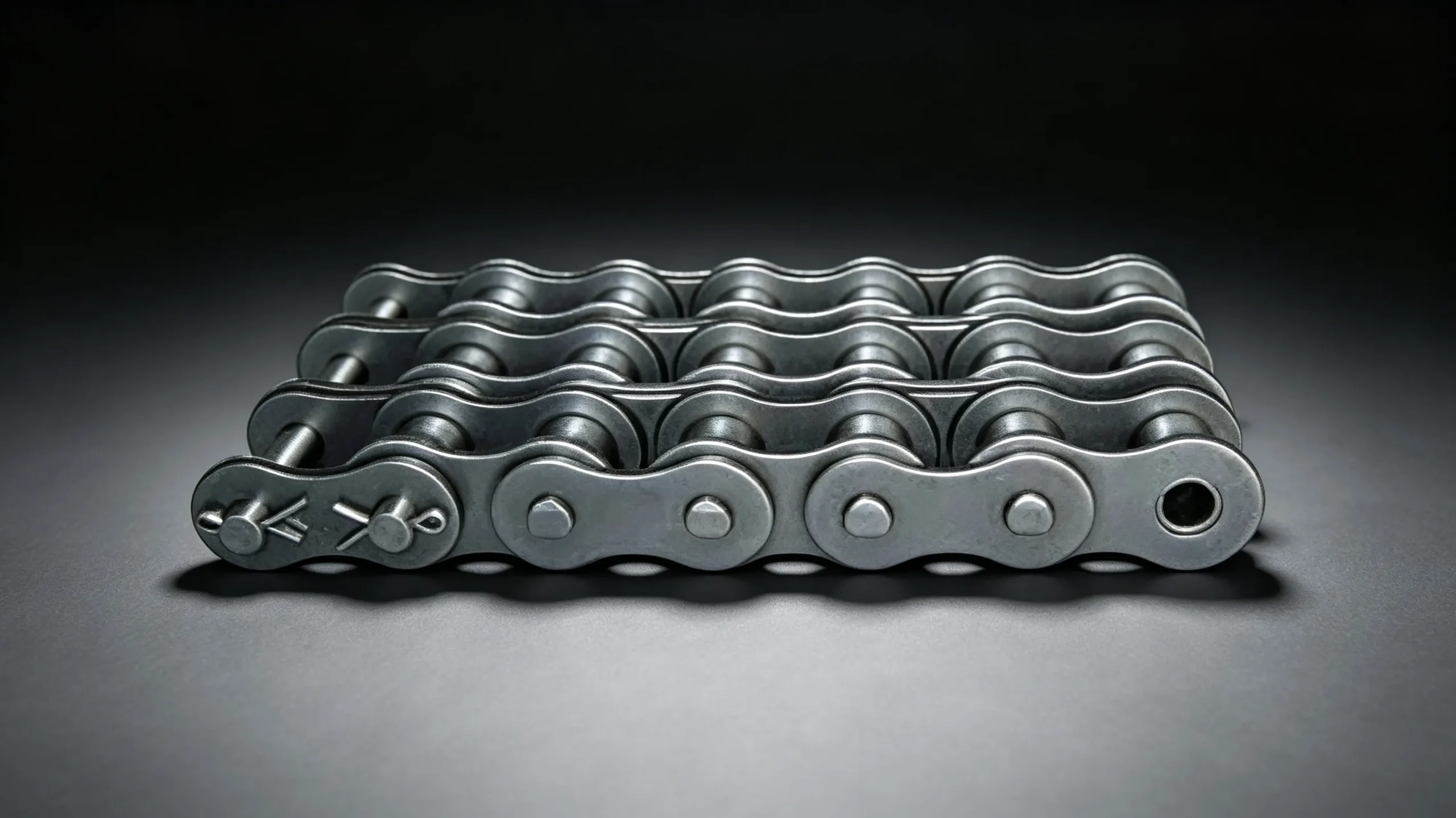
Cottered vs Spring Clip vs Rivet Links
| Connecting Link Type | Retention Mechanism | Max Load Rating | Best Application |
|---|---|---|---|
| Spring clip (snap link) | Spring clip engaging groove on pin end | ~85% of chain break load | Light to medium drives, easy in-field replacement |
| Cottered (split pin) | Split pin through drilled hole in pin end | ~95% of chain break load | Heavy shock drives, high-temperature, remote locations |
| Riveted (staked) | Pin end peened/staked over outer plate | 100% of chain break load | Permanent joins in continuous chain loops at maximum load |
For most heavy industrial applications, the cottered connecting link is the best balance of strength, security, and repairability. Riveted links achieve the highest strength but are not field-repairable without a chain rivet tool. Spring clip links are fastest to install but inappropriate for shock or vibration environments where the clip can dislodge. The cottered link is the correct choice for any heavy duty roller chain application where the drive will experience shock loading and occasional field disassembly for inspection.
EverPower Roller Chains Australia supplies cottered roller chain and cottered connecting links in ANSI and ISO sizes for heavy industrial, agricultural, and mining applications. Contact our Sydney team to specify the correct chain and connecting link type for your drive conditions.
+61 2 9708 3322 | [email protected] | 27 Harley Crescent, Condell Park NSW 2201