
Most roller chain pins are solid steel cylinders — the pin diameter is determined by the chain pitch, and the only function of the pin is to carry bending and shear loads between the inner and outer link plates. Hollow pin roller chain replaces this solid cylinder with a tubular pin that has a circular bore through its length, giving the chain a unique capability that solid pin chain cannot offer: the ability to mount transverse attachments through the pin bore. This seemingly simple change opens up a wide range of conveyor, indexing, and material handling applications that would be impossible or far more complex to engineer with standard solid pin chain.
Construction and Dimensional Specifications
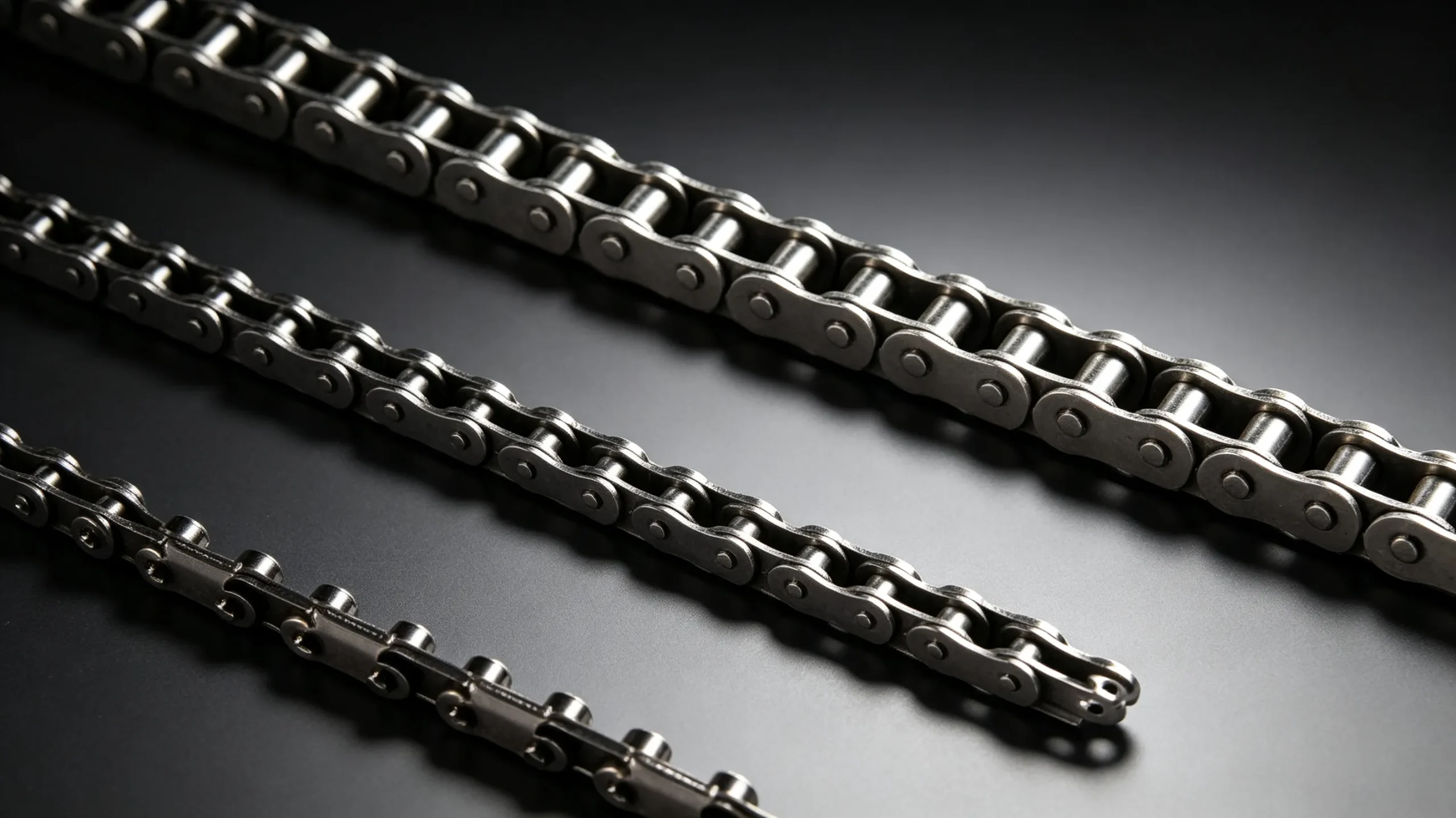
Hollow pin roller chain follows the same basic construction as standard roller chain — inner and outer link plates, rollers, and bushings — with one critical difference: the connecting pin is a precision tube rather than a solid rod. The bore diameter varies by chain size; for ANSI No. 60 hollow pin chain, the bore is typically 5.0 to 6.0 mm, sufficient to pass a standard bolt, clevis pin, or attachment rod through the full width of the chain.
The hollow bore reduces the cross-sectional area of the pin and therefore its bending and torsional stiffness relative to a solid pin of the same outer diameter. Hollow pin chain is therefore rated at a lower maximum working load than standard solid pin chain of the same pitch — typically 70 to 85 percent of the standard chain rating, depending on bore diameter and wall thickness. This reduction must be accounted for in drive calculations when hollow pin chain is used on a loaded drive rather than a lightly loaded conveyor.
| Chain Type | Pitch (mm) | Pin Outer Dia. (mm) | Bore Dia. (mm) | Min. Break Load vs Solid |
|---|---|---|---|---|
| ANSI 40 HP | 12.70 | 3.97 | 2.5 | ~80% |
| ANSI 50 HP | 15.875 | 5.09 | 3.0 | ~80% |
| ANSI 60 HP | 19.05 | 5.94 | 4.0 | ~78% |
| ANSI 80 HP | 25.40 | 7.94 | 5.0 | ~75% |
| ANSI 100 HP | 31.75 | 9.53 | 6.0 | ~75% |
What Hollow Pin Chain Enables: The Core Applications
Slat and Flat Top Conveyors
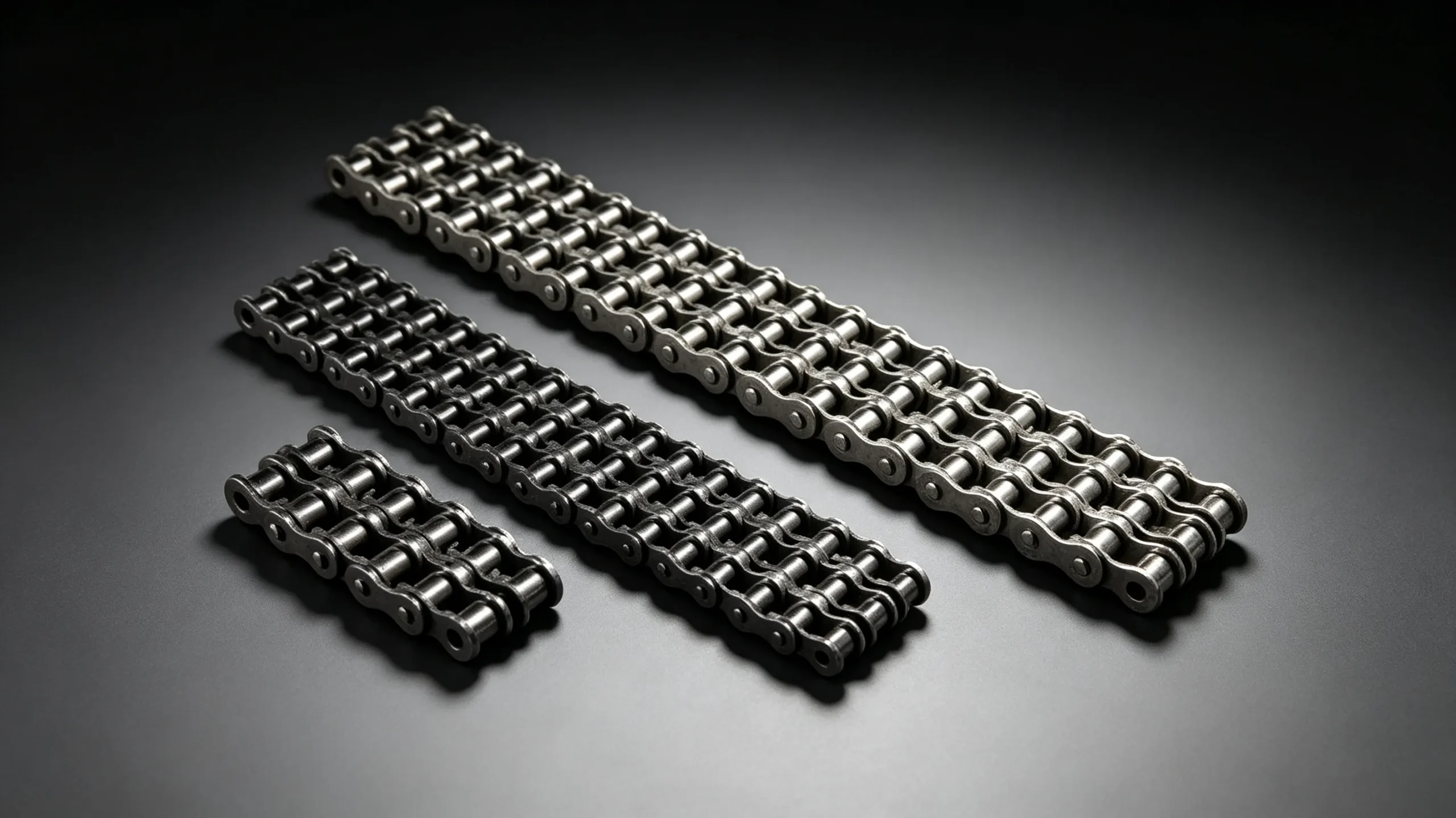
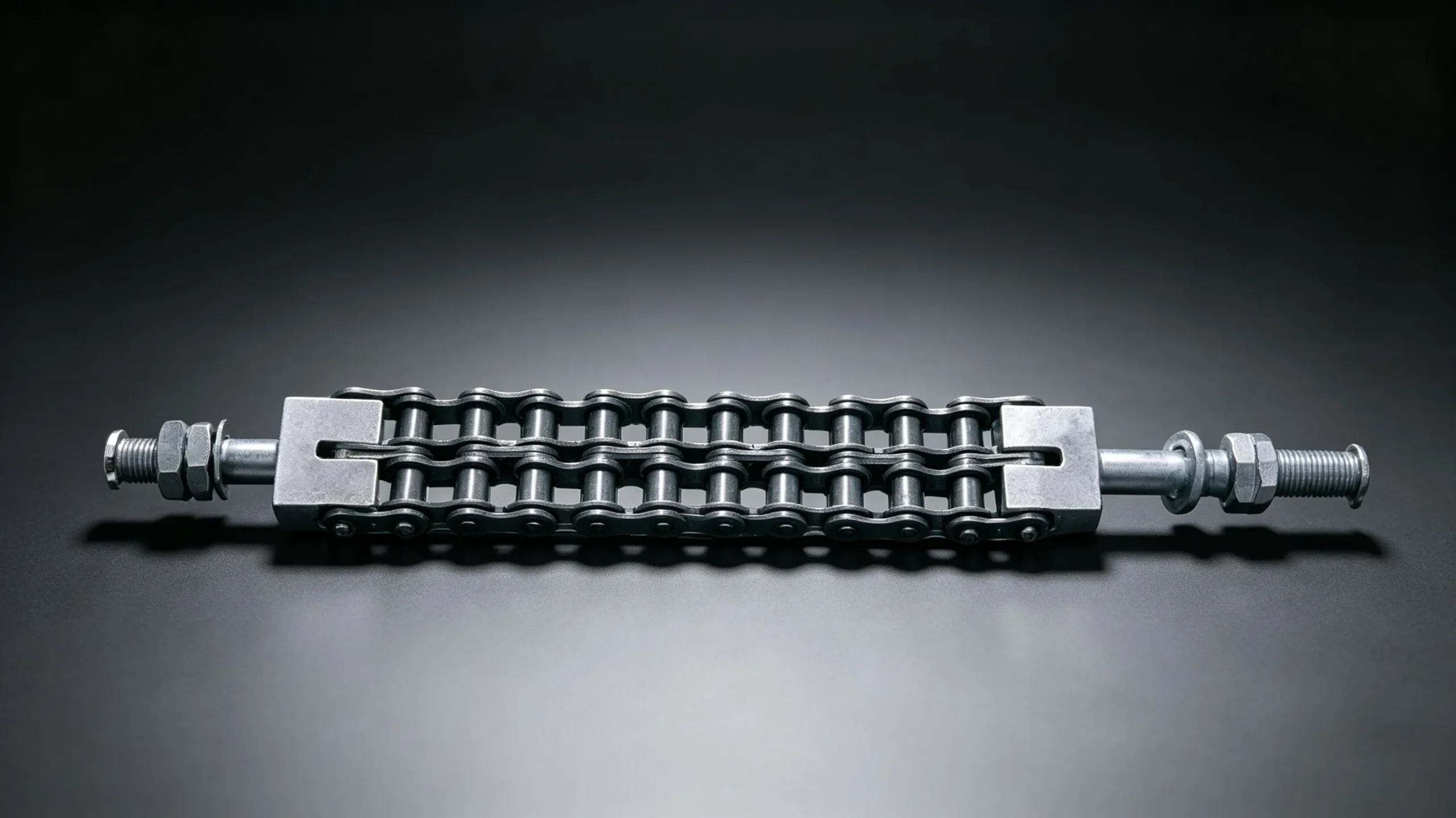
The most widespread use of hollow pin chain is in slat conveyors, where transverse rods pass through aligned hollow pins on two parallel chains running side by side. Slats, carry plates, or pusher bars are then attached to these transverse rods, forming a flat continuous conveyor surface supported on both sides by the chain drive. This construction is used in pallet conveyors, automotive assembly lines, bakery ovens, and any application requiring a rigid, flat conveying surface that standard belt conveyors cannot provide in harsh thermal or chemical environments.
The precision of chain pitch ensures that transverse rods inserted through adjacent hollow pins are parallel and evenly spaced — critical for flat top conveyor surfaces that must remain level under load. Because the rods can be removed and replaced independently of the chain, slat conveyors built on hollow pin chain can be reconfigured or repaired at the slat level without replacing the drive chains.
Indexing and Transfer Mechanisms
In manufacturing automation, hollow pin chain is used in indexing mechanisms where components must be precisely positioned at fixed intervals. A cross pin or attachment rod inserted through a hollow pin provides a positive registration point for workpiece carriers, tooling plates, or assembly fixtures. The fixed pitch of the chain ensures that every indexing position is separated by an exact multiple of the chain pitch, providing repeatable positioning accuracy without additional measurement systems.
Spreader and Width-Adjustment Applications
In textile processing, paper handling, and film manufacturing, hollow pin chains on two parallel drives carry spreader bars or width-adjustment guides through the pin bores. The transverse bar can be precisely positioned by adjusting the engagement position of the two chains relative to each other, enabling continuous width adjustment of the material being processed without stopping the line.
Installation and Assembly Considerations
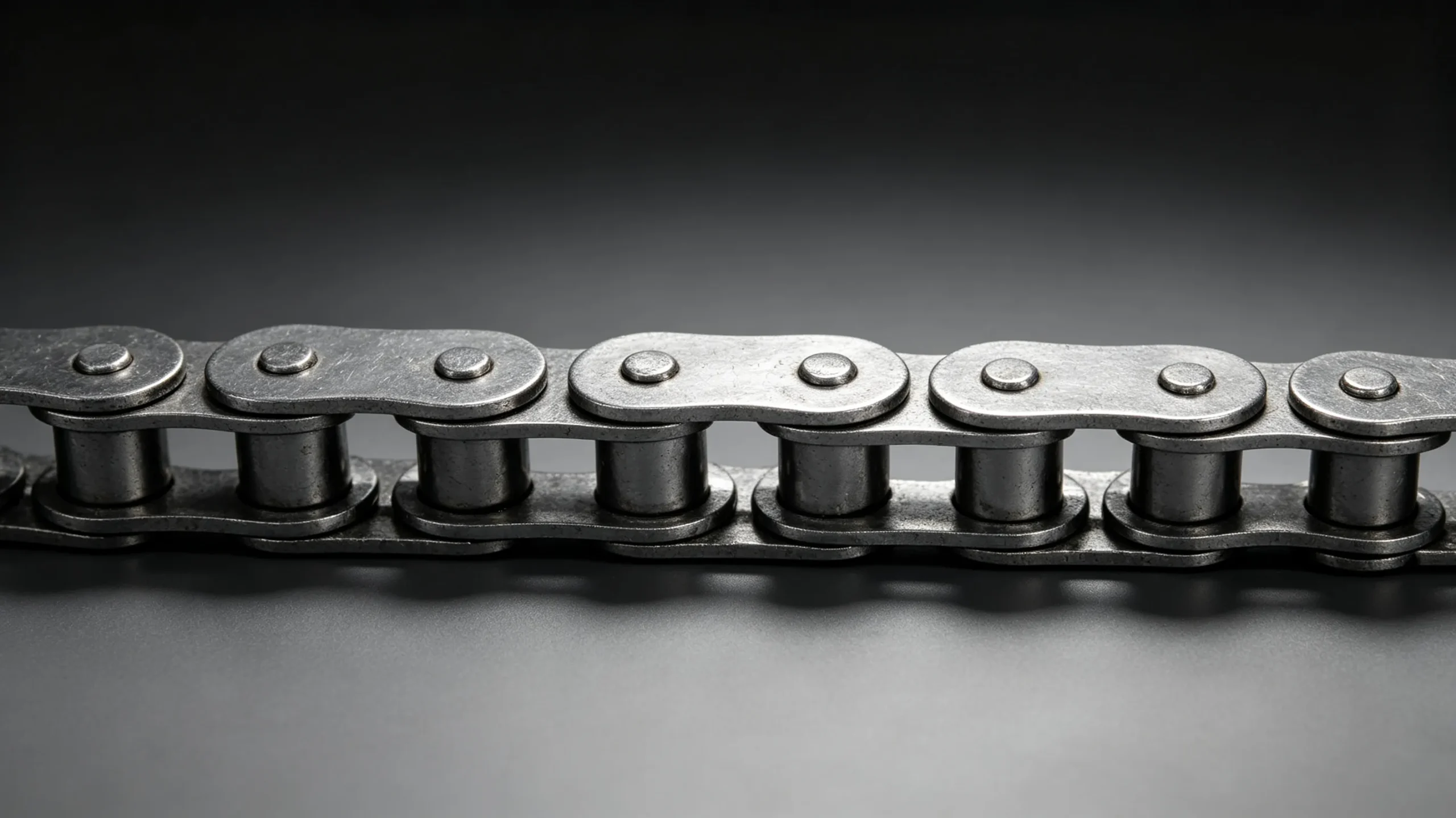
Hollow pin chain requires careful assembly when transverse rods or attachments are to be inserted. The rod must be sized accurately to the bore diameter — too tight and assembly is difficult; too loose and the rod can work sideways under lateral load, causing uneven loading on the chain. For permanent installations, rods are typically secured with split pins or circlips through a hole drilled in the protruding rod end after final adjustment.
When running hollow pin chain over sprockets, the bore must be kept free of debris that could jam the transverse rod during engagement. In dusty or contaminated environments, hollow pin chain requires either more frequent cleaning than solid pin chain or a sealed bore design. Some manufacturers offer hollow pin chain with rubber plugs or plastic inserts closing the bore ends to prevent ingress of contaminants when the bore is not in use for a particular section of the chain.
Lubrication Challenges With Hollow Pin Chain
The hollow pin bore complicates lubrication relative to solid pin chain. Oil applied to the outer surface of the chain can enter the bore by capillary action and then flow out at the bore ends, carrying lubricant away from the pin-bushing interface where it is needed. This is generally beneficial — the bore acts as a small internal reservoir that can wick lubricant back toward the bushing contact surface during operation.
However, in applications where cross rods are permanently installed, the rod blocks the bore and prevents lubricant from penetrating through the pin. In these cases, the lubrication regime must ensure oil reaches the pin-bushing interface from the outer chain surface rather than through the bore. Bath lubrication or force-feed lubrication directed at the chain inner link are the most effective methods in permanently assembled slat conveyor applications.
Drip Lubrication
Effective for hollow pin chain running without permanent cross rods — oil penetrates the bore and wicks toward the bushing contact.
Bath Lubrication
Preferred for slat conveyors with permanent cross rods — oil contacts all external chain surfaces and penetrates the bushing-roller interface.
Force-Feed Lubrication
Best for high-load, high-cycle hollow pin drives — oil is directed precisely to the chain inner link regardless of cross rod installation.
Grease
Not recommended — same reasons as standard chain. Grease cannot penetrate the pin-bushing clearance and impedes bore function.
Selecting the Right Hollow Pin Chain
Hollow pin chain is available across the standard ANSI pitch range from No. 40 to No. 120, with the bore diameter scaled to the pin size. Specify hollow pin chain by stating the chain standard (ANSI or ISO), chain number, strand count (simplex is most common for hollow pin applications), and the bore diameter required for your transverse rod. If the bore diameter needed exceeds the standard bore for your chain pitch, it may be necessary to move to a larger pitch — over-boring weakens the pin wall and reduces the chain working load unacceptably.
For food processing applications, stainless steel hollow pin chain with food-grade oil is the appropriate specification. Stainless hollow pin chain is used in bakery, meat processing, and beverage production conveyors where the chain must withstand wash-down with hot water and sanitising agents that would rapidly corrode carbon steel. The working load reduction relative to carbon steel must be accounted for — stainless hollow pin chain typically carries 65 to 75 percent of the equivalent carbon steel rating.
EverPower Roller Chains Australia supplies hollow pin roller chain in carbon steel and stainless steel versions for conveyor, indexing, and material handling applications. Our Sydney team can advise on bore diameter, strand count, and compatible sprocket specifications for your specific application requirements.
+61 2 9708 3322 | [email protected] | 27 Harley Crescent, Condell Park NSW 2201