
The choice between heavy duty roller chain and standard series chain is not about being conservative — it is about matching the chain specification to the actual failure mechanism in the drive. Heavy duty chain costs 20 to 35 percent more than standard. Specifying it unnecessarily wastes money without improving reliability. Failing to specify it when the application genuinely requires it results in repeated premature failures that are far more expensive than the price premium. The decision turns on one question: is the failure mode of the drive fatigue-dominated or wear-dominated?
The Core Distinction: Fatigue vs Wear as the Failure Mode
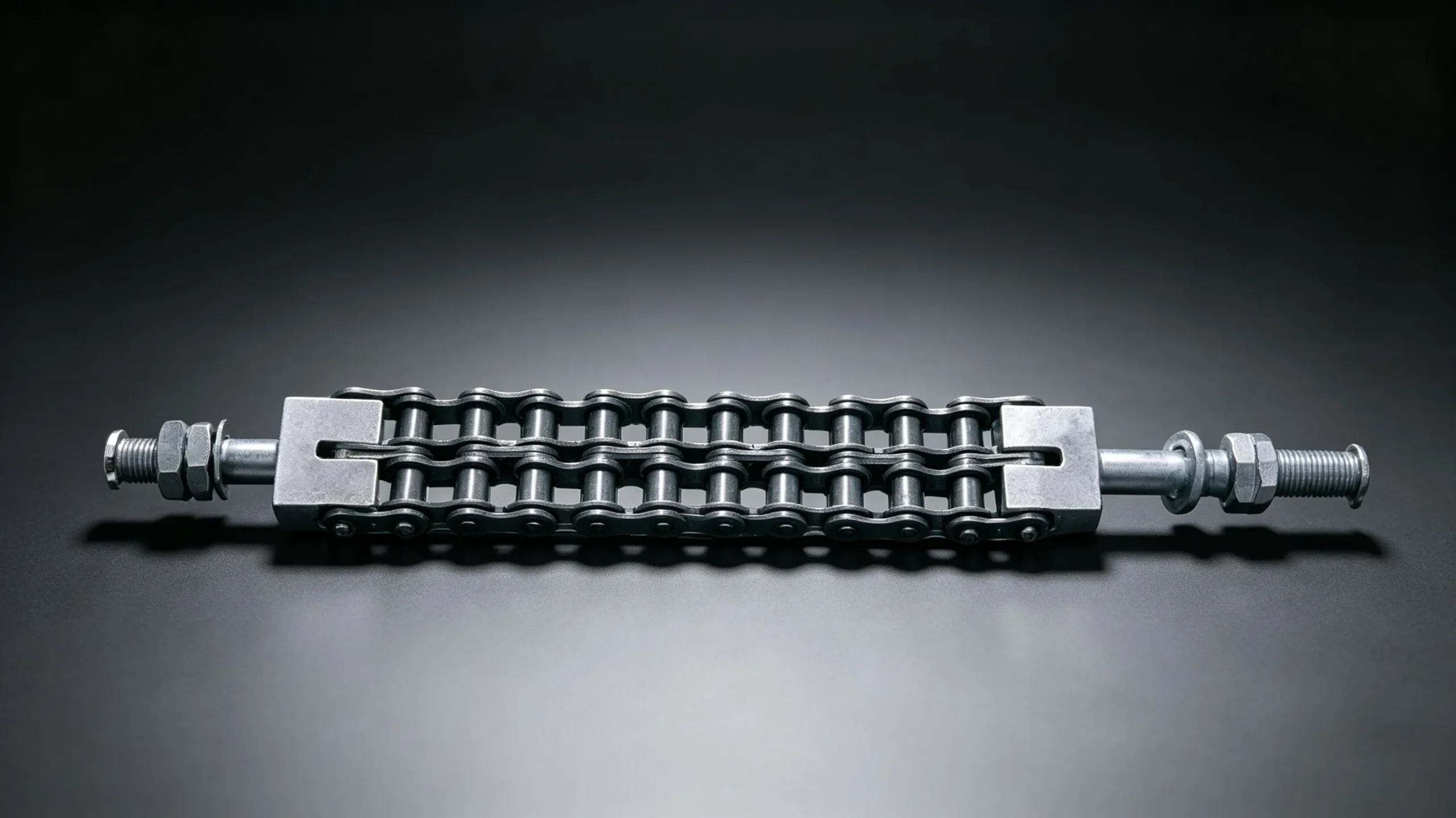
Standard series roller chain is designed to handle normal industrial loads with a service factor applied to account for load variation. The fatigue endurance limit of the standard plate is set to handle these normal loads across the chain design life before either wear elongation or plate fatigue causes replacement. For most smooth or moderately varying drives, this is entirely adequate — the chain reaches its elongation threshold from wear before any fatigue cracking occurs in the plates.
Heavy duty chain becomes necessary when the fatigue limit of the standard plate is exceeded under actual operating conditions. This occurs when the peak loads in the drive — during shock events, start-up under full load, or sustained operation at above the rated working load — push the cyclic stress at the pin holes above the standard plate endurance limit. Under these conditions, fatigue cracks initiate and propagate in the plate before the chain has worn to 3 percent elongation, resulting in premature plate fracture rather than replacement at a measured wear threshold.
Situations That Require Heavy Duty Chain
Service Factor Exceeds 1.5
The ANSI B29.1 service factor system quantifies load variability and shock severity on a scale from 1.0 (smooth, uniform load) to 1.7 or above (heavy shock, frequent load reversals). When the calculated service factor for a drive exceeds 1.5, the peak loads are sufficiently above the mean that standard plate fatigue endurance is challenged. This is the engineering signal that heavy duty roller chain is the correct specification rather than simply applying a larger service factor to standard chain.
Current Chain Fails by Plate Cracking Before Elongation Threshold
The most definitive signal that heavy duty roller chain is required is the failure pattern of the current chain. If your standard chain consistently fails by plate cracking at the pin holes — rather than by gradual elongation to the replacement threshold — the drive is operating in a fatigue-dominated regime. The load peaks are cycling the pin-hole stress above the standard plate endurance limit. Heavier plates with greater cross-section through the pin hole provide the additional endurance margin needed.
Reciprocating and Cyclic Drives
Any drive where the chain load oscillates between very low and very high values on a regular cycle is fundamentally fatigue-dominated. Hay baler plunger drives, reciprocating feeder conveyors, and vibrating screen drives all fall into this category. The amplitude of the load cycle — not the mean load — determines the fatigue damage rate. These drives almost always require heavy duty roller chain regardless of whether the mean load would be within standard chain rating.
Crusher, Shredder, and Impact Equipment Drives
Drives where sudden material contact generates sharp impact loads — jaw crushers, hammer mills, industrial shredders — impose load spikes that can reach five to eight times the mean running tension in fractions of a second. Standard chain plates cannot sustain repeated impacts at this amplitude. Heavy duty roller chain with its greater plate cross-section provides the additional fatigue margin needed to survive the accumulated impact load cycles across a realistic service life.
| Drive Type | Typical Service Factor | Standard Chain Adequate? | Heavy Duty Required? |
|---|---|---|---|
| Smooth pump or fan drive | 1.0 | Yes | No — standard is correct and more economical |
| Light conveyor, uniform material | 1.0–1.2 | Yes | No |
| Moderately variable conveyor | 1.3 | Yes with service factor applied | Only if plate cracking observed in practice |
| Agricultural feeder drives | 1.4–1.6 | Borderline | Yes — variable crop density generates fatigue-dominated loading |
| Square baler plunger drive | 1.6–1.7 | No | Yes — reciprocating high-amplitude cyclic loading |
| Crusher / shredder main drive | 1.7+ | No | Yes — impact loads exceed standard plate fatigue limit |
| Mining conveyor start-stop | 1.5–1.7 | Borderline | Recommended — start-up spikes accumulated over thousands of cycles |
When Standard Chain Remains the Correct Choice
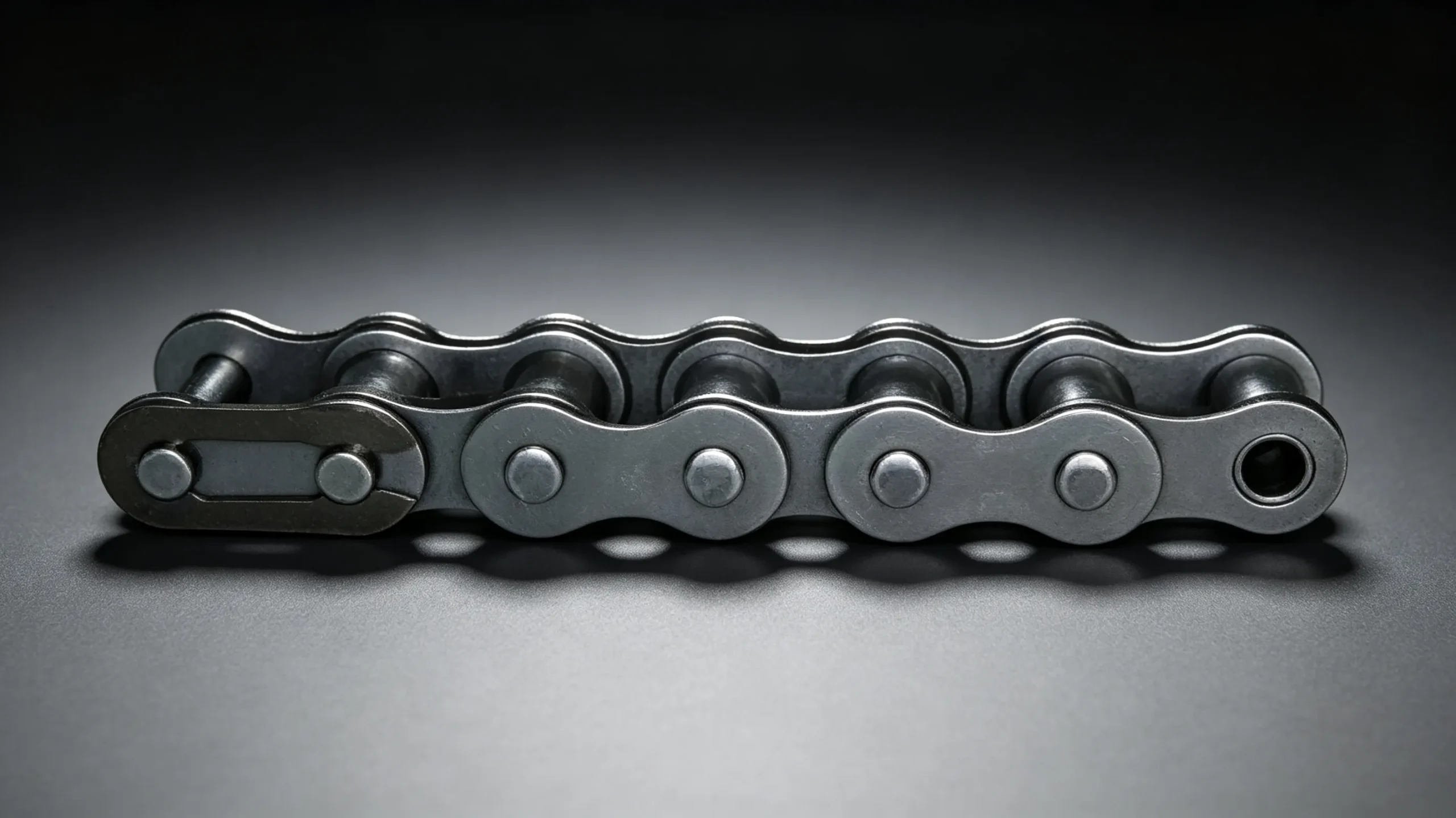
For all smooth, continuous drives where the load is steady and shock-free — pump drives, fan and blower drives, generator drives, and uniform-load conveyors — standard series chain with the correct service factor applied is adequate and more economical than heavy duty chain. The service factor of 1.0 applied to standard chain covers these smooth drives comfortably within the plate fatigue endurance limit. Upgrading to heavy duty chain on these drives adds cost without extending service life, because the chain will wear to 3 percent elongation from normal pin-bushing wear long before any fatigue limit is approached.
The economic waste of specifying heavy duty roller chain on smooth drives is real but modest — the chain costs 20 to 35 percent more and lasts about the same time as standard chain in these applications. More significant is the cost of not specifying heavy duty chain where it is needed — repeated premature failures, unplanned downtime, and accelerated sprocket damage that compounds the cost of each failure event.
How to Verify the Decision: A Practical Test
Before ordering replacement heavy duty roller chain for a drive that has been using standard chain, examine the failed or retired chain. Two outcomes are possible: (1) the plates are intact and the chain has simply elongated to the replacement threshold — standard chain is working as designed and no upgrade is needed; (2) the plates show cracking at the pin holes — the drive is in a fatigue-dominated regime and heavy duty chain is the correct upgrade. This examination takes less than five minutes and provides definitive guidance on the specification decision.
EverPower Roller Chains Australia stocks heavy duty roller chain in ANSI 60H, 80H, and 100H for same-week despatch from our Sydney facility. Our team can assist with service factor calculations and verify whether your application requires heavy series based on your drive description and current failure pattern. Contact us at +61 2 9708 3322.
+61 2 9708 3322 | [email protected] | 27 Harley Crescent, Condell Park NSW 2201