
Calculating the load capacity of a roller chain drive is the engineering foundation of correct chain specification. Without this calculation, chain selection is reduced to guessing by pitch size — a process that produces either under-specified chains that fail prematurely or over-specified chains that waste budget. The calculation is not difficult, but it requires specific inputs that must be accurate: shaft power, drive speed, service factor, and the required safety margin. This guide provides the complete methodology for calculating whether a given chain specification is adequate for a specific drive.
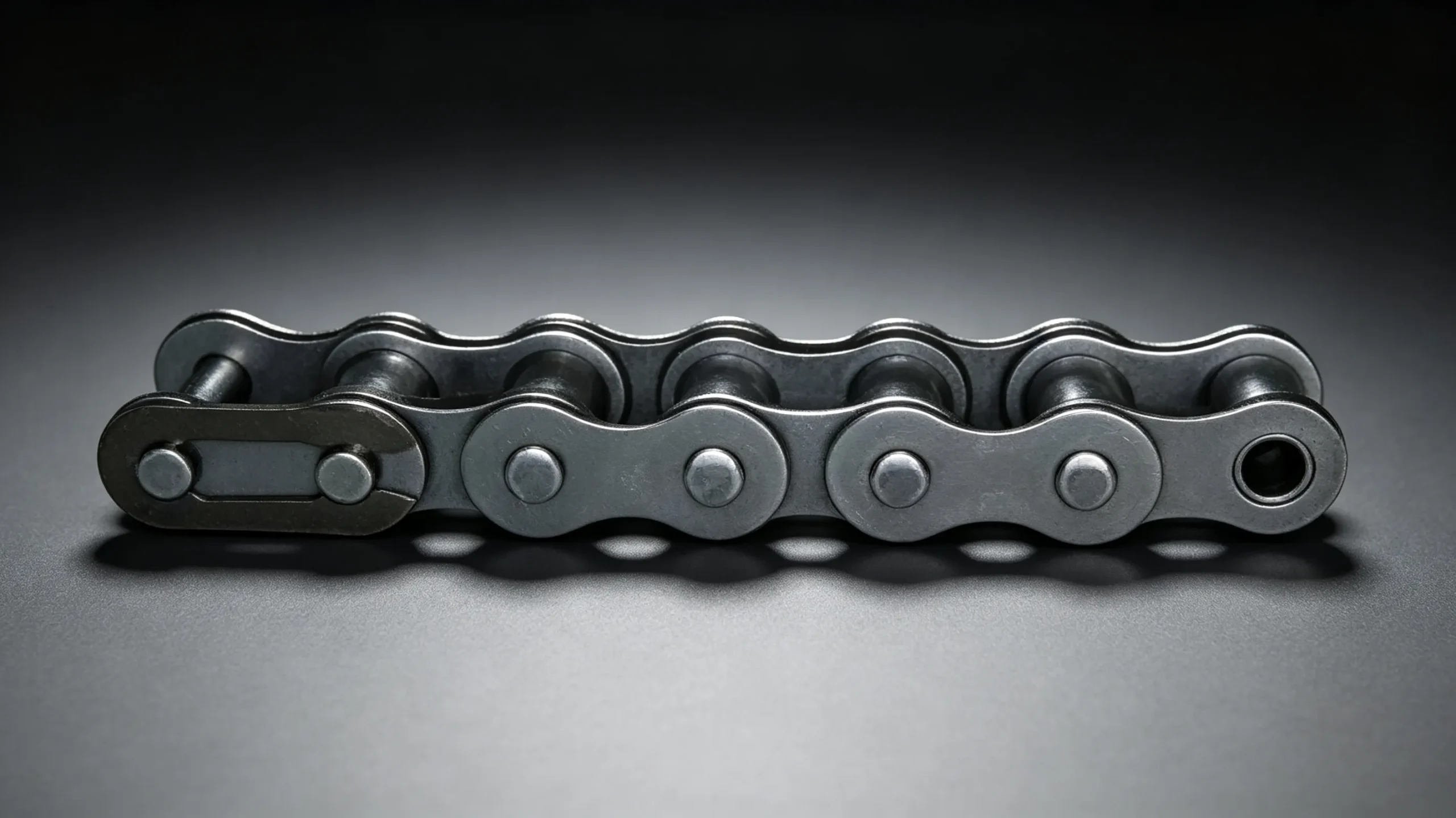
The Two Key Load Parameters: Chain Pull and Working Load
Two distinct load parameters are relevant to roller chain specification. Chain pull (also called chain force or tight-side tension) is the tangential force at the pitch circle of the driving sprocket — it is calculated from the shaft power and the chain speed. Working load (also called maximum allowable load or safe working load) is the manufacturer specification for the maximum chain pull that the chain can sustain continuously without fatigue failure or excessive elongation. The chain is correctly sized when the calculated chain pull, multiplied by the service factor, does not exceed the working load.
The relationship between chain pull and breaking load uses a safety factor. For most industrial chain drives, working load = minimum breaking load / (safety factor of 7 to 12). A safety factor of 10 is common for general industrial applications. For ANSI 60 simplex (31.3 kN minimum breaking load), the working load at safety factor 10 is approximately 3.13 kN. Manufacturer power rating tables embed this safety factor in their rated power values — the tables already account for it.
Step-by-Step Load Capacity Calculation
Chain pull (kN) = Power (kW) / Chain speed (m/s). For a 7.5 kW drive with the chain running at 1.5 m/s: chain pull = 7.5 / 1.5 = 5.0 kN. This is the steady-state chain pull at the rated power.
Design chain pull = Chain pull × Service factor. For a moderate shock application (service factor 1.3): design chain pull = 5.0 × 1.3 = 6.5 kN. This is the design load used for chain selection — the effective working load the chain must handle.
Look up the working load for candidate chain sizes. For ANSI 60 simplex at a safety factor of 10: working load ≈ 31.3 / 10 = 3.13 kN — insufficient for 6.5 kN. ANSI 80 simplex: 55.6 / 10 = 5.56 kN — still insufficient. ANSI 100 simplex: 87.0 / 10 = 8.7 kN — adequate. Alternatively, ANSI 80 duplex: 55.6 × 1.74 / 10 = 9.67 kN — also adequate. The correct specification depends on speed and space constraints.
Chain speed for ANSI 80: 1.5 m/s is well within the 3.5 m/s limit. For ANSI 60 duplex: also within limits. Both are acceptable on speed grounds.
For shock-load applications (service factor above 1.5), verify that the selected chain is rated for the peak load, not just the mean load. The peak load can be 3 to 5 times the mean in heavy shock applications. Ensure the selected chain breaking load / peak load ratio exceeds 5.0.
| Parameter | Symbol | Value (Worked Example) | Source |
|---|---|---|---|
| Shaft power | P | 7.5 kW | Motor nameplate or design specification |
| Chain speed | v | 1.5 m/s | Sprocket PCD × RPM × π / 60,000 |
| Steady-state chain pull | F | P / v = 5.0 kN | Calculated |
| Service factor | Ks | 1.3 (moderate shock) | ANSI B29.1 table |
| Design chain pull | Fd | F × Ks = 6.5 kN | Calculated |
| Safety factor | SF | 10 (typical industrial) | Engineering standard |
| Required min break load | Fb_min | Fd × SF = 65.0 kN | Calculated |
| ANSI 80 duplex break load | Fb | 55.6 × 1.74 = 96.7 kN | Manufacturer specification |
| Check | — | 96.7 kN > 65.0 kN — PASS | ANSI 80 duplex is adequate |
Calculating Chain Speed From Drive Geometry
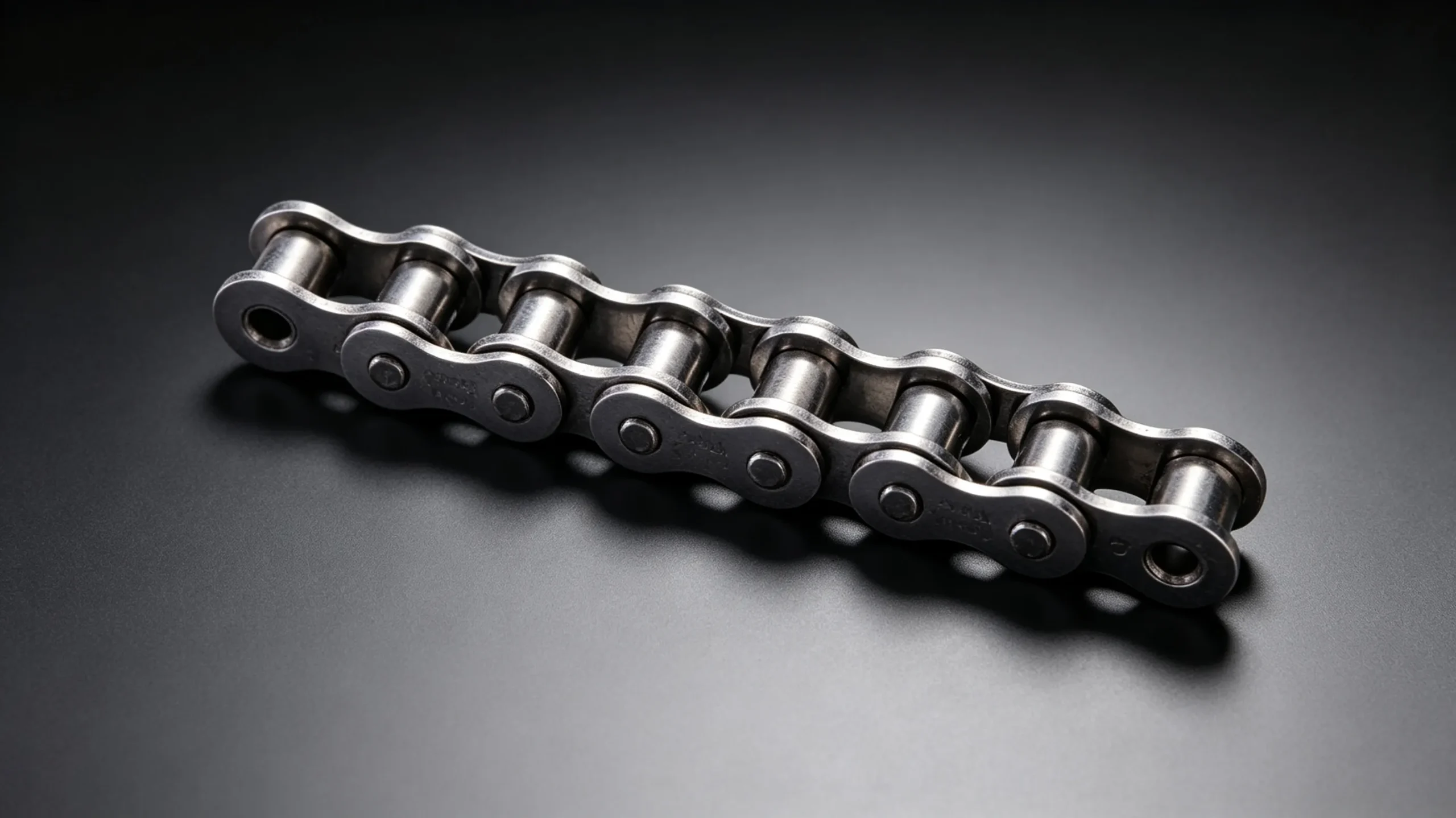
Chain speed is calculated from the drive sprocket dimensions and RPM: Chain speed (m/s) = (Pitch in metres × Number of teeth on driving sprocket × Driving sprocket RPM) / 60. For ANSI 60 (pitch = 0.01905 m) with a 17-tooth sprocket at 200 RPM: chain speed = (0.01905 × 17 × 200) / 60 = 1.08 m/s. This is a low chain speed — ANSI 60 can run reliably up to 5.0 m/s, so the speed is not a constraint in this example.
Power Rating Tables: The Faster Alternative
Manufacturer power rating tables shortcut the calculation by directly listing the rated power for each chain size at each sprocket speed and tooth count. Locate the row for your driving sprocket RPM and the column for the sprocket tooth count, and read off the rated power for each chain size. The smallest chain whose rated power exceeds your design power (shaft power × service factor) is the minimum adequate chain specification.
Power rating tables are available from chain manufacturers (Tsubaki, Renold, EverPower) and from ANSI B29.1. They assume a standard lubrication regime and a minimum 17-tooth driving sprocket. If your driving sprocket has fewer than 17 teeth, apply an additional tooth correction factor from the table — smaller tooth count sprockets require chain with a higher rated power for the same application.
When to Add a Fatigue Safety Margin
The standard calculation above uses a safety factor of 10 applied to the minimum breaking load, which provides adequate margin for most smooth to moderate shock applications. For heavy shock applications (service factor 1.7 or above), peak loads can transiently exceed the mean load by 5 to 8 times. In these conditions, apply the working load calculation against the peak load rather than the mean: if the peak chain pull is estimated at 3 times the mean and the service factor is already 1.7 on the mean, the combined peak factor approaches 5 times the mean — which may push a borderline chain size past its safe working load on each shock event. In these drives, heavy duty roller chain at the same pitch provides the additional fatigue endurance margin without necessarily requiring a pitch increase.
EverPower Roller Chains Australia can perform roller chain load calculations for your specific drive. Provide shaft power, RPM, sprocket tooth count, and application type and our Sydney team will calculate the correct chain specification and provide a quotation. Call +61 2 9708 3322.
+61 2 9708 3322 | [email protected] | 27 Harley Crescent, Condell Park NSW 2201