
Finding the correct replacement roller chain for an existing drive should be a precise process — matching pitch, roller diameter, inner width, strand count, and standard to the installed chain — but in practice it is one of the most common sources of specification error in industrial maintenance. Ordering the wrong chain means either installing a chain that fits the sprocket incorrectly (causing accelerated wear from day one) or discovering the error at installation and waiting for the correct chain with equipment standing idle. This guide provides a systematic identification and ordering process that eliminates these errors and produces the correct replacement specification from first principles.
Step 1: Identify the Chain Standard — ANSI or ISO?
The single most common error in roller chain replacement is ordering the correct pitch but the wrong standard. Both ANSI roller chain and ISO roller chain are available in 19.05 mm pitch — but ANSI 60 and ISO 12B are not interchangeable. Their roller diameters differ (11.91 mm vs 12.07 mm), their inner widths differ (12.57 mm vs 11.68 mm), and their sprockets are machined to different tooth pocket geometries. Installing ANSI chain on ISO sprockets or vice versa causes off-centre roller engagement and accelerated wear from the first operating hour.
Identify the standard before ordering. The fastest method is to measure the existing chain roller diameter and compare against the ANSI and ISO tables for the relevant pitch. If the chain markings are legible on the outer link plates — ANSI chains carry numerical designations (40, 60, 80); ISO chains carry letter-number designations (06B, 12B, 16B) — the marking confirms the standard directly. If markings are worn, the measurement method is the only reliable approach.
Step 2: Measure the Three Key Dimensions
Three measurements taken from the existing chain fully identify the chain specification without relying on markings or documentation. Take all three measurements with a vernier caliper:
Place the caliper across the outer edge of a pin at one end of the span to the outer edge of the corresponding pin at the other end (pin outer edge to outer edge across N links = N × pitch). Divide by the number of pitches measured. Compare to standard ANSI pitches: 12.70, 15.875, 19.05, 25.40, 31.75 mm.
Place the caliper across the widest point of a roller outer surface. This distinguishes ANSI from ISO at pitches where they differ, and distinguishes standard series from any special roller configuration.
Place the caliper between the inner faces of the inner link plates. This confirms the standard at pitches where ANSI and ISO have the same roller diameter (e.g. 25.40 mm pitch — both use 15.88 mm roller but different inner widths).
| ANSI / ISO Chain | Pitch (mm) | Roller Dia. (mm) | Inner Width (mm) | Combined ID Code |
|---|---|---|---|---|
| ANSI 40 | 12.70 | 7.92 | 7.85 | 12.70 / 7.92 / 7.85 |
| ISO 06B | 12.70 | 6.35 | 5.72 | 12.70 / 6.35 / 5.72 |
| ANSI 60 | 19.05 | 11.91 | 12.57 | 19.05 / 11.91 / 12.57 |
| ISO 12B | 19.05 | 12.07 | 11.68 | 19.05 / 12.07 / 11.68 |
| ANSI 80 | 25.40 | 15.88 | 15.75 | 25.40 / 15.88 / 15.75 |
| ISO 16B | 25.40 | 15.88 | 17.02 | 25.40 / 15.88 / 17.02 |
| ANSI 100 | 31.75 | 19.05 | 18.90 | 31.75 / 19.05 / 18.90 |
| ISO 20B | 31.75 | 19.05 | 19.56 | 31.75 / 19.05 / 19.56 |
Step 3: Identify Standard Series or Heavy Series
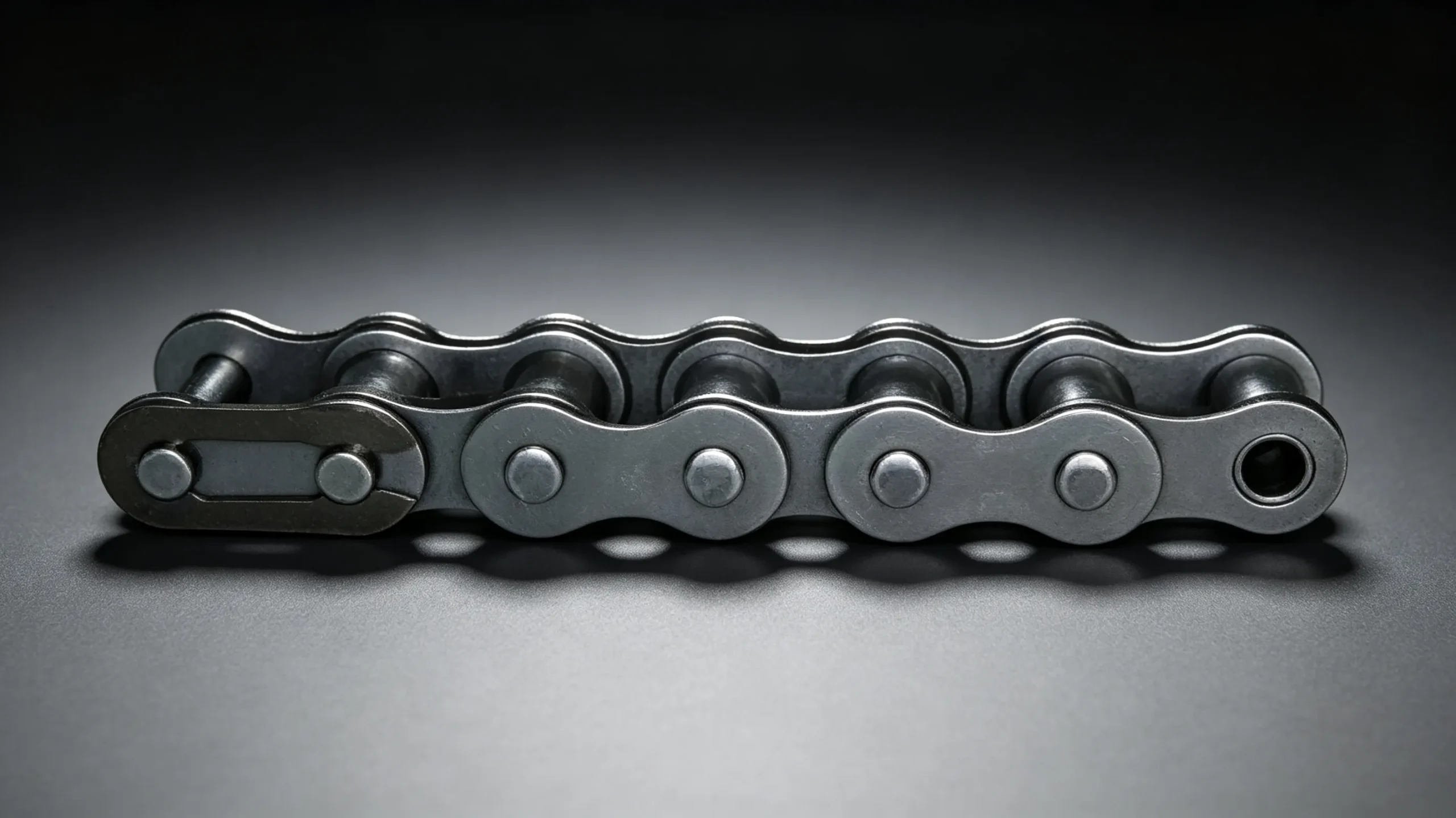
Standard and heavy duty roller chain share identical pitch, roller diameter, and inner width — all three measurements are the same. The only dimensional difference is link plate thickness. Measure the plate thickness at the mid-plate location (away from both pin holes) with the caliper. Compare to the ANSI B29.1 standard and heavy series values:
| ANSI No. | Standard Plate Thick. (mm) | Heavy Series Plate Thick. (mm) | How to Distinguish |
|---|---|---|---|
| ANSI 40 / 40H | 1.50 | 2.00 | Measure plate mid-section: 1.5 = standard; 2.0 = heavy |
| ANSI 60 / 60H | 2.40 | 3.20 | Measure: 2.4 = standard; 3.2 = heavy |
| ANSI 80 / 80H | 3.20 | 4.00 | Measure: 3.2 = standard; 4.0 = heavy |
| ANSI 100 / 100H | 3.96 | 4.80 | Measure: 4.0 = standard; 4.8 = heavy |
Step 4: Count the Strands
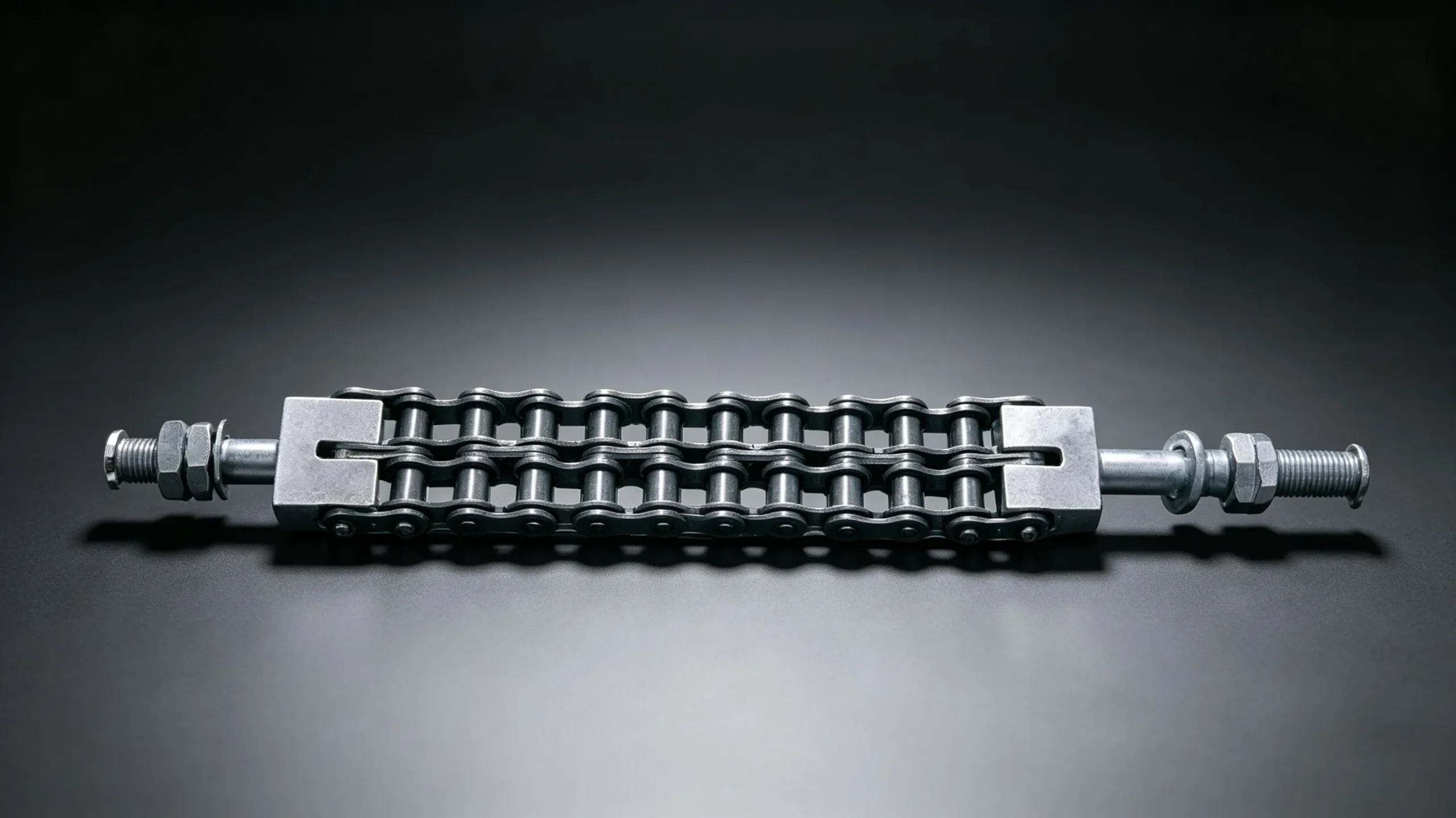
Count the number of parallel strands in the chain loop. One strand = simplex. Two strands = duplex. Three strands = triplex. This is visible by looking at the chain face-on: simplex has one roller row; duplex has two roller rows separated by a gap; triplex has three. The strand count must match the sprocket — never install simplex chain on duplex sprockets or vice versa.
Step 5: Measure the Chain Length
For a replacement chain loop, count the total number of links in the existing chain loop while it is still installed, or after removal if the machine is shut down. The link count must be even for a standard chain installation (to avoid needing an offset link). Record the link count and the chain standard number — this is the complete specification for the replacement order: standard, chain number, series, strand count, and link count.
When Chain Markings Are Legible: Using Them Correctly
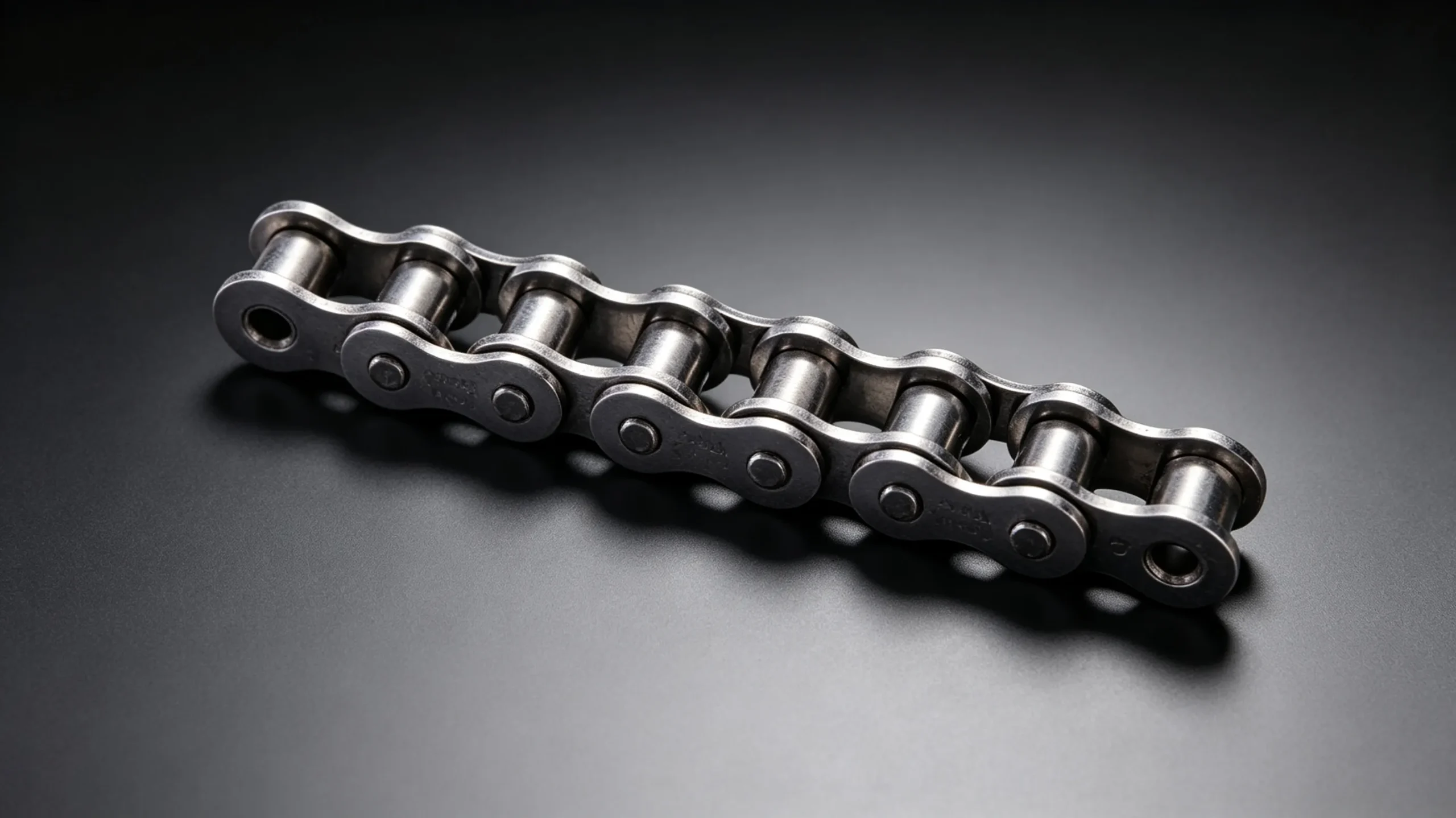
Quality roller chain is stamped with its designation on the outer link plates — typically at every few links. ANSI chain markings follow the pattern: chain number (e.g. 60, 80, 60H) sometimes followed by the strand count (-2 for duplex) and a manufacturer code. ISO chain markings use the B-series format: 12B, 16B, 16B-2 for duplex, etc. When markings are legible, they provide a fast starting point — but always verify the marked designation against your pitch measurement before ordering, particularly for chain sourced from an unfamiliar machine or after a previous maintenance event that may have introduced a different specification.
Ordering From EverPower: What to State
When contacting EverPower Roller Chains Australia to order replacement chain, provide the following information for the fastest and most accurate quotation: the three measurements (pitch, roller diameter, inner width), the plate thickness (to verify standard or heavy series), the strand count, and the total link count required. If you have the existing chain markings, provide these as well. If you are uncertain about any measurement, photograph the chain next to a ruler and email the photograph to our Sydney team for identification assistance.
EverPower Roller Chains Australia can assist with roller chain identification from your measurements or from a physical chain sample. Contact our Sydney team at [email protected] or +61 2 9708 3322 with your measurements or photographs, and we will identify the correct specification and provide a quotation for same-week despatch on stocked sizes.
+61 2 9708 3322 | [email protected] | 27 Harley Crescent, Condell Park NSW 2201