
Outdoor roller chain applications present a combination of challenges that indoor industrial chain does not face: moisture from rain and dew, temperature cycling that promotes condensation, dust and abrasive particles that contaminate the lubricant, UV exposure that degrades some elastomeric components, and in coastal or marine environments, salt-laden air that dramatically accelerates corrosion. The correct material and specification for outdoor chain depends on which of these factors dominates in your specific operating environment — and the wrong material choice can reduce chain service life by 60 to 80 percent compared to the correct specification.
The Three Material Options and Their Outdoor Performance
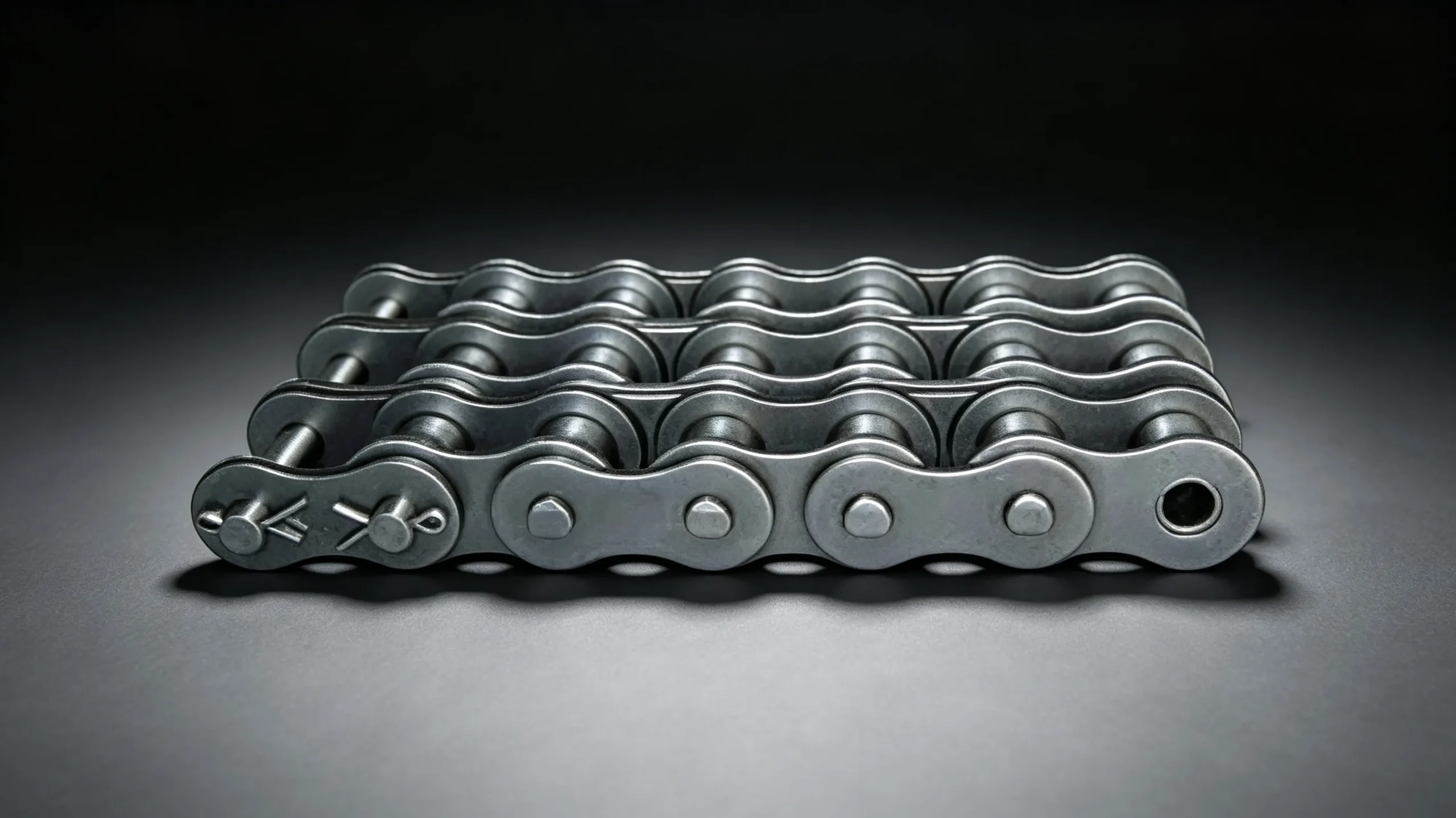
For outdoor roller chain applications, three base material specifications are relevant: standard carbon steel with protective lubrication, stainless steel roller chain (304 or 316 grade), and specialised corrosion-resistant alloy chain for extreme environments. The correct choice depends on the specific corrosion environment — humidity level, salt exposure, chemical exposure, and the intensity of the wet/dry cycling that drives condensation corrosion.
| Material | Corrosion Resistance | Strength vs Carbon Steel | Best Outdoor Application | Avoid For |
|---|---|---|---|---|
| Carbon steel + tackified oil | Moderate — adequate with consistent maintenance | Baseline (highest) | General agricultural, inland outdoor industrial | Coastal/marine, tropical high-humidity without intensive maintenance |
| 304 stainless steel | Good — resists water and mild chemicals, not strong chlorides | 70–80% of carbon steel | Outdoor food processing, light marine/coastal, wet agricultural environments | Heavy chloride exposure (seawater, strong brine, intensive chlorinated cleaning) |
| 316 stainless steel | Excellent — molybdenum addition resists chlorides | 70–80% of carbon steel | Marine, coastal, meat/seafood outdoor processing, tropical environments | Very aggressive acid environments — consult chemical compatibility data |
| Nickel-plated carbon steel | Better than bare carbon steel — limited to surface protection | Near carbon steel | Moderately corrosive environments where stainless is uneconomical | Environments where plating is abraded by contamination — inner joint not protected |
| O-ring sealed carbon steel | Good for joint protection — outer surface still corrodes | Near carbon steel | Dusty + moderately corrosive environments | Marine/coastal where outer plate corrosion is the primary problem |
Agricultural Outdoor Applications: The Dominant Category in Australia
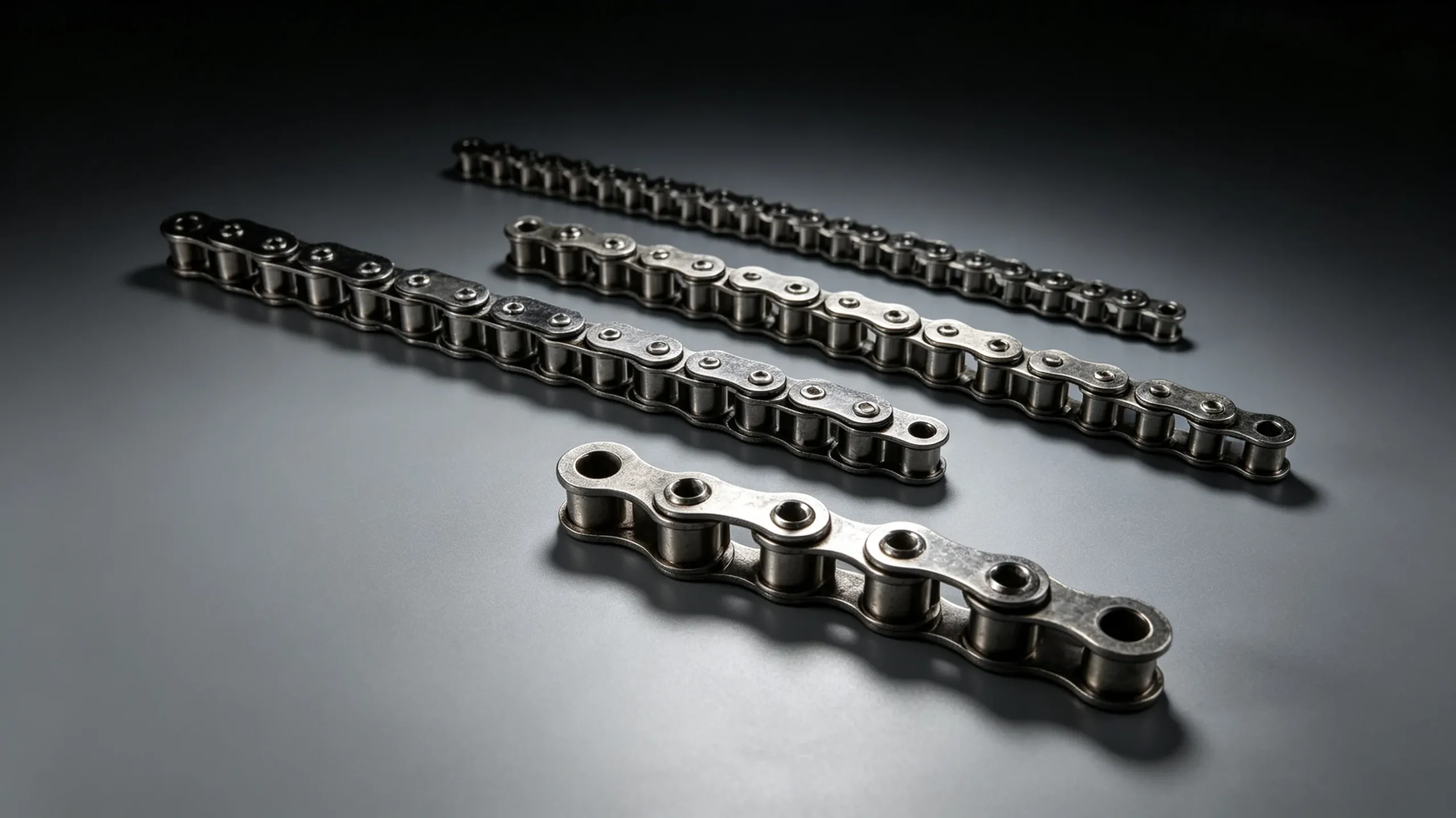
The majority of outdoor roller chain used in Australia is in agricultural machinery — combine harvesters, balers, grain handling equipment, and tillage machinery — operating in inland agricultural regions where salt exposure is not a significant factor. In these environments, the correct material specification is standard carbon steel chain with regular application of a tackified chain lubricant with corrosion-inhibiting additives.
The priority in agricultural outdoor chain maintenance is not material change but lubrication consistency. A carbon steel chain lubricated with a quality tackified oil every 20 operating hours in dusty harvest conditions will substantially outlast a chain that is left un-lubricated between seasons or lubricated infrequently during operation. Pre-season inspection, cleaning, and fresh oil application before storage, and fresh oil application before the first operating shift, are the two most impactful maintenance actions for agricultural outdoor chain.
When to Consider Stainless Steel in Agricultural Applications
For agricultural equipment operating in coastal regions within approximately 5 kilometres of the sea, salt-laden air significantly accelerates carbon steel chain corrosion even with regular lubrication. For these machines, 304 grade stainless steel roller chain on high-value drives (combine feeder house, main baler drives) provides corrosion resistance that eliminates the accelerated degradation from salt exposure — at the cost of the stainless steel strength reduction (70 to 80 percent of carbon steel) that must be verified against the drive load.
Coastal and Marine Applications
Marine equipment — fishing vessels, coastal handling equipment, port machinery, offshore platforms — requires stainless steel roller chain in 316 grade as the minimum specification for any drive exposed to seawater spray or salt-laden humid air. The chloride concentration in seawater (approximately 19,000 ppm) is far above the threshold that causes rapid pitting corrosion on 304 stainless steel (approximately 200 ppm for continuous exposure). Only the molybdenum-containing 316 grade provides adequate resistance at seawater chloride concentrations.
For drives on vessels or coastal structures that are regularly immersed in seawater or exposed to spray during operation, consider adding a dedicated corrosion inhibitor applied to the chain outer surfaces at each maintenance interval — even 316 stainless can benefit from corrosion protection at welds, machined surfaces, and connecting link interfaces where the passive oxide layer may be disrupted during installation.
Outdoor Industrial Applications: Tropical and High-Humidity Environments
In tropical regions of northern Australia — Queensland, Northern Territory, and northern Western Australia — the combination of high humidity, high temperature, and seasonal flooding generates severe corrosion conditions for carbon steel chain even in inland locations. In these environments, the choice between carbon steel with intensive maintenance and stainless steel depends on the practical ability to maintain a consistent lubrication and inspection programme on each specific drive.
For equipment in remote locations, accessed only monthly or less frequently for maintenance, stainless steel roller chain provides much better corrosion survival between maintenance visits than carbon steel. For frequently maintained equipment with disciplined maintenance personnel and documented programmes, carbon steel with a quality corrosion-inhibiting lubricant is a reasonable specification even in tropical climates — provided the maintenance programme is actually being executed.
Surface Treatment Options for Carbon Steel Chain
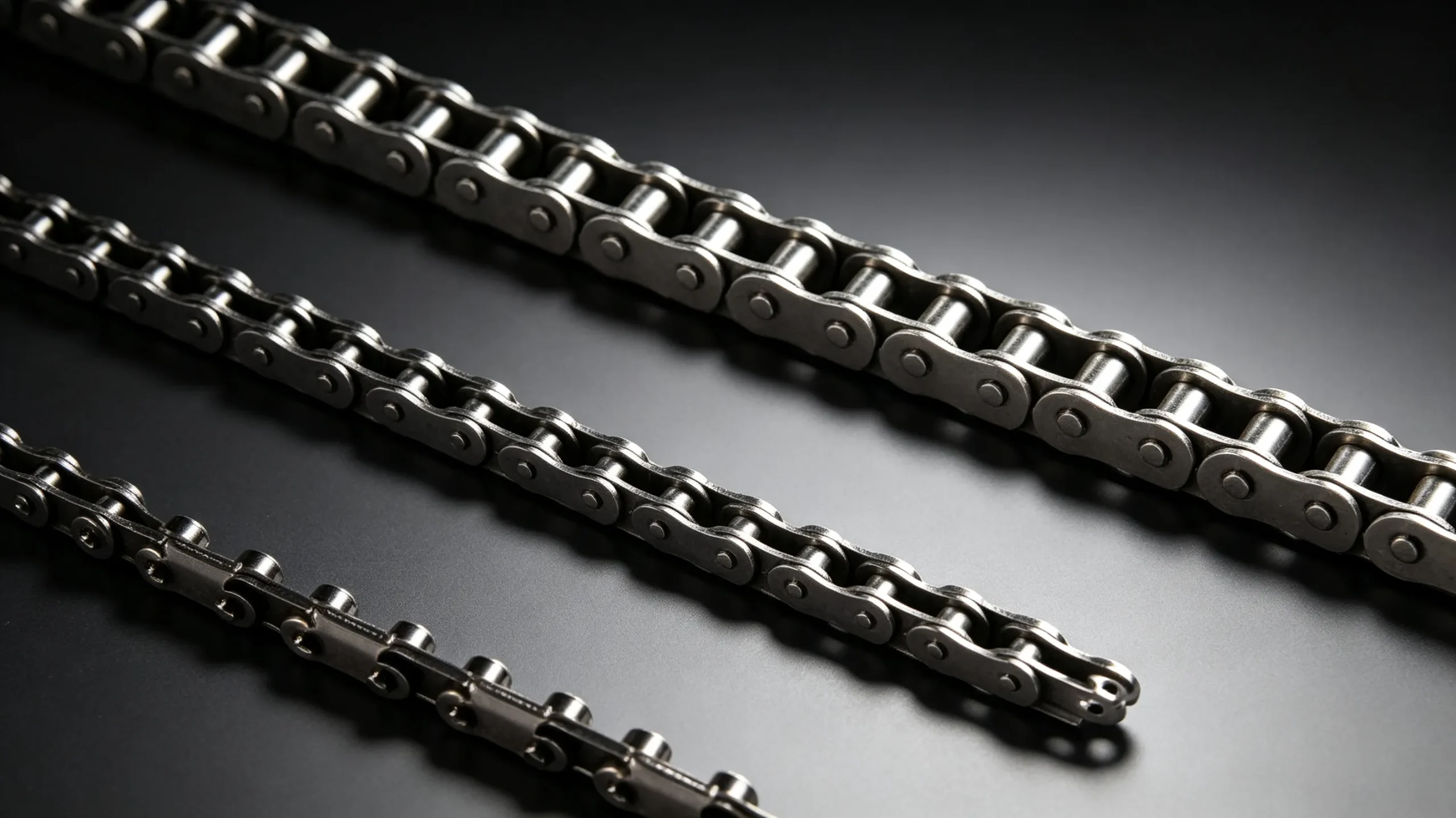
Where stainless steel roller chain is not justified by the environment but standard carbon steel needs improved corrosion resistance, several surface treatment options extend outdoor service life:
Nickel Plating
Provides a physical barrier between the steel surface and the corrosive environment. Effective for outer plate and roller surfaces; does not reach pin-bushing clearance. Cost premium: 15–25% over bare carbon steel. Best for moderate outdoor environments without intensive abrasion.
Zinc Plating (Galvanising)
Sacrificial zinc coating corrodes preferentially to protect the underlying steel. Suitable for mild outdoor environments; zinc wears from contact surfaces quickly in abrasive conditions. Cost premium: 10–20%.
Manganese Phosphate Treatment
Dark grey surface treatment that retains oil better than bare steel and provides mild corrosion protection. More commonly used for storage and shipping protection than for long-term outdoor service.
O-Ring Sealing
Seals the pin-bushing interface against moisture ingress — addresses internal joint corrosion. Outer plate surfaces still require regular lubrication for corrosion protection. Most effective for dusty outdoor environments where both contamination and moisture are problems.
The Correct Lubricant for Outdoor Chain: As Important as the Material
Material specification and lubricant specification must be matched to achieve maximum outdoor roller chain service life. For carbon steel chain in outdoor agricultural and industrial applications, use a tackified chain oil with corrosion-inhibiting additives — never a standard mineral oil that will wash off or evaporate within hours of application in outdoor conditions. Apply to the inner links (the gap between inner and outer plates) where capillary action carries it to the pin-bushing interface, and to the outer surfaces for corrosion protection.
For stainless steel chain in food processing or marine environments, use an NSF H1 food-grade oil if food contact compliance is required, or a corrosion-inhibiting marine oil for non-food marine drives. Never apply grease to roller chain of any material — grease does not penetrate the pin-bushing clearance and attracts abrasive particles that accelerate external surface wear.
EverPower Roller Chains Australia supplies roller chain in carbon steel, 304 stainless, and 316 stainless for outdoor agricultural, coastal, and marine applications. Our Sydney team can advise on the correct material grade for your specific environment. Contact us at +61 2 9708 3322 or [email protected].
+61 2 9708 3322 | [email protected] | 27 Harley Crescent, Condell Park NSW 2201