
When an existing roller chain needs replacing and the original specification is unknown — no parts manual, worn chain markings, missing maintenance records — the correct replacement specification can be determined entirely from the sprocket. A sprocket codes all the key chain dimensions in its geometry: the tooth spacing tells you the chain pitch, the tooth pocket width tells you the roller diameter, and the tooth face width tells you what strand count the sprocket was designed for. This guide walks through the complete measurement process for determining chain size from an installed sprocket, with the tools, the measurements, and the cross-reference steps to arrive at a confirmed chain specification.
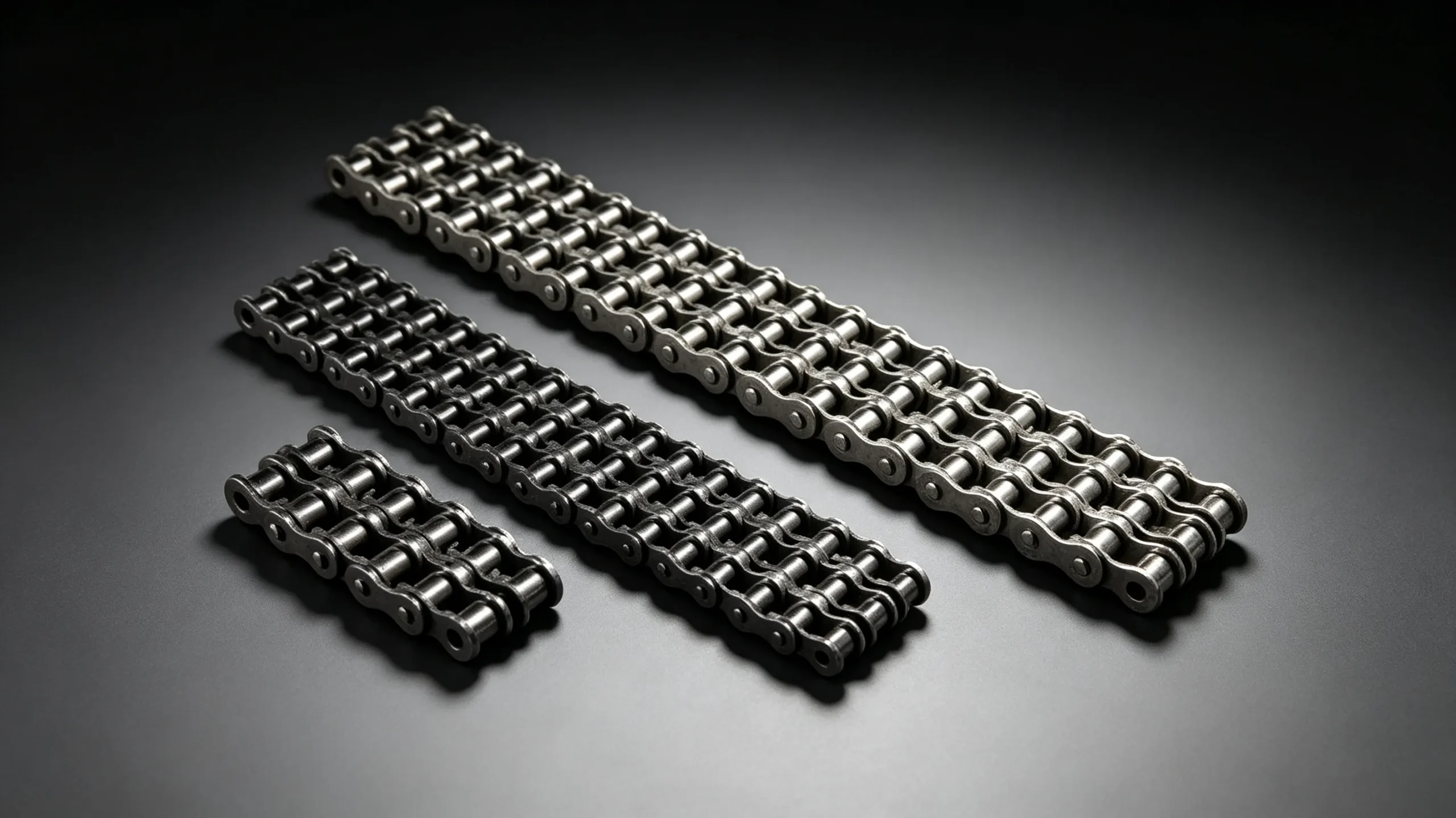
Tools Required for Sprocket Measurement
Determining roller chain size from a sprocket requires: a vernier caliper accurate to 0.05 mm (essential — a standard ruler is not adequate), a steel rule or measuring tape for tooth count, a calculator, and optionally a straight edge or chain pitch gauge for verification. The measurements take approximately 5 to 10 minutes on an accessible sprocket and provide all the information needed to specify the correct replacement chain without any additional documentation.
Measurement 1: Chain Pitch From Sprocket Tooth Spacing
The sprocket tooth spacing equals the chain pitch. To measure the tooth spacing accurately without a chain pitch gauge, use the chord method: count the number of teeth (N), then measure the outside diameter (OD) of the sprocket between tooth tips with the caliper. The pitch circle diameter (PCD) is approximately: PCD = pitch / sin(180°/N). More practically: measure the distance between the centre of one tooth tip and the centre of a tooth tip directly across the sprocket (the pitch circle chord), which for an even tooth count sprocket equals the PCD directly.
An easier field method: measure across exactly 10 tooth spaces on the sprocket face using the caliper, spanning from the root of one tooth to the root of a tooth 10 teeth later. Divide by 10 to get the average pitch. Compare against the standard ANSI pitch table: 12.70 mm (ANSI 40), 15.875 mm (ANSI 50), 19.05 mm (ANSI 60), 25.40 mm (ANSI 80), 31.75 mm (ANSI 100). Match to the nearest standard value.
Measurement 2: Roller Diameter From Tooth Pocket Width
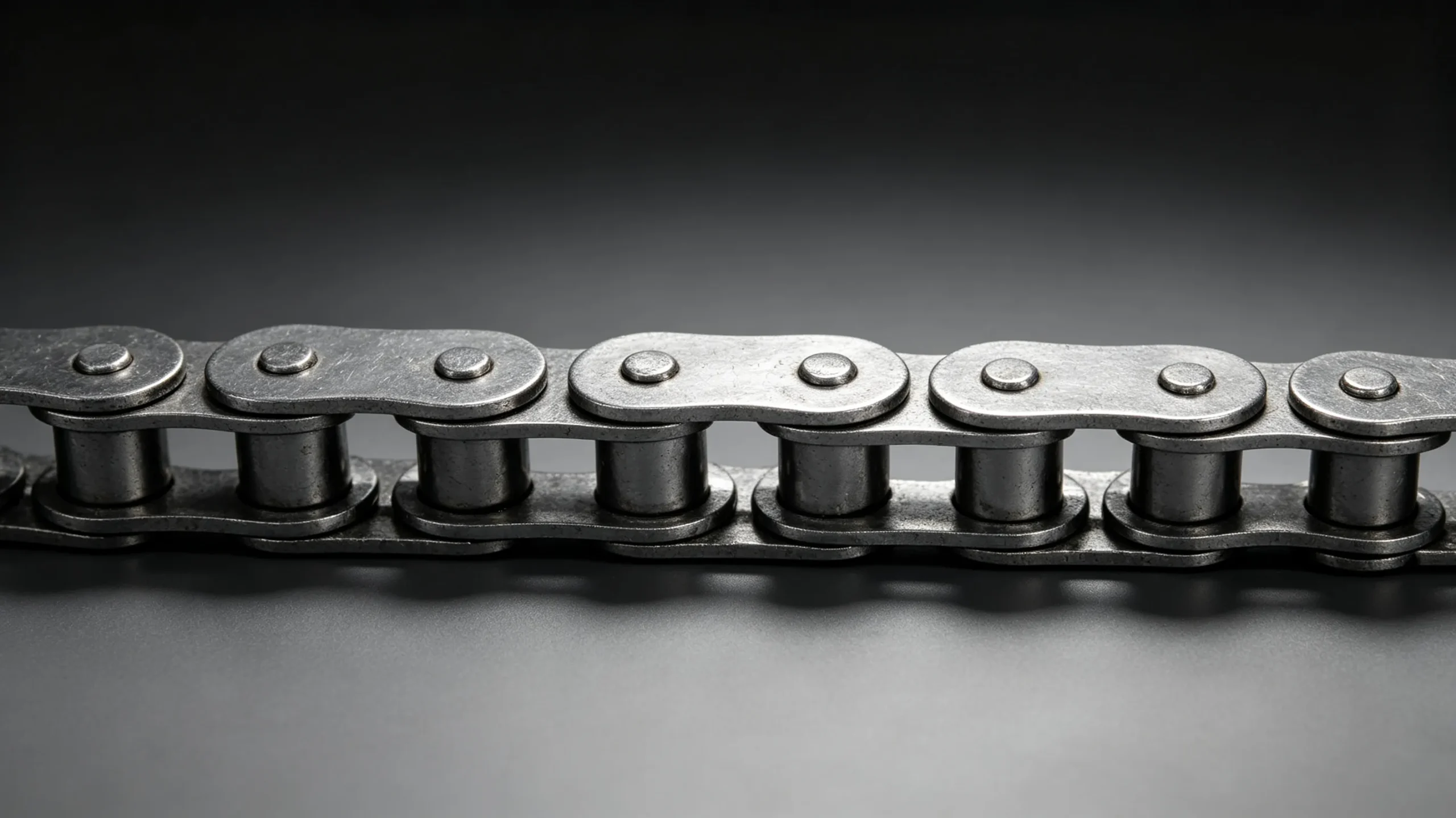
The tooth pocket (the gap between adjacent tooth tips where the roller seats) is machined to accommodate the specific roller diameter of the matching chain. Measure the width of the tooth pocket at the narrowest point — the gap between the two tooth faces where they converge toward the root — using the caliper jaw. This measurement approximates (but is slightly larger than) the roller diameter of the matching chain.
This measurement distinguishes ANSI roller chain from ISO chain at the same pitch. At 19.05 mm pitch, ANSI 60 uses an 11.91 mm roller while ISO 12B uses a 12.07 mm roller. The 0.16 mm difference is measurable with a good caliper. It is also distinguishable by the tooth pocket geometry: an ANSI sprocket machined for the 11.91 mm roller will have a noticeably tighter pocket than an ISO sprocket at the same pitch. If in doubt, measure the existing chain roller diameter directly.
| Pitch (mm) | ANSI Chain No. | ANSI Roller Dia. (mm) | ISO Chain No. | ISO Roller Dia. (mm) | How to Distinguish |
|---|---|---|---|---|---|
| 12.70 | ANSI 40 | 7.92 | 06B | 6.35 | Large difference — easily measured |
| 15.875 | ANSI 50 | 10.16 | 10B | 10.16 | Same roller — check inner width to distinguish |
| 19.05 | ANSI 60 | 11.91 | 12B | 12.07 | Small difference — measure carefully |
| 25.40 | ANSI 80 | 15.88 | 16B | 15.88 | Same roller — check inner width to distinguish |
| 31.75 | ANSI 100 | 19.05 | 20B | 19.05 | Same roller — check inner width to distinguish |
Measurement 3: Sprocket Face Width for Strand Count
The total face width of the sprocket — measured parallel to the shaft axis across the full tooth-bearing surface — determines the strand count of the matching chain. A simplex sprocket has a single tooth row; a duplex sprocket has two parallel tooth rows with a gap between them; a triplex sprocket has three rows. For a simplex ANSI 60 sprocket, the face width is approximately 12.57 mm (matching the chain inner link width). For a duplex ANSI 60-2 sprocket, the face width is approximately 2 × 12.57 mm + 1 × spacer = approximately 30 to 35 mm.
Count the tooth rows directly if the sprocket is accessible: each row is a separate chain engagement surface separated by a groove. A sprocket with two tooth rows needs duplex chain; three rows needs triplex. Never install simplex chain on a duplex sprocket — the chain will ride off-centre on one tooth row and wear rapidly.
Step 4: Verify Against the ANSI Size Table
With pitch, roller diameter, and strand count confirmed, cross-reference against the ANSI B29.1 or ISO 606 specification table to identify the chain number precisely. The combination of pitch + roller diameter uniquely identifies the chain number in most cases. If the roller diameter measurement falls between two standard values (which can happen on worn sprockets), use the pitch to narrow the candidates and then compare the tooth pocket width against both standard roller diameters to determine which matches better.
When Sprocket Markings Are Still Legible
Many quality sprockets have their tooth count and sometimes the matching chain number stamped or cast into the hub or web face. If these markings are legible, they provide a direct starting point. A sprocket marked “60-17” indicates 17 teeth for ANSI No. 60 chain. A sprocket marked “16B-21” indicates 21 teeth for ISO 16B chain. Verify the marking against your pitch measurement before ordering — hub markings can occasionally be incorrect if the sprocket has been rebored or modified.
Using an Existing Chain Section for Identification
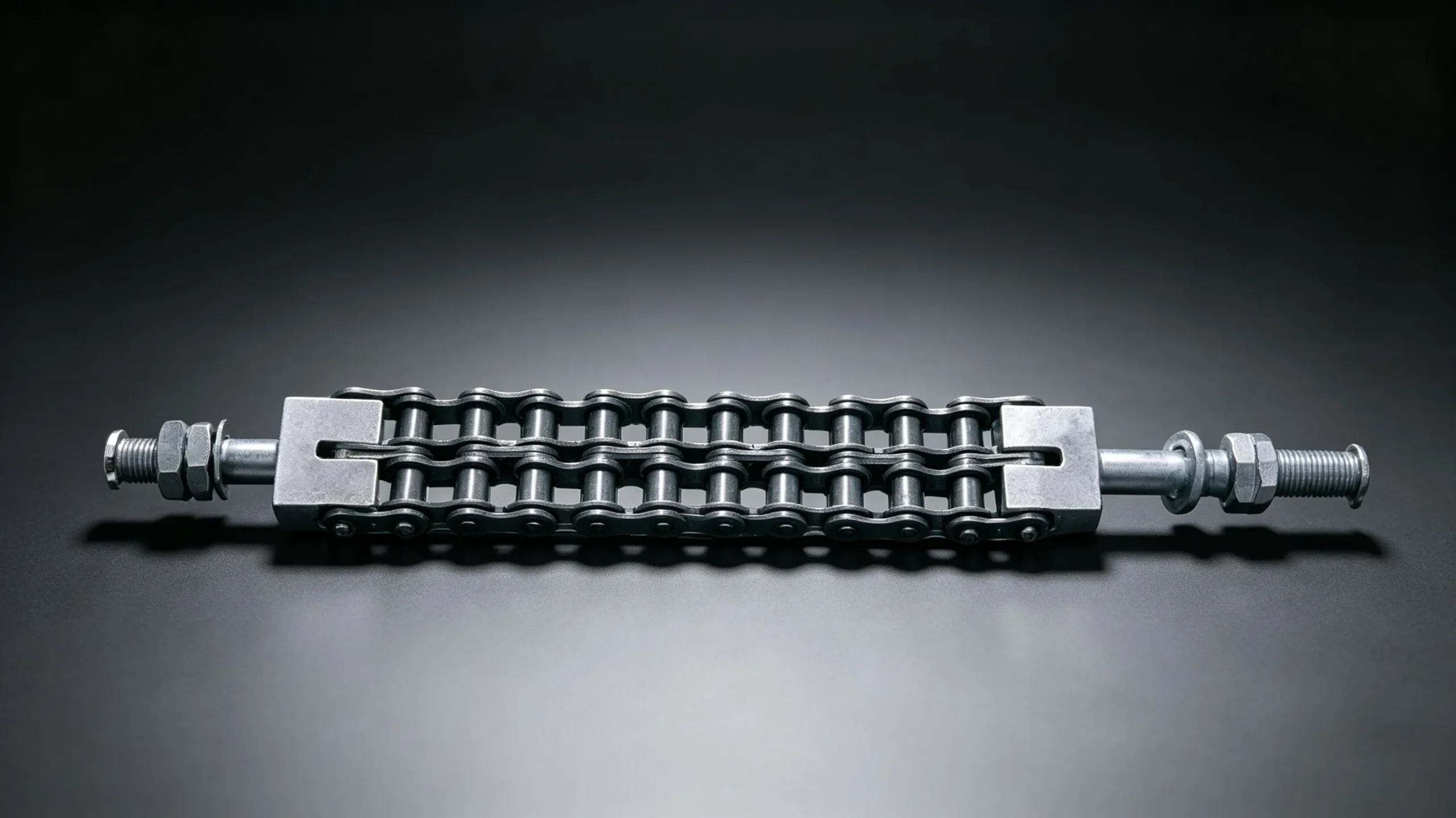
If a section of the original chain is still available — even a worn section — measuring the existing chain is more reliable than measuring the sprocket alone. The three key measurements on the existing chain are: pitch (measured across 10 or more links as described elsewhere in this guide), roller outer diameter (measured directly with caliper across the roller at its widest point), and inner link width (measured between the inner faces of the inner link plates). These three figures together uniquely identify both the chain standard and chain number without ambiguity.
EverPower Roller Chains Australia can assist with chain identification from sprocket or chain measurements. Send your pitch, roller diameter, and inner width readings (or photographs of the sprocket and existing chain) to our Sydney team at [email protected] or call +61 2 9708 3322 — we will identify the specification and provide a quotation.
+61 2 9708 3322 | [email protected] | 27 Harley Crescent, Condell Park NSW 2201