
The decision to use double pitch roller chain instead of standard pitch chain is a straightforward engineering trade-off once the performance boundaries are understood: double pitch chain is lighter, cheaper per metre, and appropriate for low-speed applications, but it has a lower maximum working load, worse chordal action at any given speed, and is categorically unsuitable for the power transmission and high-load conveyor applications where standard pitch chain is required. Knowing precisely where these boundaries lie — and what operating parameters trigger the switch from one to the other in either direction — produces the correct specification without overspending or underspecifying.
What Double Pitch Chain Is and How It Differs
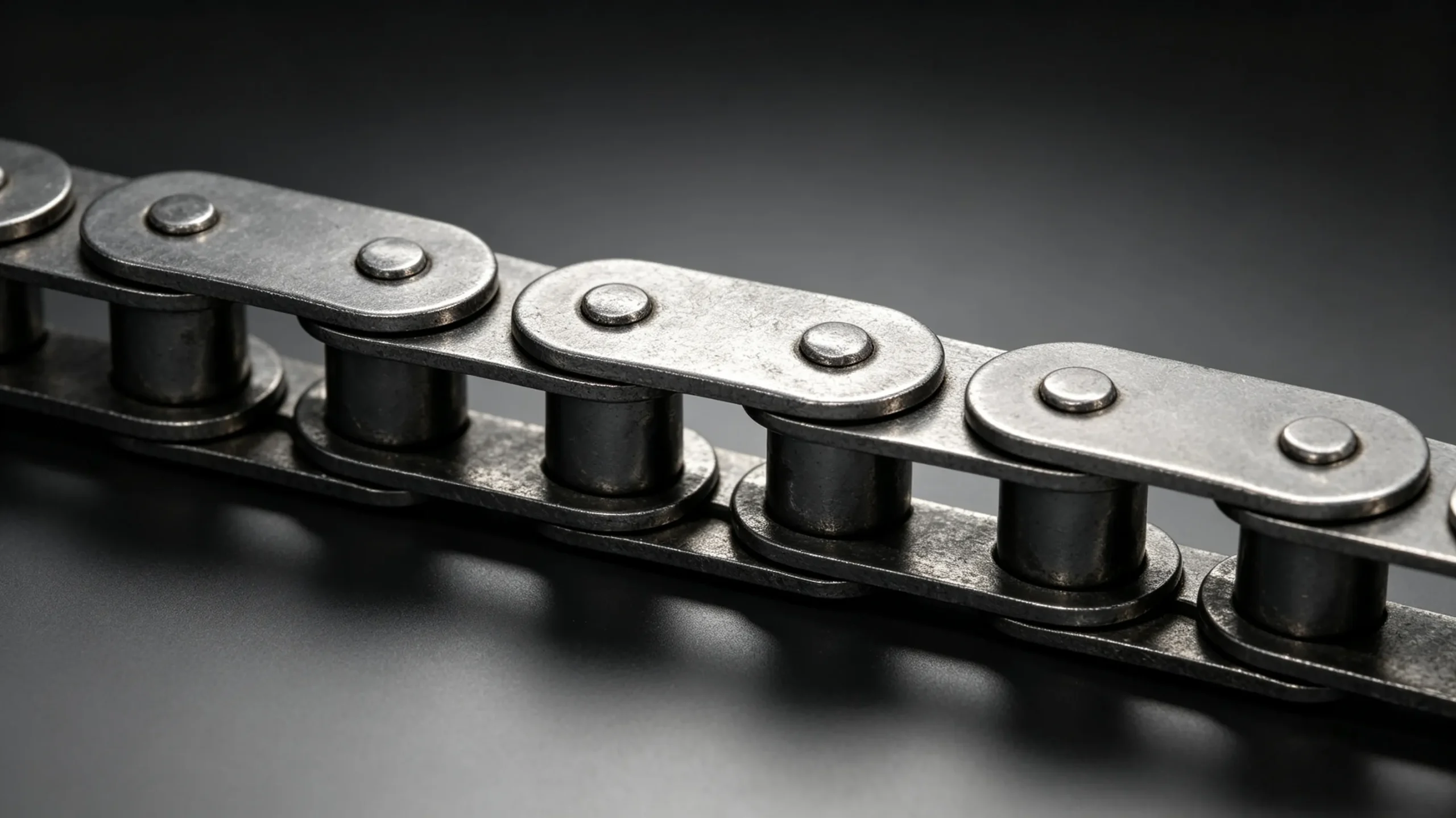
Double pitch roller chain (ANSI C2 series) uses the same pin, bushing, and roller components as standard chain of the corresponding roller diameter, but the link plates are twice as long — giving a pitch of exactly twice the standard value. C2060H chain has a pitch of 38.10 mm (twice the 19.05 mm pitch of ANSI 60), using the same 11.91 mm rollers as ANSI 60 but with plates spanning two standard pitches rather than one. This geometry makes the chain approximately 50 percent lighter per metre and proportionally less expensive, while maintaining the same roller-to-sprocket engagement characteristics.
The trade-off is a lower maximum working load (because the longer plates experience greater bending stress during articulation), more pronounced chordal action at any given chain speed (because the larger pitch polygon effect is more significant), and a strict speed limitation that excludes double pitch chain from all but slow-moving conveyor and material handling applications.
When Double Pitch Chain Is the Correct Choice
Slow Conveyor Applications Below 1.5 m/s
Double pitch roller chain is specifically designed for slow-moving conveyor systems where chain speed does not exceed approximately 1.5 m/s and loads are light to moderate. At this speed, the larger pitch does not generate problematic dynamic loads from chordal action, and the weight and cost savings per metre of chain are significant — particularly on long conveyor runs where the total chain length is substantial. Agricultural grain handling conveyors, seed transfer systems, parts washing conveyors, and assembly line carriers all commonly use double pitch chain when operating within the speed limit.
Long Conveyor Runs Where Weight Matters
In a long horizontal conveyor where the chain return strand represents a significant dead load, reducing chain weight per metre directly reduces the tension required to overcome the return strand weight — which reduces the total chain pull and potentially allows a lighter chain specification for the drive. A 30-metre conveyor using double pitch C2060H chain versus standard ANSI 60 saves approximately 50 percent of the chain weight across the return strand, which translates to a meaningful reduction in the required drive tension and a smaller drive motor.
Attachment Chain With Wide Spacing
For conveyor attachment chain where the attachment elements (bent plates, extended pins, cleats) need to be widely spaced, the longer pitch of double pitch chain provides wider spacing between attachment points without requiring every link to have an attachment. This suits applications where products being conveyed are large enough that close attachment spacing would cause interference or where wide spacing is needed for drainage between products.
When Standard Pitch Chain Must Be Used
Any Drive Above 1.5 m/s
Above approximately 1.5 m/s, the chordal action generated by the large pitch of double pitch chain produces dynamic loads and vibration that standard pitch chain at the same speed does not generate. This is the most important boundary to respect: double pitch roller chain is exclusively a slow-speed product. Power transmission drives, agricultural main drives, and any conveyor operating above the speed limit must use standard pitch chain.
High-Load Applications
The maximum working load of double pitch chain at a given roller diameter is lower than the equivalent standard pitch chain because the longer plates generate higher bending stress at the pin holes during articulation. For loads above approximately 60 to 70 percent of what would be acceptable for standard ANSI chain of the same roller diameter, the reduced working load of double pitch chain makes standard pitch the required specification.
Agricultural Main Power Drives
Agricultural main drives — combine feeder house, baler plunger, forage chopper — operate under variable, high-load, shock-dominated conditions that are categorically outside the operating envelope of double pitch roller chain. These applications require standard pitch chain, often in heavy series or sawtooth plate configuration. Using double pitch chain on these drives would result in rapid failure within hours of operation under normal agricultural load conditions.
| Parameter | Double Pitch Chain | Standard Pitch Chain |
|---|---|---|
| Maximum recommended speed | 1.5 m/s (conveyor); 2.0 m/s absolute limit | Up to 15+ m/s (pitch and load dependent) |
| Weight per metre vs standard | ~50% lighter | Baseline (heavier) |
| Cost per metre vs standard (same roller dia.) | ~40–55% lower | Baseline |
| Maximum working load | Lower — approximately 60–70% of standard equivalent | Baseline |
| Chordal action at equivalent speed | More pronounced — larger pitch polygon effect | Manageable — standard pitch geometry |
| Suitable for power transmission drives | No — low load and speed only | Yes — full power transmission range |
| Suitable for agricultural main drives | No | Yes |
| Suitable for slow flat conveyors | Yes — primary application | Adequate but more expensive |
| Suitable for attachment chain (wide spacing) | Yes — longer pitch enables wider spacing | Requires closer attachment link frequency |
Large Roller vs Small Roller Double Pitch Chain
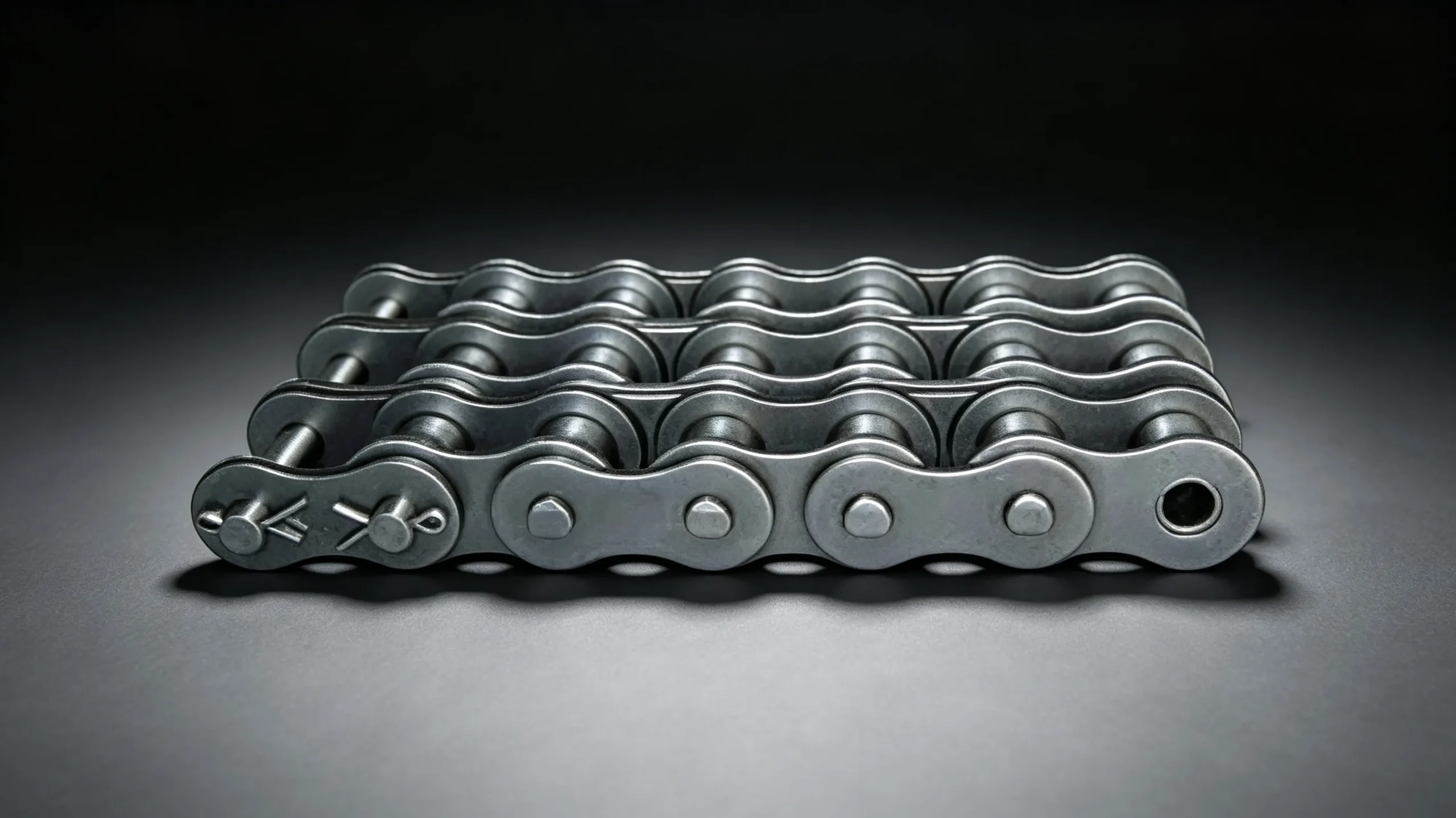
Double pitch roller chain is available in two roller configurations. Large roller variants (C2040, C2060H) use rollers identical in diameter to the standard chain of the same pitch base number — these can run on standard pitch sprockets by engaging every other tooth. Small roller variants (C2042, C2062H) use smaller rollers sized specifically for dedicated double pitch sprockets. The large roller option offers more flexibility when retrofitting existing standard sprockets; the small roller option offers better engagement geometry on dedicated sprockets in new system designs.
EverPower Roller Chains Australia supplies double pitch roller chain in C2040, C2050, C2060H, and C2080H for slow conveyor and material handling applications. Contact our Sydney team to verify that double pitch chain is within the speed and load parameters for your specific application before specifying it.
+61 2 9708 3322 | [email protected] | 27 Harley Crescent, Condell Park NSW 2201