
Replacing a roller chain too late means a breakdown — often at the worst possible moment. Replacing it too early wastes money on chain that still had useful service life remaining. The correct replacement decision sits between these two failure modes, and it is not a subjective judgement call — it is a measurable, documented process with clear thresholds that remove the guesswork from the decision. This guide covers every indicator that should trigger chain replacement, from the primary elongation measurement to the secondary warning signs that indicate a chain is developing a problem before the primary threshold is reached.
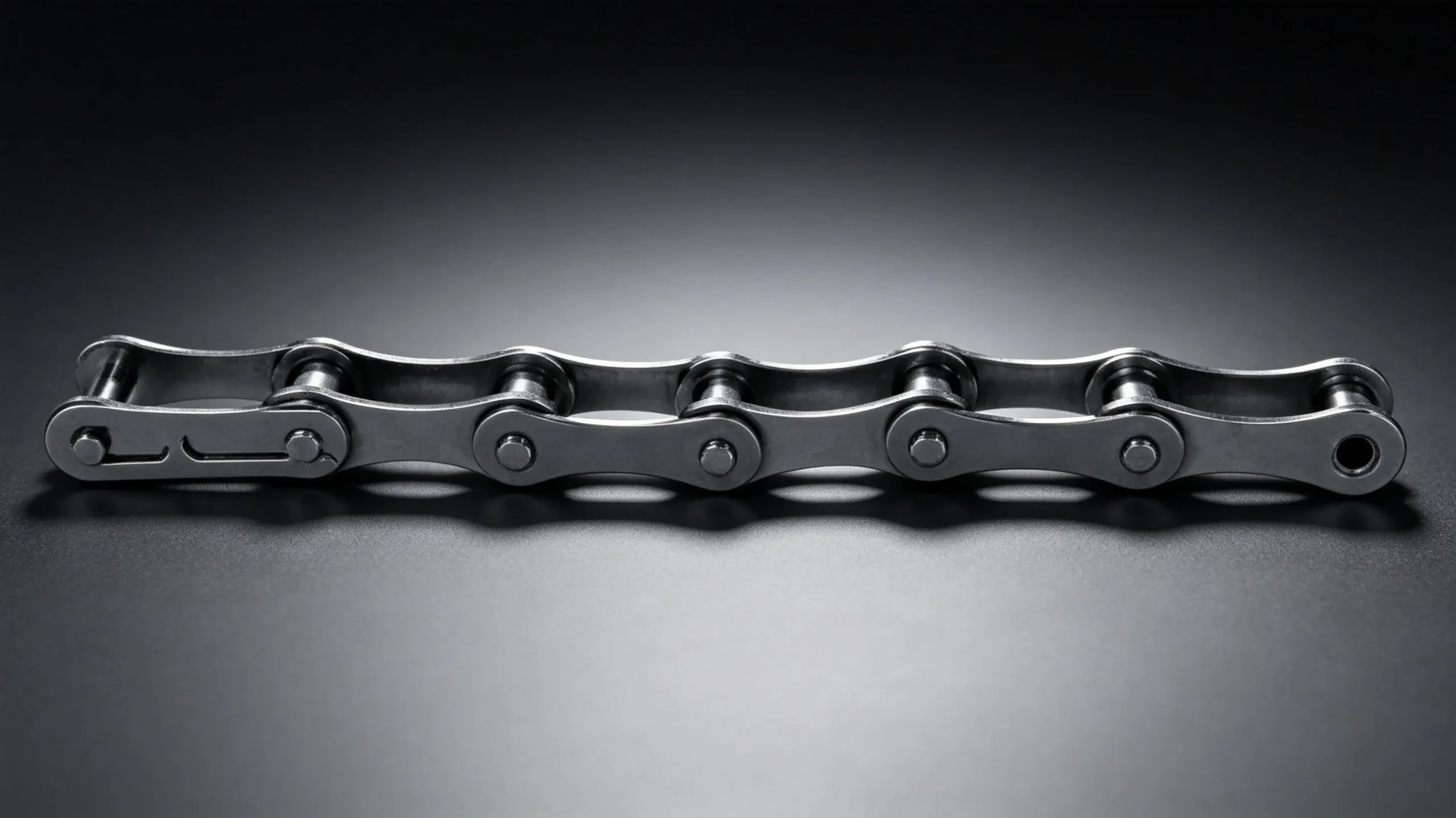
The Primary Replacement Trigger: 3 Percent Elongation
The single most important roller chain replacement indicator is wear elongation reaching 3 percent of the nominal chain length. This threshold is derived from the sprocket tooth engagement geometry defined in ANSI B29.1 and ISO 606 — at 3 percent elongation, the chain pitch has increased sufficiently that rollers no longer seat at the sprocket tooth root, generating the off-centre engagement that rapidly damages both chain and sprocket. Below this threshold, the chain functions correctly and continues to accumulate wear slowly. Above it, wear and fatigue damage rates increase exponentially.
Measure elongation by spanning 20 to 30 consecutive links with a vernier caliper (pin centre to pin centre) and dividing the measured length by the number of pitches. Compare to the nominal pitch multiplied by the same link count. Elongation percentage = (measured length − nominal length) / nominal length × 100. For ANSI 60 chain (19.05 mm pitch), a 30-link span nominally measures 571.5 mm. At 3 percent elongation, it measures 588.6 mm — a 17.1 mm increase across the span.
| ANSI Chain | Pitch (mm) | 30-Link Nominal (mm) | 2% Warning (mm) | 3% Replace (mm) | Action at 3% |
|---|---|---|---|---|---|
| ANSI 40 | 12.70 | 381.0 | 388.6 | 392.4 | Replace immediately |
| ANSI 50 | 15.875 | 476.3 | 485.8 | 490.6 | Replace immediately |
| ANSI 60 | 19.05 | 571.5 | 583.1 | 588.6 | Replace immediately |
| ANSI 80 | 25.40 | 762.0 | 777.2 | 784.9 | Replace immediately |
| ANSI 100 | 31.75 | 952.5 | 971.6 | 981.1 | Replace immediately |
| ANSI 120 | 38.10 | 1143.0 | 1165.9 | 1177.3 | Replace immediately |
Secondary Replacement Triggers: Visual and Audible Warning Signs
Elongation measurement at the scheduled interval is the planned approach to roller chain replacement. Between scheduled measurements, visual and audible warning signs provide early warning that a chain is approaching or has reached the end of its service life. Any of the following should trigger an immediate unplanned elongation measurement and, if confirmed, immediate replacement.
Chain Riding Visibly High on Sprocket Teeth
In a correctly maintained chain drive, the rollers seat at or near the tooth root of the sprocket. When you observe the chain riding visibly higher on the tooth flanks — with rollers clearly positioned above where they should be — the chain has elongated beyond the point where correct seating geometry is maintained. This visual sign typically corresponds to 2.5 to 3.5 percent elongation and warrants immediate measurement and likely replacement.
Audible Chain Skip or Snap Under Load
A roller chain that is skipping teeth under load — producing an audible snap or lurch in the drive — has usually elongated past the 3 percent threshold. The chain skip event itself generates a shock load spike that accelerates both chain and sprocket damage, making each skip event progressively more damaging. Any drive exhibiting chain skip should be taken out of service for chain measurement and replacement as soon as safely possible.
Increased Noise Level or Changed Noise Character
A gradually increasing rattle, click, or metallic grinding sound in a previously quiet chain drive indicates deteriorating engagement geometry from elongation, inadequate lubrication, or worn sprocket teeth. This noise change should trigger an inspection, not continued operation pending the scheduled maintenance interval.
Visible Plate Cracking at Pin Holes
Fatigue cracks at the pin-hole edge of link plates are an immediate replacement trigger regardless of measured elongation. A chain with plate cracks is subject to sudden fracture — the crack will propagate under operating load until the plate separates, causing chain failure. Replace the entire chain loop immediately when plate cracks are found, not just the cracked links.
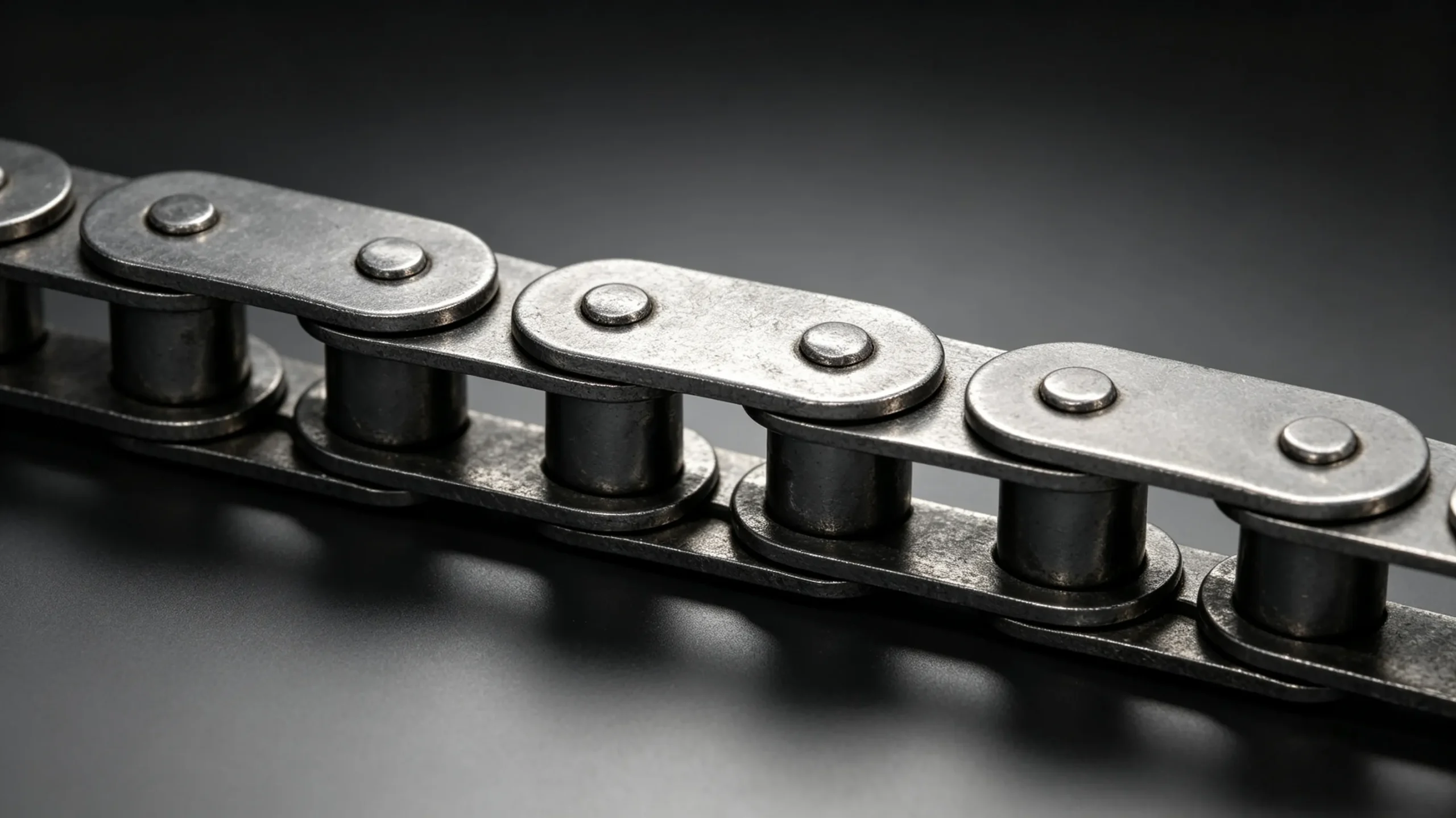
Conservative Replacement Thresholds for Specific Applications
The standard 3 percent threshold is appropriate for most industrial drives. More conservative replacement thresholds are appropriate when the consequences of failure are severe or when sprocket protection is the priority.
| Application Type | Standard Threshold | Conservative Threshold | Rationale |
|---|---|---|---|
| General industrial drive | 3% | 2.5% | Minor cost saving from early replacement vs risk of sprocket damage |
| Long conveyor with expensive sprockets | 3% | 1.5–2% | Protecting large-diameter hardened sprockets is worth the earlier chain replacement cost |
| Agricultural main drives (pre-season) | 3% | 2% or pre-season replacement | In-harvest failure cost far exceeds cost of early chain replacement |
| Food processing conveyor | 3% | 2% | Hygiene risk if chain fails over open product; also chain skip can damage food product |
| Mining conveyor (24-hour operation) | 3% | 2% | Difficult maintenance access; high cost of unplanned shutdown |
| High-speed drives above 5 m/s | 3% | 2% | Reduced skip risk at elevated speeds where skip events are more damaging |
Time-Based vs Condition-Based Replacement
Two distinct replacement philosophies exist for roller chain: time-based (replace at fixed intervals regardless of measured condition) and condition-based (replace when measured parameters reach defined thresholds). For most industrial applications, condition-based replacement based on elongation measurement is more economical — it avoids replacing chain that still has significant remaining life, and it provides a documented basis for the replacement decision.
Time-based replacement is appropriate when: the cost of taking equipment down for measurement exceeds the cost of regular replacement; the operating environment makes measurement difficult or unreliable; or the chain runs in a safety-critical application where any uncertainty about chain condition is unacceptable. Agricultural operators who replace feeder house chain every season regardless of measured elongation are effectively using time-based replacement — a rational choice given the high cost of mid-harvest failure relative to the cost of chain.
When to Replace Chain and Sprockets Together
Whenever roller chain is replaced, sprocket tooth condition must be assessed. Hold a new section of chain against the sprocket teeth and observe whether the rollers seat at the tooth root. A sprocket with hooked or asymmetric teeth that no longer allows new chain to seat at the root must be replaced concurrently. Installing new chain on worn sprockets reduces the new chain service life by 30 to 60 percent — negating most of the economic benefit of the chain replacement.
EverPower Roller Chains Australia supplies replacement ANSI roller chain and ISO roller chain for all industrial, agricultural, and mining applications. Contact our Sydney team for chain sizing advice, pre-season stock reservation, and volume pricing for your replacement programme.
+61 2 9708 3322 | [email protected] | 27 Harley Crescent, Condell Park NSW 2201