Description
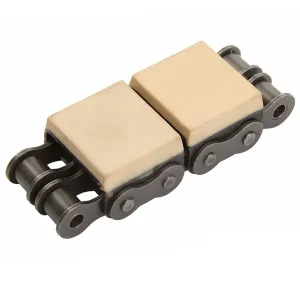
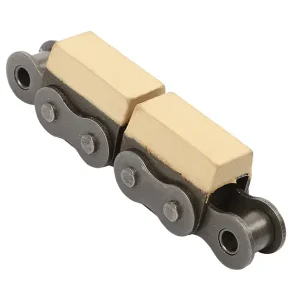
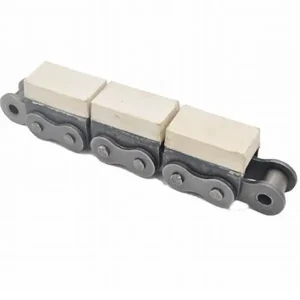
Rubber Top Chain — 12B-G1
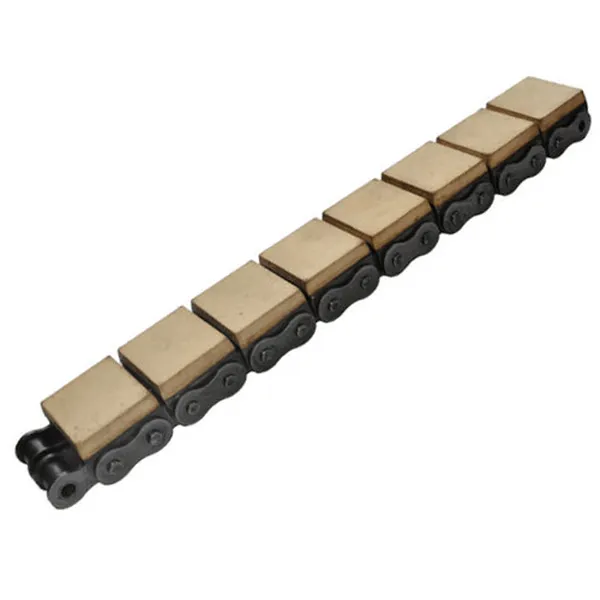
12B-G1 rubber top chain delivers non-marking, non-slip conveying on the ISO 12B pitch base — the standard specification for wood panel production lines, glass handling systems, and ceramic tile conveyors across European and Asian manufacturing facilities.
Product Overview
The 12B base chain (19.05mm pitch, ISO 606 / BS 228 specification) represents a step up in load capacity from the 10B pitch while remaining within the standard British/European chain series. Combined with a G1 narrow rubber top profile, the 12B-G1 is the dominant chain specification in flat-glass and wood panel conveyors where the product surface — typically a polished glass face, a lacquered wood veneer, or a glazed ceramic tile — must reach the customer without any contact marking from the conveying chain.
The non-marking requirement for these industries is a genuine quality standard, not a preference — contact marking on flat glass causes scattering defects visible under quality inspection light; marking on lacquered panels creates warranty claims; marking on glazed tiles results in rejected batches. Rubber top chains address this completely: the rubber’s contact stress is below the marking threshold for all standard glass, panel, and ceramic surface specifications, and its coefficient of friction with smooth surfaces is high enough to maintain positive product control without the metal teeth or cleats that would otherwise be needed on inclined sections.
12B-G1 — G1 narrow rubber top on ISO 12B-1 base
Specification — 12B-G1
| Chain No. |
Pitch P (mm) |
Roller Ø (mm) |
Inner Width (mm) |
Pin Ø (mm) |
Pin Length (mm) |
Plate Depth (mm) |
Rubber W (mm) |
Rubber H (mm) |
Overall W (mm) |
Q min (kN) |
Weight (kg/m) |
| 12B-G1 |
19.050 |
12.07 |
11.68 |
5.72 |
22.50 |
16.13 |
32.0 |
12.0 |
40.0 |
29.0 |
1.15 |
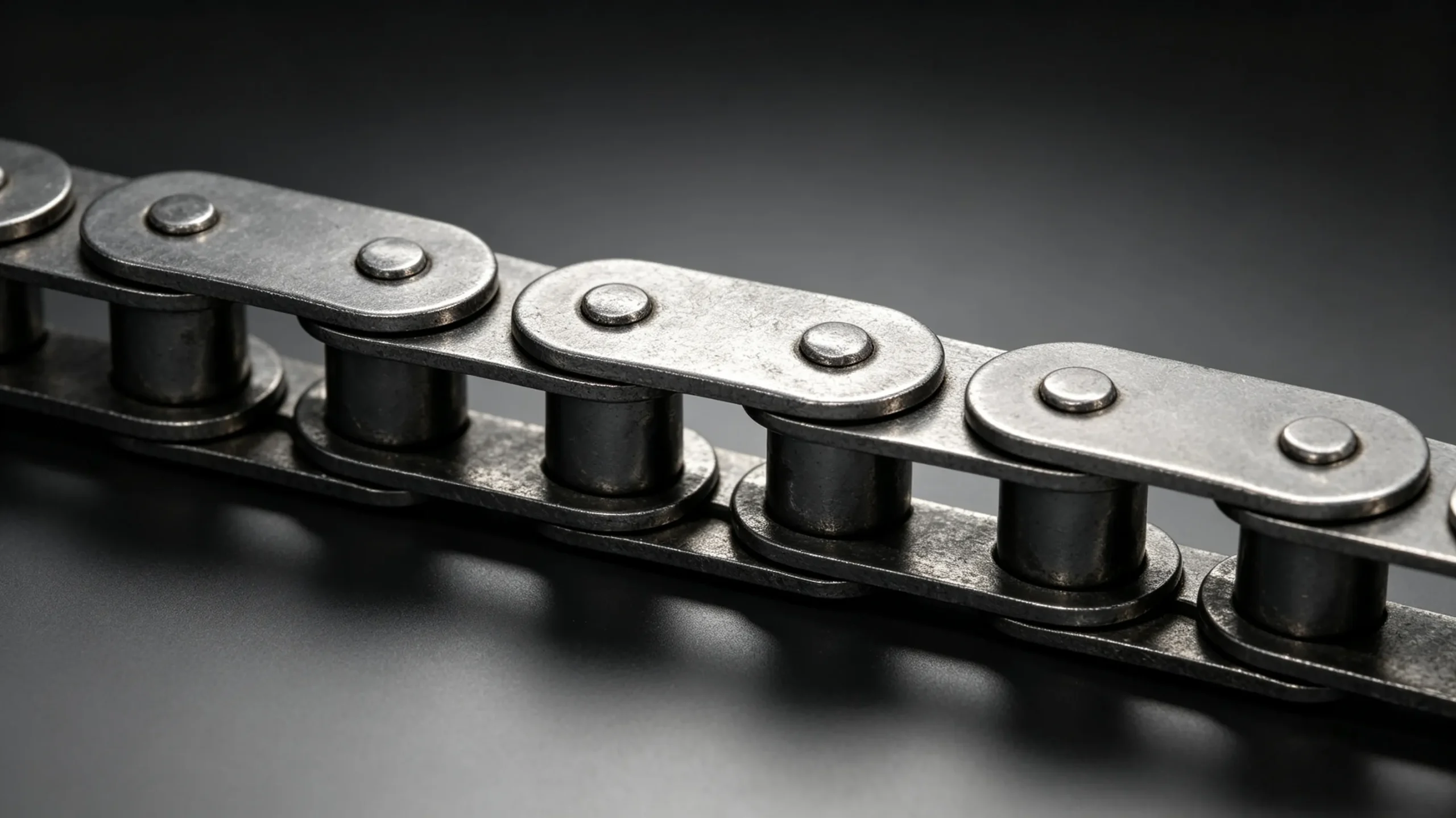
Rubber top chain in production conveyor environment
Rubber Profile and Material Properties
Standard 12B-G1 chains use a natural rubber or NBR compound in 60–80 Shore A hardness. The lower end of this range (60–70 Shore A) is preferred for glass and highly polished surfaces where maximum surface conformity and minimum contact pressure are required. The harder 80 Shore A compound is used for ceramic and panel applications where the product surface has sufficient hardness to tolerate slightly higher contact pressure without marking. The vulcanised bond between rubber and steel plate withstands the thermal cycling between room temperature and the 60–80°C temperatures encountered at glass lehr outfeed and panel press exit conveyors. Silicone rubber compound rated to +150°C is available for lehr applications where chain temperatures above 80°C occur. Customised rubber hardness in 5-Shore-A increments can be specified on minimum order quantities of 20 metres.
Core Performance Advantages
🤚
Positive Non-Slip Grip
The vulcanised rubber surface grips product bases firmly at conveyor accelerations and on inclined sections where smooth-surface chains allow slippage — eliminating the positioning errors and product damage that result from uncontrolled sliding.
🔇
Measurable Noise Reduction
Rubber’s damping properties absorb the micro-impacts at each sprocket link engagement, reducing conveyor operating noise at the product contact surface. In facilities with noise regulations, this can be a compliance factor.
🛡️
Surface-Safe Product Handling
Direct contact between bare steel chain and finished product surfaces causes scratching, denting, and marking. The rubber layer completely eliminates steel-to-product contact, maintaining surface integrity through the full conveyor run.
⚙️
Standard Sprocket Compatibility
The base chain dimensions are fully standard — the same sprockets used for the equivalent standard roller chain work without modification for the rubber top version. No hardware changes required for retrofitting.
Application Areas
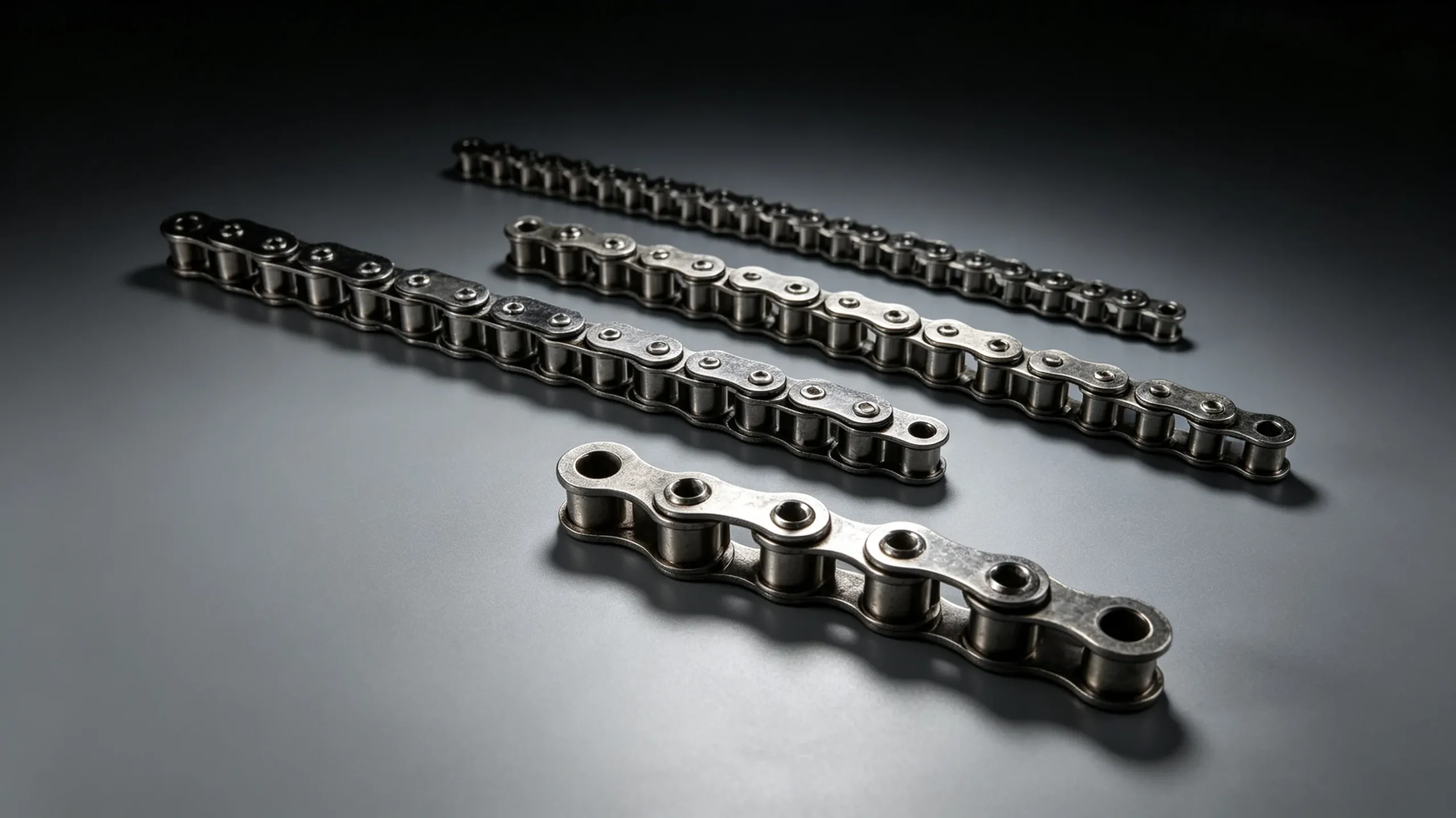
Industrial conveyor application for 12B-G1
🪟
Flat Glass Conveying
Float glass sheets exiting the annealing lehr, cut glass panels between processing stations, and insulated glass units being assembled are conveyed on 12B-G1 chains. The rubber surface contact pressure is below the threshold that causes surface stress marks on standard float glass at temperatures from ambient to 80°C at the lehr exit.
🪵
Wood Panel Production Lines
MDF, plywood, particleboard, and solid wood panels travel through sanding, laminating, and finishing lines on 12B-G1 rubber top chains. The rubber prevents the contact marking that bare-steel chain causes on melamine-coated and lacquered surfaces at the point of first contact.
🏺
Ceramic Tile Handling
Glazed and unglazed ceramic tiles convey through kiln outfeed, sorting, and packaging on 12B-G1 chains. The rubber surface prevents chipping at contact points on glazed tiles and avoids the abrasion that bare-steel chain causes on unglazed green-body tiles before firing.
🔲
Synthetic Panel Lines
Fibre cement boards, composite panels, and vinyl-faced panels require non-marking conveying through trimming, routing, and stacking. The 12B-G1 rubber top prevents the surface indentation that steel chain contact creates on soft-faced composite panels.
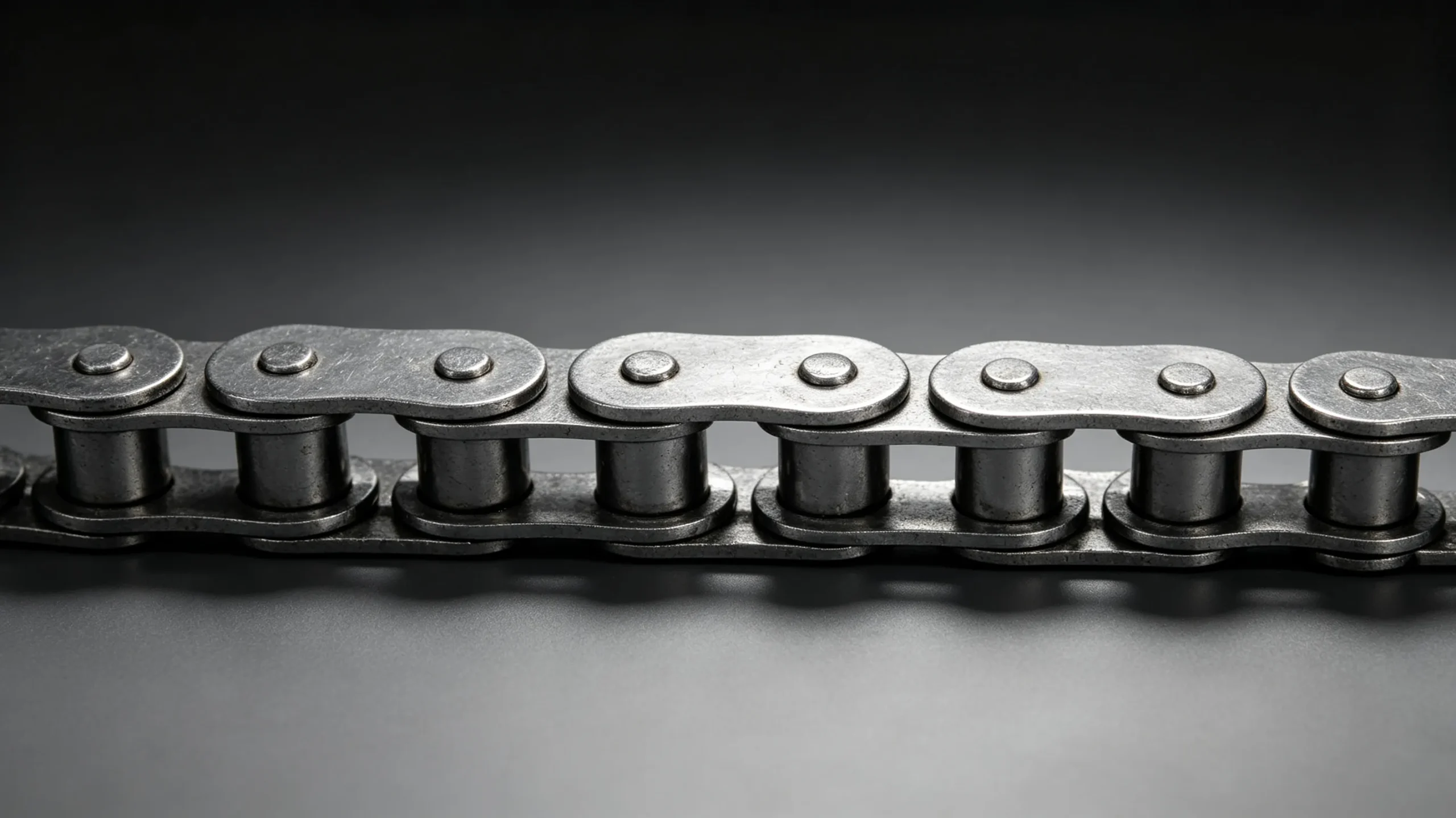
Rubber top chain on production line
Related Components We Supply
◆
Matched Sprockets — ISO 12B-1
Standard sprockets in the pitch matching 12B-G1. No special tooth form needed — standard ISO 12B-1 sprockets engage rubber top chains correctly at the roller-to-tooth interface.
◆
Rubber Top Connecting Links
Connecting links with matching rubber top profile for a smooth, uninterrupted conveying surface at the chain join point.
◆
Replacement Rubber Top Outer Link Sets
Individual outer link plate assemblies with vulcanised rubber profiles for field repair of worn sections without replacing the full chain.
◆
UHMWPE Guide Rails
Low-friction polyethylene guide profiles reducing lateral wear on rubber edges in side-guided conveyor configurations.
Customer Reviews
★★★★★
“We have been running 12B-G1 chains on our glass cutting table and stacking conveyor for six years. Zero glass surface marking in that entire period — the rubber compound selection was spot-on for the 70°C glass temperature at our lehr exit point. Reorder process is simple and the batch-to-batch rubber hardness is consistent.”
K
Klaus Becker
Plant Engineer — Stuttgart Flat Glass Processing
★★★★★
“Specified 12B-G1 for our MDF laminating line conveyor. The lacquered panel surface showed contact marks with our previous bare-steel chain at any conveyor speed above 0.4 m/s. The rubber top chains eliminated marking completely at speeds up to 0.8 m/s. Lead time was 10 days — suitable for our maintenance planning schedule.”
M
Mei Lin
Production Manager — Guangdong Wood Panel Plant
★★★★★
“Running 12B-G1 on our tile kiln outfeed conveyor for two years. The chains handle the 80°C tile temperature at exit without rubber hardening — we checked hardness at 12-month inspection and it was within 5 Shore A of the original specification. No tile surface damage complaints since installation.”
A
Antonio Ferreira
Quality Manager — Porto Ceramic Tile Plant
Frequently Asked Questions
Why is rubber hardness important for glass and panel conveying?+
Rubber hardness (Shore A) determines the contact pressure between the rubber surface and the product. Softer rubber (60 Shore A) deforms more under load, spreading contact over a larger area and reducing peak contact pressure — which prevents surface marking on polished glass and lacquered panel faces. Harder rubber (80 Shore A) resists deformation but generates higher peak contact pressure, which can exceed the marking threshold on sensitive surfaces at high conveyor speeds. Specifying the correct hardness for your product surface finish is as important as specifying the correct chain size.
Can 12B-G1 be used for glass at temperatures above 80°C?+
Standard NBR rubber compound is rated to 80°C. For glass temperatures between 80°C and 150°C at the lehr exit, specify the silicone rubber compound option. Silicone maintains consistent hardness through this temperature range and does not leave rubber transfer marks on hot glass surfaces that could affect glass clarity. For temperatures above 150°C, the chain operates beyond the silicone rating — alternative conveying methods (roller conveyors, ceramic-coated chains) should be considered.
What is the pitch of 12B chain compared to 12A?+
12B-1 is an ISO B-series chain with 19.05mm pitch. 12A-1 is also a 19.05mm pitch chain but follows the ANSI A-series standard — same pitch value, different roller diameter and inner width. They are not interchangeable. Use 12B for ISO/BS-standard European machinery; use 12A for ANSI-standard North American machinery. Confirm the standard from your machine’s parts documentation before ordering.
Does rubber top chain require different lubrication from standard chain?+
The lubrication requirement is at the pin-bushing interface, which is on the inner face of the chain — not the rubber top surface. Apply ISO VG 100–150 mineral oil to the inner side of the chain as normal. Never apply lubricant to the rubber top surface — this reduces the friction coefficient and defeats the purpose of specifying rubber top chain. In food-adjacent or food-contact applications, use H1 food-grade lubricant at the pin-bushing interface.
Can 12B-G1 chains be supplied in stainless steel for food industry use?+
Yes — 12B-G1 chains with 316L stainless steel base chain and food-grade rubber compound (with H1 lubrication) are available for food industry applications. The combination of stainless base and food-grade rubber provides both corrosion resistance for wash-down environments and the non-marking, non-contamination surface required for food contact zone conveyors. Full compliance documentation for HACCP, BRC, and IFS audits is available with every food-grade stainless order.
Get in Touch
Ready to Place Your Order?
Send us your chain specification and annual volume. Standard enquiries receive a quotation within 2 business days.
Further reading: specialty chain profiles for sensitive environments.