
Chordal action is the cyclic rise and fall of chain speed as each roller engages a sprocket tooth — caused by the geometric mismatch between a straight chain span and a polygonal sprocket pitch circle. It is the root cause of chain drive noise and vibration, and it is responsible for the impact loading on chain and bearings that increases with sprocket speed.
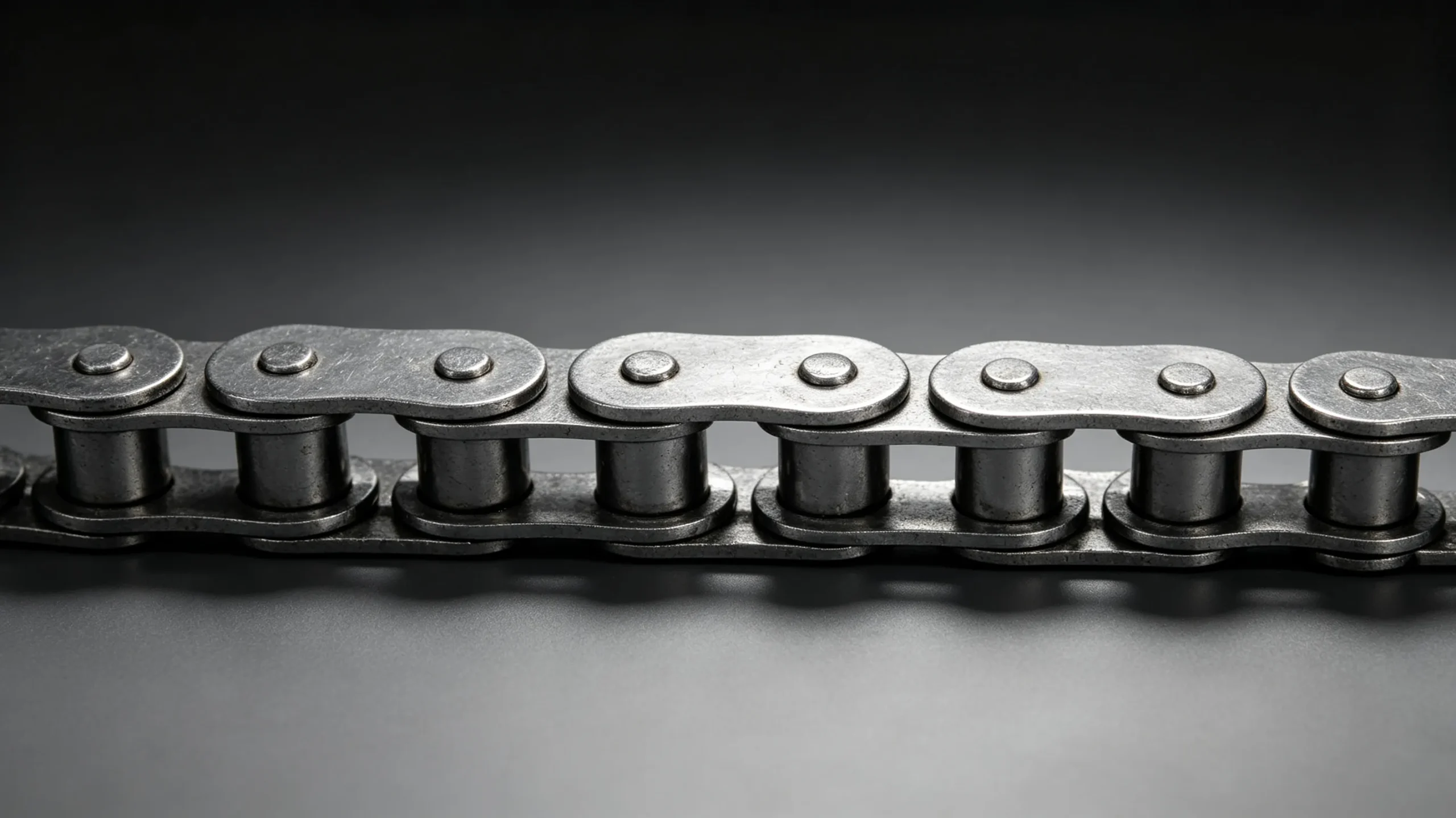
The Geometry of Chordal Action
A sprocket is a polygon, not a circle. When a chain roller engages a sprocket tooth, contact occurs at the corner of this polygon. As the sprocket rotates through one tooth pitch angle, the chain entry point rises from the lowest to the highest position on the pitch polygon, then falls again as the next tooth engages. This rise-and-fall translates directly into chain speed variation — even though the sprocket rotates at constant angular velocity.
The magnitude of this speed variation is the chordal rise: Rise = P × (1 − cos(180°/N)). Chain speed variation percentage = 100 × (1/cos(180°/N) − 1).
13 teeth = 2.99% variation 17 teeth = 1.74% 21 teeth = 1.14% 25 teeth = 0.80%
Consequences of Chordal Action
The speed variation from chordal action has four practical consequences: chain velocity fluctuates on every tooth engagement, producing periodic vibration at the tooth-engagement frequency; each roller contacts the tooth flank at a slight angle, producing an impact load; the driven shaft speed is not perfectly constant, introducing velocity ripple into driven machinery; and the transverse motion of the chain entry point generates lateral vibration in the span.
| Tooth Count | Speed Variation (%) | Practical Suitability |
|---|---|---|
| 13 | 2.99% | Minimum for slow secondary agricultural drives only |
| 17 | 1.74% | Standard minimum for all primary industrial and agricultural drives |
| 19 | 2.10% | Preferred for drives above 100 m/min |
| 25 | 0.80% | Low-vibration drives and high-speed applications |
| 30+ | Below 0.55% | High-precision conveyors and noise-critical environments |
Five Methods to Reduce Chordal Action
Method 1: Increase the Drive Sprocket Tooth Count
The most effective single measure. Moving from 17 to 25 teeth reduces the speed variation from 1.74 percent to 0.80 percent — a 54 percent reduction in vibration amplitude.
Method 2: Use Smaller Pitch Chain
For a given pitch circle diameter, a smaller pitch chain has more teeth — and more teeth means less chordal action. This is why ANSI B29.1 recommends using the smallest pitch chain that meets the load requirements. ANSI 40 duplex provides equivalent load capacity to ANSI 60 simplex with significantly lower chordal action.
Method 3: Avoid Low Tooth Count Driven Sprockets
If the driven sprocket also has a low tooth count (below 17 teeth), it adds its own chordal action to the system. Ensure both drive and driven sprockets meet the minimum tooth count recommendations.
Method 4: Choose the Optimal Centre Distance
Keeping the centre distance within 30 to 50 times the chain pitch prevents chordal vibration from both sprockets from combining in their worst phase. Very short centre distances (below 30 times pitch) allow the chordal action from both sprockets to combine constructively, increasing total vibration.
Method 5: Consider Modified Sprocket Profiles
Advanced sprocket designs with modified tooth profiles reduce velocity ripple from chordal engagement. These are specialist products for precision applications. For most industrial and agricultural drives, increasing tooth count is the most practical solution.
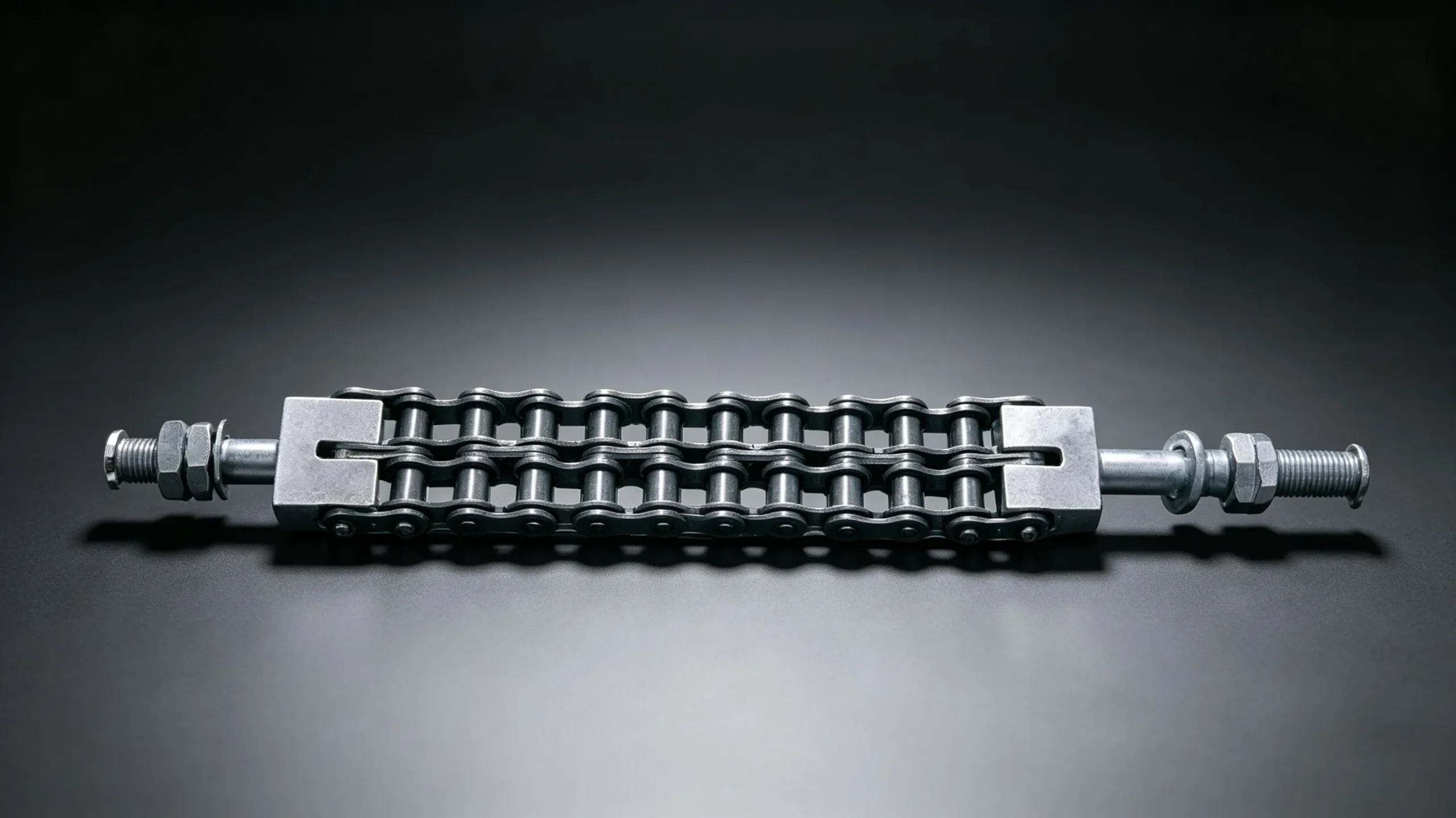
Diagnosing Chordal Action in an Existing Drive
Chordal action produces a characteristic vibration frequency: (N × n) / 60 Hz, where N is the sprocket tooth count and n is RPM. For a 17-tooth sprocket at 200 RPM: chordal frequency = (17 × 200) / 60 = 56.7 Hz. Vibration analysis revealing a significant component at or near this frequency verifies chordal action as the dominant source.
EverPower Roller Chains Australia can advise on roller chain pitch and sprocket tooth count to minimise chordal action. Contact +61 2 9708 3322 or [email protected].
+61 2 9708 3322 | [email protected] | 27 Harley Crescent, Condell Park NSW 2201