
Specifying roller chain for a vertical drive or elevator application requires attention to geometry and dynamic factors that do not apply in standard horizontal drives. The chain must support its own weight in the vertical span, cannot rely on gravity for slack-side sag measurement, and must resist the tendency for the loaded and unloaded strands to separate from the sprockets under the different tension conditions produced by the vertical hanging weight.
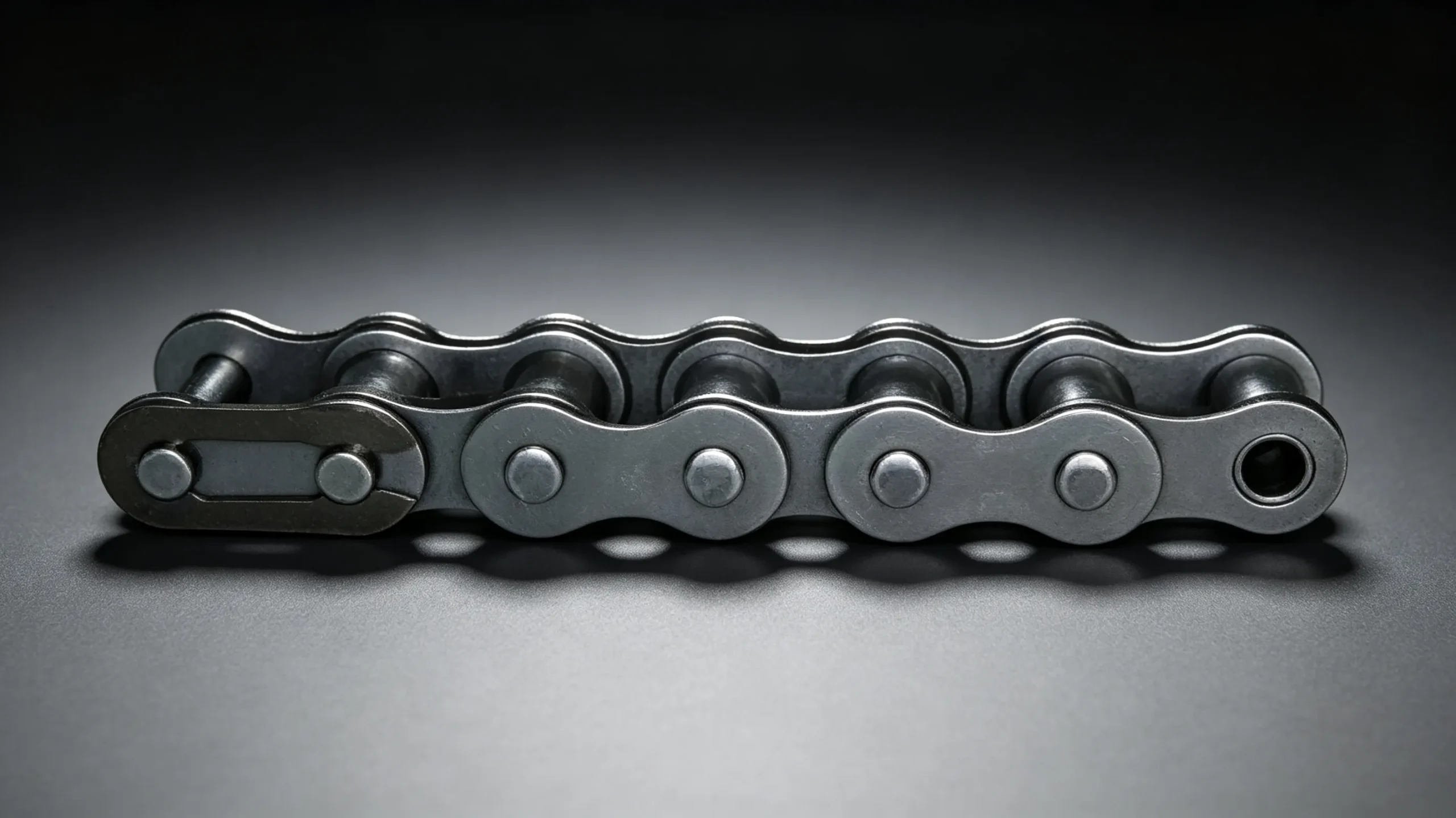
Key Differences in a Vertical Chain Drive
| Factor | Horizontal Drive | Vertical Drive or Elevator |
|---|---|---|
| Chain weight effect | Produces slack-side sag — the standard tension indicator | Adds to working load on up strand; reduces load on down strand |
| Tension measurement | Slack-side sag measured and adjusted to 2–3% of centre distance | Sag measurement does not apply — tension set by drive geometry and take-up position |
| Minimum tension (down strand) | Slack-side tension = tight-side tension minus chain pull | Down strand tension = up strand tension minus chain pull minus chain weight; can be near zero for long elevator legs |
| Sprocket wrap | Minimum 120° wrap angle on small sprocket | Always 180° in a pure vertical two-sprocket drive — maximum possible engagement |
Calculating the Additional Chain Weight Load
For a vertical elevator with a long centre distance, the chain weight hanging in the vertical spans adds a significant static load that must be accounted for in chain specification. Chain weight load on the up strand: W_chain = m × L_up × g, where m is the chain mass per metre (kg/m), L_up is the upward span length (m), and g = 9.81 m/s². For a 10-metre elevator leg with ANSI 80 chain (mass approximately 5.5 kg/m): W_chain = 5.5 × 10 × 9.81 = 539 N = 0.54 kN per strand. Add this to the product lifting load when calculating the total chain pull.
Take-Up Mechanisms for Vertical Drives
Gravity Take-Up — Most Common for Elevator Legs
The tail (bottom) sprocket shaft is mounted in a slide that is free to move vertically under gravity or a counter weight. The weight of the tail shaft assembly maintains constant chain tension as the chain elongates in service. No manual adjustment is needed — the take-up is automatic. Monitor the take-up travel range and replace chain when the take-up reaches its lower limit.
Screw Take-Up — For Fixed Geometry Vertical Drives
A screw adjustor on the tail sprocket shaft allows manual centre distance adjustment. Less common in elevator applications because it requires periodic manual adjustment as the chain elongates. More common in fixed vertical drives (vertical conveyors with fixed geometry).
Idler Tensioner on the Return Strand
In some vertical conveyor designs, a spring-loaded idler contacts the empty return strand and provides constant tension. This approach works well for light-load conveyors but may not provide adequate tension in heavy elevator applications.
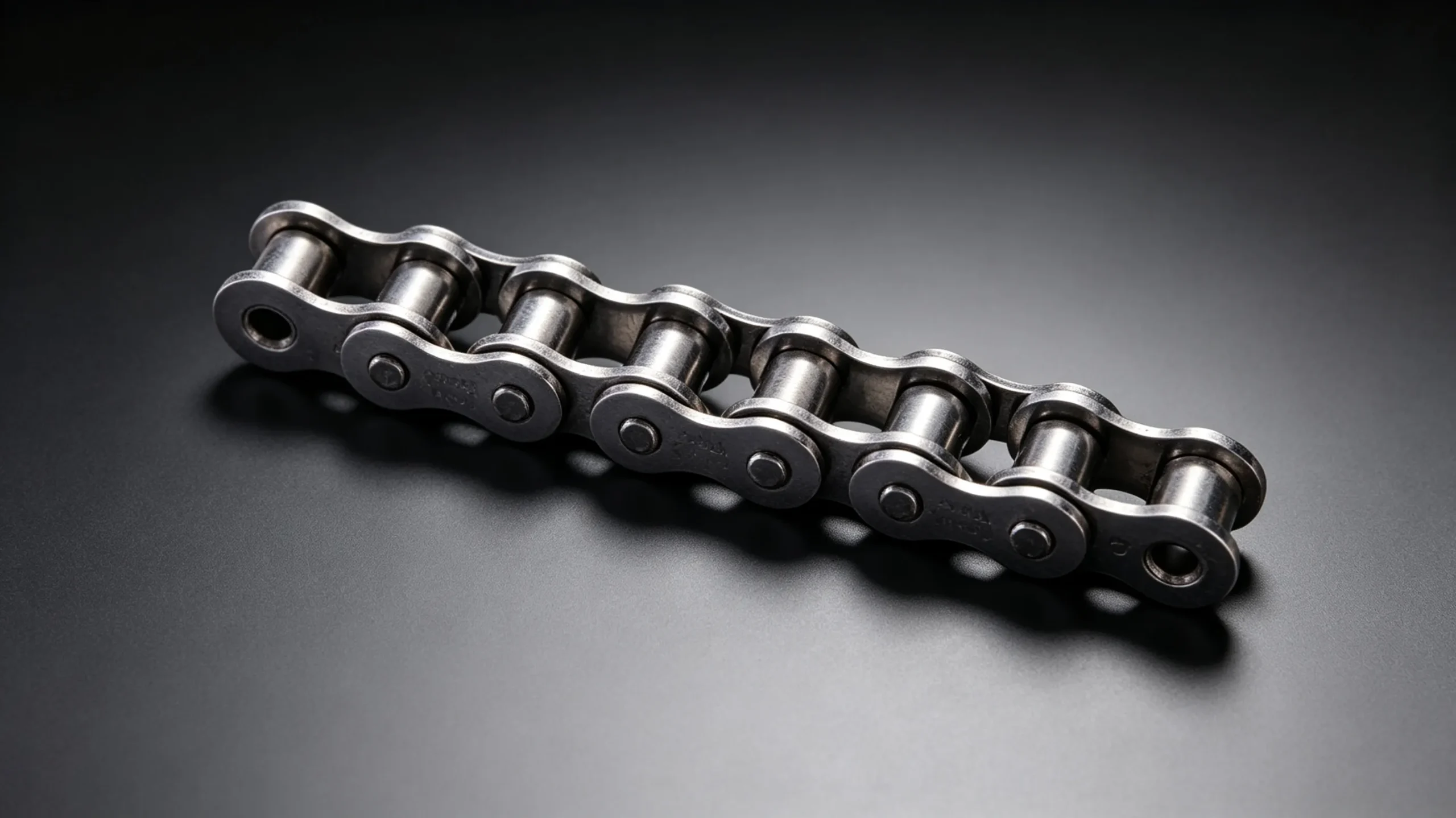
Chain Specification Adjustments for Vertical Drives
For a vertical drive, the chain specification must account for the full static hanging load of the chain on the up strand, not just the product lifting load. Apply the full service factor to the total load (product load plus chain hanging weight) before specifying the chain. For very long elevator legs (above 15 metres), the chain hanging weight can become the dominant load component. Specifying a lighter-weight chain of equivalent breaking load (smaller pitch duplex or triplex rather than large pitch simplex) can reduce the chain hanging weight without reducing capacity.
Lubrication in Vertical Drives
In a vertical elevator drive, lubricant applied to the chain at the top of the drive path will run down by gravity and pool at the bottom rather than being distributed to all chain sections. A drip oiler positioned near the bottom of the drive (lubricating the chain as it moves from the return strand to the loaded strand) is more effective than top-position lubrication.
EverPower Roller Chains Australia supplies roller chain and matching sprockets for vertical drives and elevator applications. Contact +61 2 9708 3322 or [email protected] to discuss the correct specification for your elevator or vertical drive.
+61 2 9708 3322 | [email protected] | 27 Harley Crescent, Condell Park NSW 2201