
Knowing roller chain speed in metres per minute is essential for verifying the drive is within the rated speed range for the chosen chain and lubrication type, and for calculating product throughput rate on conveyor applications. The formula requires only three inputs: drive sprocket tooth count, chain pitch, and drive shaft RPM.
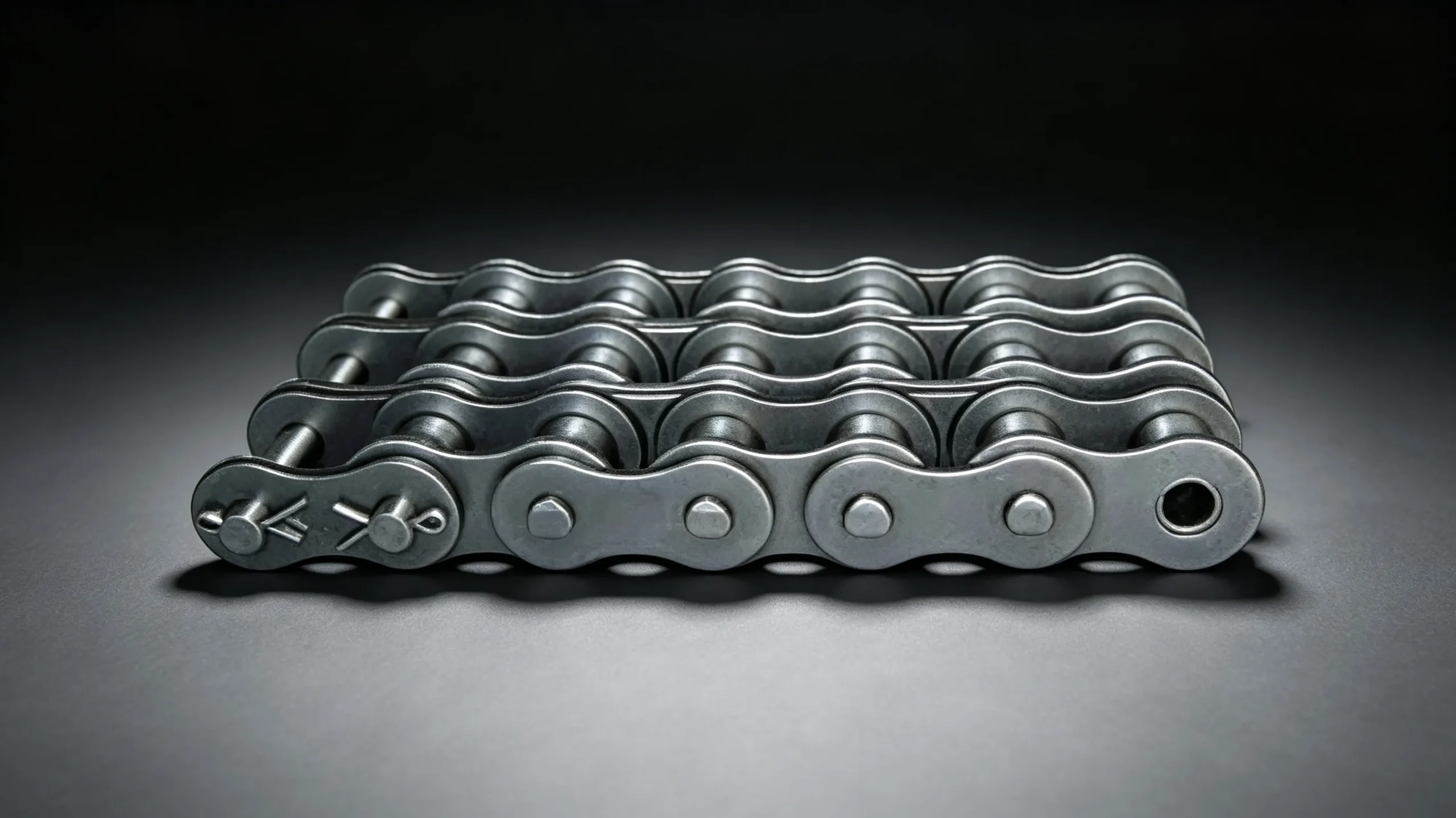
The Chain Speed Formula
v = chain speed in metres per minute
N = teeth on the drive sprocket
P = chain pitch in millimetres
n = drive sprocket RPM
For chain speed in feet per minute: v = (N × P_in × n) / 12 (P_in = pitch in inches)
Worked Examples
| Scenario | N | P (mm) | n (RPM) | Speed (m/min) | Notes |
|---|---|---|---|---|---|
| ANSI 60 agricultural drive | 17 | 19.05 | 150 | 48.5 | Within manual lubrication range |
| ANSI 50 conveyor | 25 | 15.875 | 60 | 23.8 | Light industrial — drip lubrication adequate |
| ANSI 80 industrial | 21 | 25.40 | 500 | 266 | Approaching oil bath threshold |
| ANSI 40 secondary drive | 13 | 12.70 | 200 | 33.1 | Below recommended 17T minimum — secondary use only |
Why Chain Speed Determines Lubrication Type
ANSI B29.1 and ISO 606 tie the required lubrication method to chain speed. Running chain at oil-bath speed with only a drip oiler reduces service life by 50 to 80 percent regardless of lubrication frequency.
| Speed Range | Lubrication Required | Why |
|---|---|---|
| 0 to 50 m/min | Manual — oil can or brush | Low speed allows penetration before oil is thrown off |
| 50 to 200 m/min | Drip oiler — continuous metered supply | Centrifugal force at these speeds requires continuous replenishment |
| 200 to 600 m/min | Oil bath or disc lubrication in sealed housing | Continuous oil contact required; drip cannot match depletion rate |
| Above 600 m/min | Forced-feed pump in sealed housing | Only pressurised supply can maintain film at these speeds |
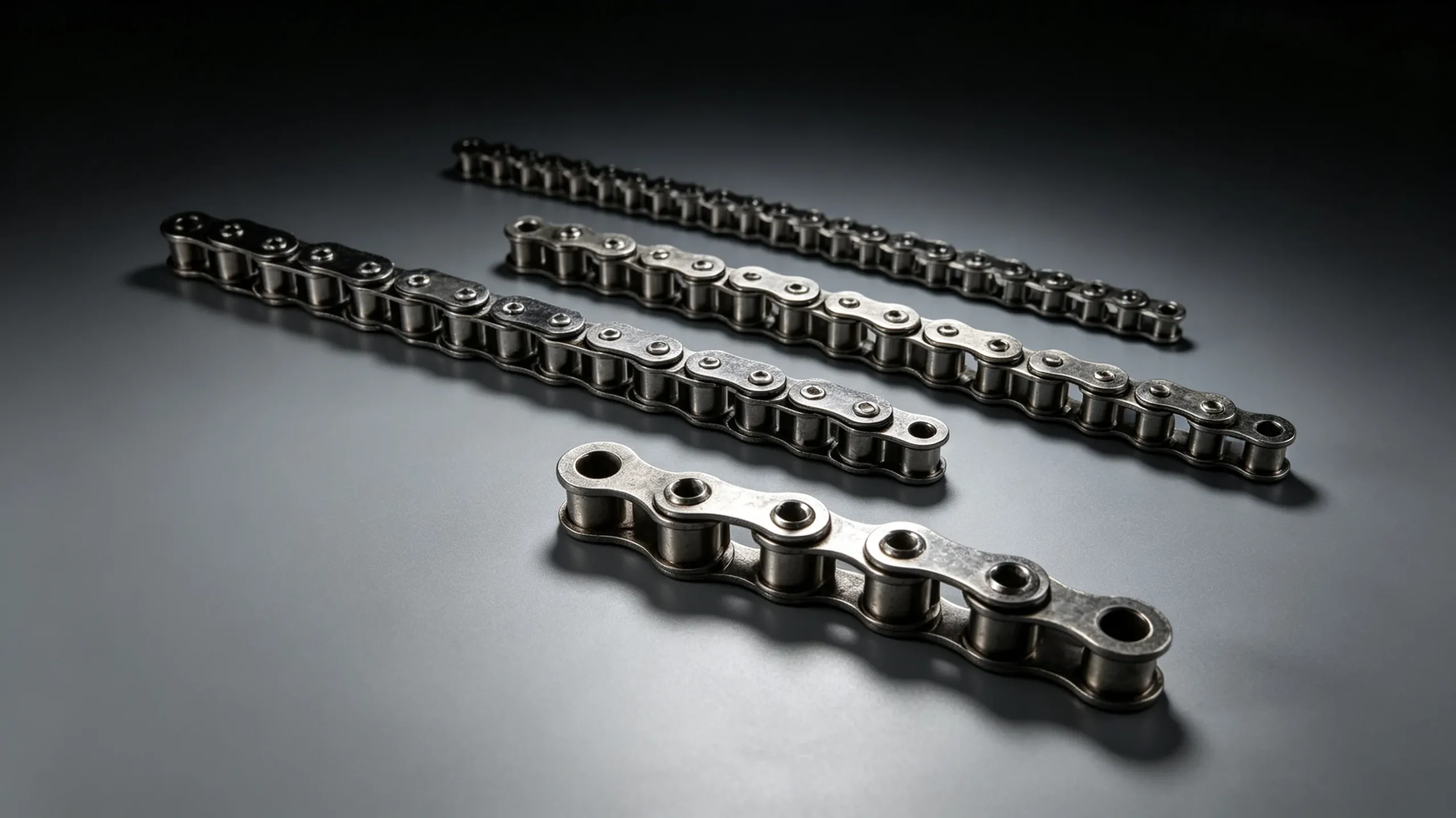
Calculating Chain Speed From the Driven Sprocket
Chain speed can be calculated from either sprocket — the result is identical because the chain connects them rigidly with no slip. Using the driven sprocket: v = (N₂ × P × n₂) / 1000. Use this as a cross-check against the drive sprocket calculation.
Chain Speed and Conveyor Product Rate
For chain conveyors, chain speed directly determines throughput. At 30 m/min with product carriers spaced 300 mm apart: rate = 30 / 0.3 = 100 items per minute.
Finding Drive RPM From a Target Chain Speed
Rearrange the formula: n = (v × 1000) / (N × P). To achieve 25 m/min with a 19-tooth ANSI 60 sprocket: n = (25 × 1000) / (19 × 19.05) = 69 RPM.
EverPower Roller Chains Australia can advise on roller chain specification and lubrication requirements for any calculated chain speed. Contact +61 2 9708 3322 or [email protected].
+61 2 9708 3322 | [email protected] | 27 Harley Crescent, Condell Park NSW 2201