
Discovering that roller chain wears unevenly — with one section of the loop elongating significantly faster than another, or one side of the link plates wearing more than the other — is a diagnostic signal pointing to specific correctable causes. Uneven wear is always caused by something: a lubrication gap, an alignment problem, a specific overloaded section, or a sprocket defect. Identifying and correcting the root cause is more important than simply replacing the chain.
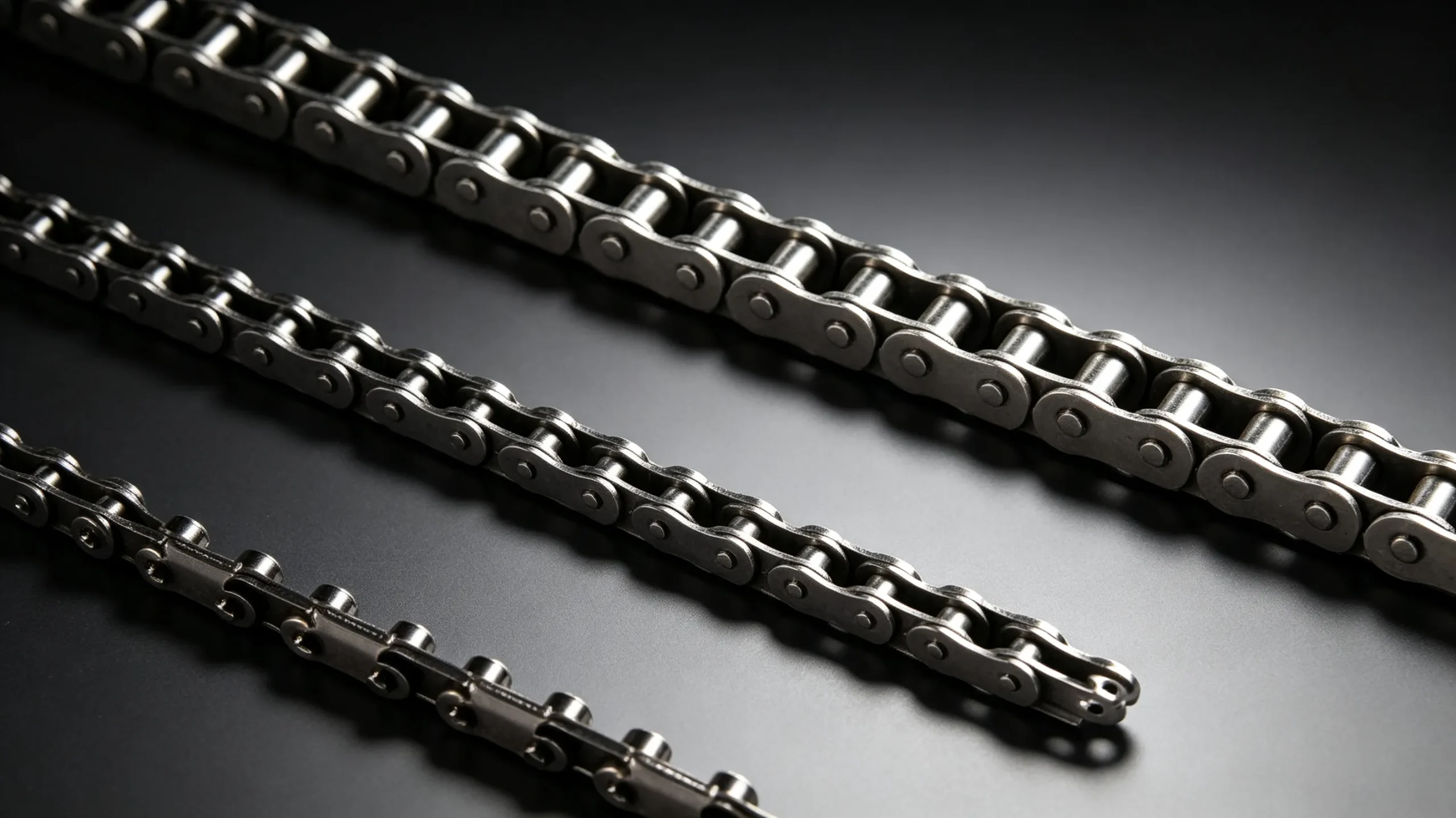
Type 1: One Section of the Loop Elongates Faster Than the Rest
When the chain loop has a section that has elongated significantly more than the surrounding chain — producing a visible loose spot in the loop — the cause is localised higher wear in that section. The three most common causes are:
Lubrication Shadow — A Section That Did Not Receive Oil
If the drip oiler or oil brush misses a portion of the chain on each pass, that section runs dry while the rest of the chain is adequately lubricated. The dry section wears at 10 to 50 times the rate of the lubricated section, producing visible elongation in that region. Verify oil coverage reaches all sections during slow operation.
A Previous Field Repair With Different Chain Specification
A section of new chain (or different specification chain) spliced into the loop wears at a different rate than the surrounding chain. The wear rate mismatch is visible as a section that is either looser or tighter than the rest of the loop.
A High-Load Section in a Complex Chain Path
In drives where the chain follows a complex path with multiple sprockets and loaded conveyor sections, one segment may carry substantially more load. The higher-load section elongates faster from higher pin-bushing contact pressure.
Type 2: One Side of the Link Plates Wears More Than the Other
When the inner face of the inner link plates on one side of the chain shows polishing or scoring while the other side is unworn, the cause is almost always sprocket misalignment — specifically lateral offset misalignment where the two sprocket face planes are displaced sideways from each other. The chain runs at an angle between the misaligned sprockets, pressing one side of the inner links against the sprocket tooth face on every engagement.
Diagnosis: inspect the inner plate faces (flat surfaces facing each other inside the chain loop). Uniform polishing on one inner plate face along its full length verifies lateral offset misalignment. Alternating polishing (one side polished for several links, then the other side) indicates angular misalignment. Correct the misalignment and replace the chain — the same wear pattern will recur on the new chain if misalignment is not corrected first.
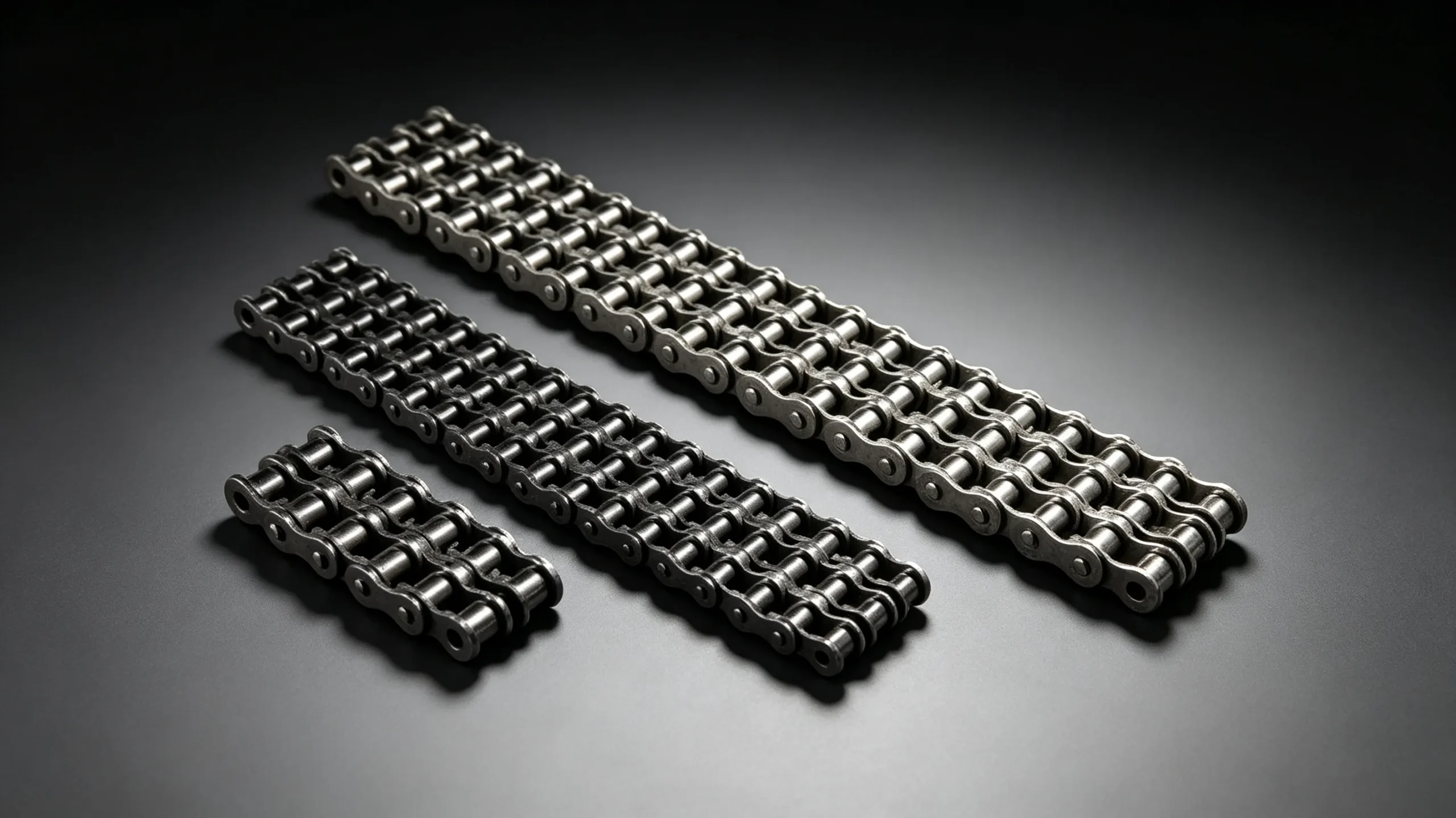
Type 3: Rollers Wear on One End Only
When the cylindrical roller surface shows wear on one end only — a flat or groove worn into one end of the roller — the cause is lateral contact between the roller end face and the sprocket tooth face from lateral chain loading. This occurs in misaligned drives and in drives where the chain runs under lateral tension (such as when the chain path changes direction horizontally at a corner sprocket). Roller end wear accompanied by inner plate face polishing verifies lateral misalignment as the cause.
Type 4: Every Other Link Wears Differently
In some drives, alternating inner and outer links show different wear patterns. This pattern occurs when: the chain has been incorrectly assembled with links of different specification mixed in the same loop; the chain was previously broken and re-joined with a connecting link of different material or specification; or the drive geometry causes alternating inner and outer link engagement conditions at a specific sprocket.
EverPower Roller Chains Australia can assist with roller chain wear pattern diagnosis. Contact +61 2 9708 3322 or [email protected].
+61 2 9708 3322 | [email protected] | 27 Harley Crescent, Condell Park NSW 2201