
Cracks in roller chain link plates radiating from the pin holes are one of the most serious defects found during chain inspection — more serious than wear elongation, more serious than surface rust, and requiring immediate chain replacement. A plate crack at the pin hole is the precursor to plate fracture — the complete separation of the link plate that causes sudden chain failure. Understanding what causes these cracks allows maintenance teams to identify and correct the root cause.
What Link Plate Cracks Look Like
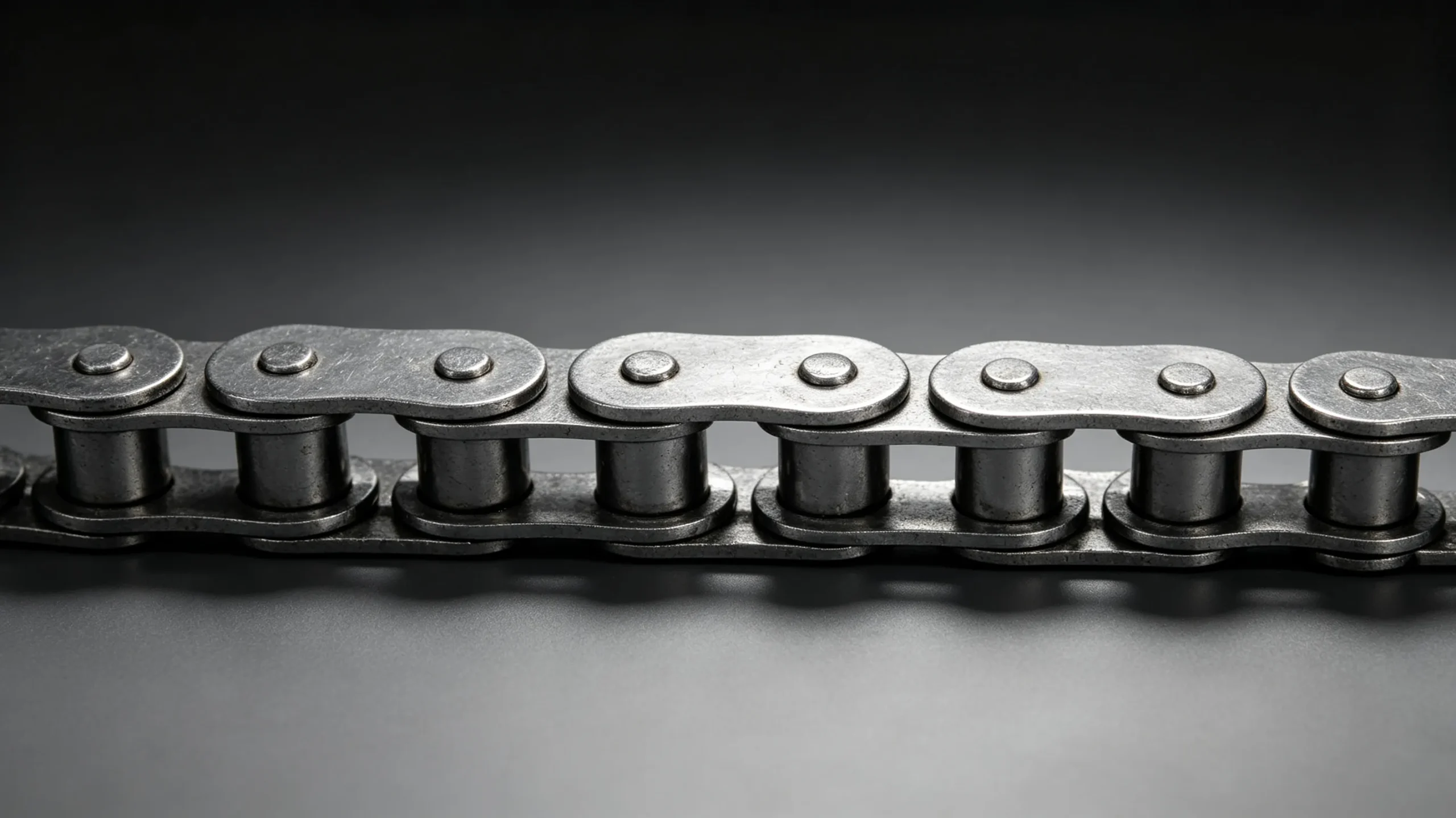
Pin hole cracks in roller chain link plates are typically fine cracks radiating outward from the pin hole edge toward the outer edge of the plate. They are most commonly found at the pin holes of outer link plates, where the plate is retained by the pin heads and subjected to the highest peel-out stress. Under good lighting (a bright flashlight held at a low angle), fatigue cracks appear as fine dark lines — much finer than surface rust markings and oriented perpendicular to the plate length direction.
The Primary Cause: Fatigue From Cyclic Overloading
The most common cause of roller chain plate cracking at pin holes is fatigue — the accumulation of microscopic damage in the plate steel at the stress concentration around the pin hole, from millions of cycles of tensile loading, until a fatigue crack initiates and propagates. The key factor is overloading — fatigue cracks initiate much faster when the peak load significantly exceeds the plate fatigue limit. A chain correctly specified for the drive and correctly maintained to its service factor requirements will not typically develop fatigue cracks within its design service life.
| Cause | Diagnostic Indicator | Correction |
|---|---|---|
| Under-specification — chain not rated for actual peak load | Cracks on multiple links throughout the loop; new chain fails in the same location within a short period | Recalculate chain specification using the correct service factor; upgrade to heavy duty chain or additional strands |
| Shock overload from blockage or jam | Cracks concentrated at one or two links near the jam location; rest of loop is unworn | Clear jam sources; check for material buildup; consider a shear-bolt overload protection mechanism |
| Over-elongation (chain past service limit) | Cracks occurring simultaneously with 3%+ elongation; rollers riding on tooth tips | Replace chain at 3% elongation — impact overload from tooth-tip engagement accelerates fatigue in a chain already at its wear limit |
| Corrosion-assisted fatigue | Cracks initiating from corrosion pits on the plate face rather than from the pin hole edge | Replace chain; improve corrosion protection with tackified oil; specify nickel-plated or stainless steel chain |
The Secondary Cause: Incorrect Press-Fit at Pin Holes
In properly manufactured roller chain, the pin is pressed into the outer link plates with a specific interference fit that holds the pin without movement. If the press-fit is too loose, the pin can rock slightly in the hole under load, creating fretting wear that initiates cracks at the hole edge. Very early cracking on new chain — plate cracks appearing within the first few hundred hours of operation on a correctly specified drive — may indicate a manufacturing quality issue.
Immediate Action When Cracks Are Found
A chain with any visible crack at a pin hole must be taken out of service immediately. Do not continue to operate while ordering a replacement — a plate with a visible fatigue crack can fracture without further warning at any load above the stress that produced the crack. Chain fracture at operating speed can project a section of chain and connecting link at high velocity. Remove the chain, note the location and orientation of the cracks, and document for the root cause investigation before the replacement chain is specified.
EverPower Roller Chains Australia supplies ANSI heavy duty roller chain and standard roller chain for all industrial and agricultural applications. If you are experiencing plate cracking, contact +61 2 9708 3322 or [email protected] to discuss the correct specification upgrade.
+61 2 9708 3322 | [email protected] | 27 Harley Crescent, Condell Park NSW 2201