
Pitch is the single dimension that defines a roller chain more completely than any other. It determines the chain number, the sprocket tooth spacing, the load capacity, the maximum operating speed, and the overall size of the drive system. Yet despite its fundamental importance, pitch is frequently misunderstood — particularly by maintenance technicians who measure it incorrectly on worn chain and then order the wrong replacement. This guide explains exactly what pitch is, how to measure it accurately in the field, and what the measurement tells you about the correct replacement specification.
The Definition of Pitch: More Precise Than It Sounds
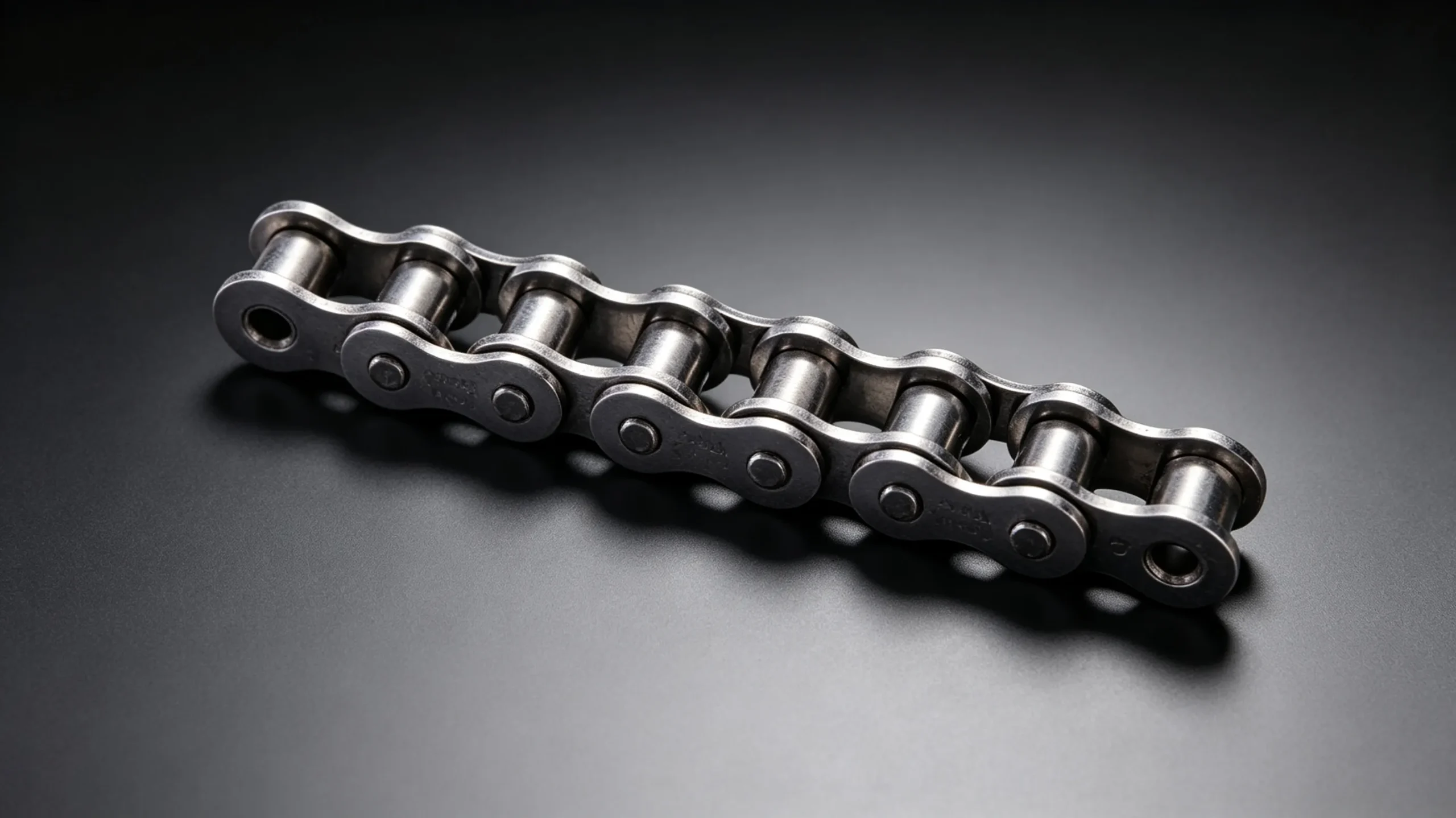
Pitch is defined as the centre-to-centre distance between adjacent pin holes in a roller chain, measured along the chain centreline. This is also the distance from the centre of one roller to the centre of the next adjacent roller. Pitch is specified in millimetres in ISO and metric systems, and in fractions of an inch in the ANSI system (where it is embedded in the chain number, with the digits representing pitch in eighths of an inch).
The precision required for this measurement matters more than it might seem. A nominal pitch of 19.05 mm (ANSI No. 60) must be measured across multiple links to average out manufacturing tolerances and, more importantly, to account for any wear elongation already present in the chain. Measuring just one pitch interval on a worn chain can give a reading that is anywhere from 0.1 to 0.5 mm above nominal, which could be misread as a different pitch size rather than as elongation of the correct size.
How to Measure Roller Chain Pitch Correctly
The Multi-Link Span Method
The most accurate field measurement method is to measure across a span of ten or more consecutive links and divide by the number of pitches in the span. Place the measuring jaw of a vernier caliper at the centre of the pin on one end of the span, and at the centre of the pin on the other end. A ten-pitch span of ANSI No. 60 chain should measure 190.5 mm nominally (10 x 19.05 mm). If it measures 196 mm, the elongation is (196 – 190.5) / 190.5 x 100 = 2.9 percent — close to the 3 percent replacement threshold.
Pin Outer Edge Method for Worn Chain
When pin centres are difficult to locate precisely due to a corroded or dirty chain surface, measure across the outer edge of the pin at one end to the outer edge of the pin at the other end of the same span. Because both measurements reference the same pin diameter, the pin diameter cancels out and the result equals the centre-to-centre span. This method is often more practical in field conditions and is accurate to within 0.1 mm for spans of ten or more pitches.
| ANSI Chain No. | Pitch (mm) | 10-Link Nominal (mm) | 3% Elongation Limit (mm) | ISO Equivalent |
|---|---|---|---|---|
| ANSI 25 | 6.35 | 63.5 | 65.4 | 04B |
| ANSI 35 | 9.525 | 95.25 | 98.1 | 06B (near) |
| ANSI 40 | 12.70 | 127.0 | 130.8 | 08B |
| ANSI 50 | 15.875 | 158.75 | 163.5 | 10B |
| ANSI 60 | 19.05 | 190.5 | 196.2 | 12B |
| ANSI 80 | 25.40 | 254.0 | 261.6 | 16B |
| ANSI 100 | 31.75 | 317.5 | 327.0 | 20B |
| ANSI 120 | 38.10 | 381.0 | 392.4 | 24B |
Why Pitch Determines Almost Everything Else
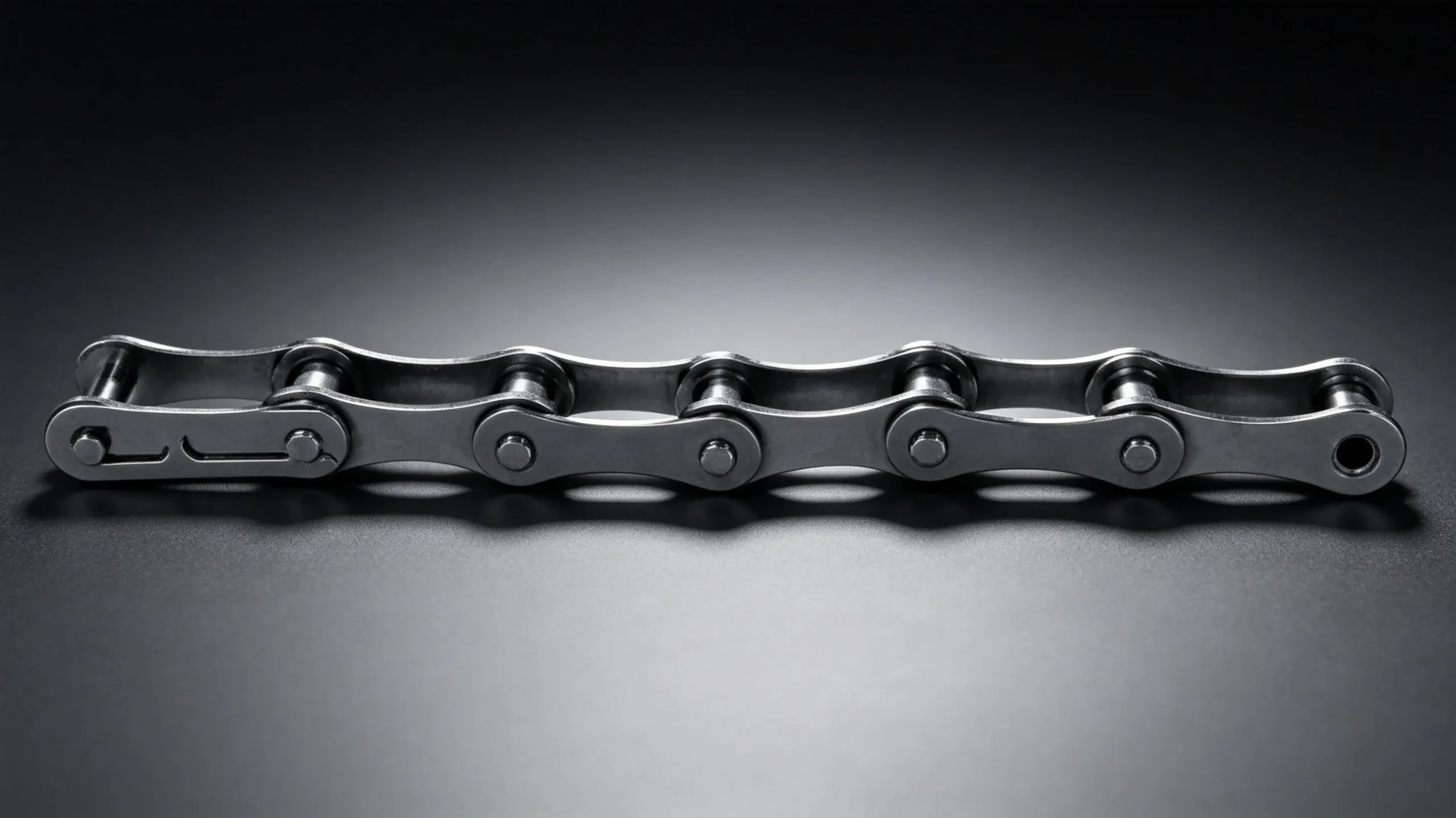
Pitch is the master dimension from which all other roller chain specifications are derived in fixed ratios. Roller diameter is approximately 62 percent of pitch in ANSI standard series chains. Inner link width is approximately 61 percent of pitch for ANSI standard series. Pin diameter is approximately 46 percent of pitch. These ratios mean that when you know the pitch, you can estimate all other key dimensions — useful when a chain has no visible markings and you need to identify it quickly.
Pitch also determines the maximum permissible operating speed for a given drive. Smaller pitch chains run at higher speeds because the polygon effect (chordal action) is proportionally smaller for a given sprocket tooth count. For most applications, operating chain speed should remain below 15 m/s; above this, lubrication and chordal action combine to generate damaging dynamic loads that shorten chain and sprocket life significantly.
Pitch and Sprocket Tooth Spacing: The Direct Relationship
The sprocket is machined with tooth pockets spaced at exactly the chain pitch. Each tooth pocket is profiled to accept the chain roller at its nominal diameter, allowing the roller to seat at the tooth root under load. This means a sprocket and chain must share the same pitch to engage correctly — there is no tolerance for error. A 19.05 mm pitch chain cannot engage a 25.4 mm pitch sprocket.
The number of teeth on the sprocket, combined with the pitch, determines the pitch circle diameter (PCD) of the sprocket and therefore the output speed and torque. For a drive with a fixed centre distance and a required speed ratio, the designer chooses pitch first (based on power and speed requirements) and then calculates the sprocket tooth counts that deliver the required ratio within the available centre distance.
Common Pitch Measurement Mistakes
Measuring Only One Pitch Interval
Single-interval measurements amplify the effect of any burr, wear flat, or corrosion on the pin face. Always measure across ten or more links.
Confusing Elongation With Wrong Pitch
A worn ANSI 60 chain measuring 20 mm per pitch is not ANSI 80 — it is a worn ANSI 60 at 5% elongation, well beyond replacement threshold.
Measuring the Outer Plate Length
The outer plate spans from pin centre to pin centre — but measuring the plate edge-to-edge includes the plate overhang beyond the pins. Measure pin centres, not plate edges.
Ignoring the Standard When Ordering
Identical pitch exists in both ANSI and ISO. Specifying only the pitch when ordering risks receiving the wrong standard with different roller and inner width dimensions.
What to Do With Your Pitch Measurement
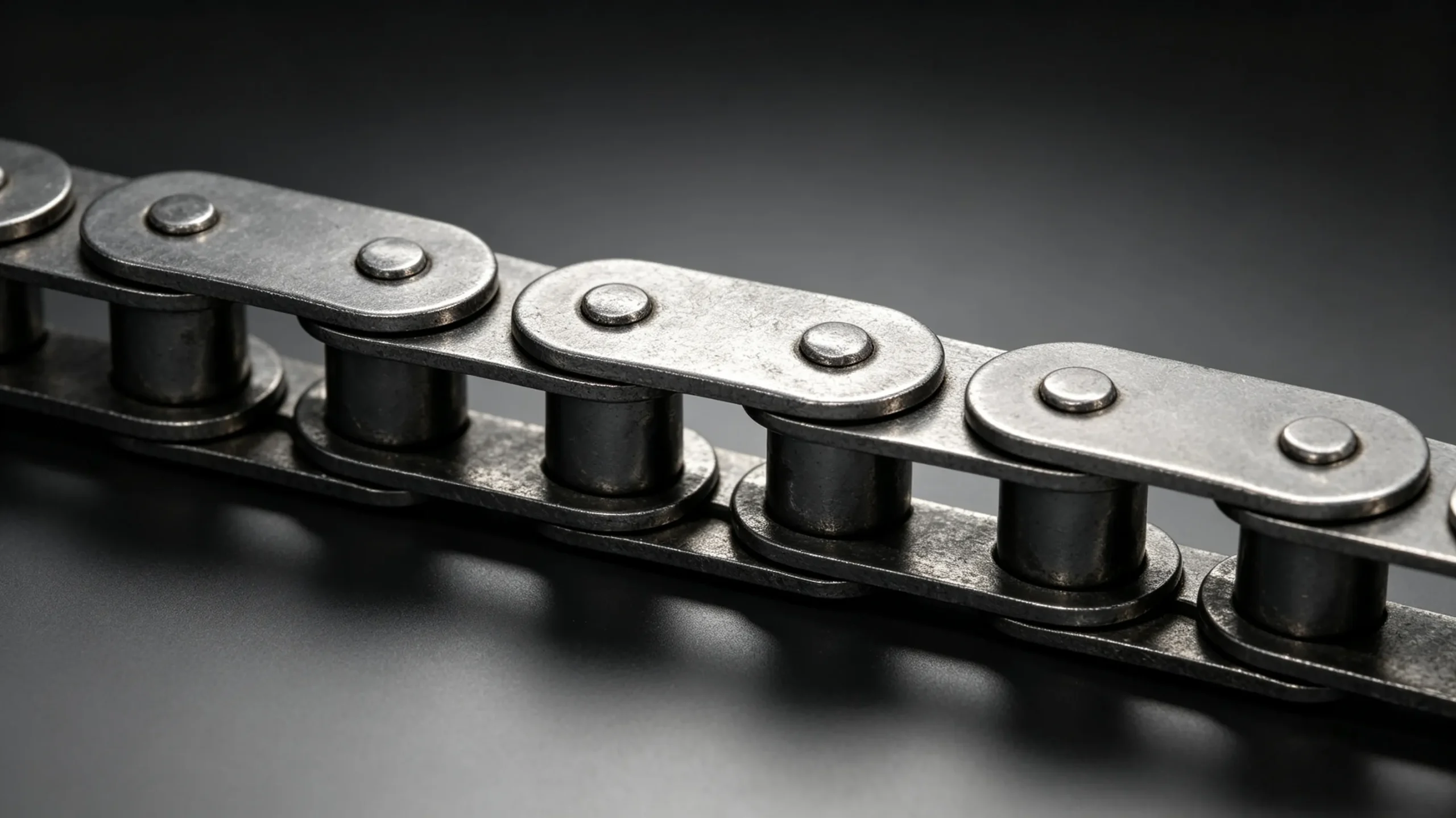
Once you have a reliable pitch measurement and have identified the standard (ANSI or ISO) by measuring roller diameter and inner width, you have all the information needed to order a correct replacement chain. State the standard, the chain number, the strand count, and the total length in links. If the chain has attachment plates or extended pins, photograph these and include the photograph with your order enquiry — attachment geometry is not captured in the standard chain number and must be specified separately.
If your measured pitch falls between two standard values and you cannot identify the chain from the tables, the most likely explanation is a worn chain of the smaller standard pitch — at 3 to 5 percent elongation, an ANSI 60 can measure between 19.6 and 20.0 mm per pitch, which is close to but not at any standard pitch value. Calculate what elongation percentage the measured value represents for each candidate pitch size; the correct answer will be the one with a plausible elongation figure between 1 and 5 percent.
EverPower Roller Chains Australia can assist with chain identification from field measurements. Send your pitch, roller diameter, and inner width readings to our Sydney team and we will identify the correct specification and verify stock availability for your replacement order.
+61 2 9708 3322 | [email protected] | 27 Harley Crescent, Condell Park NSW 2201