
Product Description
Detailed Photos
Product Description
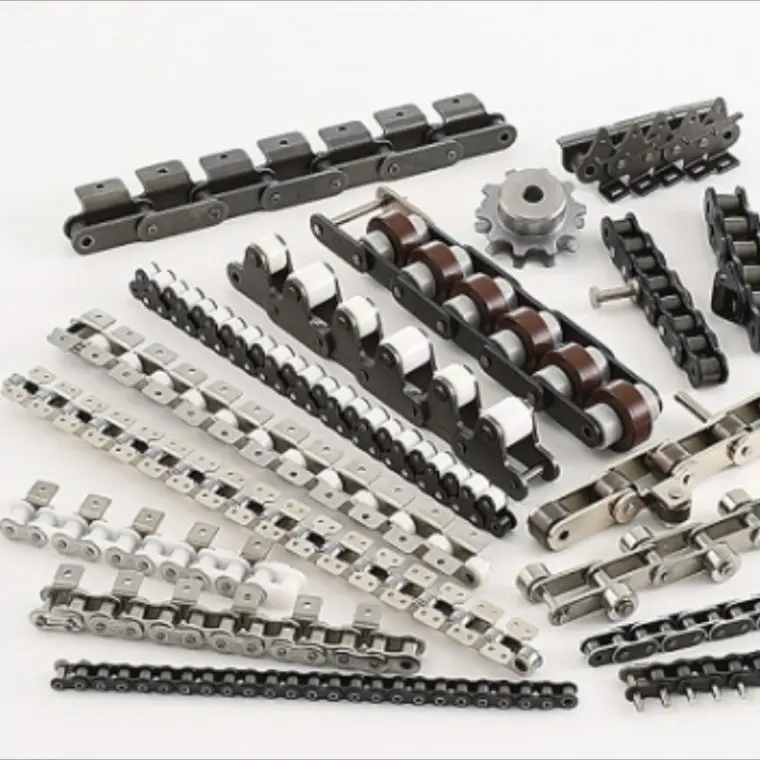
| Item Name | Standrad transmission Roller Chains | Model | Series A, Series B |
| Row | Simplex Duplex Triplrex |
Application | Machinery Parts |
| Suiface Treament | netural/sand-blasted/shot-peening | Certification | ISO, ANSI, DIN, BS |
| Packing | Packaged in boxes and wooden cases, or packaged in reels and then on pallets | Port | Any sea port or airport in china |
Standard roller chains are a type of industrial chain that is commonly used in power transmission
applications. They consist of a series of cylindrical rollers that are linked together by side plates.
The rollers rotate within the links, transmitting power from 1 sprocket to another.
Standard roller chains are available in a range of sizes and configurations to fit different industrial
applications. They are made from high-quality materials, such as carbon steel or stainless steel,
which are resistant to wear, corrosion, and fatigue.
These chains are designed to provide smooth and efficient power transmission, with minimal energy
loss. They have a high load-bearing capacity, making them suitable for use in heavy-duty machinery,
such as conveyors, elevators, and industrial equipment.
Standard roller chains are also easy to install and maintain, with simple lubrication requirements to
ensure long-lasting performance. Overall, they offer a reliable and cost-effective solution for power
transmission in a wide range of industrial applications.
Other Products
Company Profile
Packaging & Shipping
After Sales Service
| Standard or Nonstandard: | Standard |
|---|---|
| Application: | Textile Machinery, Garment Machinery, Conveyer Equipment, Packaging Machinery, Electric Cars, Motorcycle, Food Machinery, Mining Equipment, Agricultural Machinery |
| Surface Treatment: | Netural/Sand-Blasted/Shot-Peening |
| Material: | Carbon Steel |
| Type: | Short Pitch Chain |
| Main Materials: | It Is 40mn. 40cr, 45mn Alloy Steel or SUS304 for P |
| Samples: |
US$ 1.28/Meter
1 Meter(Min.Order) | |
|---|
| Customization: |
Available
| Customized Request |
|---|
What are the maintenance intervals for roller chains?
Maintenance intervals for roller chains can vary depending on several factors, including the specific application, operating conditions, and manufacturer’s recommendations. Here’s a detailed answer to the question:
1. Lubrication: Proper lubrication is essential for the smooth operation and longevity of a roller chain. Lubrication intervals depend on the type of lubricant used, the chain’s speed, and the operating conditions. In general, it is recommended to lubricate the chain every 200-300 miles or as specified by the motorcycle manufacturer.
2. Tension Adjustment: Chain tension should be checked regularly and adjusted as needed to maintain optimal performance. Over time, roller chains can elongate due to wear, which affects their tension. It is recommended to check the chain tension every 500-1,000 miles or as advised by the motorcycle manufacturer.
3. Inspection: Regular visual inspection of the roller chain is important to identify any signs of wear, damage, or misalignment. Inspect the chain for loose or missing rollers, damaged links, excessive wear on sprockets, and any signs of rust or corrosion. Inspections should be performed at least every 500-1,000 miles or as recommended by the motorcycle manufacturer.
4. Cleaning: Periodic cleaning of the roller chain helps remove dirt, debris, and accumulated grime that can interfere with its performance. Cleaning intervals depend on the riding conditions and the level of contamination. Generally, it is advisable to clean the chain every 1,000-2,000 miles or when it appears visibly dirty.
5. Replacement: Roller chains have a finite lifespan and will eventually require replacement. The replacement interval depends on various factors, including the chain’s quality, usage conditions, and maintenance practices. As a general guideline, roller chains should be replaced when they become excessively worn, elongated beyond the manufacturer’s specifications, or show signs of damage that compromise their integrity.
It’s important to note that the maintenance intervals provided here are general guidelines, and it is crucial to refer to the motorcycle manufacturer’s specific recommendations for the roller chain used in your motorcycle. Adhering to the manufacturer’s guidelines and performing regular maintenance can help ensure the roller chain’s optimal performance, reliability, and longevity.
What are the differences between standard and specialty roller chains?
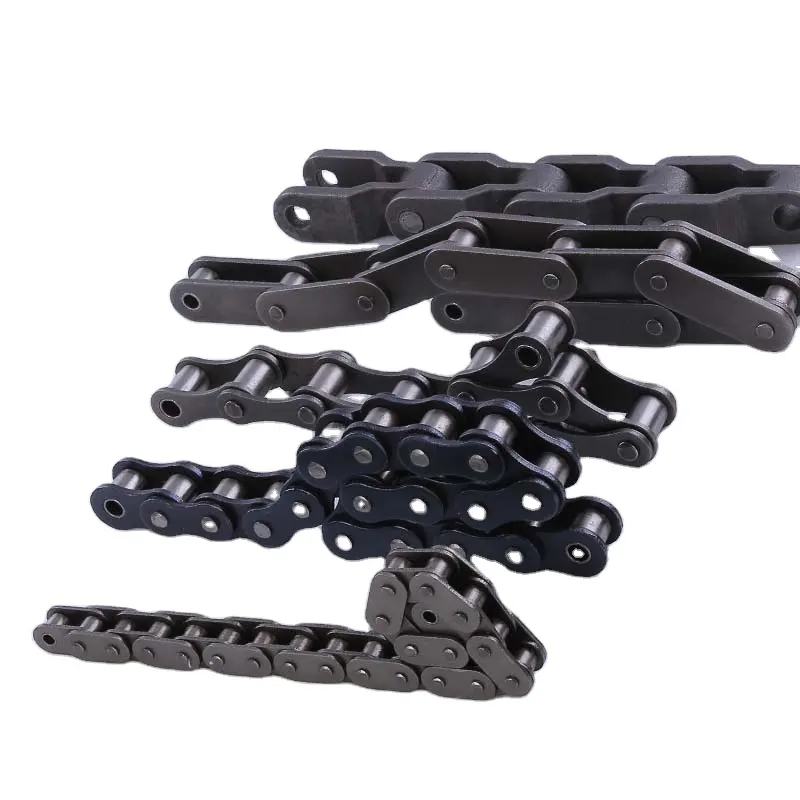
Standard roller chains refer to chains that are commonly used in a wide range of applications and are readily available from chain manufacturers. These chains typically have standard dimensions, including pitch, roller diameter, and pin diameter, and are made from materials such as carbon steel, stainless steel, or nickel-plated steel. Standard roller chains are suitable for most general-purpose applications that require moderate strength and durability.
Specialty roller chains, on the other hand, are designed for specific applications that require unique features or properties. These chains may have non-standard dimensions or be made from specialized materials such as high-strength alloys or plastic. Specialty roller chains can be used in a variety of industries, including food processing, automotive, and aerospace. Examples of specialty roller chains include corrosion-resistant chains, high-temperature chains, and chains with special attachments for conveying specific products or materials.
Overall, the main differences between standard and specialty roller chains are their intended applications and the unique features that they offer. Standard roller chains are suitable for most general-purpose applications, while specialty roller chains are tailored to specific applications that require special properties or features.
What are the signs of roller chain wear and when should it be replaced?
Roller chain wear is a natural occurrence due to the repetitive motion and load-bearing nature of the chain. Recognizing the signs of wear is important to ensure the safe and efficient operation of the chain. Here’s a detailed answer to the question:
1. Elongation: Roller chains can elongate over time due to wear on the pins, bushings, and rollers. To check for elongation, measure the distance between a specific number of links (e.g., 10 or 12) over a known length. If the measured distance exceeds the standard pitch length, it indicates chain elongation and the need for replacement.
2. Chain Slack: Excessive chain slack or sag is another sign of wear. When the chain becomes elongated, it fails to maintain the proper tension, resulting in increased slack. Excessive chain slack can cause poor engagement with sprockets, resulting in skipping or jumping and affecting the overall performance of the chain.
3. Misalignment: As a roller chain wears, it may start to misalign with the sprockets. This misalignment can cause the chain to ride unevenly on the sprocket teeth, leading to accelerated wear on the chain and sprockets. If you notice the chain consistently riding to one side of the sprocket, it may be a sign of wear and misalignment.
4. Chain Noise: Worn roller chains can produce increased noise during operation. Excessive wear on the chain components can cause rattling, clicking, or grinding sounds. Unusual noises should be investigated, as they may indicate significant wear or damage to the chain.
5. Visible Signs of Wear: Inspect the chain visually for signs of wear, such as rust, discoloration, or visible damage to the rollers, pins, or bushings. Excessive wear on these components can affect the chain’s ability to properly engage with the sprockets and transmit power efficiently.
When to replace a roller chain depends on various factors, including the severity of wear, the criticality of the application, and the manufacturer’s recommendations. It is generally recommended to replace a roller chain when it has elongated beyond the allowable limits, exhibits excessive wear, or shows signs of damage that can compromise its performance and safety.
Regular inspection and maintenance of roller chains are essential to identify signs of wear and ensure timely replacement. Replacing the chain at the appropriate time helps prevent unexpected failures, reduces downtime, and maintains the overall efficiency of the machinery or equipment.


editor by CX 2023-08-16