Description
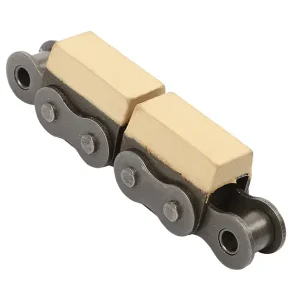
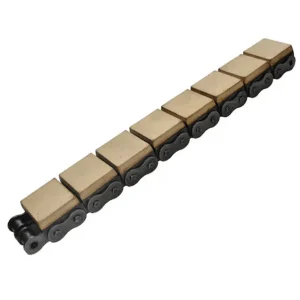
Rubber Top Chain — 16A-G2
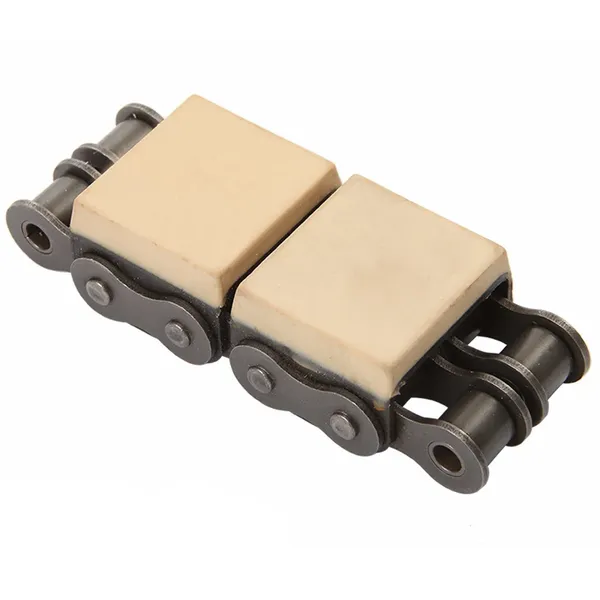
16A-G2 rubber top chain combines the high tensile capacity of the ANSI #80 pitch base with the broad rubber contact area of the G2 wide profile — the highest-capacity rubber top specification in the standard A-series range, suited to the heaviest and widest products requiring non-marking conveying.
Product Overview
At the #80 pitch with a G2 wide rubber profile, 16A-G2 represents the top of the standard rubber top chain specification range before moving to custom or heavy-series designs. The chain delivers approximately 55.6 kN minimum tensile capacity with a rubber contact width that provides stable support for products spanning the full chain width — large-format stone slabs, structural glass panels, wide-format engineered wood products, and heavy industrial component carriers that require both non-marking contact and high conveyor load capacity simultaneously.
In practice, the need for 16A-G2 arises in stone and glass processing facilities with long conveyor runs handling the heaviest and widest product formats, in precast concrete element manufacturing where finished concrete faces must be conveyed without contact damage, and in heavy-duty automotive and aerospace component manufacturing where large formed panels and structural parts require both high-capacity conveying and surface protection. The G2 profile’s wider rubber contact distributes the heavier loads of the #80 pitch application across a larger surface area, reducing unit contact pressure to below the marking threshold even for heavy product formats.
16A-G2 — G2 wide rubber top on ANSI #80 (A-series) base
Specification — 16A-G2
| Chain No. |
Pitch P (mm) |
Roller Ø (mm) |
Inner Width (mm) |
Pin Ø (mm) |
Pin Length (mm) |
Plate Depth (mm) |
Rubber W (mm) |
Rubber H (mm) |
Overall W (mm) |
Q min (kN) |
Weight (kg/m) |
| 16A-G2 |
25.400 |
15.88 |
15.75 |
7.92 |
30.60 |
24.00 |
62.0 |
14.0 |
72.0 |
55.6 |
2.78 |
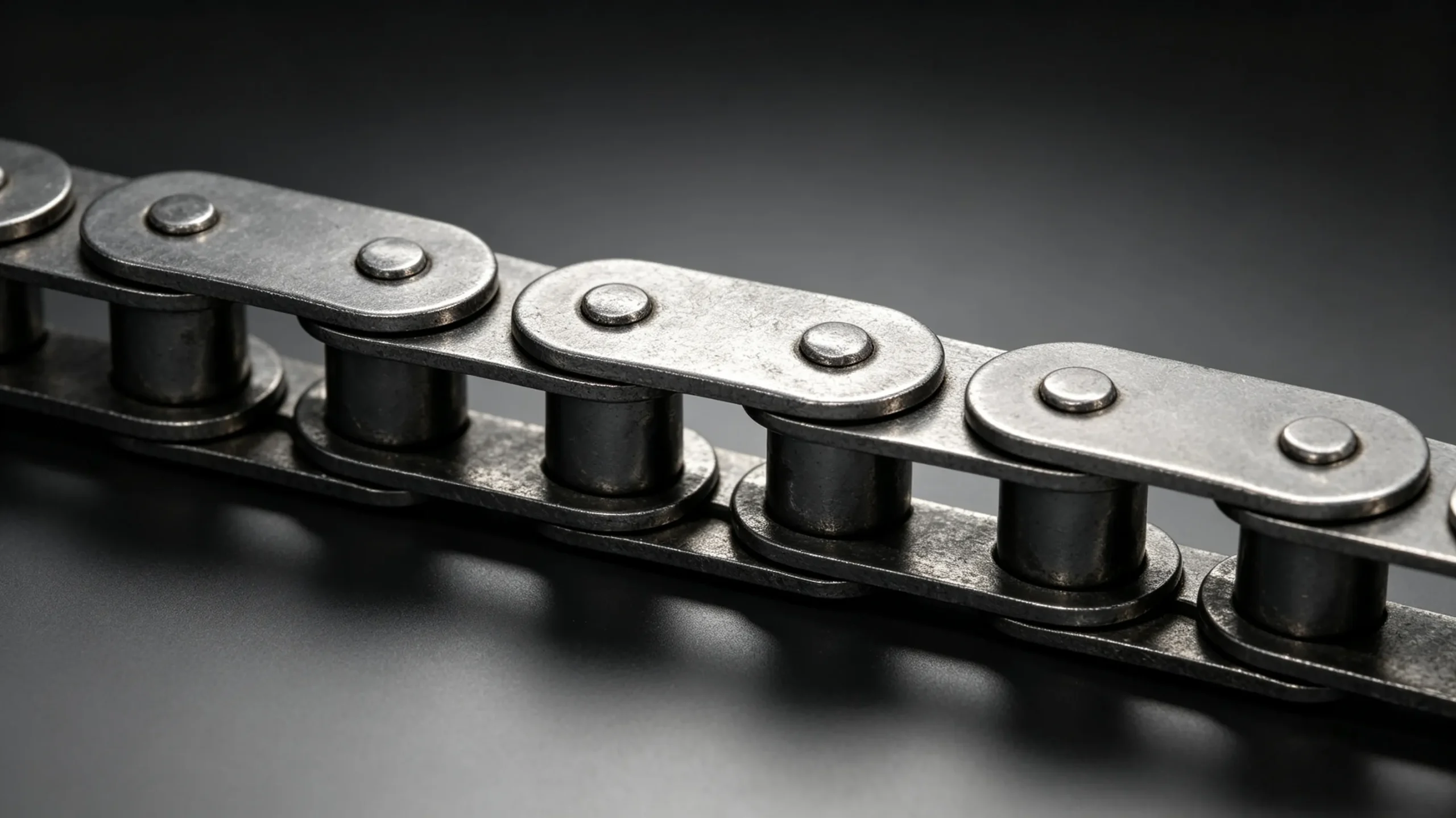
Rubber top chain in production conveyor environment
Rubber Profile and Material Properties
16A-G2 rubber top chains use 75–80 Shore A NBR compound for standard applications, with 90 Shore A abrasion-resistant compound available for stone and concrete environments. The G2 profile at the 16A pitch provides the largest standard rubber bonding area in the A-series rubber top range — approximately 62mm wide across the full outer link plate. This large bonding area gives the rubber profile exceptional delamination resistance under the lateral scrubbing forces generated when heavy panels are pushed off the conveyor or when products accumulate against backstops. For stone and concrete processing environments where the rubber operates in grit-laden water, the abrasion-resistant 90 Shore A compound extends service life by 40–60% compared to standard 80 Shore A specification.
Core Performance Advantages
🤚
Positive Non-Slip Grip
The vulcanised rubber surface grips product bases firmly at conveyor accelerations and on inclined sections where smooth-surface chains allow slippage — eliminating the positioning errors and product damage that result from uncontrolled sliding.
🔇
Measurable Noise Reduction
Rubber’s damping properties absorb the micro-impacts at each sprocket link engagement, reducing conveyor operating noise at the product contact surface. In facilities with noise regulations, this can be a compliance factor.
🛡️
Surface-Safe Product Handling
Direct contact between bare steel chain and finished product surfaces causes scratching, denting, and marking. The rubber layer completely eliminates steel-to-product contact, maintaining surface integrity through the full conveyor run.
⚙️
Standard Sprocket Compatibility
The base chain dimensions are fully standard — the same sprockets used for the equivalent standard roller chain work without modification for the rubber top version. No hardware changes required for retrofitting.
Application Areas
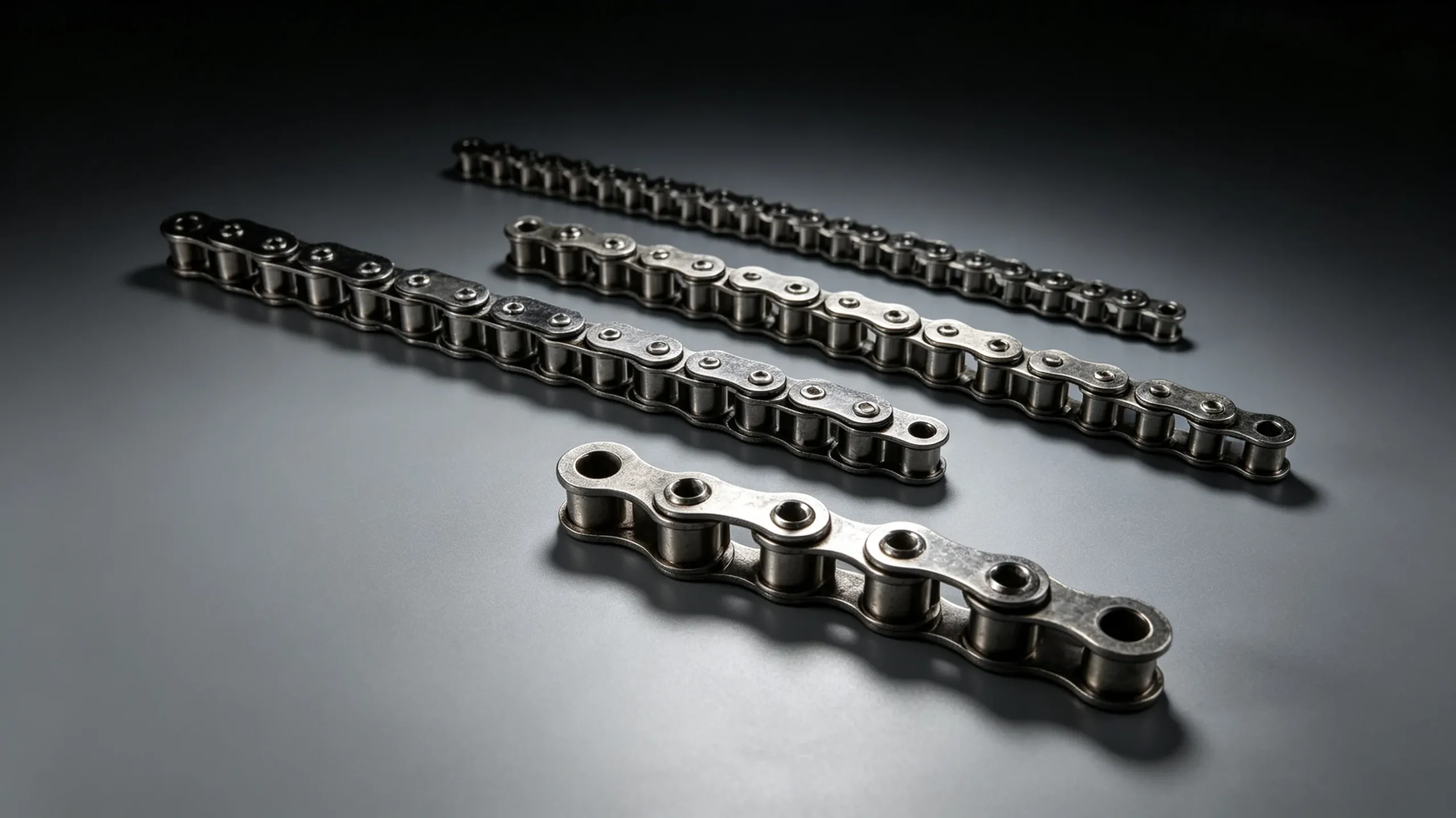
Industrial conveyor application for 16A-G2
🏔️
Extra-Large Stone Slab Conveying
3,000mm × 1,500mm granite and marble slabs at 30mm thickness — some of the heaviest conveyed products in any rubber top chain application — require both the G2 wide support and the #80 pitch load capacity simultaneously.
🏗️
Precast Concrete Panels
Thin precast concrete facade panels with architectural surface finishes cannot tolerate contact marks from conveying chains. 16A-G2 provides the load capacity for panel weights above 200 kg while keeping contact pressure below the concrete surface marking threshold.
✈️
Aerospace Panel Conveying
Large aluminium and composite panels for aerospace applications — wing skin sections, fuselage panels — require non-marking, high-capacity conveying between machining and assembly stations.
🪟
Structural Laminated Glass
Extra-heavy laminated safety glass panels for structural glazing applications require both the broad G2 support and the high tensile capacity of the #80 pitch base for conveying through laminating presses and autoclave outfeed systems.
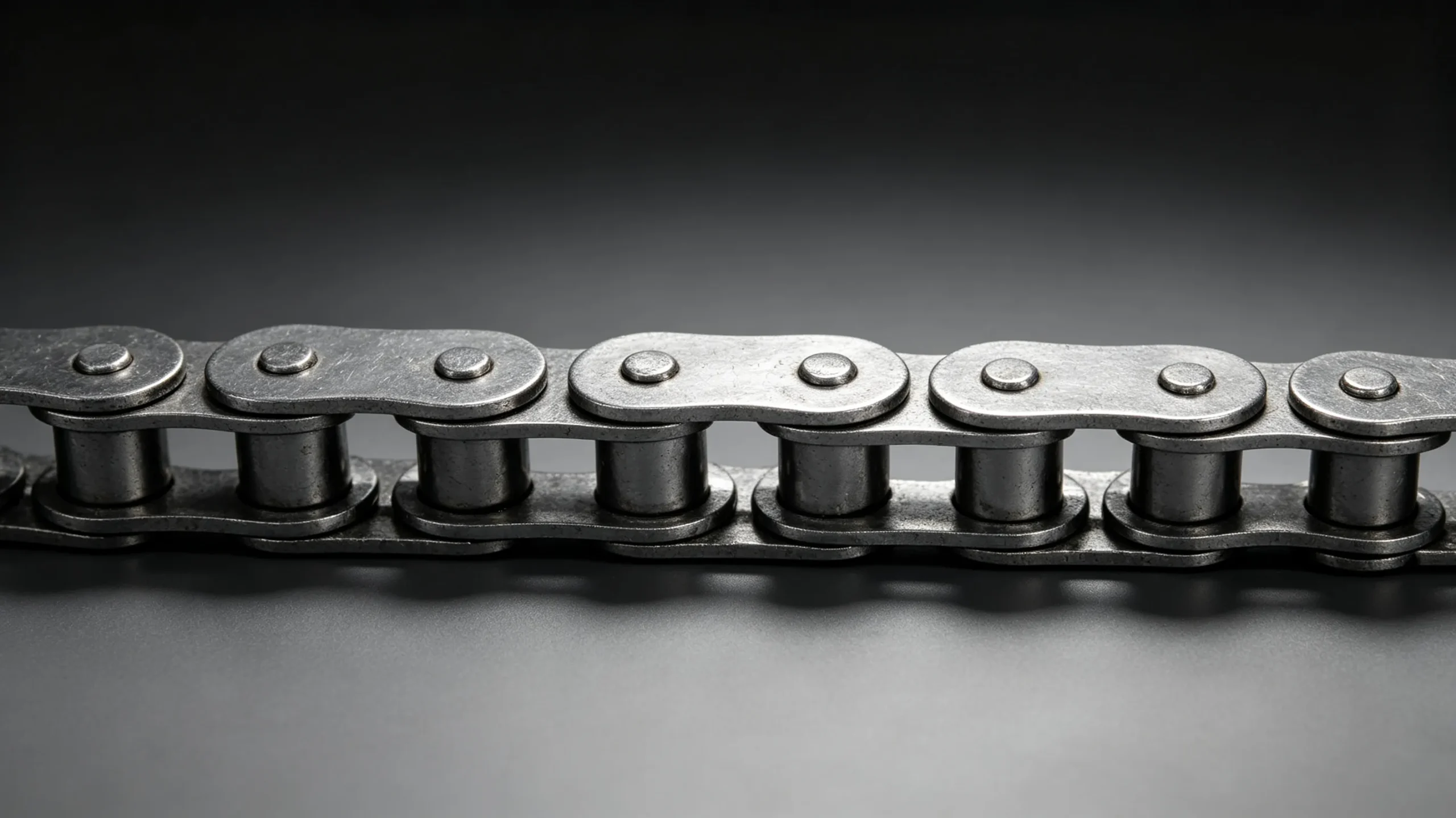
Rubber top chain on production line
Related Components We Supply
◆
Matched Sprockets — ANSI #80 (A-series)
Standard sprockets in the pitch matching 16A-G2. No special tooth form needed — standard ANSI #80 (A-series) sprockets engage rubber top chains correctly at the roller-to-tooth interface.
◆
Rubber Top Connecting Links
Connecting links with matching rubber top profile for a smooth, uninterrupted conveying surface at the chain join point.
◆
Replacement Rubber Top Outer Link Sets
Individual outer link plate assemblies with vulcanised rubber profiles for field repair of worn sections without replacing the full chain.
◆
UHMWPE Guide Rails
Low-friction polyethylene guide profiles reducing lateral wear on rubber edges in side-guided conveyor configurations.
Customer Reviews
★★★★★
“We run 16A-G2 on our main granite slab conveyor handling 3,000 × 1,500mm slabs at 700+ kg each. The #80 pitch base is essential — we calculated that #60 pitch would be at 85% of rated load with our heaviest slabs. The G2 wide profile prevents granite surface scratching even with our rough-cut slab faces. No rubber delamination in 28 months of continuous operation.”
B
Bruno Ferrari
Operations Director — Verona Stone Processing Plant
★★★★★
“Specified 16A-G2 for conveying architectural precast panels with polished aggregate finish. The rubber top contact keeps the aggregate surface marking-free. The chain handles panel weights up to 220 kg without chain stretch issues — we check elongation at 6-month intervals and it’s well within specification.”
C
Claire Martin
Plant Engineer — Lyon Precast Concrete Plant
★★★★★
“We convey large aluminium wing rib panels through our machining cells on 16A-G2 chains. Surface marking on machined aerodynamic surfaces creates rework and scrap — the rubber top eliminates marking completely at our 0.6 m/s conveyor speed. Stainless steel base option for our water-jet cutting conveyor is also available from this supplier.”
T
Thomas Anderson
Manufacturing Engineer — Seattle Aerospace Components
Frequently Asked Questions
What is the rubber contact width for 16A-G2 versus 16A-G1?+
16A-G2 rubber width is approximately 62mm versus 40mm for 16A-G1. Overall chain width increases from approximately 50mm to 72mm. The G2 profile provides 55% more rubber contact area per link than G1 at the same pitch, distributing heavier product loads across a larger surface and reducing peak contact pressure proportionally.
Is 16A-G2 available in self-lubricating specification?+
Yes — 16A-G2 with oil-impregnated sintered bushings is available. Self-lubricating 16A-G2 chains are particularly useful on long conveyor runs in stone processing and panel plants where manual lubrication access is restricted. Service life with SLR self-lubricating bushings under moderate load is typically 2,000–3,500 operating hours before the oil reservoir is depleted and chain replacement is required.
Can I specify a custom rubber hardness for concrete face conveying?+
Yes — rubber hardness in 5-Shore-A increments from 55 to 90 Shore A can be specified on orders above 10 metres. For polished concrete face conveying, 60–65 Shore A provides the lowest contact pressure and best surface conformity for minimum marking risk. For rough-cast concrete, 80 Shore A is more appropriate for abrasion resistance. Contact us with your concrete surface specification for a hardness recommendation.
What sprockets does 16A-G2 require?+
Standard ANSI #80 (16A) sprockets — the same sprockets used for standard ANSI #80 roller chain. The G2 rubber profile does not affect sprocket engagement. Verify conveyor frame clearances accommodate the 72mm overall chain width before installation.
Is 16A-G2 available in metric pitch (16B base)?+
The equivalent ISO B-series wide rubber top chain is 16B-G2. If your equipment uses European ISO standard sprockets (16B tooth form), specify 16B-G2 rather than 16A-G2. The rubber profile geometry is the same; the base chain standard — ANSI vs ISO — determines sprocket compatibility. Contact us to confirm which standard your equipment uses if you are uncertain.
Get in Touch
Ready to Place Your Order?
Send us your chain specification and annual volume. Standard enquiries receive a quotation within 2 business days.
Further reading: when heavy-duty chain capacity is required.