
Lubrication is the single most important maintenance input for a roller chain drive, and also the one most frequently neglected. In applications where access for re-lubrication is restricted — enclosed machinery, high-temperature environments, food processing lines, or equipment in remote locations — the inability to lubricate regularly is the primary driver of premature chain wear. Self-lubricating roller chain addresses this problem by building the lubricant into the chain itself, providing sustained internal lubrication without any external supply for the duration of the chain service life.
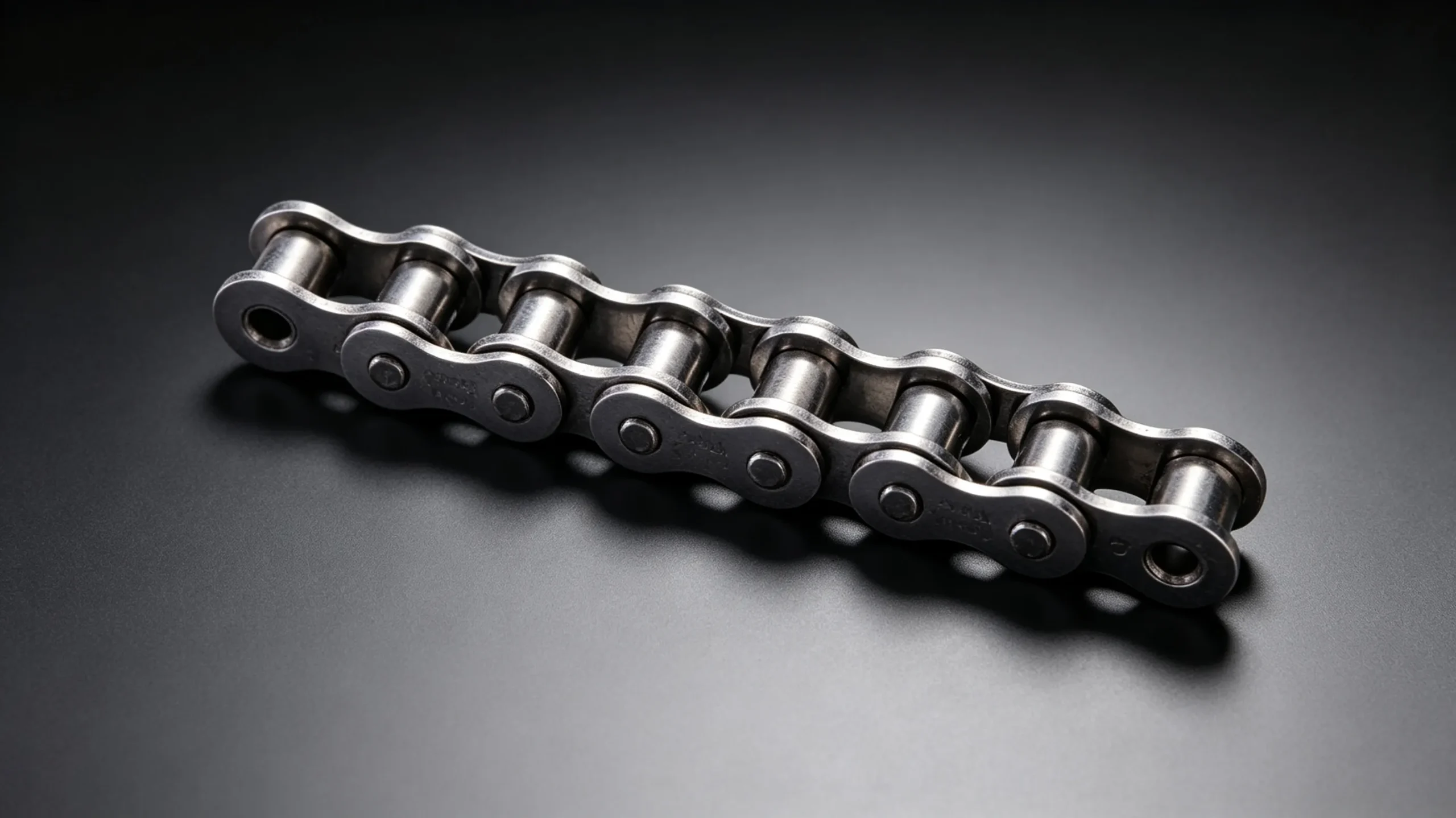
How Self-Lubricating Chain Works: The Sintered Bushing
The core technology in a self-lubricating roller chain is a sintered metal bushing — a bushing manufactured by compressing and heating metal powder (typically iron or iron-copper alloy) into a solid form with a controlled porosity of 15 to 25 percent by volume. This porous structure is then vacuum-impregnated with a high-viscosity lubricating oil, filling the voids throughout the bushing body.
During chain operation, the heat generated at the pin-bushing contact interface causes the trapped oil to expand slightly and migrate to the contact surface, forming a thin lubricating film between the pin and the bushing bore. When the chain cools during a rest period, the oil is drawn back into the porous bushing by capillary action. This self-replenishing mechanism operates continuously throughout the chain life without any external oil supply, providing consistent lubrication at the exact location where it is needed — the pin-bushing sliding interface — for a typical service life of 2,000 to 5,000 operating hours depending on load and speed conditions.
Performance Comparison: Self-Lubricating vs Standard Chain
| Parameter | Standard Roller Chain (Lubricated) | Self-Lubricating Roller Chain |
|---|---|---|
| Lubrication source | External — manual, drip, bath, or force-feed | Internal — sintered bushing oil reservoir |
| Lubrication interval | Every 8–500 hours depending on load and speed | None required for chain service life |
| Typical service life | 2,000–8,000 hours (with correct lubrication) | 2,000–5,000 hours (application dependent) |
| Contamination sensitivity | High — external lube attracts dust | Lower — no external oil film to collect debris |
| Operating temperature range | Up to ~150°C with standard lubricant | Up to ~120°C (oil viscosity limits above this) |
| Cost vs standard chain | Baseline | Typically 40–80% premium |
| Food-grade availability | With food-grade oil applied externally | Yes — food-grade oil impregnation available |
| Strength vs standard | Baseline | Approximately equal — same plate and pin geometry |
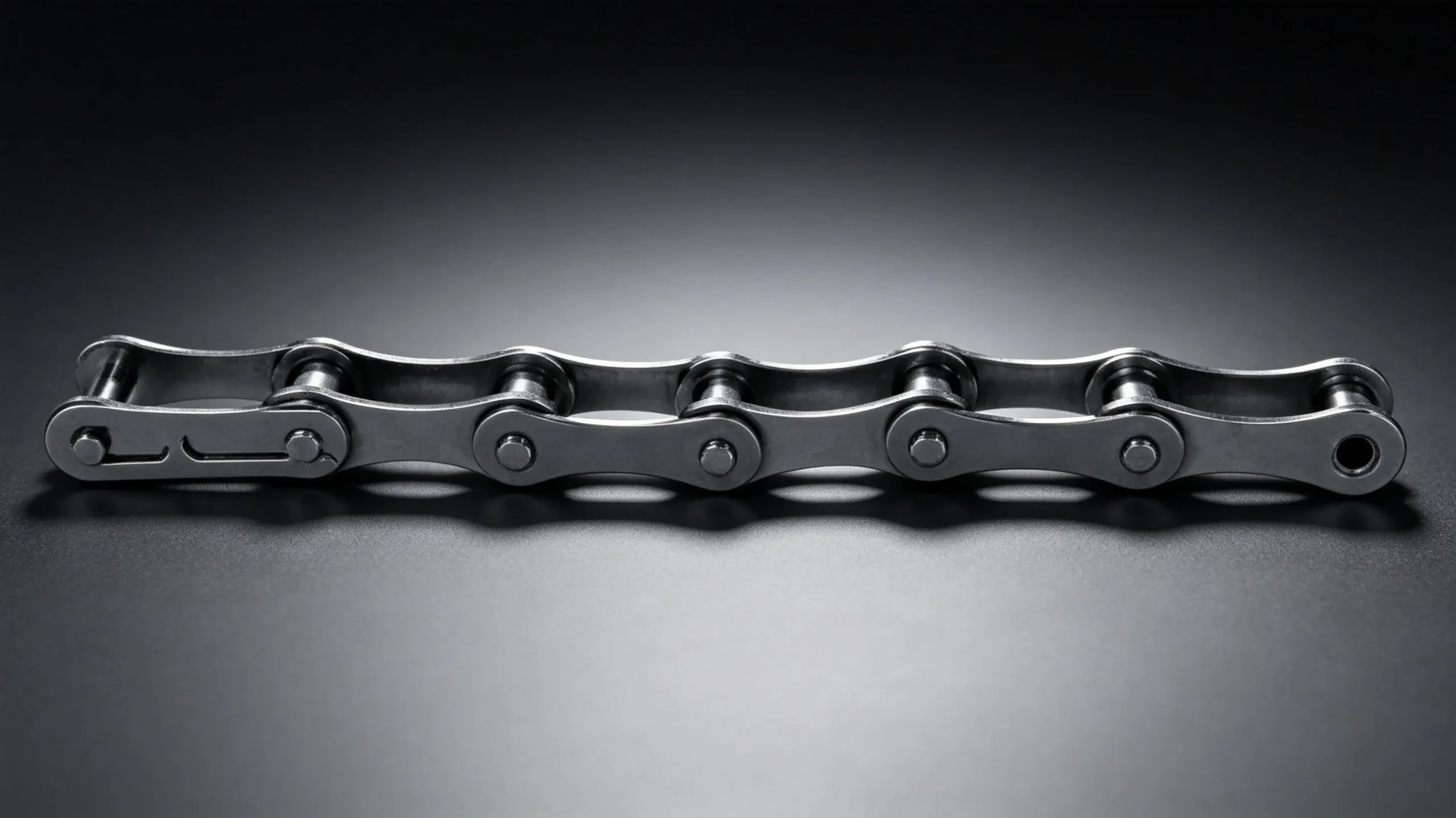
Applications Where Self-Lubricating Chain Is the Right Choice
Enclosed and Inaccessible Drive Locations
Many industrial machines enclose their chain drives within sealed housings for noise reduction, safety guarding, or protection from the environment. In such drives, gaining access for manual lubrication requires stopping the machine, opening the housing, applying oil, and reassembling — a procedure that is often skipped in practice due to production pressure. Self-lubricating roller chain eliminates this maintenance burden entirely for these enclosed drives, providing sustained lubrication without access requirements.
Food and Pharmaceutical Processing Lines
External lubricant applied to a roller chain in a food processing environment is a contamination risk. Even food-grade oils must be applied sparingly and can drip onto products or conveyor surfaces if over-applied. Self-lubricating roller chain with food-grade oil impregnation eliminates the need for external lubrication entirely, removing the contamination risk at its source. This is particularly valuable in overhead conveyor runs above open food products, where any drip contamination is unacceptable.
Dusty and Abrasive Environments
In grain handling, cement processing, and quarrying operations, external oil on a roller chain surface acts as an adhesive for dust particles. The resulting oil-dust paste is highly abrasive and can accelerate pin-bushing wear faster than running the chain dry. Self-lubricating chain avoids this problem because there is no external oil film to attract and hold abrasive particles — the lubricant is entirely within the sintered bushing and does not reach the outer surface in quantities that would cause particle adhesion.
Remote Locations With Infrequent Maintenance
Irrigation systems, remote agricultural equipment, and telecommunications tower drive systems may operate for months between maintenance visits. For these applications, the self-lubricating chain acts as a reliability measure — the drive continues to operate within acceptable wear parameters even if the maintenance interval extends beyond what would be acceptable for a standard chain.
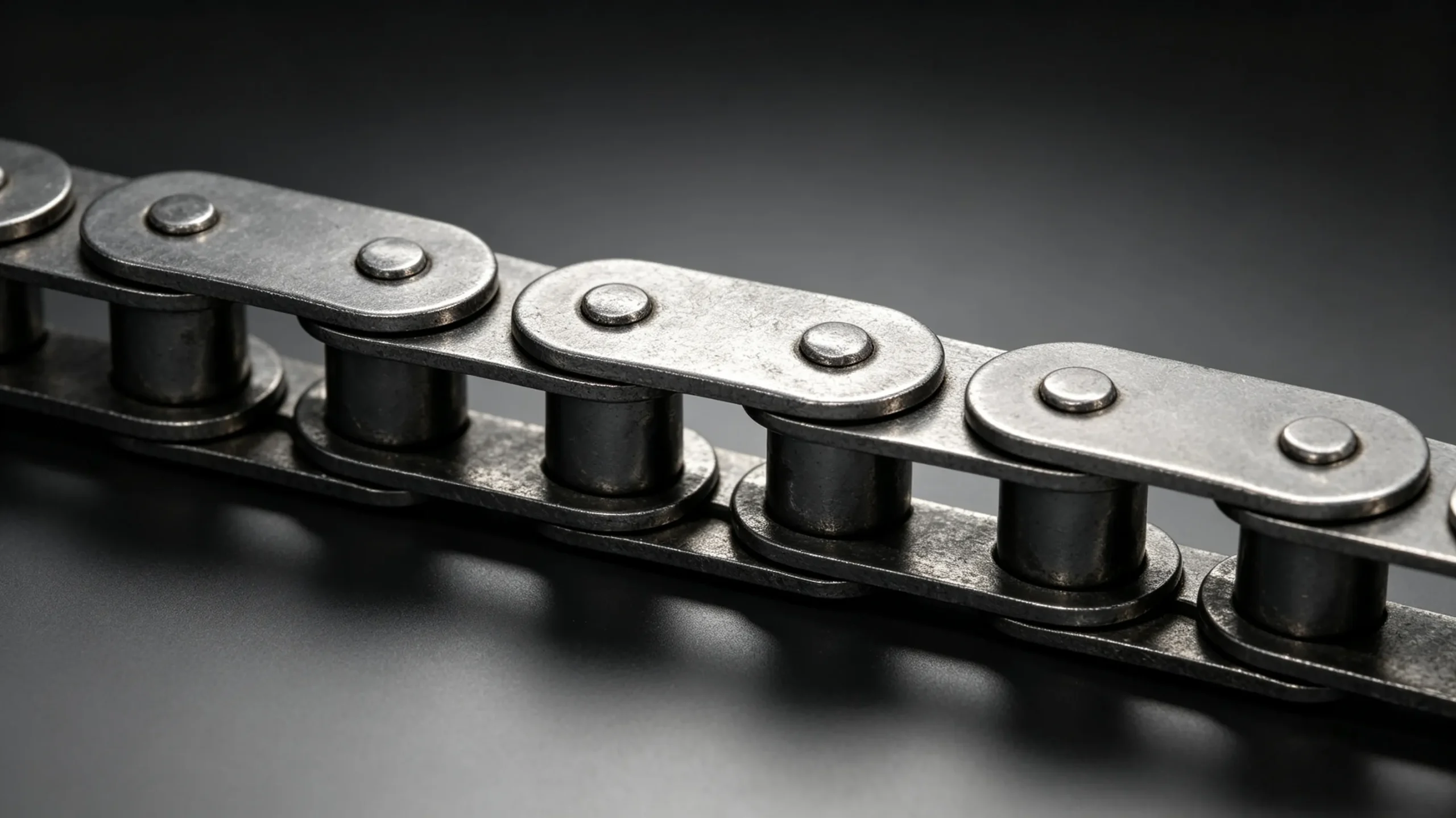
Limitations of Self-Lubricating Chain
The oil reservoir in a sintered bushing has a finite capacity. At high loads and high speeds — conditions where the pin-bushing interface pressure is elevated and the relative sliding velocity is high — oil consumption from the reservoir is faster than at moderate conditions. In drives operating at or above 80 percent of the chain rated working load, or at speeds above 3 m/s, the bushing oil reservoir may be depleted faster than the general service life estimates suggest. For these demanding conditions, standard roller chain with a proper force-feed lubrication system is likely a better technical and economic choice.
Temperature is a second limitation. Lubricating oils have a minimum viscosity below which they cannot maintain an adequate film at the pin-bushing contact. For most sintered bushings, this becomes a concern above approximately 120 degrees Celsius. Above this temperature, the oil thins to the point where film thickness at the contact is insufficient, and wear rates increase. For high-temperature applications — furnace conveyors, kiln chains, heat-treatment equipment — specialised high-temperature lubricants or different chain types (such as stainless steel roller chain with heat-resistant lubricants) are required.
Self-Lubricating Chain vs O-Ring Chain: Choosing the Right Maintenance-Free Option
Both self-lubricating roller chain and O-ring roller chain are designed to reduce external lubrication requirements, but they achieve this through different mechanisms and are suited to different operating conditions. Self-lubricating chain releases lubricant from within the bushing to the pin contact surface. O-ring chain seals a pre-packed grease charge inside a rubber O-ring at each pin, protecting the grease from contamination rather than releasing it on demand.
Self-Lubricating Chain
Best for moderate loads and speeds in clean or dusty environments. No external lubrication required. Lighter and less expensive than O-ring chain. Lower contamination risk in food environments.
O-Ring Chain
Best for highly contaminated environments (mud, grit, chemicals) where sealing the lubricant inside is more important than the lubricant release mechanism. Higher load capacity maintenance. Used in motorcycle chains and heavy agricultural drives.
EverPower Roller Chains Australia supplies self-lubricating roller chain in ANSI and ISO series with standard and food-grade oil impregnation. Contact our Sydney team to discuss whether self-lubricating chain is the right solution for your drive conditions and maintenance schedule.
+61 2 9708 3322 | [email protected] | 27 Harley Crescent, Condell Park NSW 2201