
Most maintenance engineers reach for heavy duty roller chain after a standard chain has failed unexpectedly — and then wonder why they did not specify it from the start. Heavy duty roller chain is not a premium upgrade with marginal benefits; it is an engineering solution to a specific problem: applications where the loading profile exceeds what standard chain link plates can sustain across the required service life. Understanding exactly what makes heavy duty chain different, and which applications genuinely require it, prevents both under-specification failures and over-specification cost waste.
How Heavy Duty Chain Differs From Standard Chain
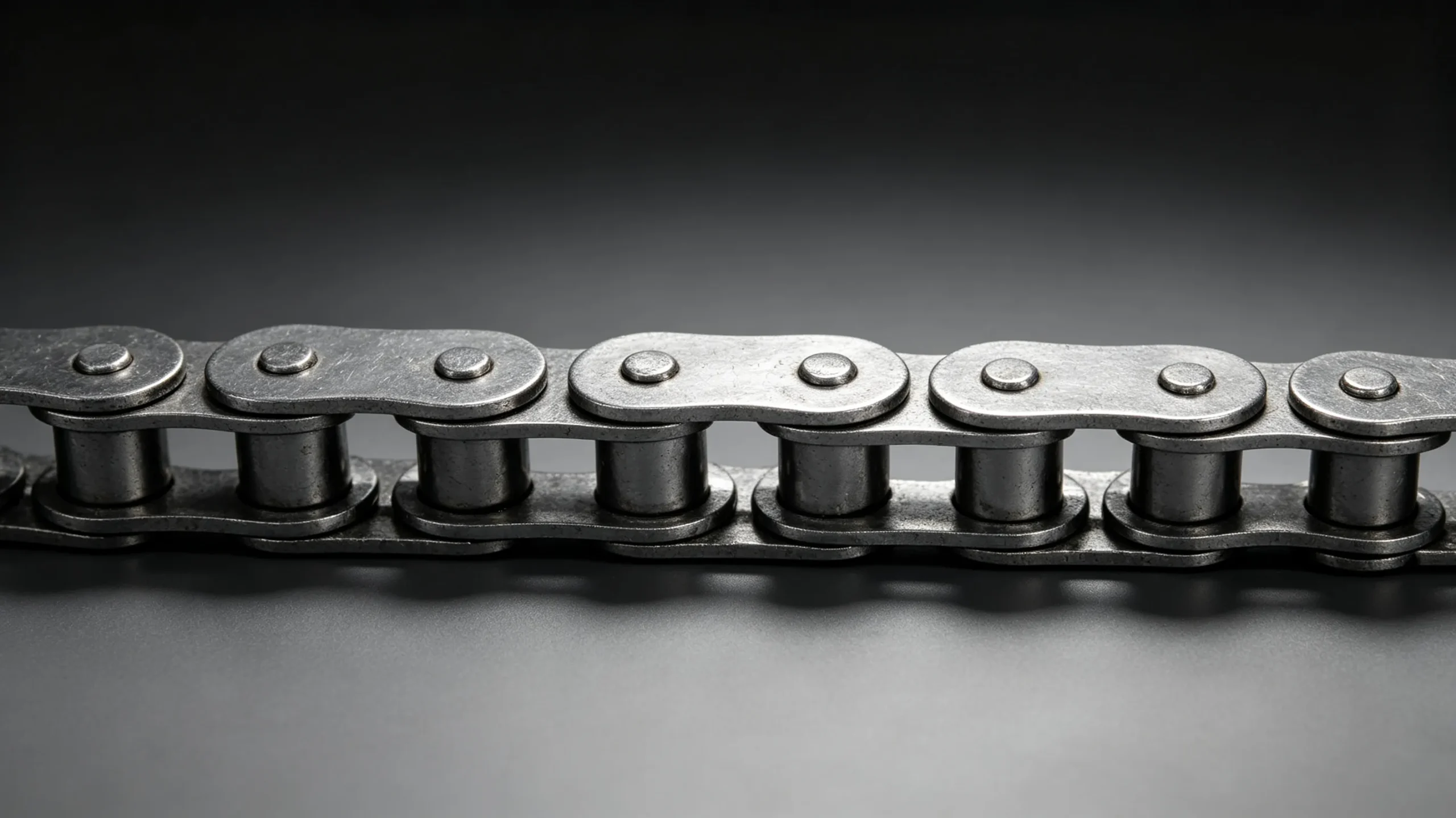
Heavy duty roller chain uses the same pitch as standard chain — the pin-to-pin distance is identical, and heavy duty chain runs on standard matched sprockets without modification. What changes are the link plates and pins. Heavy duty plates are thicker and wider than standard plates at the same pitch. This increases the cross-sectional area through the pin hole — the critical stress concentration point in any chain link plate — which raises both the static breaking load and, more importantly, the fatigue endurance limit of the plate under cyclic loading.
ANSI B29.1 designates heavy series chains with an H suffix: ANSI 60H, 80H, 100H. These chains use standard pitch and roller geometry but carry approximately 25 to 35 percent higher minimum breaking loads than standard series chains of the same pitch. ISO 606 uses a similar heavy series designation. The table below compares key specifications.
| Chain Size | Series | Min. Break Load (kN) | Plate Thickness (mm) | Pin Diameter (mm) |
|---|---|---|---|---|
| ANSI 60 | Standard | 31.3 | 2.40 | 5.94 |
| ANSI 60H | Heavy | 42.3 | 3.20 | 5.94 |
| ANSI 80 | Standard | 55.6 | 3.20 | 7.94 |
| ANSI 80H | Heavy | 74.7 | 4.00 | 7.94 |
| ANSI 100 | Standard | 87.0 | 3.96 | 9.53 |
| ANSI 100H | Heavy | 117.0 | 4.80 | 9.53 |
Applications That Require Heavy Duty Chain
Crusher and Shredder Drives
Jaw crushers, hammer mills, and industrial shredders subject their drive chains to severe impact loads when oversized material enters the crushing chamber. These impact loads can reach 5 to 8 times the mean running tension in a fraction of a second. Standard chain plates, which are designed around steady-state load with a service factor applied, cannot sustain repeated impacts of this magnitude without progressive fatigue cracking. Heavy duty chain, with its thicker plates and larger pin-hole cross-section, provides the additional fatigue margin needed to survive these impact profiles.
Baler Plunger Drives
Square hay and straw balers use a reciprocating plunger to compress crop material into bales. The plunger drive chain experiences near-zero tension during the return stroke and a sharp tension peak at the compression stroke — a cyclic profile that is particularly damaging for link plate fatigue. Many baler manufacturers specify heavy duty chain as original equipment for the plunger drive specifically because of this loading pattern.
Mining Conveyor Start-Up Loads
Long overland conveyors in mining operations can require start-up tensions three to five times higher than running tension when starting a fully loaded belt. If the conveyor drive uses roller chain (common in medium-scale underground mining), this start-up surge is transmitted directly through the chain. Heavy duty chain provides the additional plate strength to absorb these infrequent but extreme loading events without fatigue damage that would accumulate over thousands of start cycles.
When Standard Chain Is Sufficient
Not every industrial application requires heavy duty chain. For smooth, steady-state drives — pump drives, fan drives, conveyor systems moving uniform material at constant speed without start-stop cycling — standard chain with the correct service factor applied is adequate and more economical. The service factor system in ANSI B29.1 already accounts for moderate shock loading (service factor 1.3 to 1.5 for moderate shock) without requiring a switch to heavy series.
Heavy duty chain becomes necessary when the shock loading is severe (service factor above 1.7), when operating hours are long with continuous cycling, or when the consequences of an unplanned chain failure are disproportionately expensive — such as during harvest season on agricultural machinery or during a production run in a continuous-process manufacturing plant.
Heavy Duty vs Duplex Standard: Which Gives More Capacity?
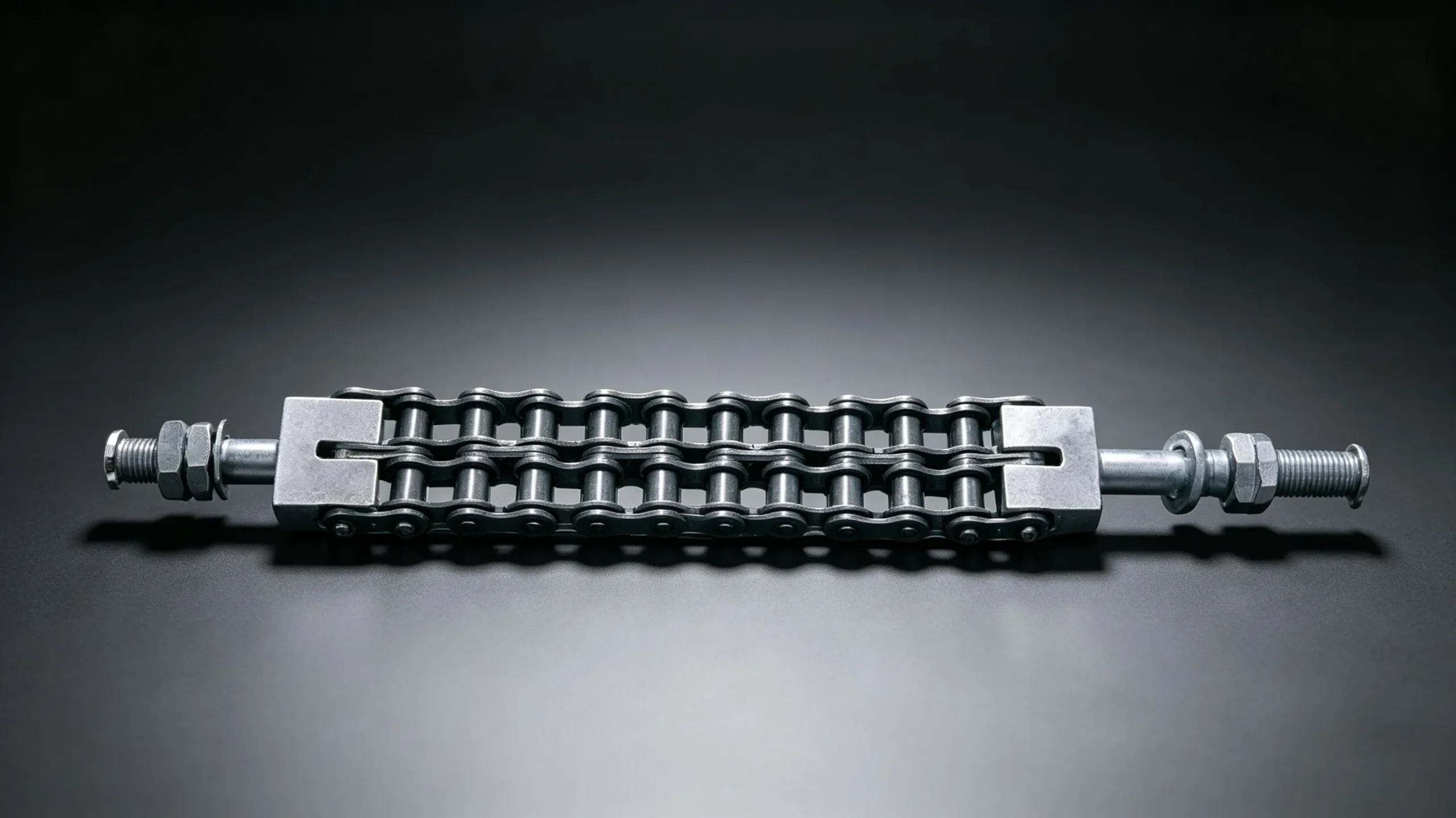
A common question in drive design is whether heavy duty simplex chain or standard duplex chain provides better value at the same capacity requirement. At equivalent breaking load, the two options are often close in cost. The deciding factors are practical rather than purely economic.
Choose Heavy Duty Simplex when…
Sprocket width is constrained, shaft centre distance is tight, or the drive geometry does not accommodate the wider face width needed for duplex sprockets.
Choose Standard Duplex when…
The drive speed is high (duplex allows smaller pitch), the sprocket hub can accommodate wider face width, and load distribution across two strands is acceptable for alignment precision available.
Choose Heavy Duty Duplex when…
Both maximum fatigue resistance and maximum load capacity are required simultaneously — such as main drives on large mining equipment or heavy baling machinery.
Identifying Heavy Duty Chain in the Field
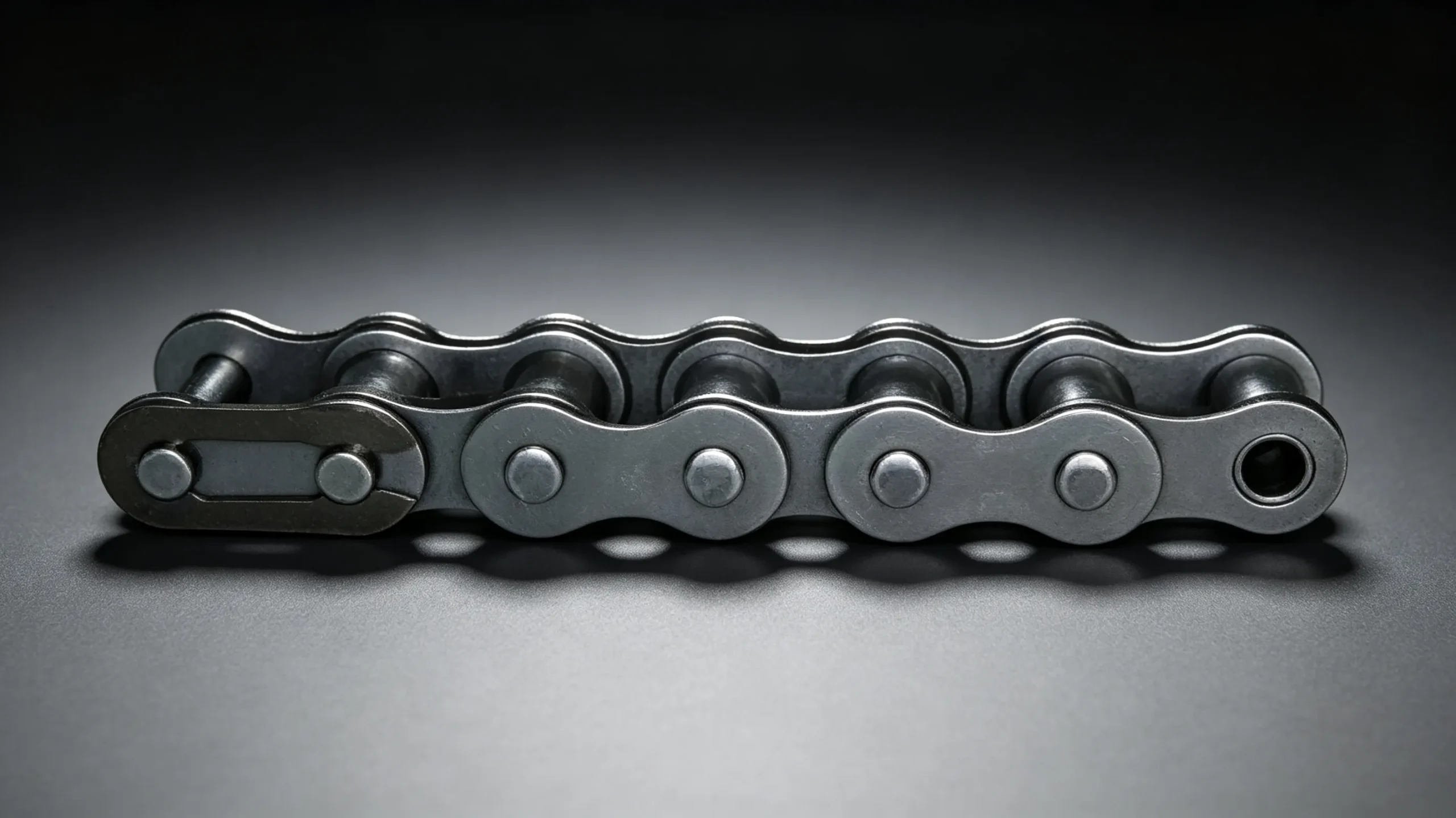
When taking over maintenance of an unfamiliar machine, identifying whether the installed chain is standard or heavy series requires only a vernier caliper. Measure the link plate thickness at the mid-plate location (away from the pin holes). Compare against the values in the table above for the pitch size identified. If the plate is thicker than the standard series value, the chain is heavy series. Cross-reference with any markings stamped on the outer plates — ANSI heavy series chains should carry an H designation following the chain number.
Always replace heavy series chain with heavy series chain of the same specification. Fitting standard chain as a replacement for heavy series in a high-shock application will result in reduced service life and, in severe cases, rapid fatigue failure within a few hundred operating hours.
EverPower Roller Chains Australia stocks ANSI heavy series chain (60H, 80H, 100H and more) for mining, agricultural, and industrial applications. We can advise on whether your specific application requires heavy series based on your load profile and duty cycle — contact our Sydney team for a technical review before ordering.
+61 2 9708 3322 | [email protected] | 27 Harley Crescent, Condell Park NSW 2201