
Product Description
Product advantages:
| — Ten CoreTechnologies — | |||
| 1 | Chain strengh preload technology | 2 | Pin CRV treatment technology |
| 3 | Plate smoothly punching technology | 4 | Bush oil hole technology |
| 5 | Vacuum Oiled Technology | 6 | Precision Punching Technology |
| 7 | Low frequency fatigue test technology for lange size chain | 8 | Chain length comparison technology |
| 9 | Variation of silence design technology | 10 | Chain dynamic testingtechnology technologies |
Our Advantages:
1. Any inquiry you make will be answered professionally within 6~8 hours.
2. Attaches great importance to product quality and approved by many global quality system certification,such as France, Norway, Germany.
3. Focused on Chain since 1999, have rich experience in Production.
4. High-quality workers,First-class advanced equipment,good quality control,advanced technology.
5. Be Good at Custom-Made Products, provide customized services for customers.
6. Participated in the drafting of 24 national and industrial standards such as chains.As of 2571-Mar, CHOHO has 180 authorized patents.
7. With the responsibility of “Providing high quality chain system with the same service life for the global locomotive industry”, have established a strong R&D team.
By 2571,CHOHO has more than 2,7.
-CHOHO has 4 subsidiaries, including testing technology and international trading companies. has 4 factories in HangZhou, Thailand factory, ZheJiang R&D Center and Tokyo R&D Center. In addition, CHOHO ZHangZhoug Industrial zone is expected to be completed & put into operation next year.
-We specialized in producing all kinds of standard chains and special chains, such as Agricultural Chain, Sprocket, Chain Harrow, Tillage Parts,Rice Harvester Chain, GS38 Chain, Roller Chain, Automobile Chain, Motorcycle Chain Industrial Chain and so on.Our partners among world top enterprises, such as LOVOL,JOHN DEERE,NEWHOLLAND, CLASS,AGCO,DEUTZFAHR,HONDA, KUBOTA etc.
FAQ:
1. Are you manufacturer or trade Company?
We are a factory focused on producing and exporting Chain over 23 years,have a professional international trade team.
2. What terms of payment you usually use?
T/T 30% deposit and 70% against document, L/C at sight
3. What is your lead time for your goods?
Normally 30~45 days.Stock can be shipped immediately.
4. Do you attend any Show?
We attend Hannover show in Germany, EIMA in Italy, CZPT in France, CIAME in China and many other Agricultural machinery shows.
5.Do you offer free samples?
Yes,we can.or you just bear the shipping cost.
6.Is OEM available?
Yes, OEM is available. We have professional designers to help you design.
|
Shipping Cost:
Estimated freight per unit. |
To be negotiated|
|
|---|
| Standard or Nonstandard: | Nonstandard |
|---|---|
| Application: | Conveyer Equipment, Agricultural Machinery |
| Surface Treatment: | Polishing |
| Samples: |
US$ 0/Meter
1 Meter(Min.Order) | Order Sample |
|---|
| Customization: |
Available
| Customized Request |
|---|
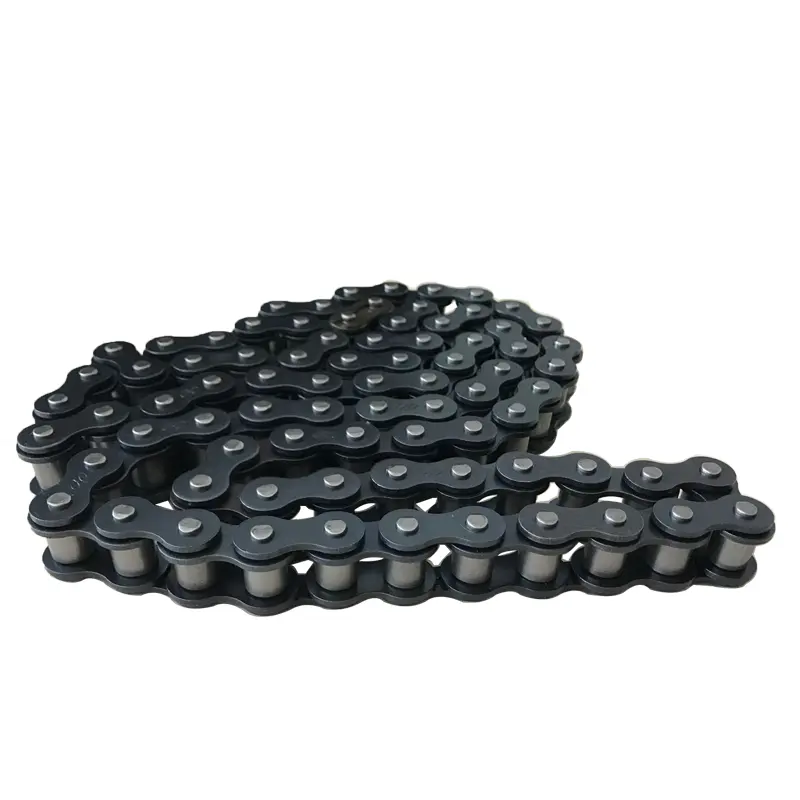
Are there any special considerations for installing roller chains?
Proper installation of roller chains is crucial to ensure their optimal performance and longevity. Here are some key considerations for installing roller chains:
1. Alignment: Ensure proper alignment of the sprockets to prevent side loading and premature wear. The sprockets should be aligned parallel to each other and positioned at the correct distance according to the chain’s pitch.
2. Tension: Proper chain tension is essential for smooth operation and to prevent excessive wear. Follow the manufacturer’s recommendations for the appropriate tension based on the specific chain type and application. It’s important to achieve the correct tension without over-tightening, as excessive tension can lead to increased stress and accelerated wear.
3. Lubrication: Apply the appropriate lubricant to the roller chain during installation. Lubrication helps reduce friction, wear, and heat generation. Follow the manufacturer’s recommendations for the type and frequency of lubrication based on the operating conditions and chain design. Ensure even distribution of lubricant along the chain’s length.
4. Sprocket Teeth Engagement: Check that the chain properly engages with the teeth of the sprockets. The chain should fit snugly into the sprocket teeth without excessive clearance or interference. Incorrect engagement can cause slippage, uneven wear, and premature failure.
5. Chain Length: Ensure that the chain length is appropriate for the application. Avoid excessive slack or excessive tension by adjusting the chain length accordingly. An incorrectly sized chain can lead to poor performance, increased wear, and potential damage to the chain and sprockets.
6. Protection: Consider using chain guards or covers to protect the roller chain from external contaminants such as dust, dirt, or debris. This helps minimize wear and extends the chain’s lifespan, particularly in harsh or dirty environments.
7. Regular Inspection: Regularly inspect the roller chain and sprockets for signs of wear, damage, or misalignment. Monitor the chain’s performance and address any issues promptly to avoid further damage and prevent unexpected downtime.
8. Proper Tools and Techniques: Use appropriate tools and techniques during installation to ensure accuracy and prevent damage to the chain or components. Follow the manufacturer’s guidelines or consult with experts for specific installation instructions.
By following these considerations and best practices, you can ensure proper installation of roller chains and maximize their performance and durability in your application.
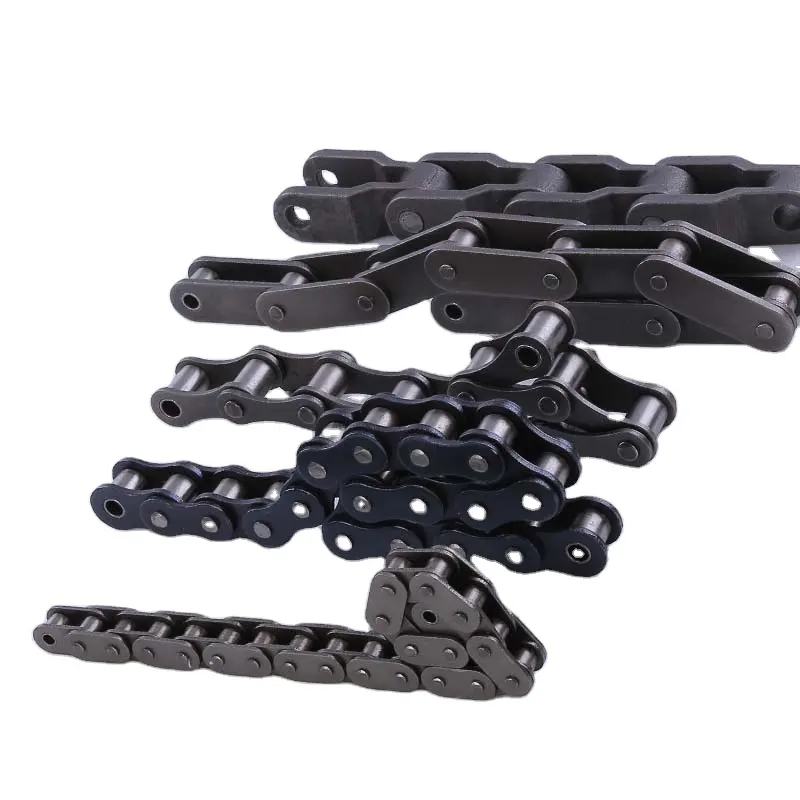
What are the differences between standard and specialty roller chains?
Standard roller chains refer to chains that are commonly used in a wide range of applications and are readily available from chain manufacturers. These chains typically have standard dimensions, including pitch, roller diameter, and pin diameter, and are made from materials such as carbon steel, stainless steel, or nickel-plated steel. Standard roller chains are suitable for most general-purpose applications that require moderate strength and durability.
Specialty roller chains, on the other hand, are designed for specific applications that require unique features or properties. These chains may have non-standard dimensions or be made from specialized materials such as high-strength alloys or plastic. Specialty roller chains can be used in a variety of industries, including food processing, automotive, and aerospace. Examples of specialty roller chains include corrosion-resistant chains, high-temperature chains, and chains with special attachments for conveying specific products or materials.
Overall, the main differences between standard and specialty roller chains are their intended applications and the unique features that they offer. Standard roller chains are suitable for most general-purpose applications, while specialty roller chains are tailored to specific applications that require special properties or features.
What are the common applications of roller chains?
Roller chains are widely used in various industries and applications where reliable power transmission is required. Here’s a detailed answer to the question:
1. Industrial Machinery: Roller chains are commonly used in industrial machinery such as conveyors, material handling equipment, packaging machines, printing presses, textile machinery, and woodworking equipment. They provide efficient and reliable power transmission in these applications.
2. Automotive: Roller chains are used in automotive applications, including engine timing systems, camshaft drives, and drive chains for motorcycles and bicycles. They are known for their strength, durability, and ability to handle high loads and speeds.
3. Agriculture: Roller chains are extensively used in agricultural machinery, including tractors, combine harvesters, hay balers, and crop sprayers. They are capable of transmitting power in harsh and demanding agricultural environments.
4. Construction Equipment: Roller chains find applications in construction machinery such as excavators, bulldozers, cranes, and concrete mixers. They provide reliable power transmission for heavy-duty operations in construction sites.
5. Mining and Quarrying: Roller chains are used in mining and quarrying equipment, including rock crushers, conveyor systems, and drilling rigs. They are designed to withstand heavy loads, abrasive materials, and harsh operating conditions in these industries.
6. Food Processing: Roller chains with food-grade lubricants and corrosion-resistant coatings are used in food processing equipment, including conveyor systems, bottling machines, and bakery equipment. They meet the strict hygiene and safety standards required in the food industry.
7. Material Handling: Roller chains are essential in material handling systems, such as overhead cranes, forklifts, and palletizers. They enable smooth and reliable movement of goods in warehouses, distribution centers, and manufacturing facilities.
8. Power Transmission Systems: Roller chains are employed in power transmission systems that require efficient and precise power delivery, such as power presses, machine tools, and industrial automation equipment.
9. Renewable Energy: Roller chains are used in wind turbines and solar tracking systems to transmit power from the turbine or solar panels to the generator or electrical grid.
10. Marine and Offshore: Roller chains are utilized in marine and offshore applications, including shipbuilding, offshore drilling rigs, and port equipment. They provide reliable power transmission in challenging marine environments.
These are just some of the common applications where roller chains are widely used. The versatility, durability, and reliability of roller chains make them suitable for a wide range of industries and machinery.


editor by CX 2023-08-02