
Specifying roller chain for high-temperature conveyor applications — industrial ovens, powder coating lines, bakery tunnel ovens, paint curing conveyors, and heat treatment furnaces — requires addressing the specific effects that elevated temperature has on chain lubrication, steel properties, dimensional stability, and service life. Standard carbon steel chain with standard mineral oil lubrication is appropriate only up to approximately 60°C ambient temperature; above this threshold, a combination of material and lubrication changes is required.
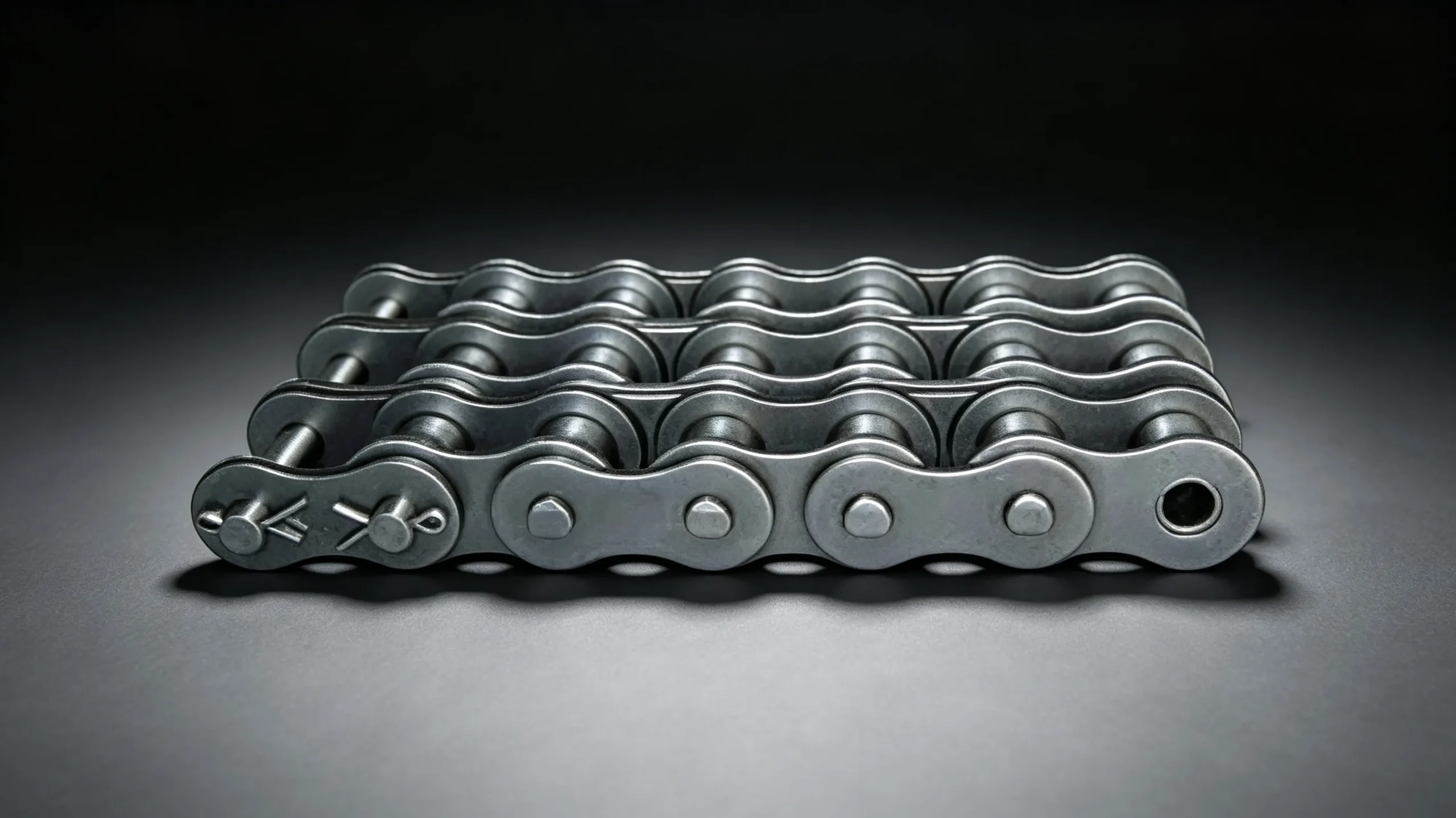
How Temperature Affects Roller Chain
Elevated temperature affects conveyor roller chain through four mechanisms: lubricant viscosity and film thickness decrease rapidly, with standard mineral oil becoming far too thin to maintain an adequate film above 100°C and evaporating or carbonising above 150°C; carbon steel plate and pin yield strength decrease gradually above 200°C, reducing load-carrying capacity; dimensional clearances in the pin-bushing joint change with temperature due to differential thermal expansion; and steel surface oxidation accelerates above 200°C in the absence of an adequate lubricating film.
| Temperature Range | Chain Material | Lubrication | Notes |
|---|---|---|---|
| Up to 60°C | Standard carbon steel chain | Standard mineral oil ISO VG 68 to 100 in drip oiler or bath | Normal industrial chain specification — no special provisions required |
| 60 to 120°C | Standard carbon steel chain | High-viscosity mineral oil ISO VG 150 to 220, or synthetic ISO VG 100 | Drip oiler still effective; no oxidation protection required below 120°C |
| 120 to 200°C | Standard carbon steel or nickel-plated chain | Synthetic chain oil (PAO or ester base) ISO VG 100 to 150; food-grade synthetic for food processing | Mineral oil begins to carbonise above 150°C — use synthetic |
| 200 to 400°C | Heat-resistant steel chain, 310 stainless steel chain | High-temperature grease (PTFE or graphite base) or dry lubricant (molybdenum disulphide, graphite coating) | Standard lubricating oils are not suitable above 200°C — solid lubricants required |
| Above 400°C | Special high-temperature alloy chain (inconel, super-alloy) | Dry operation — graphite coating only | Consult a specialist chain manufacturer — these are not standard products |
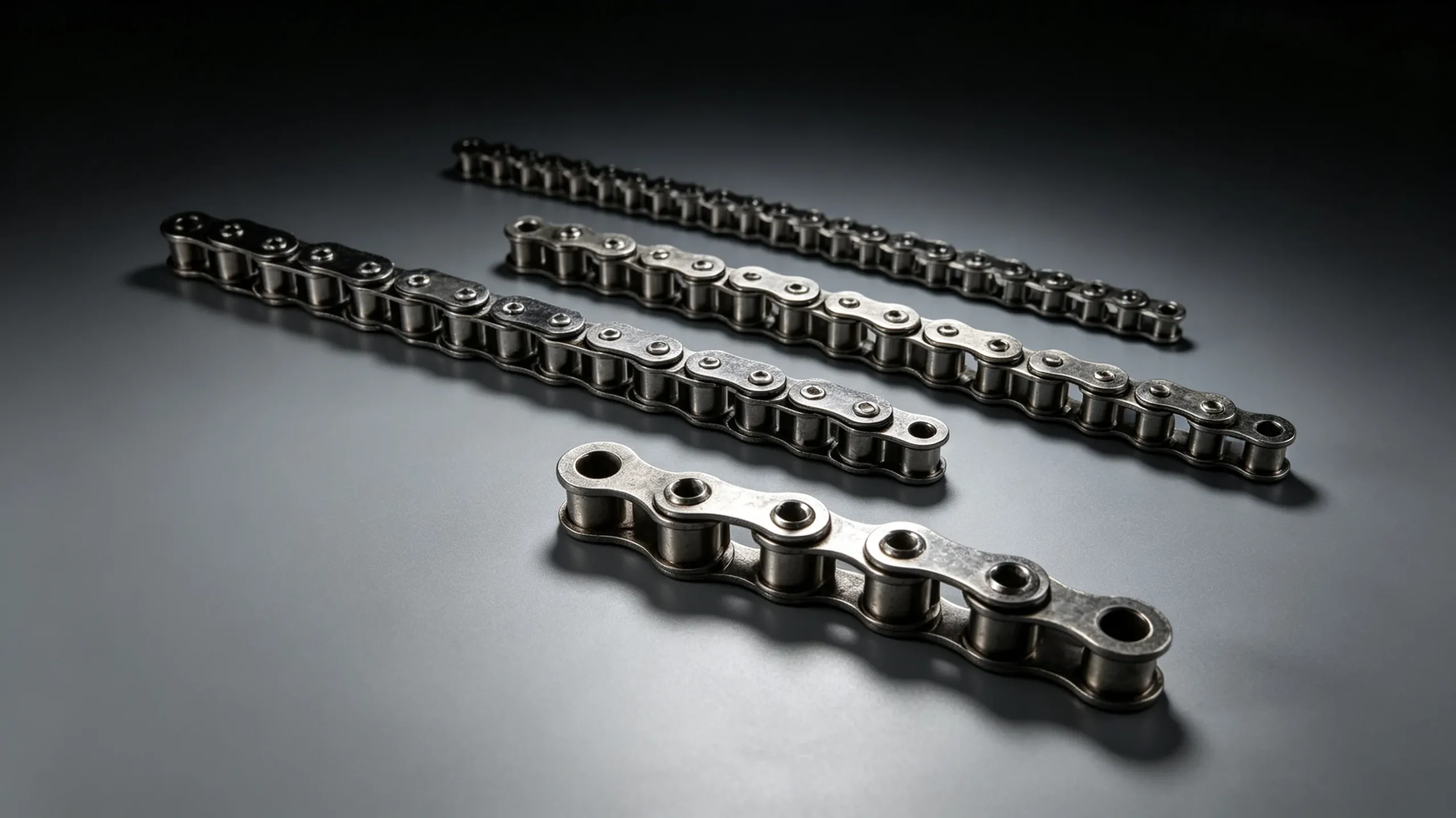
Standard Specification: Powder Coating and Paint Curing Ovens
The most common industrial oven chain application in Australian manufacturing is the powder coating or paint curing conveyor, where the chain carries hanging fixtures through a cure oven at temperatures typically between 160°C and 220°C. Standard specification: chain material — standard carbon steel or nickel-plated carbon steel; pitch — typically ANSI 40 or ANSI 50 for light-duty light part conveyors, up to ANSI 80 or special conveyor chain for heavy fixture conveyors; lubrication — synthetic high-temperature chain oil applied to the chain before it enters the oven zone, positioned immediately before the oven entry point.
Food Processing Ovens: Special Requirements
For food processing tunnel ovens, all lubricants used on chains in the direct food contact zone must be NSF H1 registered food-grade synthetic lubricants. Carbon steel chain is not appropriate in steam or moisture-heavy oven environments — 304 or 316 stainless steel chain is the standard specification for food processing ovens where the chain is exposed to steam, condensate, or wash-down cycles.
Lubrication Strategy for High-Temperature Applications
The fundamental lubrication challenge in high-temperature oven conveyors is that standard oil lubrication evaporates or carbonises in the hot zone. The standard strategy is to lubricate the chain immediately before it enters the oven — the lubricant penetrates the pin-bushing clearance while the chain is at ambient temperature, then the oil film protects the joint through the hot zone passage. Position the lubrication point 300 to 500 mm before the oven entry point.
EverPower Roller Chains Australia supplies carbon steel roller chain, nickel-plated roller chain, and 304/316 stainless steel roller chain for high-temperature industrial and food processing conveyor applications. Contact +61 2 9708 3322 or [email protected].
+61 2 9708 3322 | [email protected] | 27 Harley Crescent, Condell Park NSW 2201