
When roller chain wears out faster than expected, the chain itself is rarely the root cause. The most common hidden driver of premature chain wear is a sprocket condition problem — worn tooth profile, incorrect tooth count for the pitch, or a sprocket not running true. Because the chain is a relatively low-cost consumable and the sprocket is a higher-cost, longer-life component, most maintenance teams focus on the chain when it fails and replace it without investigating whether the sprocket is causing the failure.
Sign 1: Chain Wears Out Significantly Faster After a Replacement
The most reliable signal that a sprocket is driving premature chain wear is a pronounced reduction in chain service life that begins after a specific chain replacement event. If chain service life drops from two years to eight months between one replacement and the next with no other changes in the drive conditions, the most likely explanation is that the sprocket reached a wear level during the first chain service life that now prevents the new chain from engaging correctly. Every time a new chain is installed on increasingly worn sprockets, the service life shortens — the sprocket problem compounds with each chain cycle.
Sign 2: The Chain Rides High on the Sprocket Teeth Under Load
With the drive stopped and locked out, hold a section of the chain on the drive sprocket and observe the roller position relative to the tooth root. If the rollers sit noticeably elevated above the tooth root — rather than nestled in the gullet — the sprocket tooth profile is worn to the point where it can no longer correctly seat the chain. This elevated engagement position causes the chain to experience a harder impact on each tooth engagement, as the roller must remove from the elevated position to the root position on every revolution.
Sign 3: Polishing or Scoring on the Roller OD at One End
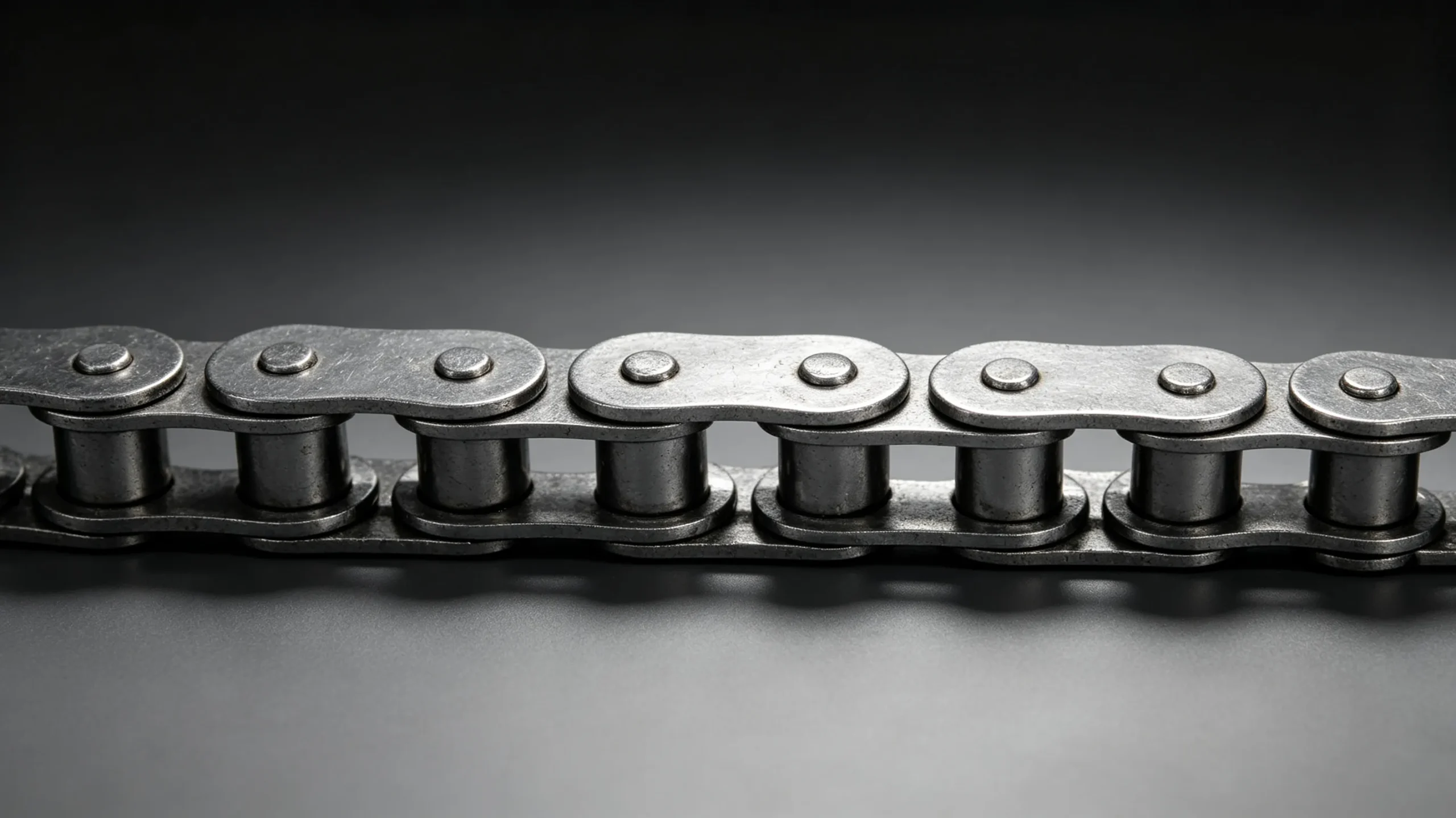
Examine the roller surfaces on the worn chain before discarding it. If the rollers show asymmetric wear — polished or scored on one side of the roller OD, or showing a flat worn area on one end of the cylindrical surface — the cause is the chain riding off-centre on the worn sprocket tooth face. This off-centre roller contact is produced when the worn tooth hook profile pushes the roller toward one side of the tooth gullet rather than allowing it to seat centrally.
Sign 4: Pin and Bushing Wear Concentrated at One Rotational Position
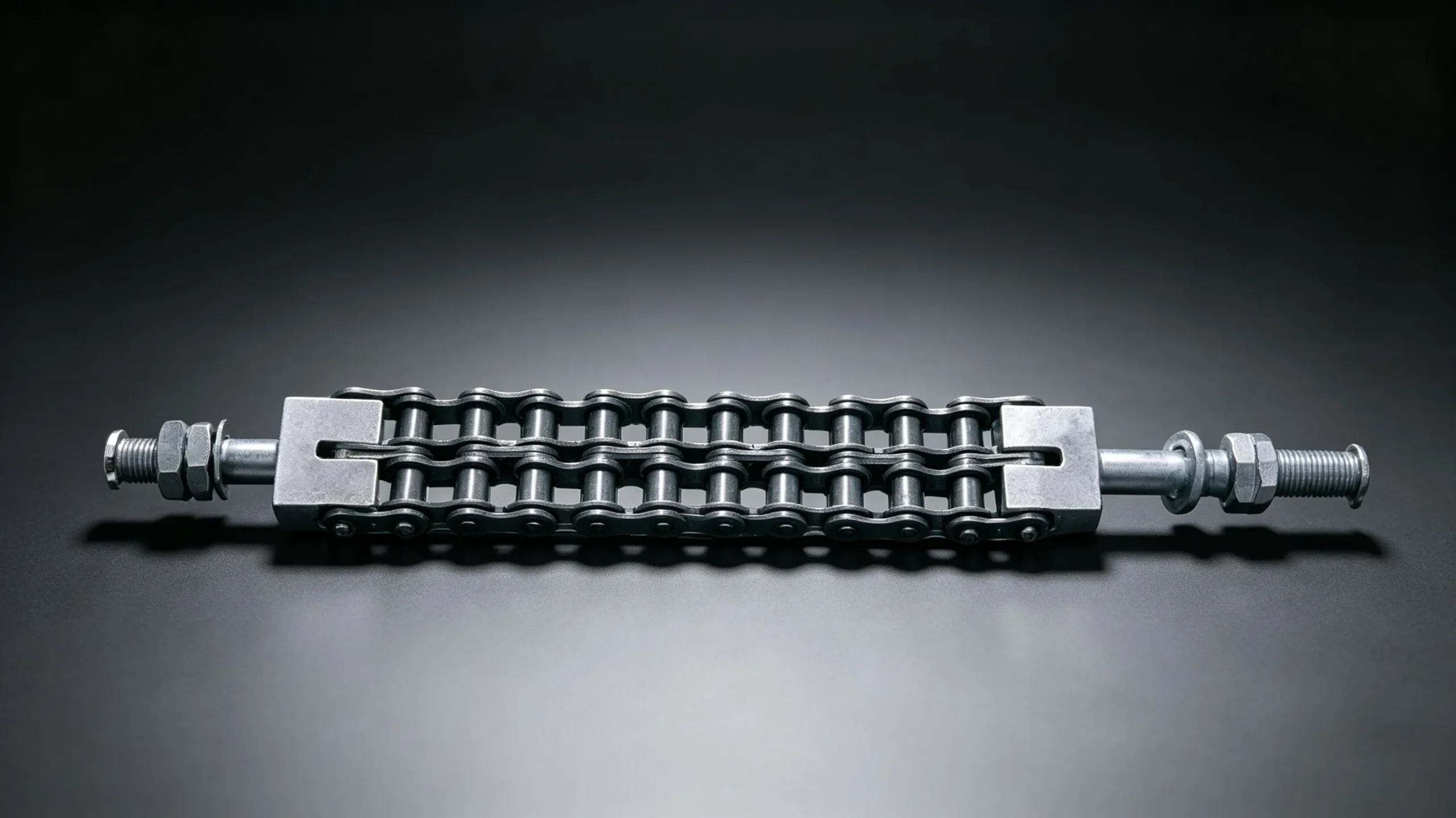
Normal chain elongation distributes wear approximately evenly across all pin-bushing joints in the loop. If chain elongation is concentrated in a specific section of the loop and that section consistently corresponds to the same sprocket engagement position, a specific worn or damaged tooth on the sprocket is imposing higher impact loads at that engagement position, causing accelerated pin-bushing wear in the chain links that engage that tooth on each revolution.
Sign 5: Chain Skip or Jump-Off Under Load That Resolves After Sprocket Replacement
Chain skip under load can be caused by both chain elongation and sprocket wear. If chain skip occurs on a recently installed chain that measures within acceptable elongation limits, the sprocket is the likely cause. Replacing the sprocket resolves skip events caused by the worn tooth hook profile pushing the chain roller outward on each engagement.
The Diagnostic Inspection Protocol
Compare measurements — is elongation distributed evenly, or concentrated in a specific section? Concentrated elongation points to a specific sprocket tooth problem.
Look for asymmetric roller OD wear (one end more worn, flat spots on one side) — indicates off-centre tooth engagement from a worn sprocket profile.
Press a new chain section against the sprocket. If rollers do not seat at the tooth root, the sprocket requires replacement before the new chain is installed.
Rotate the sprocket by hand and inspect each tooth for undercut flanks, chipped tips, cracked roots, or visible uneven spacing.
EverPower Roller Chains Australia can advise on roller chain and sprocket wear diagnosis and supply matched replacement chain and sprockets. Contact +61 2 9708 3322 or [email protected].
+61 2 9708 3322 | [email protected] | 27 Harley Crescent, Condell Park NSW 2201